
Kimchi vs Doenjang vs Sundubu: Which Korean Stew First?
Start with sundubu jjigae for a soft texture and a usually solo-friendly pot. Pick kimchi jjigae for sour heat or doenjang jjigae for a deeper fermented flavor—but check the broth and serving size before ordering.
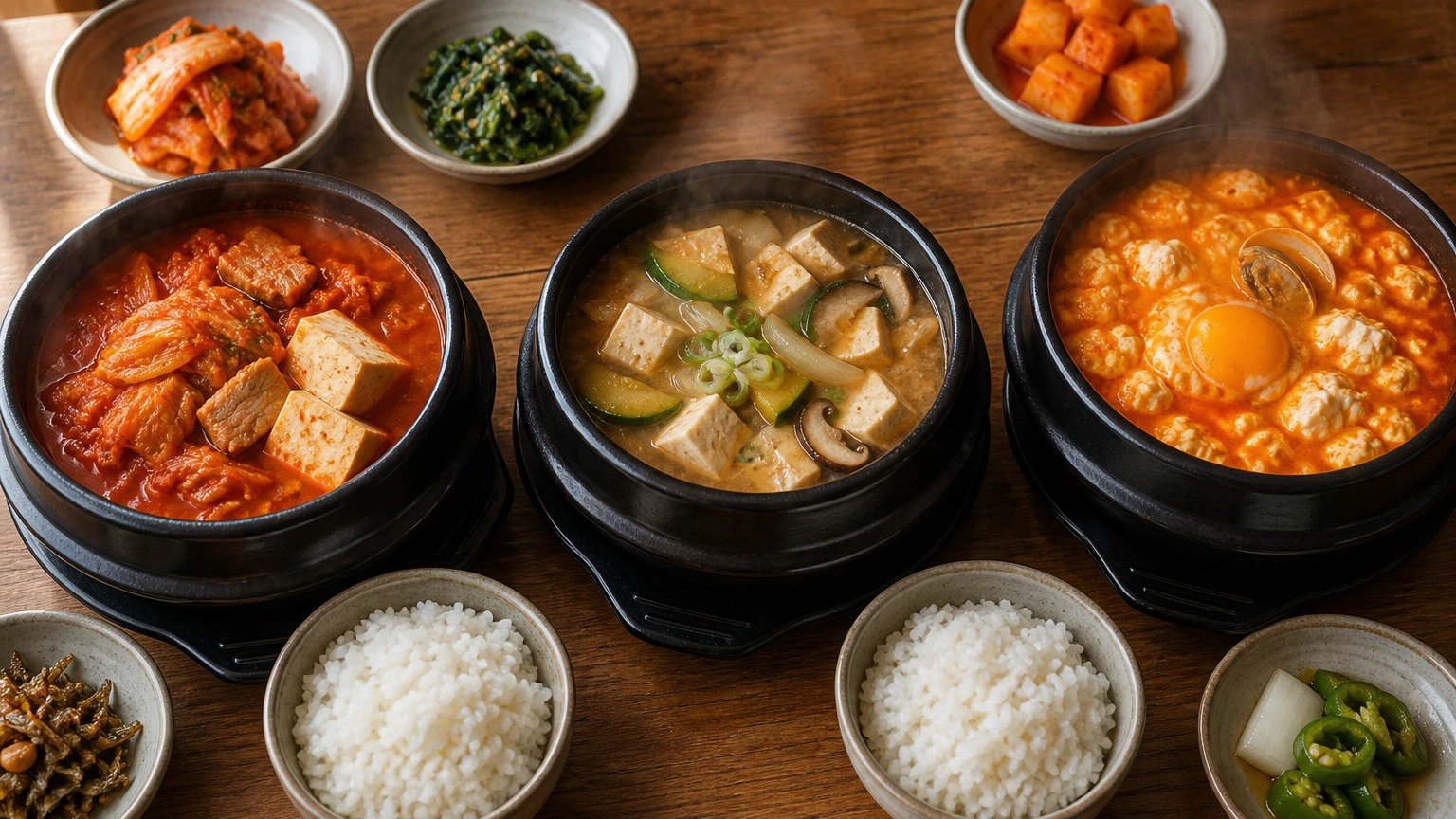
For a first Korean stew, sundubu jjigae is the easiest default if you are comfortable with some heat and have no seafood, egg, or meat concerns: the tofu is soft, the flavor is savory, and dedicated sundubu shops commonly build the meal around one bubbling pot. Choose kimchi jjigae for a sharper fermented punch or doenjang jjigae for an earthy soybean-paste broth; neither is automatically mild, vegetarian, or served for one.
Choose by flavor and serving style
- Sundubu jjigae (순두부찌개): best first pick for a solo diner who likes soft tofu and is willing to check the spice level. Check the variant—seafood, clam, pork, beef, kimchi, and mixed versions are common.
- Kimchi jjigae (김치찌개): pick this if sour, aged kimchi and a bold red broth sound appealing. Pork and tuna are frequent partners, and the fermented acidity can feel stronger than the chili itself.
- Doenjang jjigae (된장찌개): pick this if you enjoy fermented soybean flavor and a salty, earthy broth. Its brown color does not guarantee zero heat, and a vegetable-heavy bowl may still use anchovy, clam, beef, or pork.
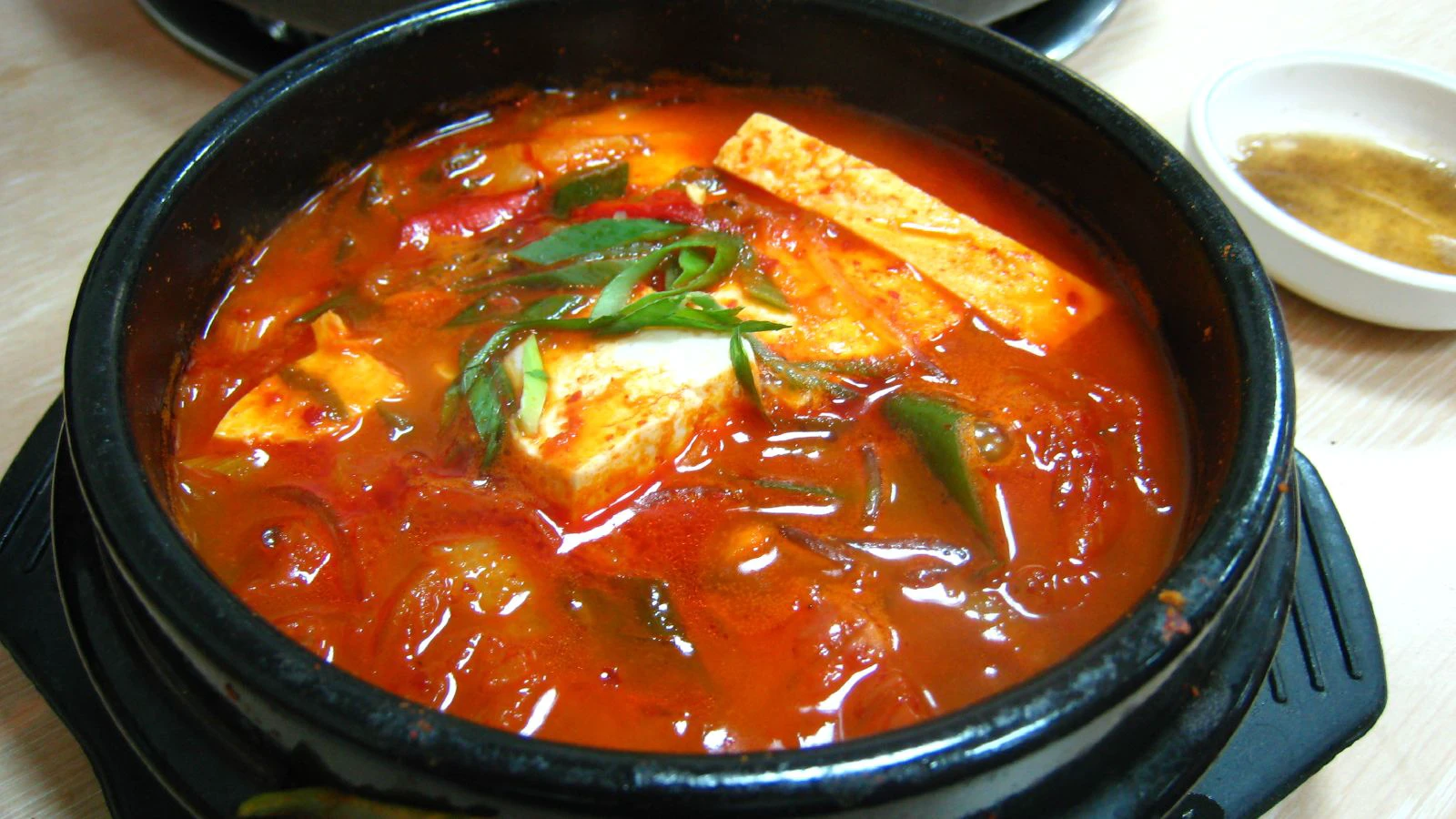
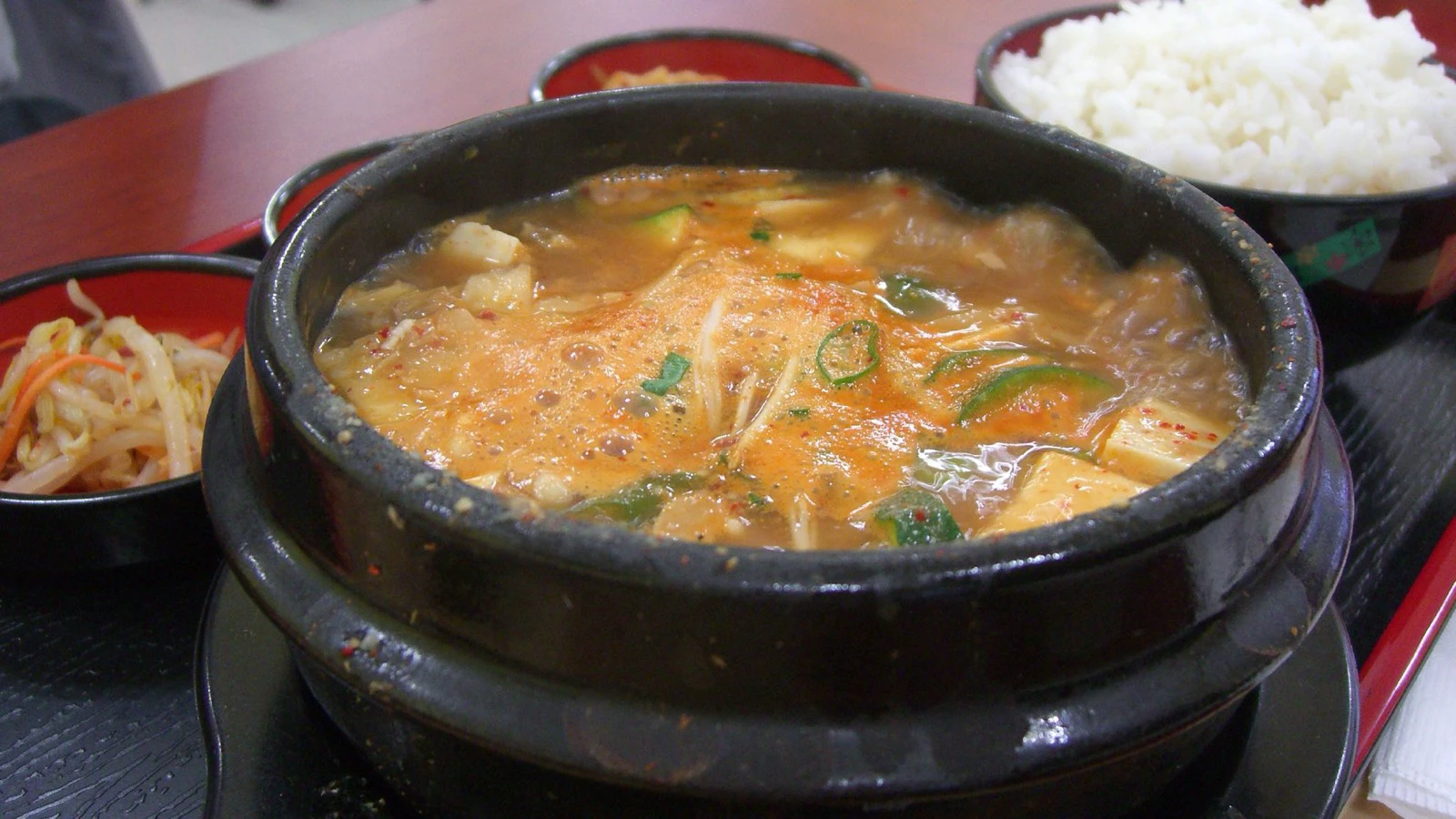
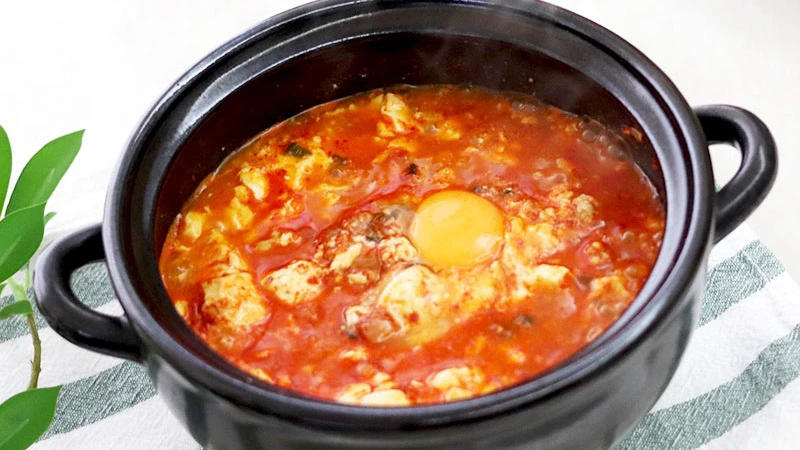
All three stews can arrive in black earthenware pots, so use the Korean menu name rather than color alone. From left to right: kimchi jjigae, doenjang jjigae, and pork sundubu jjigae.
What each stew actually tastes like
Sundubu: soft texture, flexible fillings, visible chili
Sundubu is barely pressed tofu, so it breaks into custardy pieces rather than firm cubes. The Korea Tourism Organization's food entry describes soft tofu cooked with seafood for a savory broth; restaurants also sell pork, beef, mushroom, kimchi, and mixed versions. A raw egg may be cracked into the pot while it is still boiling.
Sundubu's texture is gentle; its chili level is a separate question. A specialist shop may offer a spice-level choice or a white broth, while another kitchen may use one pre-seasoned red base. If chili is the deciding issue, ask before ordering rather than assuming the egg and tofu will cancel the heat. Our less-spicy ordering phrases explain what a kitchen can and cannot realistically change.
Kimchi jjigae: sour first, then heat and richness
Kimchi jjigae gets its defining flavor from well-fermented kimchi. The official VISITKOREA description highlights aged sour kimchi simmered with pork; tuna kimchi jjigae is another common menu label. Expect a sharper, more acidic profile than sundubu and a broth that asks for rice.
For someone who already likes kimchi, this can be the most recognizably Korean first choice. For someone uncertain about fermented acidity, it is the riskiest of the three. Long simmering softens the cabbage but concentrates the kimchi character—it does not turn the dish neutral.
Doenjang jjigae: a deeper fermented flavor
Doenjang is fermented soybean paste with a more rustic, assertive flavor than the smooth miso soup many diners expect. The Korea Tourism Organization's doenjang jjigae entry lists tofu, mushrooms, zucchini, and clams among typical ingredients. The broth may be tan or brown, with a savory aroma that can be more challenging than the color suggests.
A Serious Eats guide to Korean soups and stews also notes how varied jjigae bases can be: anchovy, seafood, beef, chicken, and other seasonings all appear across the category. Doenjang jjigae suits someone who already enjoys assertive fermented flavors. Anyone avoiding chili or animal ingredients still needs to confirm the broth.
The ingredient traps are different
If you have a dietary restriction, choose by the full menu label and ask about the broth. The visible ingredients do not tell the whole story.
- Kimchi jjigae: look for 돼지고기 (pork) or 참치 (tuna). Kimchi itself may contain fish sauce or salted shrimp.
- Doenjang jjigae: look for 차돌 (beef brisket), 우렁 (freshwater snail), 꽃게 (blue crab), or 해물 (seafood). A plain-looking vegetable version can still start with anchovy stock.
- Sundubu jjigae: look for 해물 (seafood), 바지락 (clam), 소고기 (beef), 돼지고기 (pork), and 계란 (egg). Mixed sundubu can combine several of them.
For a plant-based order, “tofu stew” is not enough information. Use the checks in our guide to hidden non-vegetarian ingredients in Korean food, especially for broth, kimchi seasoning, and premixed sauce.
Check whether the menu sells one-person pots
Sundubu restaurants often make the choice simple: one person, one earthenware pot, rice, and banchan. An official VISITKOREA restaurant listing shows both sundubu and doenjang paired with individual hot-stone rice sets, which is a useful example of how either stew can work as a complete meal. It is an example, not a nationwide serving rule.
Kimchi jjigae and doenjang jjigae can also be individual meals, but barbecue restaurants and specialty jjigae shops may list a shared pot or require two portions. On the menu, 1인 means one person, 1인분 means one serving, and 2인분 이상 means two or more servings. If the number is unclear, ask 이거 1인분 주문돼요?—“Can I order one serving of this?” The same minimum-order logic is covered in our one-menu-per-person guide.
A practical first order
If you have no dietary restrictions and like some spice, order pork sundubu (돼지고기 순두부) or seafood sundubu (해물 순두부) at a restaurant that lists one-person pots. You get the clearest solo format and the softest texture without losing the bubbling-stew experience.
Choose kimchi jjigae instead if fermented sourness is exactly what you want. Choose doenjang jjigae if you prefer earthy and savory over bright red chili flavor—and are willing to confirm what made the stock.
There is no universal winner. A lively Reddit comparison of the three jjigae splits between long-simmered pork kimchi jjigae, seafood sundubu, doenjang, and several other stews. That disagreement is useful: first choose the flavor and ingredients you actually enjoy, then check whether the restaurant sells that pot for one.
Sources and image credits
- VISITKOREA sundubu jjigae — Soft-tofu texture, seafood example, and broth context.
- VISITKOREA kimchi jjigae — Aged sour kimchi and pork preparation.
- VISITKOREA doenjang jjigae — Typical tofu, mushroom, zucchini, and clam ingredients.
- Serious Eats — Background on varied Korean soup and stew bases.
- VISITKOREA restaurant listing — Example of individual sundubu and doenjang hot-stone rice sets; not a nationwide serving rule.
- Reddit r/KoreanFood comparison — Individual taste preferences used as anecdotal context.
- Delivery Spot illustration — Featured comparison illustration; it is not a restaurant-meal photograph.
- miyagawa via Wikimedia Commons — Kimchi jjigae image, CC BY-SA 2.0.
- Alpha via Wikimedia Commons — Doenjang jjigae image, CC BY-SA 2.0; cropped to 16:9.
- 초록스토리 on Naver Blog — Sundubu jjigae image used with operator-confirmed permission and cropped to 16:9.
Last updated


