
How to Ask for Less-Spicy Korean Food: Exact Phrases
Use 덜 맵게—not 조금 맵게—and match the request to four kitchen situations: adjustable heat, separate sauce, removable chili, or a spicy base that is already mixed.
If you want food less spicy, show or say:
덜 맵게 해 주세요.
Deol maepge hae juseyo.
Please make it less spicy.
Do not shorten the idea to 조금 맵게. That means “a little spicy,” so it can sound like you want some heat added. 조금 덜 맵게 means “a little less spicy,” but the shorter 덜 맵게 해 주세요 is clearer in a busy restaurant.
This request is not a guarantee. Some kitchens can change a spice level, some can put a finishing sauce on the side, some can omit fresh chili, and some work from a red broth or marinade that is already mixed. Start by finding out which situation applies.
Ask whether the dish can change
이 음식은 맵기를 조절할 수 있나요?
I eumsigeun maepgireul jojeolhal su innayo?
Can the spice level of this dish be adjusted?
If staff say no, do not keep stacking requests onto a fixed recipe. Ask for a naturally mild choice:
그럼 안 매운 메뉴로 추천해 주세요.
Geureom an maeun menyuro chucheonhae juseyo.
Then please recommend a non-spicy menu item.
Use the mild Korean dishes guide to choose a realistic backup before arriving. “Mild” still varies by restaurant, seasoning and personal tolerance.
Match the phrase to where the heat enters
- Adjustable spice level: 덜 맵게 해 주세요. — Please make it less spicy.
- Recipe can be made without heat: 안 맵게 해 주세요. — Please make it not spicy.
- Finishing sauce or seasoning: 양념은 따로 주세요. — Please serve the sauce/seasoning separately.
- Gochujang added at the table: 고추장은 따로 주세요. — Please serve the gochujang separately.
- Chili flakes added during cooking: 고춧가루는 빼 주세요. — Please leave out the chili flakes.
- Fresh Cheongyang chili: 청양고추는 넣지 말아 주세요. — Please do not add Cheongyang chili.
- Unsure whether the base is fixed: 소스가 이미 섞여 있나요? — Is the sauce already mixed in?
When sauce is added at the end
For bibimbap, dipping sauces and dishes dressed immediately before serving, 따로 주세요 (“separately, please”) can be more reliable than a vague reduction.
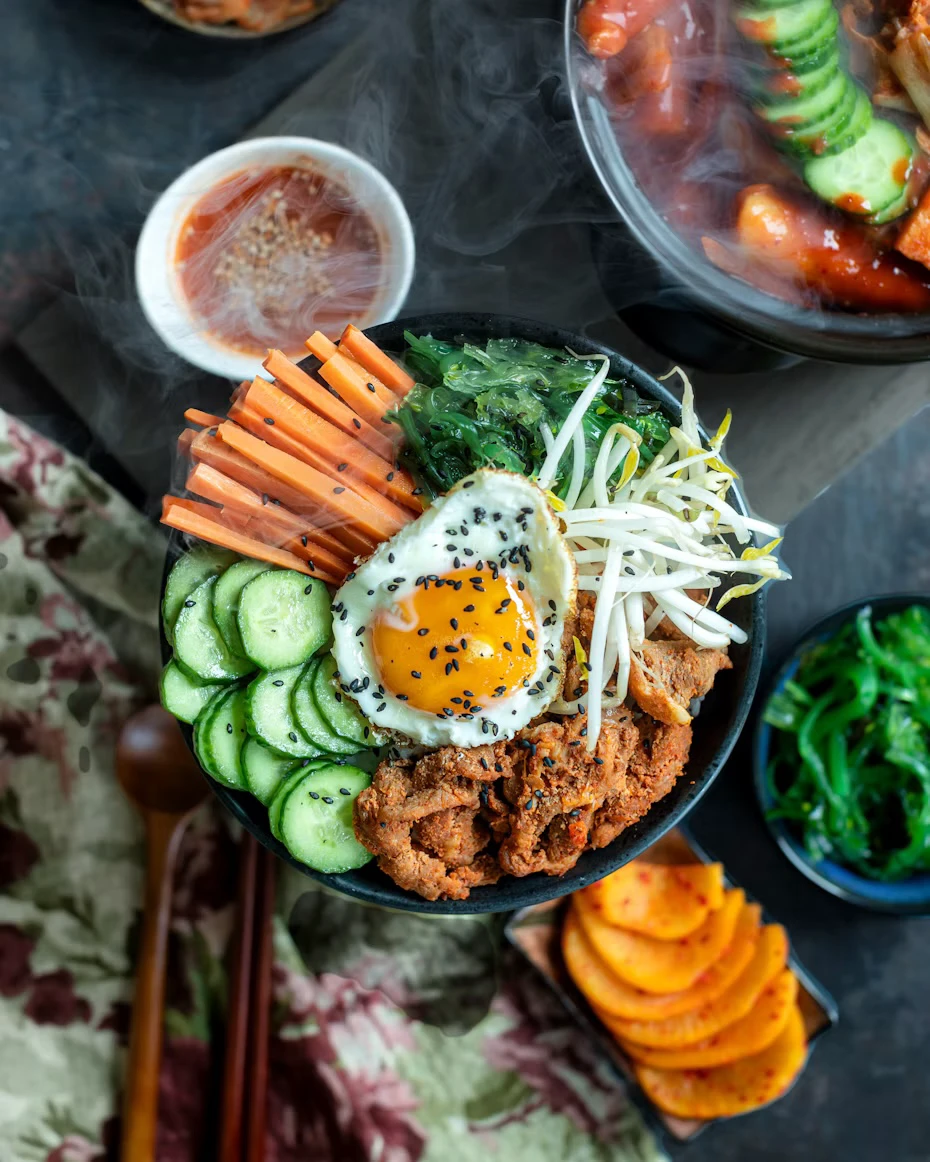
A bowl that arrives unmixed lets you add a little sauce, taste and stop. 양념 is a broad word for seasoned sauce or seasoning; 고추장 names fermented red chili paste. Point to the item on the menu or table when context is unclear. Do not assume every red condiment is gochujang or that a marinade can be separated after it has soaked into the food.
When one chili ingredient can be removed
These need different requests:
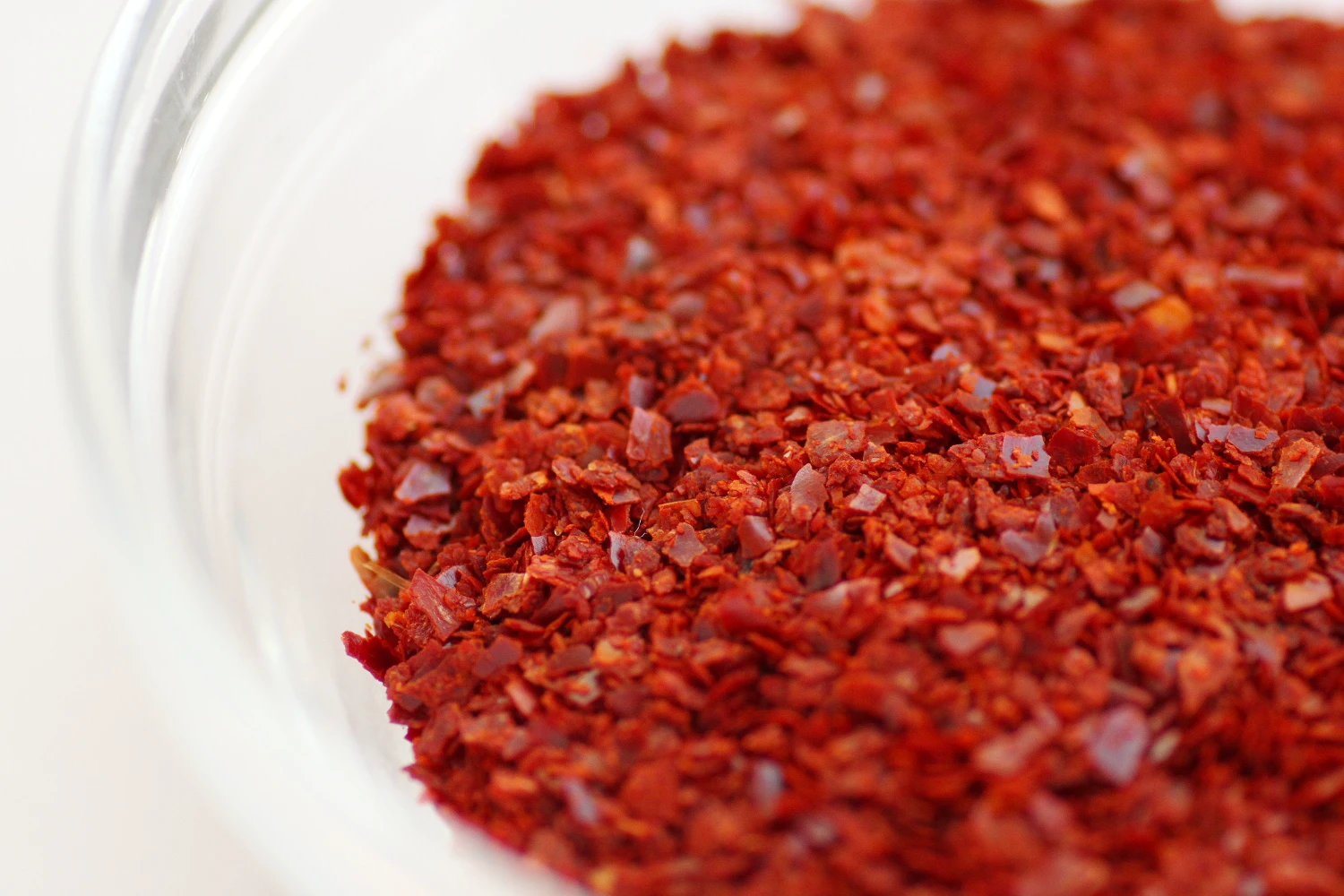
- 고춧가루 (gochutgaru) — red chili flakes or powder: 고춧가루는 빼 주세요.
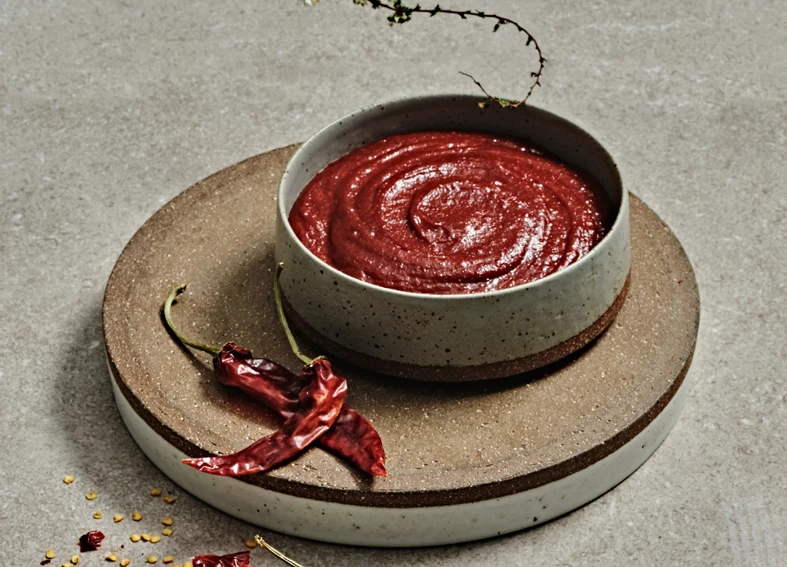
- 고추장 (gochujang) — fermented red chili paste: 고추장은 따로 주세요.
- 청양고추 (Cheongyang gochu) — a fresh chili used for sharp heat: 청양고추는 넣지 말아 주세요.
The official Basic Korean Dictionary defines **덜** as “less,” or to a weaker degree than a standard. It defines **빼다** as removing or taking a part away from a whole. That is why 덜 맵게 reduces degree, while 빼 주세요 asks to omit a removable ingredient.
Neither phrase can undo a batch-made broth, pre-seasoned kimchi, premixed paste or marinated protein. Ask before ordering.
Check the restaurant’s “lowest level”
덜 맵게 is relative. A restaurant’s level 1 may still feel hot to someone who rarely eats chili. Ask:
가장 안 매운 단계도 매운가요?
Gajang an maeun dangyedo maeungayo?
Is even the least-spicy level hot?
If staff say it is, choose another dish. A 2026 TEUIDA restaurant-language guide also gives 안 맵게 해 주세요 and 조금 덜 맵게 해 주세요 as practical requests; treat it as language-learning support, not a promise about any kitchen.
Recognize the first words of the reply
- 맵기 조절이 안 돼요. — The spice level cannot be adjusted.
- 이미 양념되어 있어요. — It is already seasoned.
- 소스가 이미 섞여 있어요. — The sauce is already mixed in.
- 양념 따로 드릴게요. — We will give you the sauce separately.
- 고추 빼 드릴게요. — We will leave out the chili.
You do not need to understand the full explanation. Listen for 안 돼요 (cannot), 이미 (already), or 따로 (separately), then confirm by pointing to a mild alternative if necessary.
Why traveler advice often conflicts
Questions recur because “not spicy” may describe tolerance, the diner’s goal or a recipe that cannot change. Threads in r/KoreanFood, r/Korean and r/koreatravel show the practical confusion. They are traveler anecdotes, not language authorities or restaurant policies.
The reliable move is to separate three questions: Can the recipe change? Which ingredient carries the heat? Is the lowest available version still spicy?
Allergy and medical-reaction note
These phrases communicate taste preference or limited tolerance. 덜 맵게 does not mean chili-free, allergen-free or protected from cross-contact. 빼 주세요 only asks to omit an ingredient when the kitchen can do so; it does not certify that the ingredient was absent from a premade base.
If exposure could cause a medical reaction, name the exact ingredient and communicate the allergy separately. When staff cannot confirm the recipe or cross-contact risk, choose another item or do not eat it. Do not rely on “less spicy” as an allergy protocol.
One message to show staff
이 음식은 맵기를 조절할 수 있나요?
Can the spice level be adjusted?
조절할 수 있으면 덜 맵게 해 주세요. 양념을 나중에 넣는 거면 따로 주세요.
If it can be adjusted, please make it less spicy. If the sauce is added later, please serve it separately.
조절이 안 되면 안 매운 메뉴로 추천해 주세요.
If it cannot be adjusted, please recommend a non-spicy item.
Use only the line that matches the dish. A short, specific request is easier to carry from server to kitchen than every possible chili change at once.
If bags make a restaurant stop awkward, choose a nearby handoff through Delivery Spot before the meal.
Language meanings and the practical phrases were rechecked on August 12, 2026. Recipes and restaurant practices remain branch-specific.
Sources and image credits
- Delivery Spot bibimbap image — Web-ready copy derived from the credited Deepthi Clicks / Unsplash photo.
- Delivery Spot gochugaru image — Web-ready copy derived from the credited Stacy Spensley / Wikimedia Commons photo.
- Delivery Spot gochujang image — Web-ready copy derived from the credited Korea Agro-Fisheries & Food Trade Corporation image.
- National Institute of Korean Language — 덜 — Official Basic Korean Dictionary meaning “less”; rechecked August 12, 2026.
- National Institute of Korean Language — 빼다 — Official meaning “remove/take away a part”; rechecked August 12, 2026.
- TEUIDA — Korean restaurant phrases — 2026 language-learning examples; not a restaurant-policy source.
- r/KoreanFood — Dining-out sentences — Traveler and community context only.
- r/Korean — Saying food is not spicy — Learner discussion retained as anecdotal context.
- r/koreatravel — Finding non-spicy food — Traveler context, not a universal restaurant rule.
- Cover photo — Jakub Kapusnak / Foodiesfeed — Original featured-image source under the Unsplash License.
- Bibimbap photo — Deepthi Clicks — Original body-photo source under the Unsplash License.
- Gochugaru photo — Stacy Spensley — Original image source under CC BY 2.0.
- Gochujang photo — Korea Agro-Fisheries & Food Trade Corporation — Original image source under KOGL Type 1.
- Delivery Spot cover image — Web-ready copy derived from the credited Jakub Kapusnak / Foodiesfeed image.
Last updated


