
Why a Korean ‘Villa’ Is Usually a Low-Rise Apartment Building
In Korean real estate, villa usually means a small low-rise building with several homes—not a detached luxury retreat. Learn the legal labels, trade-offs and documents to check.
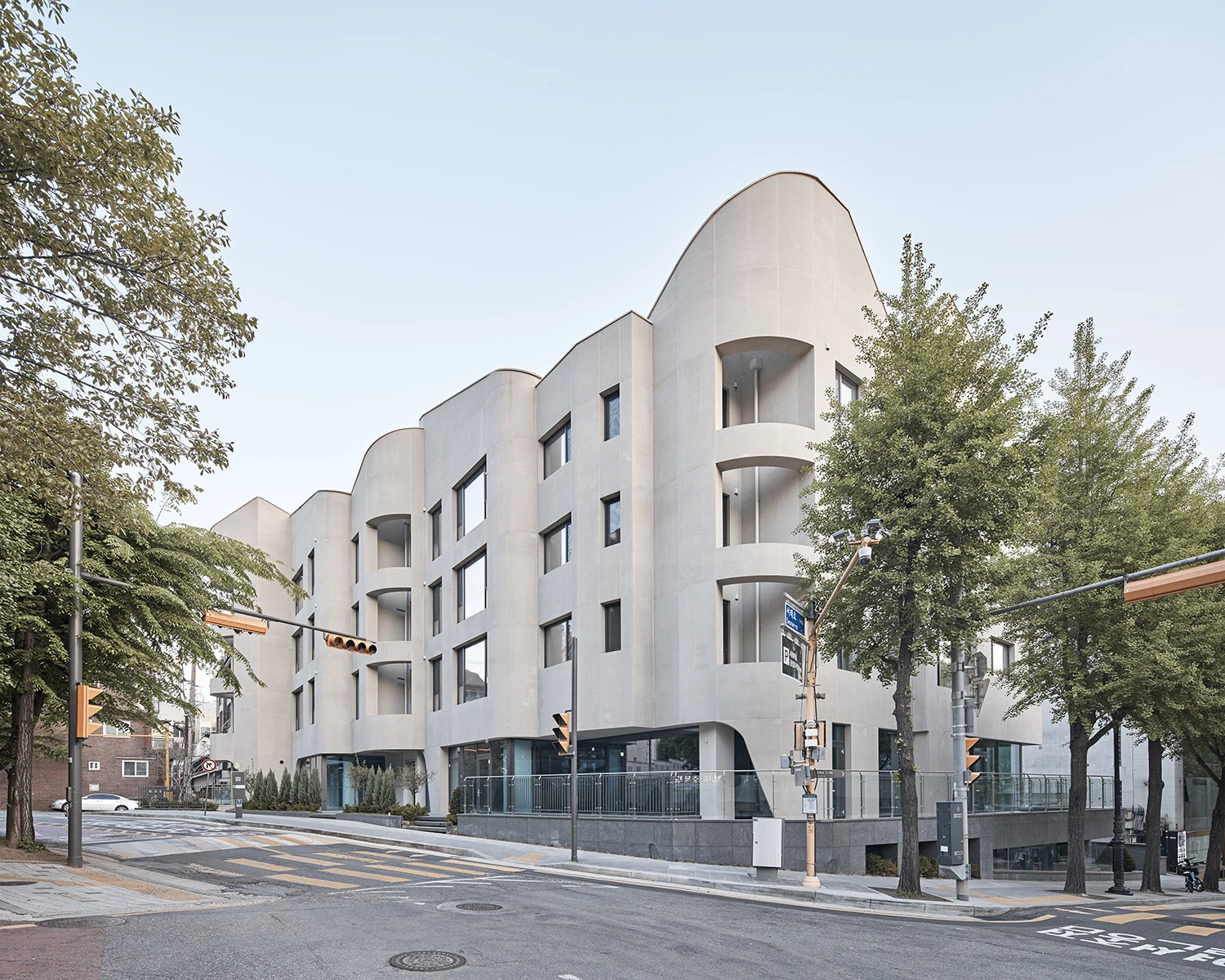
A Korean real-estate listing that says 빌라 (villa) usually means a small low-rise building containing several homes. It does not promise a detached luxury house, private land, a garden, or the whole building to yourself. Read it as a market shortcut first, then check the official register for the actual building type.
Translate the picture, not the English word
The Architectural Institute of Korea terminology entry records both meanings: the overseas country-house image and the Korean use for low-rise collective housing. In an app, picture a compact neighborhood apartment block with separate households, shared walls and a common entrance.
“Villa” is not one final statutory category. The current Korean Building Act Enforcement Decree, Appendix 1 classifies apartment housing more precisely as 아파트, 연립주택 and 다세대주택. A listing marketed as villa may fall under one of the low-rise categories, while a building people casually group with villas can also have a different registered use or ownership structure. The building register, property register and exact unit—not the entrance sign—settle the legal facts.
Our broader Korean housing-terms guide separates building type, unit layout and payment type. A villa can contain a one-room or two-room, and the contract can be jeonse or wolse; those labels answer different questions.
What it commonly looks like
The Institute for Basic Science Living in Korea housing guide describes villas as smaller single apartment buildings, usually under five floors, often with one or two homes per floor and frequently without an elevator. Treat that as a practical orientation, not a promise for every property.
Common features include:
- one low-rise building rather than a multi-tower complex;
- a keypad entrance but no staffed management office;
- stairs in many older buildings and a small lift in some newer ones;
- tight or tandem parking;
- fewer shared facilities and a more building-specific repair arrangement.
Condition varies enormously. A villa can be an aging brick walk-up, a recently built budget unit or architect-designed boutique housing.
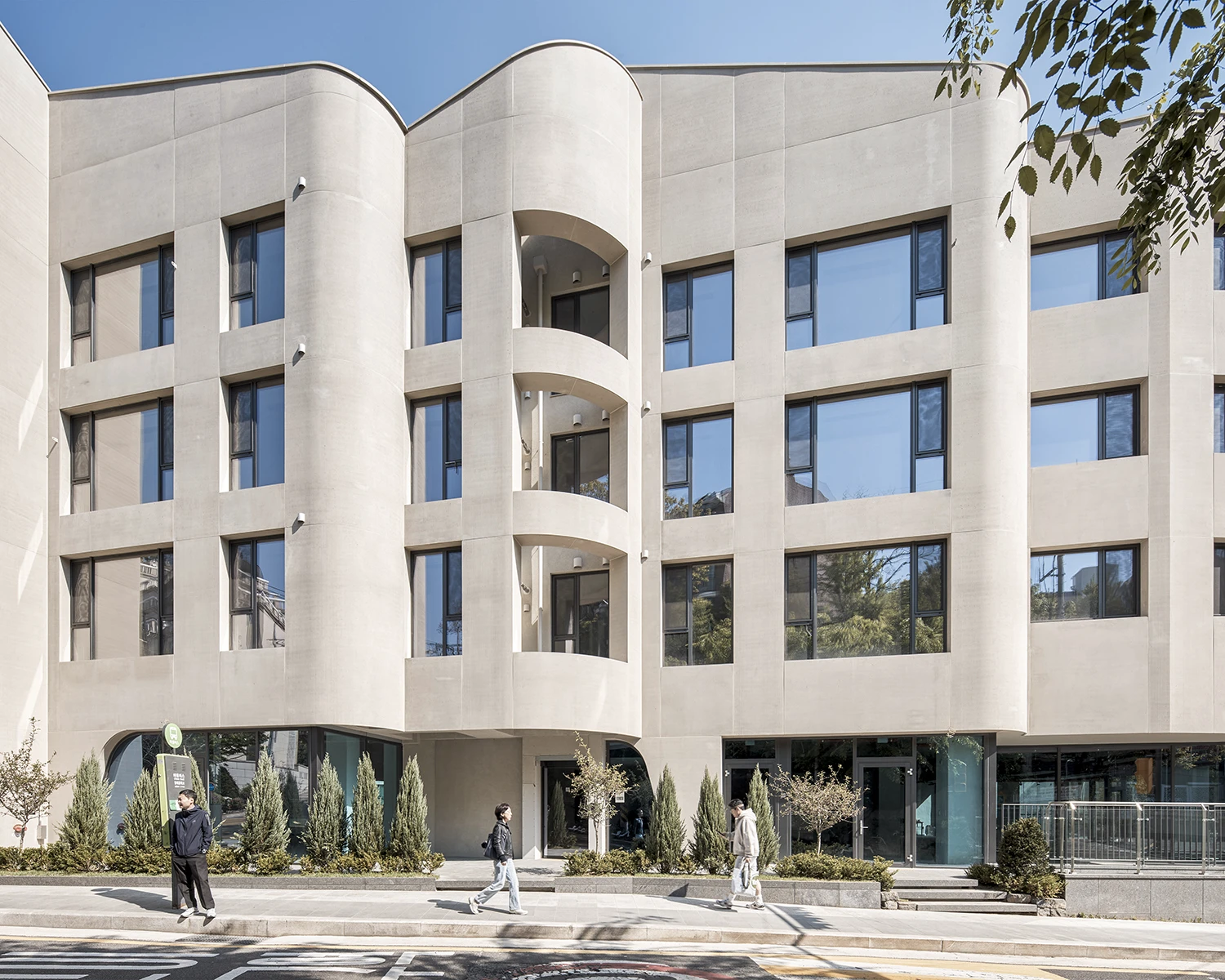
The VMSPACE project profile identifies this polished Seocho-gu example as a four-story multi-family building with twelve homes. It shows the range of the form; it is not a baseline for price, finish or amenities.
Villa versus detached house
If you mean one household on its own land, the closer Korean search term is 단독주택 (detached house). Seoul’s official housing-type guide separates detached houses from multiplex houses and describes the latter as low-rise buildings where households occupy separate homes and units can be owned and sold separately.
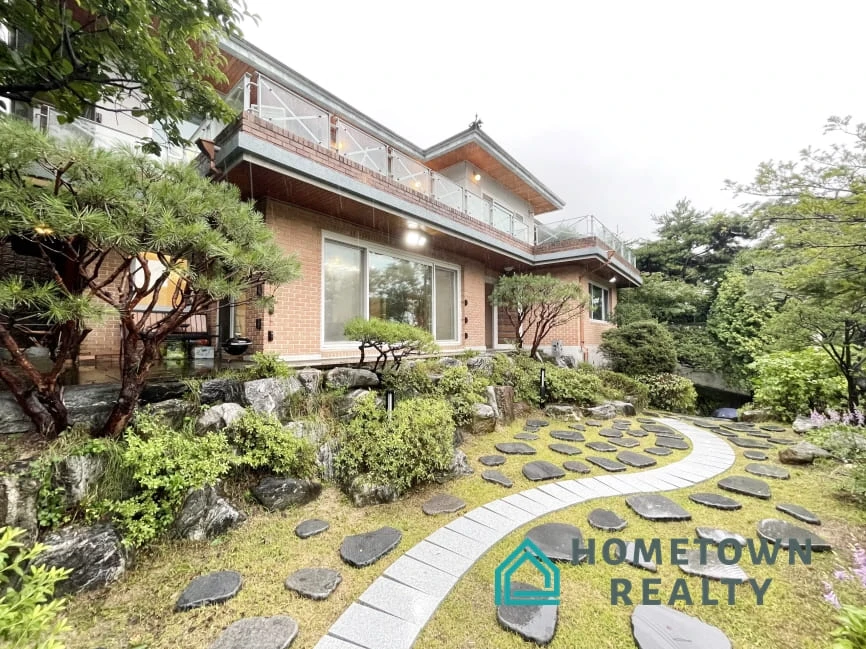
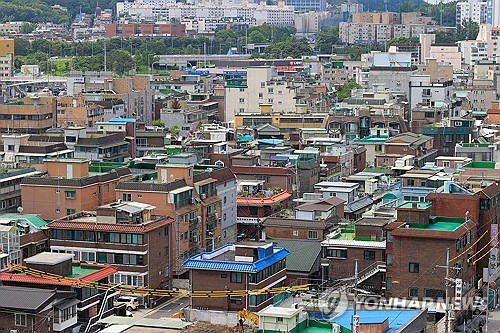
The first image matches the international detached-villa picture. The second is the kind of dense low-rise neighborhood a Korean villa search commonly returns. Neither photograph proves the registered category of an individual property; always check its documents.
Why the market keeps using the word
A July 2026 Yonhap report carried by Naver News uses “villa” and immediately clarifies it as row and multi-family housing. The shortcut is useful when people want to distinguish a small neighborhood building from a large apartment complex, officetel or detached house, even though it is imprecise.
Building names can make the confusion worse. “Villa,” “Palace,” “Castle” or a European-sounding name is branding, not evidence of a garden, concierge, parking allocation or construction standard.
What changes compared with a large apartment complex
A villa may offer more space or a less standardized plan for the same budget, fewer neighbors and access to central side streets where a comparable high-rise unit costs more. Common charges can be lower, but fewer services may be included.
Check these building-specific trade-offs in person:
- elevator, stairs and emergency access;
- assigned parking versus cars blocking one another;
- package handling, entrance security and CCTV;
- who cleans and repairs common areas;
- roof, drainage, shared pipes and trash storage;
- sunlight, ventilation, mold, water pressure, heating and noise;
- fixed management fee, included items and recent utility bills.
Do not infer quality from age or label alone. A well-maintained newer villa can outperform an older apartment; an attractive older unit can be spacious yet costly to heat or difficult to manage.
Check the register before sending money
Before paying a holding deposit or signing, match the exact address and unit across the contract, building register (건축물대장) and property register (등기사항증명서). Ask a licensed broker to explain the registered use and ownership structure in a language you understand.
For any substantial refundable deposit, verify the owner, the recipient’s authority, mortgages and senior claims, approved residential use, address-registration eligibility and the steps needed to protect the lease. Also confirm the exclusive-use area, lawful balconies or rooftop rooms, parking rights and every repair or access promise in writing.
The word villa does not itself make a deposit safe or unsafe. The documents, claim priority, contract and unit condition do. Our jeonse-versus-wolse guide helps compare payment structures, but it does not replace transaction-specific legal or financial advice.
Why opinions are divided
Large apartment complexes are easier to compare and often have standardized management, while small villas can have fewer comparable sales, thinner resale demand and owner-by-owner maintenance. Those issues matter most to buyers, though they can also affect a renter’s deposit and negotiations.
A Living in Korea community discussion includes both liquidity concerns and people who prefer larger rooms and low-rise living. It is anecdotal, not market evidence. Renters should prioritize deposit safety, condition, commute, light, noise and management; buyers also need comparable sales, land share, financing, maintenance governance and independent professional advice.
A six-step listing check
- Picture a low-rise multi-unit building, not a detached resort home.
- Open the official records for use, ownership, floor, area and unit.
- Inspect shared systems: entrance, lift or stairs, parking, drainage, roof and trash area.
- Inspect the home: light, ventilation, mold, water, heating, noise and alterations.
- Separate price from deposit risk and review senior claims independently.
- Put promises in writing, including parking, pets, repairs, furniture and rooftop access.
The short answer is simple: Korean villa is a useful search label for low-rise multi-unit housing, not a reliable legal translation. Let it set the initial picture, then let the register, inspection and contract make the decision.
Photo credits
- Featured low-rise housing and façade: Lee Namsun via VMSPACE.
- Detached house and garden: Hometown Realty.
- Typical Seoul villa neighborhood: Yonhap News via Naver News.
Sources
- Architectural Institute of Korea terminology entry — Korean and international meanings of villa
- Building Act Enforcement Decree, Appendix 1 — Current official building categories, checked August 12, 2026
- IBS Living in Korea housing types — Practical orientation for villa housing
- VMSPACE Maison Le Sommet — Featured multi-family project and photo source
- Seoul housing-type guide — Detached and multiplex housing comparison
- Yonhap report via Naver News — Dated July 2026 market-language example and neighborhood image
- Living in Korea discussion — Anecdotal owner and renter perspectives only
- Hometown Realty detached house — Detached-house photo source
- Featured cover asset — Delivery Spot licensed derivative
Last updated


