
Korean Housing Terms: Apartment, Villa, Officetel, and One-Room
In Korean property listings, apartment, villa, and officetel usually identify the building or legal-use category, while one-room describes the unit layout. Learn how to separate those labels and what to verify before signing a lease.
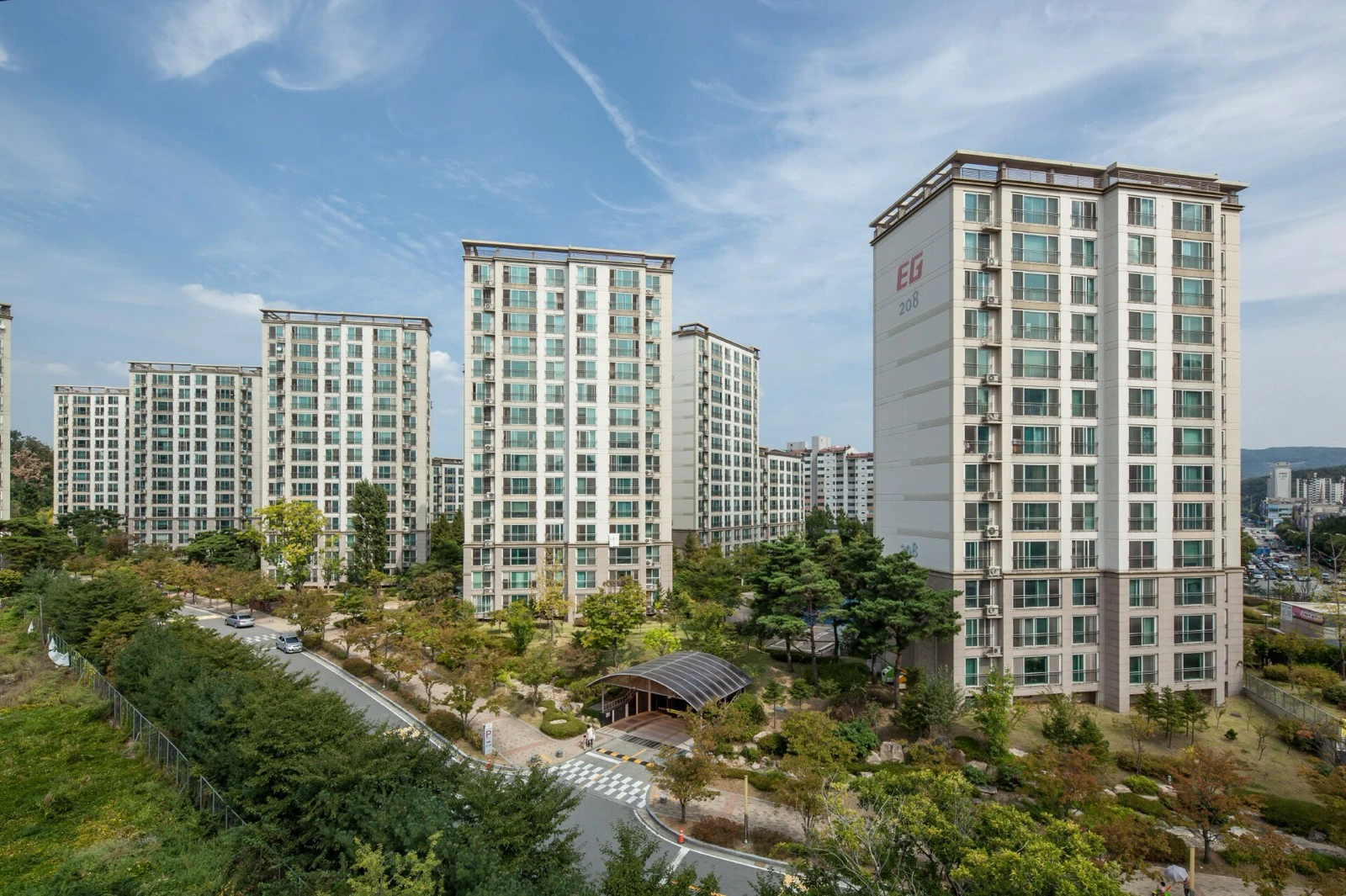
Korean 아파트 (apateu) is narrower than the English word apartment. In a Korean property listing, apartment, villa, and officetel mainly describe the building or its registered use, while one-room describes the unit layout. A home can therefore be both an officetel and a one-room, or a villa and a two-room.
That distinction makes listing apps much easier to read. Separate every listing into three questions: What kind of building is it? What is the layout? How is the rent paid?
One listing can carry three labels
A Korean listing often mixes three independent axes:
- Building or use: apartment, villa, officetel
- Layout: one-room, 1.5-room, two-room
- Payment: jeonse or wolse
For example, 오피스텔 원룸 월세 means an officetel building, a studio-style unit, and a deposit-plus-monthly-rent contract. 빌라 투룸 전세 means a low-rise home marketed as a villa, a two-room layout, and a jeonse contract. Our jeonse-versus-wolse guide explains the payment side; this guide decodes the first two labels.
Apartment: a specific Korean building category
Under the current Building Act Enforcement Decree, Appendix 1, an 아파트 is a residential building with five or more floors used as housing. In everyday listings, the word often brings to mind a professionally managed complex with several buildings, shared grounds, elevators, security, and substantial management fees. Those features are common, but the legal floor-based category is the safer definition.
Korean speakers do not normally use apateu as a blanket word for every rented flat. A studio in a small low-rise building may be perfectly natural to call an apartment in English, yet its Korean listing may say villa, multi-family housing, urban-living housing, or officetel instead.
Villa: a market label, not one legal box
빌라 (villa) in Korean listings usually means low-rise multi-unit housing. It does not mean a detached luxury holiday home, and it is not a single official category in the Building Act. The building register may instead identify the property as 다세대주택 (multi-family housing), 연립주택 (row housing), or 다가구주택 (multi-household housing).
The ownership structure can differ. Units in a 다세대 or 연립 building are commonly registered separately, while a 다가구 building is treated as one building under one owner even though several households rent inside it. That difference matters for document checks and deposit risk, so do not rely on the word villa alone.
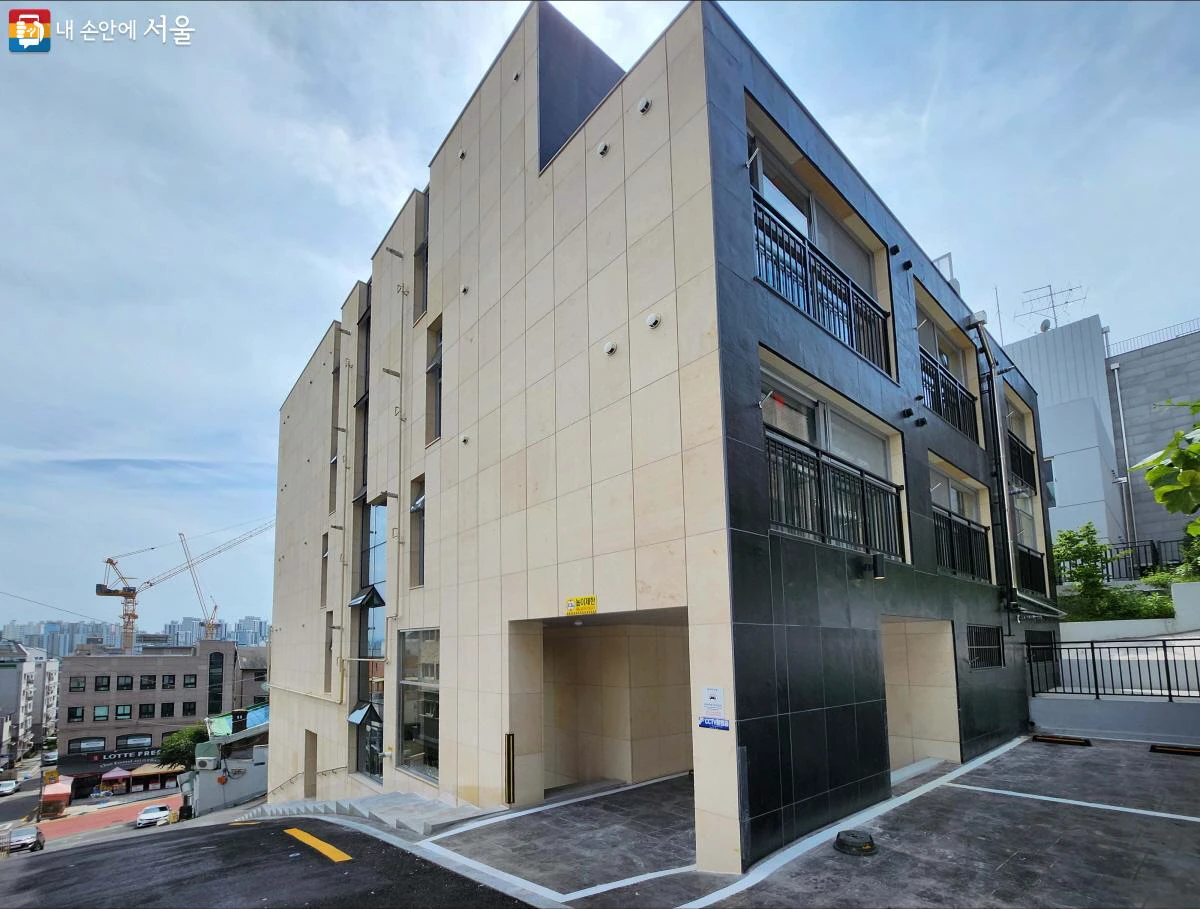
This five-floor building in Eunpyeong-gu contains 22 homes and a community room. Its exterior is a useful reminder that a property advertised colloquially as a villa may have a more precise registered category. Ask the agent for the exact use shown on the building register (건축물대장).
Officetel: housing in a business-facility category
오피스텔 (officetel) combines office and hotel, but many officetels are used as compact homes. The same Building Act appendix places officetels under general business facilities, describing buildings primarily for work that may allow accommodation in some individually leased or sold sections when they meet national standards. The Seoul Metropolitan Government's housing guide likewise describes an officetel as an office-and-residence form.
That classification can affect practical details. Do not assume an officetel will be handled exactly like an apartment for every administrative, utility, tax, or financing question. Before signing, verify the registered use, whether you can register your address, the management-fee breakdown, heating and utility arrangements, parking, and the documents needed to protect your deposit. The national census FAQ even counts officetels under places other than housing for its dwelling-type statistics, showing how everyday residential use and administrative classification can diverge.
One-room: a layout, not a building type
원룸 (one-room) normally means a studio-style unit whose sleeping and living area share one main open space, with a separate bathroom. The kitchenette may be in that same space or along a short entrance corridor. A one-room can sit inside an officetel, villa-type low-rise building, or another registered residential category.
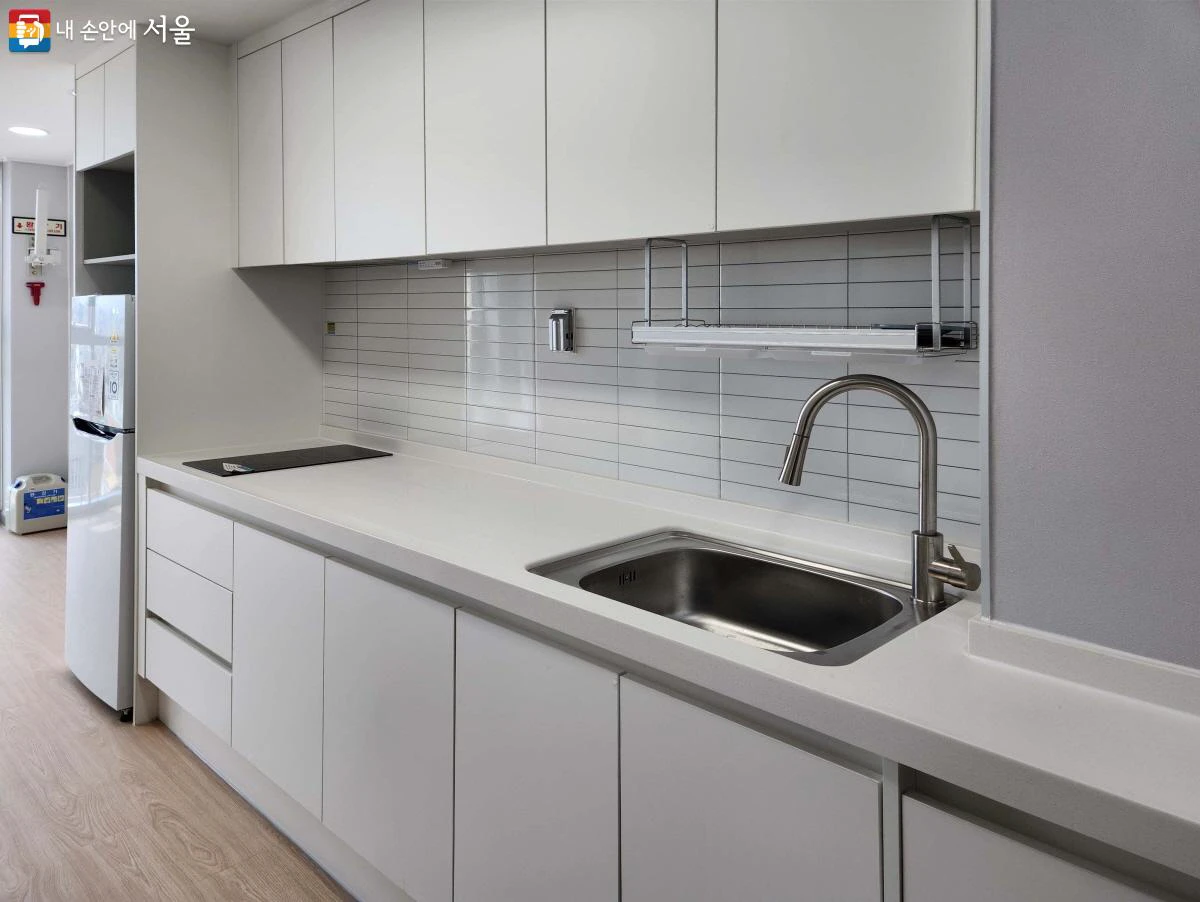
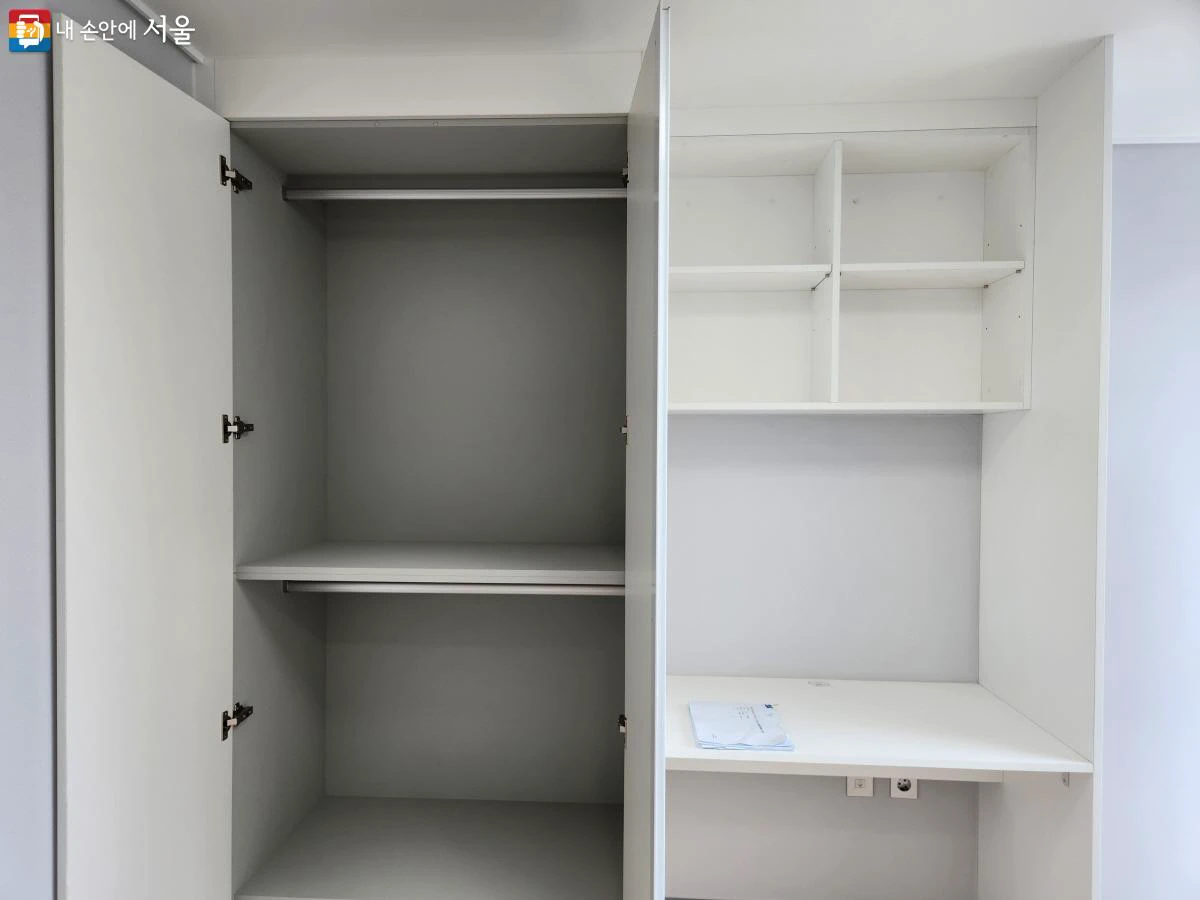
These two views are from a compact public-rental unit in the same Eunpyeong-gu building shown above. The kitchenette and built-in storage show why the layout label alone is not enough: two one-room units can feel very different depending on usable floor area, storage, appliance placement, windows, and the shape of the main room.
Treat 1.5-room as a marketing description rather than a dependable legal standard. It often suggests a partial divider or a small separated sleeping area, but the floor plan decides what you actually get. Likewise, two-room does not reliably mean two bedrooms in the English-language sense. Inspect the plan and count the spaces yourself.
Verify the property, not just the headline label
Before paying a holding deposit or signing a contract, ask the agent to show you the documents and the exact unit. Check:
- Registered building use: the entry on the 건축물대장, not only the app category
- Exclusive area (전용면적): the space reserved for your unit rather than the headline supply area
- Actual layout: doors, windows, kitchen position, storage, and whether a loft or divider is usable
- Furniture and appliances: which items remain and who repairs them
- Management fee: the fixed amount, what it includes, and recent utility costs
- Daily access: elevator, parking, parcel storage, security, and rubbish area
- Address registration: whether 전입신고 is possible for this unit and intended use
- Deposit protection: ownership, senior claims, and the documents required for your contract type
If the app says one thing and the official register says another, stop and get a clear explanation before transferring money. A convenient way to remember the system is: building label + layout label + payment label. Read all three, then let the register, floor plan, and contract settle the details.
Photo credits
- Featured Pangyo apartment-complex photo: 오재순 via Wikimedia Commons, licensed under CC BY-SA 3.0.
- Eunpyeong-gu low-rise building, kitchenette, and storage photos: 조시승 via Seoul MediaHub; used with written operator permission.
Sources and asset credits
- Building Act Enforcement Decree, Appendix 1 — Current statutory building-use categories; rechecked August 12, 2026
- Eunpyeong-gu low-rise image — Delivery Spot licensed Seoul MediaHub asset
- Seoul types of residence guide — Official English-language housing context
- Statistics Korea census FAQ — Administrative dwelling-type treatment of officetels
- Kitchenette image — Delivery Spot licensed Seoul MediaHub asset
- Built-in storage image — Delivery Spot licensed Seoul MediaHub asset
- Featured Pangyo apartment photo — 오재순 via Wikimedia Commons
- CC BY-SA 3.0 licence — Featured-image licence
- Seoul MediaHub photo source — 조시승; operator permission
- Cover image — Delivery Spot licensed featured asset
Last updated


