
Is Seoul Still Hard for Vegetarian Travelers?
Seoul is manageable with one verified meal anchor a day. Compare vegan restaurants, temple food and ordinary kitchens, then plan for stock, sauces and group-order rules.
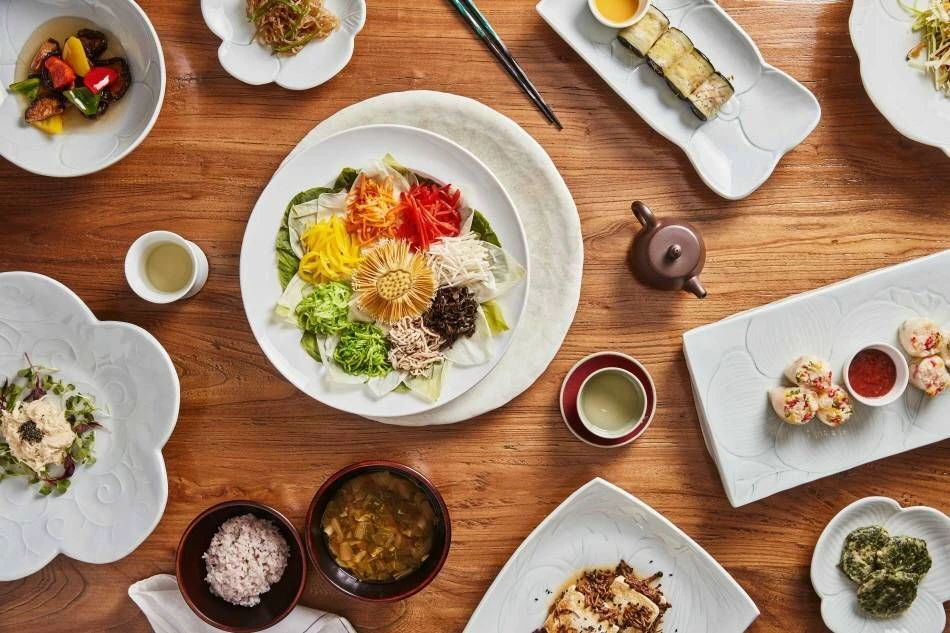
Seoul is no longer a difficult city for vegetarian travelers who plan one dependable meal each day. It can still be frustrating for a strict vegetarian or vegan who expects to enter any ordinary Korean restaurant and improvise: a dish with no visible meat may contain anchovy stock, fish sauce, shrimp paste, egg, or a pre-mixed sauce.
The honest answer therefore depends on your boundary and your travel style. A pescatarian who accepts fish seasoning has far more spontaneous options than a vegan who avoids every animal ingredient. Dedicated vegan restaurants and temple-food dining make Seoul workable; unplanned neighborhood meals remain the weak point.
Define your boundary before choosing restaurants
Write down what you do and do not eat before the trip. “Vegetarian” is too broad for a busy kitchen to interpret safely.
- Pescatarian: accepts fish and seafood, but not meat.
- Lacto-ovo vegetarian: avoids meat, fish and seafood, but accepts dairy and egg.
- Vegan: avoids meat, fish, seafood, dairy, egg and other animal-derived ingredients.
- Personal boundary: decide how you treat fish sauce, anchovy stock, shared fryers, shared utensils and trace ingredients.
Contradictory traveler reports often describe different boundaries. In one r/koreatravel discussion about vegetarian food in Korea, the original poster found meals easier than expected while accepting eggs and some fish-based seasoning; commenters pointed out that fish cake, shrimp paste and broth can remain hidden. In a separate Seoul vegetarian dining thread, stricter travelers described detours, closed listings and snack-based meals when they had not planned.
Both can be accurate. Seoul offers very good vegetarian food, but strict, spontaneous dining is not equally easy in every neighborhood.
Use dedicated vegan restaurants as meal anchors
A fully vegan restaurant removes most uncertainty about stock, kimchi seasoning, egg and batch preparation. Seoul's official tourism listings now include multiple specialist venues across neighborhoods, so you do not need to build an entire trip around one restaurant. You do need to match each day's anchor to where you will actually be.
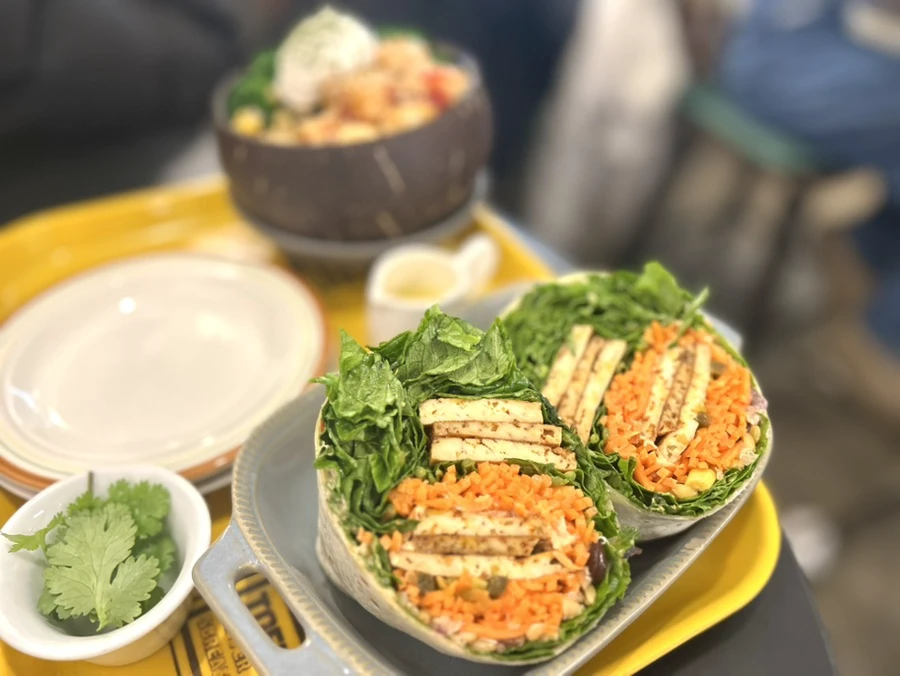
By Tofu in Haebangchon is one example. Its current Naver search result is the useful same-day check; its hours and closed days can change. Seoul's official tourism guide also listed the venue as a vegan tofu specialist in 2026. The photo above shows a tofu wrap photographed in January 2025, not a promise that the same menu item will always be available.
For a Korean set-meal experience, Visit Seoul's Maji listing, edited June 30, 2026, describes vegetable-centered dishes including burdock japchae, pear naengmyeon and set menus. The page displays schedule fields that do not fully agree with one another. Treat that conflict as a warning: use official guides for discovery, then confirm the live place page or restaurant channel on the day.
Specialist restaurants still have trade-offs. They cluster in particular areas, may take a break between lunch and dinner, and can close on weekdays that surprise visitors. Save two options near the day's main neighborhood rather than one restaurant on the other side of Seoul.
Temple food is a strong traditional option—with a dairy caveat
Korean temple food offers a composed, traditional meal without meat or seafood. The official VISITKOREA temple-food guide says the tradition excludes animal-based ingredients except dairy. It also avoids the five pungent vegetables used in Buddhist practice: green onion, garlic, chives, wild chives and Chinese squill.
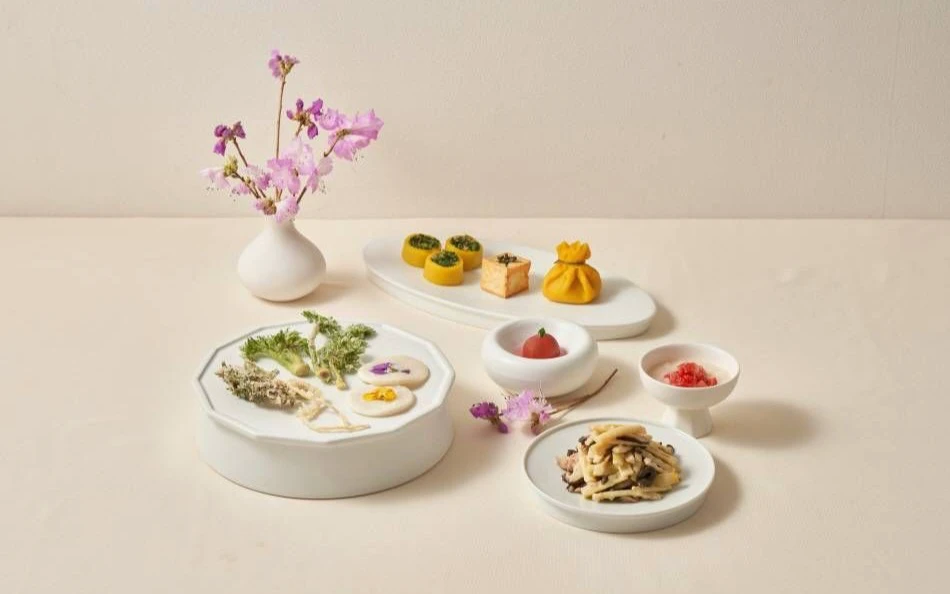
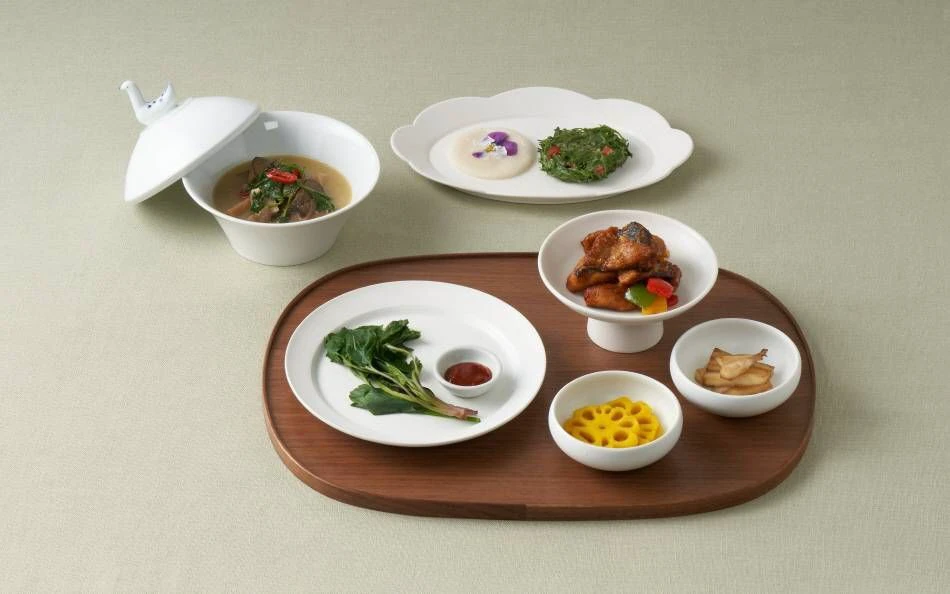
That definition makes temple cuisine dependable for many vegetarians, but “temple food” is not automatically a vegan certification. A strict vegan should still ask whether the specific course contains dairy. Diners with an allium allergy should also explain the allergy separately; a religious cooking tradition is not a substitute for an allergen procedure.
The same official guide identifies Balwoo Gongyang in Seoul as a public restaurant operated by the Jogye Order of Korean Buddhism. It offers composed courses, so check the current reservation method, course selection, price and meal duration rather than treating it as an inexpensive walk-in lunch. You do not need to stay overnight at a temple to experience temple cuisine.
Ordinary restaurants are where the difficulty remains
Removing visible beef from bibimbap does not change anchovy broth, fish sauce in kimchi, shrimp paste, dumpling filling or a sauce mixed earlier. Many components are prepared in batches before service. A polite request helps only when the kitchen can identify and change the whole preparation.
Ask about the base, not only the topping:
육수와 소스까지 고기, 생선, 해산물 없이 가능한가요?
Yuksuwa soseukkaji gogi, saengseon, haesanmul eopsi ganeunghan-gayo?
“Can this be made without meat, fish or seafood, including the stock and sauce?”
For vegan food, add:
계란과 유제품도 먹지 않아요.
Gyerangwa yujepumdo meokji anayo.
“I also do not eat eggs or dairy.”
For a strict boundary, show a short written card listing every excluded ingredient. Ask one complete question, then accept a clear “not possible.” If staff are unsure or the dish is batch-cooked, choose another meal instead of negotiating away ingredients one by one. Our guide to hidden non-vegetarian ingredients in Korean food explains common stocks, sauces and fermented seasonings.
Do not assume that these dishes are automatically vegetarian:
- bibimbap, because meat, egg and pre-seasoned vegetables vary;
- kimchi, because fish sauce or salted seafood is common;
- tteokbokki, because fish cake and anchovy broth are common;
- noodles and soups, because the stock may be meat or seafood based;
- jeon and fried food, because batter, filling and shared oil vary;
- side dishes, because visible vegetables do not reveal their seasoning.
This is an ingredient-verification issue, not a claim that every version contains animal products.
Mixed groups need a table plan
Many Korean restaurants expect each diner to order a main item, while barbecue and hot-pot venues may require shared minimum portions. If the menu has no suitable main, a vegetarian guest may not be able to join the table with only rice or side dishes. Read our guide to Korea's one-menu-per-person and minimum-order rules before making a meat-centered restaurant the group's only dinner plan.
The easiest compromise is to make one fully vegan or vegetarian restaurant a shared meal. Everyone can eat there; the reverse is harder. If the group chooses barbecue later, give the vegetarian traveler a proper meal first rather than expecting the grill restaurant to improvise dinner from banchan.
A low-stress one-anchor plan
You do not need to schedule every bite. Use this structure:
- Save one primary meal near the day's main area. Search Korean map apps for 비건 식당 (vegan restaurant), 채식 식당 (vegetarian restaurant), or 사찰음식 (temple food).
- Save one backup within the same neighborhood. A second restaurant 10 minutes away is more useful than a famous option across the city.
- Recheck on the day. Confirm the newest hours, break time, last order, reservation requirement and temporary closure notice.
- Carry a label-readable backup. Fruit, nuts, soy milk or another substantial packaged food can bridge a museum, hiking or late-arrival day. Ingredient formulas change, so read the current Korean label rather than relying on the front picture.
- Treat ordinary restaurants as a bonus. Use them only when staff can clearly confirm the stock, sauce and preparation.
A recent budget-travel community discussion illustrates why labels matter: the traveler initially described a vegetarian search, then clarified that they were pescatarian. Commenters repeatedly returned to fish-based broth and seasoning. Community posts are useful for lived experience, but they cannot certify today's menu or your dietary boundary.
The By Tofu wrap shown above was photographed by JENN and first published in the credited Naver Blog post; the image is retained with written permission.
So, is Seoul still hard?
- Vegan traveler with one meal anchor per day: manageable, with strong specialist choices.
- Lacto-ovo vegetarian who verifies broth and seafood seasoning: generally manageable.
- Pescatarian: substantially easier, though individual restrictions still need explaining.
- Strict vegetarian or vegan relying only on spontaneous ordinary restaurants: still difficult.
- Severe allergy or medically necessary avoidance: restaurant conversation alone may be insufficient; use a professionally translated allergy card and choose places with a clear allergen process.
The old warning is now too broad. Seoul is not a vegetarian-food desert. The remaining difficulty is the gap between plentiful destination restaurants and whichever ordinary restaurant happens to be nearby. One verified meal anchor, one nearby backup and a precise ingredient boundary keep food from controlling the whole trip.
If you are moving between neighborhoods with a suitcase, store it before a tightly timed reservation or a small upstairs restaurant. Find a nearby Delivery Spot luggage location.
Sources and image credits
- Visit Seoul — byTOFU — Official 2026 listing describing byTOFU as a vegan restaurant and giving venue details; live hours and closures should still be checked.
- Visit Seoul — Maji — Official description, dishes and set-meal context; edited June 30, 2026. Conflicting schedule fields are not reproduced as a dependable timetable.
- VISITKOREA — Korean Temple Food — Official definition, dairy exception, five pungent vegetables, Balwoo Gongyang operator and public restaurant context; checked August 12, 2026.
- Delivery Spot cover asset — Web-ready Korean temple-food overview credited by VISITKOREA to Korea Tourism Organization Photo Korea / Alexbundo; used under written operator permission.
- Delivery Spot body asset: By Tofu wrap — Photograph by JENN, originally published in the credited Naver Blog post; used under written operator permission.
- Delivery Spot body asset: Balwoo Gongyang small spring dishes — Balwoo Gongyang image distributed through VISITKOREA; vertically cropped for web presentation and used under written operator permission.
- Delivery Spot body asset: Balwoo Gongyang spring course — Balwoo Gongyang image distributed through VISITKOREA; used under written operator permission.
Last updated


