
Seoul, Gyeongju, Busan and Jeju: Is 10 Nights Too Much?
Ten nights is too tight for most first trips covering Seoul, Gyeongju, Busan and Jeju; 13–14 nights is more workable. Count five door-to-door moves before deciding which stop to remove.

With 10 hotel nights, Seoul, Gyeongju, Busan and Jeju are too compressed for most first trips. The four-stop route becomes reasonable at about 13–14 nights; on a shorter trip, remove Jeju first unless the island is the priority, in which case keep Jeju and drop Busan or Gyeongju.
The published train and flight times make the route look easier than it is. A useful plan counts five door-to-door moves, including checkout, terminal access, waiting, baggage and the final ride to the next hotel.
Count five moves, not three tickets
This itinerary usually contains all of the following:
- Incheon Airport → Seoul hotel: immigration and baggage, then the airport train or bus and the last walk or taxi. The Korea Tourism Organization airport guide lists the AREX Express at about 43 minutes from Terminal 1 to Seoul Station and 51 minutes from Terminal 2. Seoul Station is not the hotel door.
- Seoul hotel → Gyeongju hotel: checkout, the trip to Seoul Station, boarding time, KTX, local transport from Gyeongju Station and another check-in.
- Gyeongju hotel → Busan hotel: the intercity ride is short, but packing, reaching the terminal and crossing Busan to the next neighborhood still take part of the day.
- Busan hotel → Jeju hotel: travel to Gimhae Airport, domestic-flight procedures, the flight, baggage claim and the journey across Jeju.
- Jeju hotel → international departure: usually a domestic flight to Gimpo followed by an airport transfer when the long-haul flight leaves from Incheon, or a separately protected connection.
In the 10-night example below, those moves leave only six fully usable sightseeing days.
Gyeongju is the easier extra stop
Gyeongju fits the mainland sequence because it lies between Seoul and Busan. Gyeongju City's transport page gives approximate KTX times of 2 hours 10 minutes from Seoul and 30 minutes from Busan. It lists the express bus from Busan at about 50 minutes. Those are station-to-station or terminal-to-terminal figures.
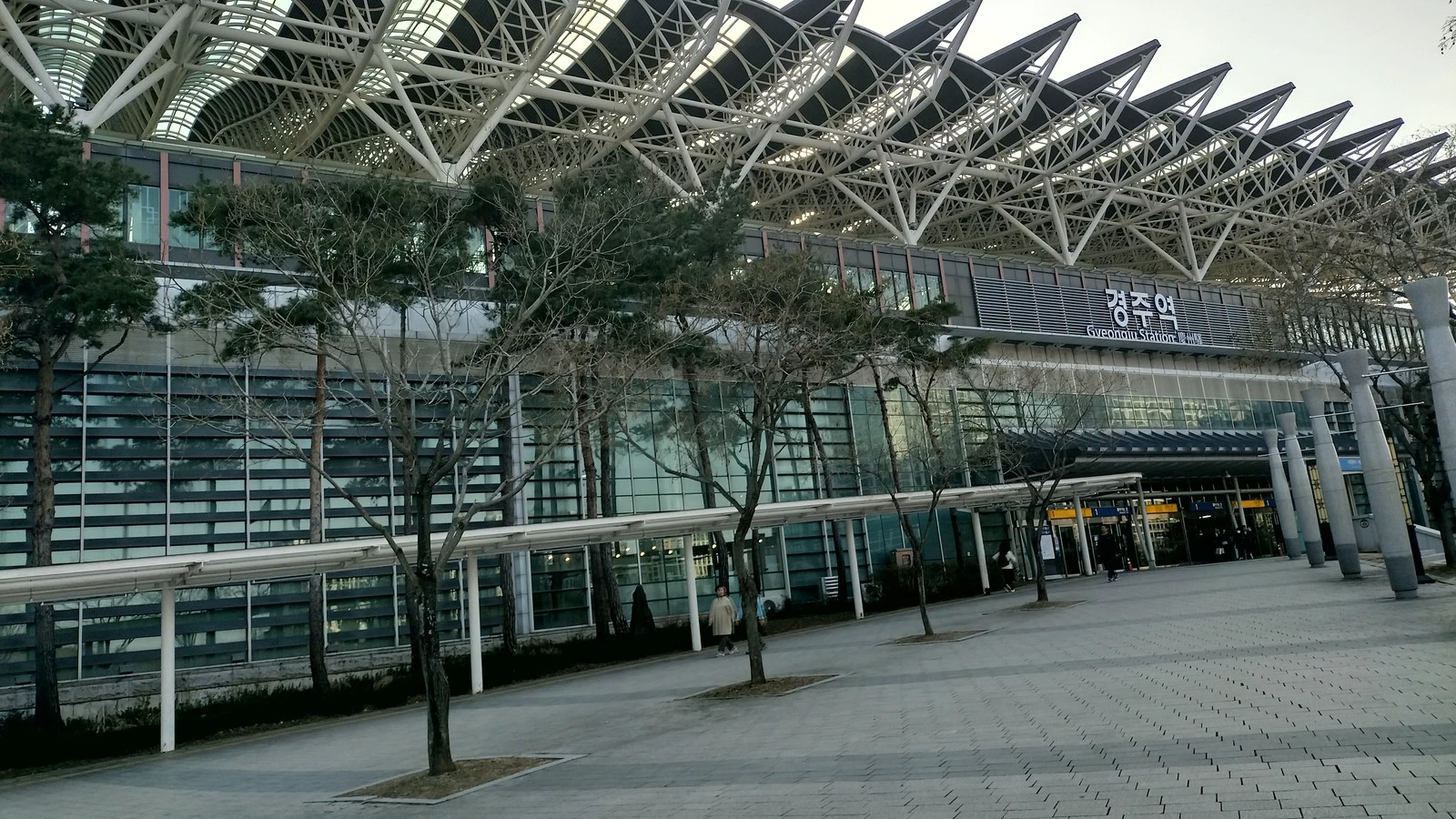
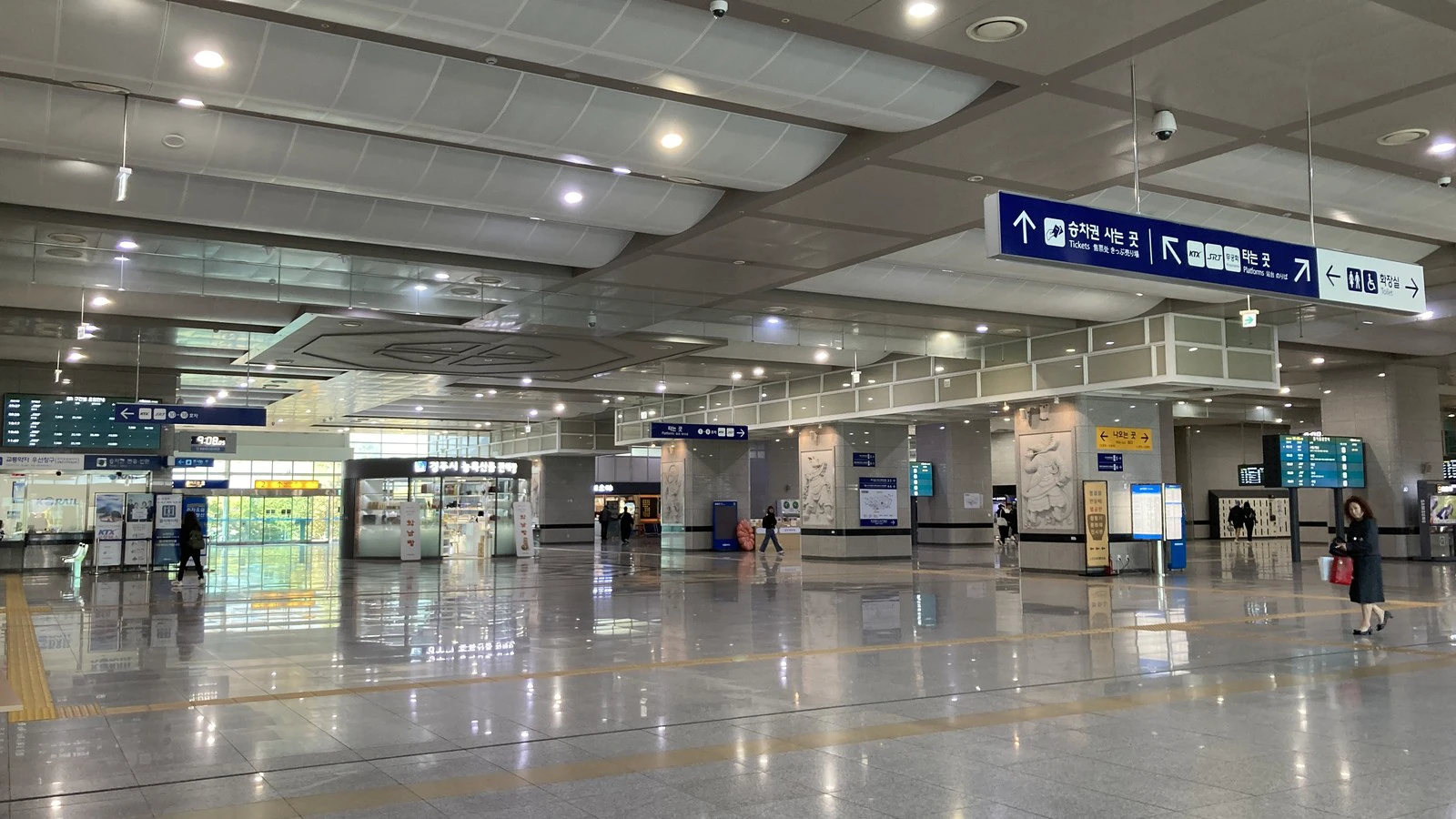
Gyeongju Station sits outside the historic center. Gyeongju Smart Tourism describes the station as inconvenient for travelers on foot and gives an approximate 40-minute interval for its sightseeing-bus route. For planning, allow roughly 30–45 minutes between the platform and the Hwangnidan-gil area, including a possible wait, then check live directions on the day. That allowance is not a timetable.
This is why the 30-minute KTX ride is not automatically the fastest hotel-to-hotel choice. The 50-minute intercity bus may work better when both bus terminals are closer to the two hotels. Compare the entire chain before booking.
One night in Gyeongju can work if you arrive early, keep the evening and continue to Busan the next day. A same-day detour with a suitcase is much less useful: the hotel night you saved becomes luggage time in the middle of sightseeing.
Jeju turns a short flight into a long transfer
Busan to Jeju is the move that breaks most compact plans. The same KTO airport guide estimates rail access to Gimhae Airport at about 30 minutes from Seomyeon, 50 minutes from Gwangalli and 70 minutes from Haeundae. You still need the airline's required airport margin, then baggage claim and island transport after landing.
The Korea Airports Corporation live Gimhae page separates self check-in, bag drop, identity check, security and boarding. Its displayed averages change with conditions and can differ from an individual passenger's time, so they are a live check rather than a promise.
A July 2026 first-person Naver report recorded an unusually fast carry-on-only trip: about 11 minutes from self check-in to the gate area at Gimpo and roughly five minutes from the aircraft to the exit at Gimhae. The writer also noted that checking and collecting a bag would take longer. Treat this as one quiet-airport example, not a planning baseline.
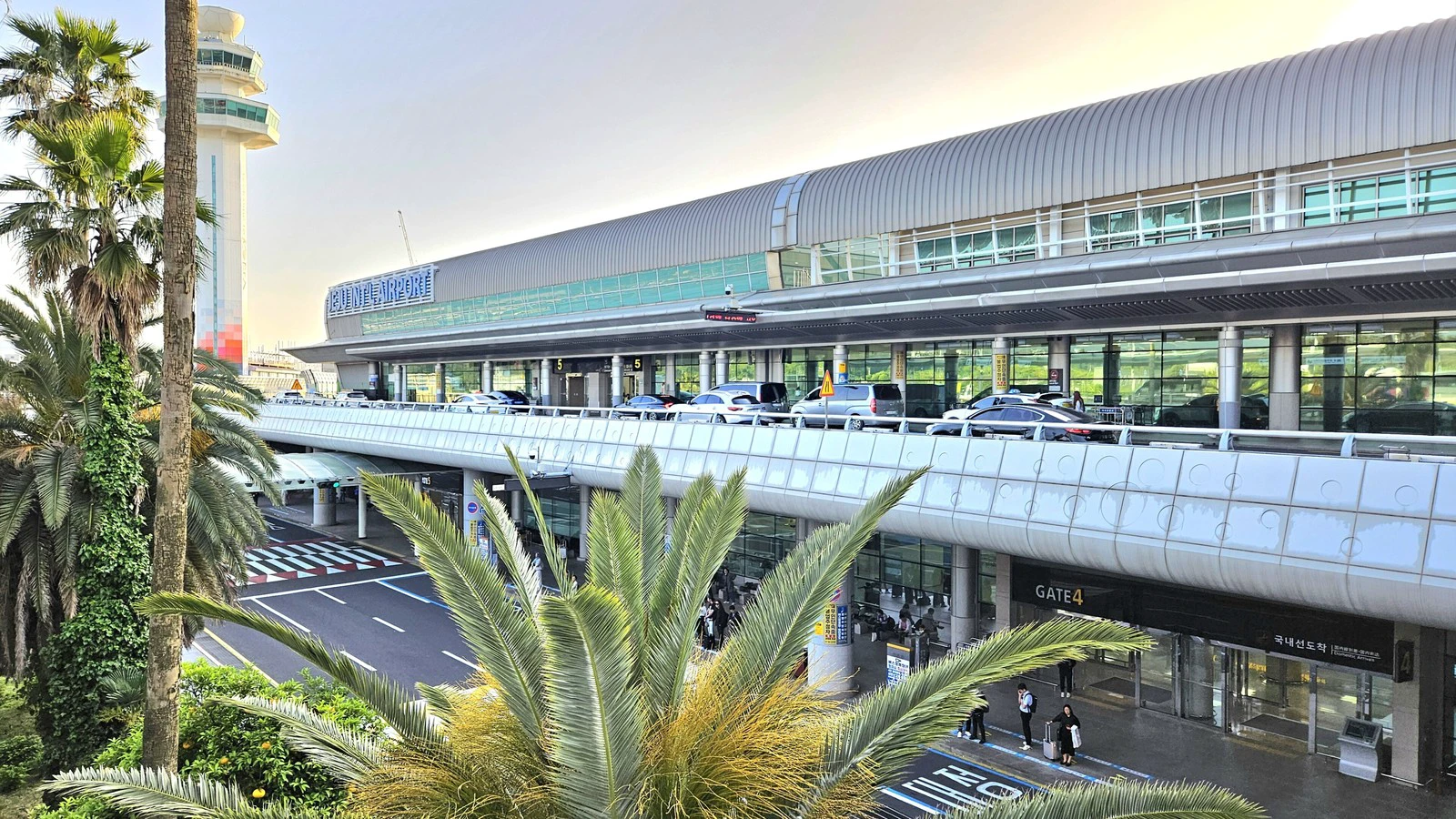
Jeju Airport is not the end of the transfer. The official airport page for bus 600 shows the route continuing through Jungmun to Seogwipo, with an operating interval of 16–40 minutes. A south-coast hotel can therefore add a wait and a substantial road leg after baggage claim.
Plan the final day carefully too. KTO's 2026 Incheon–Jeju notice states that the limited trial operated only through August 7, 2026. As checked on August 11, do not assume that direct route is available. Confirm the actual airports on both tickets; if the Jeju flight uses Gimpo and the international flight uses Incheon, leave a protected airport-change buffer or sleep in Seoul before departure.
What 10 nights actually gives you
Even an optimistic version with light luggage divides like this:
- Night 1: arrive and sleep in Seoul.
- Days 2–4: three full Seoul days.
- Day 5: Seoul to Gyeongju; the remainder is a partial day.
- Day 6: Gyeongju sights, then Busan; both cities share one day.
- Days 7–8: two full Busan days.
- Day 9: Busan to Jeju; much of the useful daytime is exposed to the airport chain.
- Day 10: one full Jeju day.
- Day 11: leave Jeju and connect to the international departure.
The route is possible, but Jeju receives one full day, weather has no spare day and the international connection is the weakest point. In a Reddit discussion after a 10-day Seoul–Jeju–Busan trip, one traveler said they felt tired and would choose two cities next time, while another participant found a similar route workable. These are individual experiences; the useful distinction is how much you dislike packing and partial days.
For 10 nights, a cleaner land route is Seoul 5 nights → Gyeongju 1 night → Busan 3 nights → departure, with the last night adjusted to the outbound airport. If Jeju is non-negotiable, use Seoul 5 nights → Jeju 4 nights → Seoul 1 night, or replace Busan with Jeju.
A workable 13–14-night version
At 13–14 nights, all four stops have enough room around the transfers. A fast but defensible split is Seoul 4 nights → Gyeongju 1 night → Busan 3 nights → Jeju 4 nights → Seoul 1 night. With a fourteenth night, add it to Gyeongju, Seoul or the final departure buffer according to your priorities.
Book from the least flexible connection outward. Check the exact Busan–Jeju flight first, then Gyeongju–Busan and Seoul–Gyeongju. The KTO train guide says tickets can usually be purchased from 07:00 one month before departure, but release details can change.
Before paying, write one line for each relocation:
- Leave the hotel: checkout and luggage collection.
- Reach the terminal: the real door-to-station or door-to-airport route.
- Wait: boarding, security and a missed-bus margin.
- Ride: the published train, bus or flight time.
- Reach the next bed: local transport, baggage and check-in.
If two consecutive days are mostly relocation lines, the itinerary has already shown you which stop to remove. Compare regional costs in our realistic two-week Korea budget guide, or choose a simpler land sequence from five realistic 10-day Korea itineraries.
Sources and image credits
- Korea Tourism Organization airport transportation guide — AREX and Gimhae Airport access times checked August 11, 2026
- Gyeongju City directions — approximate KTX and express-bus journey times checked August 11, 2026
- Gyeongju Smart Tourism station bus guide — station location and approximate sightseeing-bus interval checked August 11, 2026
- Korea Airports Corporation Gimhae boarding-process page — live process stages and limitations checked August 11, 2026
- Korea Airports Corporation Jeju bus 600 guide — route and operating interval checked August 11, 2026
- KTO 2026 Incheon–Jeju trial notice — trial dates checked August 11, 2026
- KTO train guide — usual ticket-release window checked August 11, 2026
- Naver first-person domestic-flight report — attributed carry-on-only experience, not used as a timetable
- Reddit itinerary discussion — attributed, differing traveler experiences
- Published KTX cover image — Delivery Spot crop of the credited source below
- Featured KTX photo by revi — CC BY 2.0 KR, cropped by Delivery Spot
- Gyeongju Station exterior by にのへ — CC0 1.0, cropped by Delivery Spot
- Gyeongju Station concourse by Nick-D — CC BY-SA 4.0, cropped by Delivery Spot
- Jeju Airport photo by Kimhs5400 — CC BY 4.0, cropped by Delivery Spot
Last updated


