
Five Realistic 10-Day South Korea Itineraries—and the Transfer Time Each Costs
Compare five realistic 10-day Korea routes by night split, door-to-door transfer burden, and the interests that justify Seoul, Busan, Jeju, Gyeongju, Jeonju, or Gangneung.
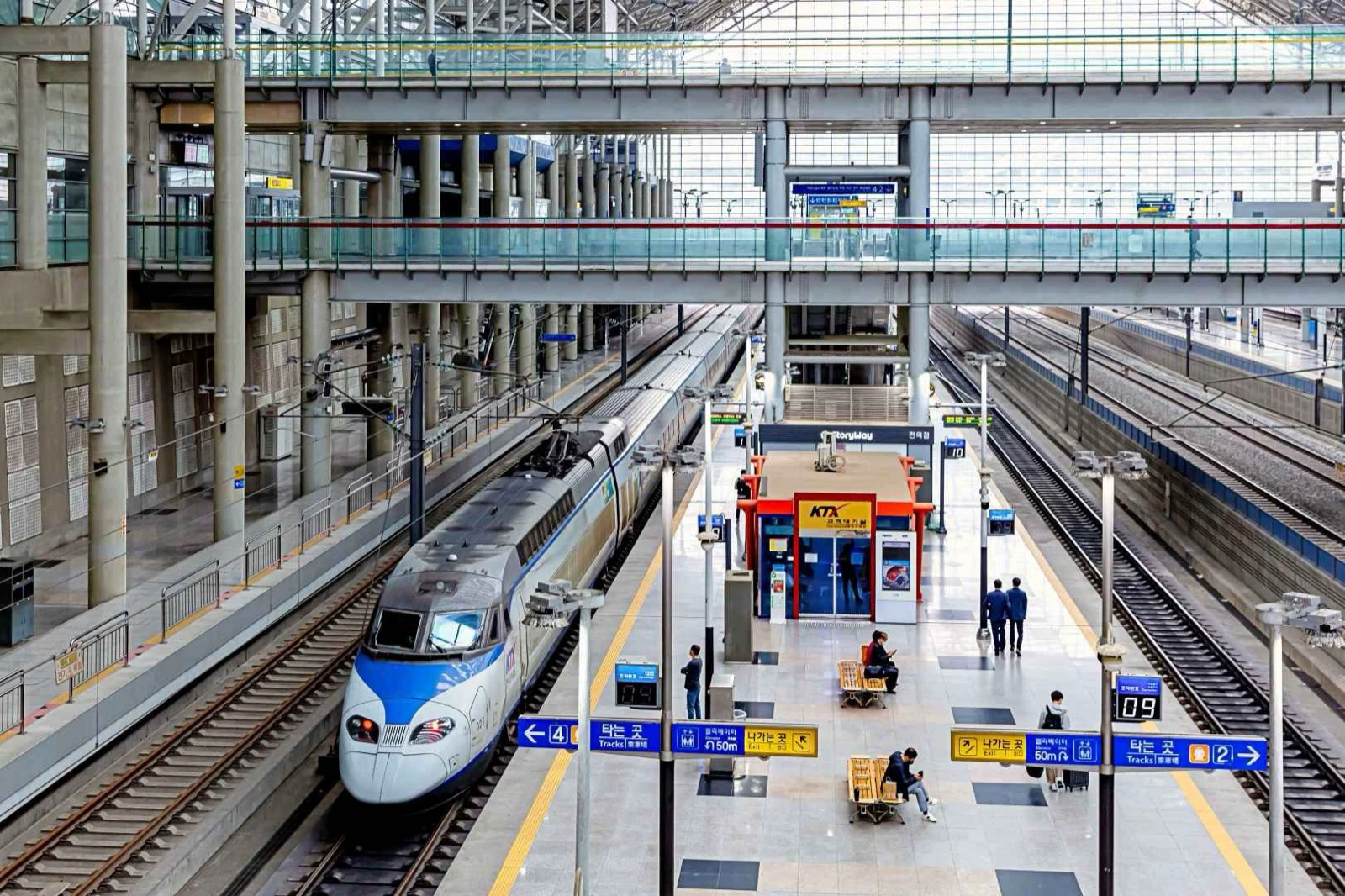
For a first 10-day trip to South Korea, the cleanest default is five nights in Seoul, three in Busan, and one final night in Seoul. It gives both cities useful time while limiting the trip to one long-distance move in each direction. Choose Jeju only when the island is a priority, and add Gyeongju only when history matters enough to justify another hotel change.
These plans assume 10 calendar days and nine hotel nights, with an international arrival and departure in the Seoul area. An evening arrival and a morning departure can reduce that to about eight usable sightseeing days. If the international flight leaves from Busan or connects cleanly with Jeju, the final Seoul night may not be necessary.
Compare the five routes first
| Route | Night split | Long-distance travel | Best for |
|---|---|---|---|
| Seoul + Busan | Seoul 5 → Busan 3 → Seoul 1 | Two KTX journeys | The easiest two-city first trip |
| Seoul + Jeju | Seoul 4 → Jeju 4 → Seoul 1 | Two airport moves and two flights | Island landscapes and outdoor days |
| Seoul + Gyeongju + Busan | Seoul 3 → Gyeongju 2 → Busan 3 → Seoul 1 | Three rail legs and three check-ins | History plus a major coastal city |
| Seoul + Jeonju | Seoul 5 → Jeonju 3 → Seoul 1 | Two rail journeys | Food, hanok, and a slower pace |
| Seoul + Gangneung | Seoul 5 → Gangneung 3 → Seoul 1 | Two direct rail journeys | East-coast scenery without an airport |
The official VISITKOREA trip-length guide, last updated in September 2025, recommends limiting a 6–10 day trip to two areas when staying within one broad route. That is a useful ceiling, not a rule: the Gyeongju–Busan combination works because both cities sit on the same rail corridor.
1. Seoul + Busan: the lowest-friction first trip
Night split: Seoul 5 → Busan 3 → Seoul 1
Transfer burden: Low; one long-distance move each way
Planning allowance: About half a day door to door for each move
VISITKOREA lists the KTX from Seoul Station to Busan Station at approximately three hours. The train therefore fits inside a useful day: leave after breakfast, reach the hotel in the afternoon, and keep the evening for the neighborhood around the accommodation.

Busan itself is more spread out than the intercity timetable suggests. Haeundae and Gwangalli are east of Nampo, Jagalchi, and Gamcheon. Group the eastern beaches on one day and the older downtown area on another instead of crossing the city repeatedly. The official Busan transport overview is a useful orientation, but live journey times should come from the map app used during the trip.
This route is strongest when the goal is two genuinely different cities without turning several mornings into checkout mornings. If the international flight leaves from Gimhae or another southeastern airport, compare an open-jaw ticket before automatically returning to Seoul.
2. Seoul + Jeju: choose it when the island is the point
Night split: Seoul 4 → Jeju 4 → Seoul 1
Transfer burden: High; airport access, check-in, baggage, the flight, and local transport at both ends
Planning allowance: Usually most of a travel day across the two hotel doors
The flight itself is short, but the move is not. A typical Seoul–Jeju transfer includes travel to Gimpo, airport processing, baggage collection, and a bus, taxi, or rental-car shuttle after landing. Recent Korean trip reports treat the rental-car return, shuttle, and terminal sequence as a separate part of departure day (airport and rental-car return report; arrival and pickup report). These are individual experiences, so use them to identify steps rather than predict an exact duration.
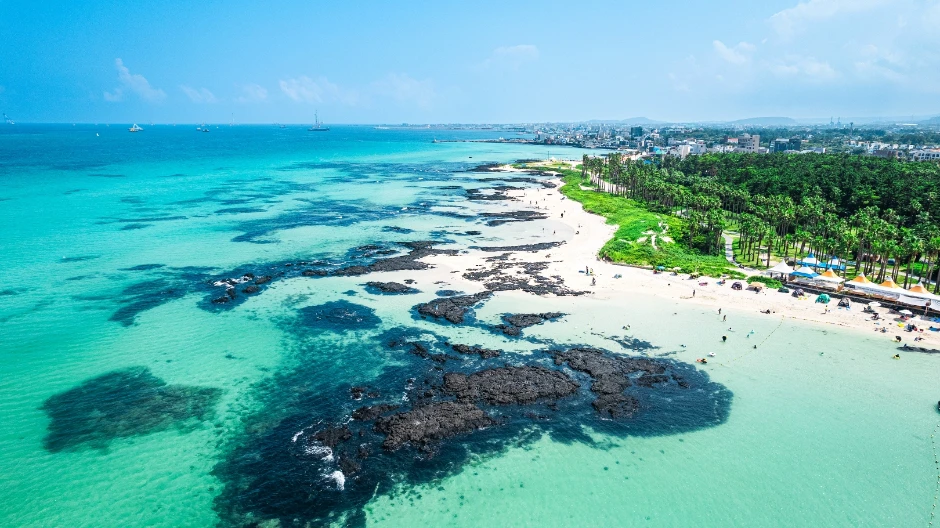
Four nights produce three full island days and make the transfer overhead easier to justify. Two nights usually leave only one full day between flights, especially when a rental car is involved.
There is now a limited Incheon–Jeju option, but it is not a daily connection. The current Jeju Air timetable lists flights on Mondays and Fridays from June 1 through October 24, 2026. The earlier VISITKOREA resumption notice showed a shorter operating period, so do not build the route from an article alone. Search the exact date on the airline site and leave a safe connection buffer before buying separate tickets.
3 and 4. Two history-led routes
Gyeongju fits naturally before Busan on the same rail corridor. Jeonju is the calmer alternative when one compact traditional-city stay matters more than adding another major city.
3. Seoul + Gyeongju + Busan: history on one rail corridor
Night split: Seoul 3 → Gyeongju 2 → Busan 3 → Seoul 1
Transfer burden: High; three rail legs and two hotel changes before the final Seoul night
Planning allowance: Three partial days, though the Gyeongju–Busan leg is short
The official Gyeongju guide gives about two hours by KTX from Seoul. The detail hidden by that number is the station handoff: Gyeongju Station is outside the central heritage area, so the route still needs a local bus or taxi after the train.
Korean travelers describe roughly 30 minutes by taxi between the station and central sights, while another recent account warns that desirable KTX departures can sell out when booked late (winter Gyeongju report; recent KTX booking report). Treat both as planning examples, then confirm the actual route and ticket inventory.
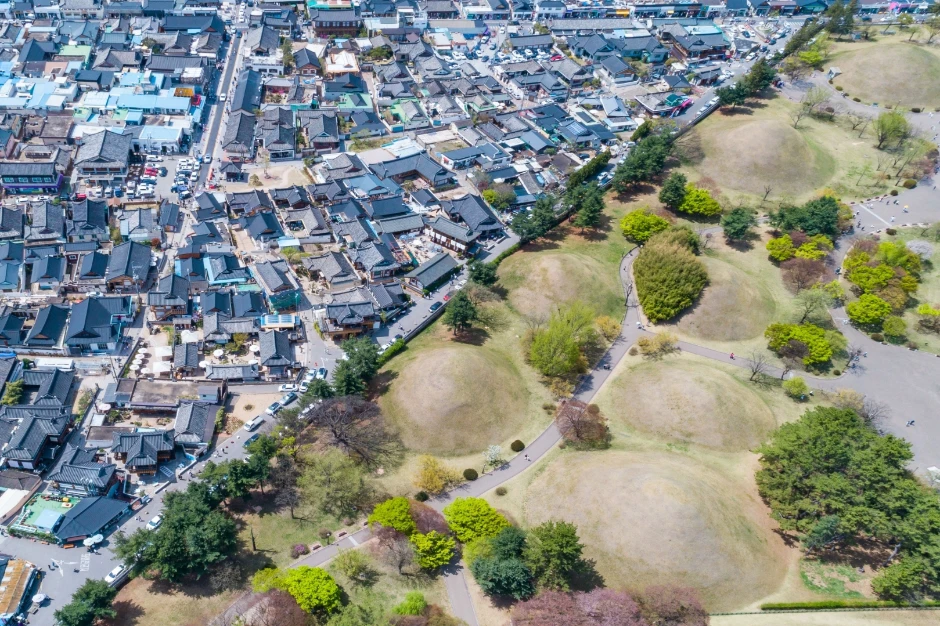
Two nights make the stop coherent. Check in once, spend the full day around Daereungwon, Hwangnidan-gil, and the nearby heritage area, then continue south to Busan. A same-day Seoul–Gyeongju visit followed by Busan is possible on a timetable but awkward with luggage and a missed connection.
4. Seoul + Jeonju: a smaller, slower trip
Night split: Seoul 5 → Jeonju 3 → Seoul 1
Transfer burden: Low to medium; one city change and a return
Planning allowance: About half a day in each direction
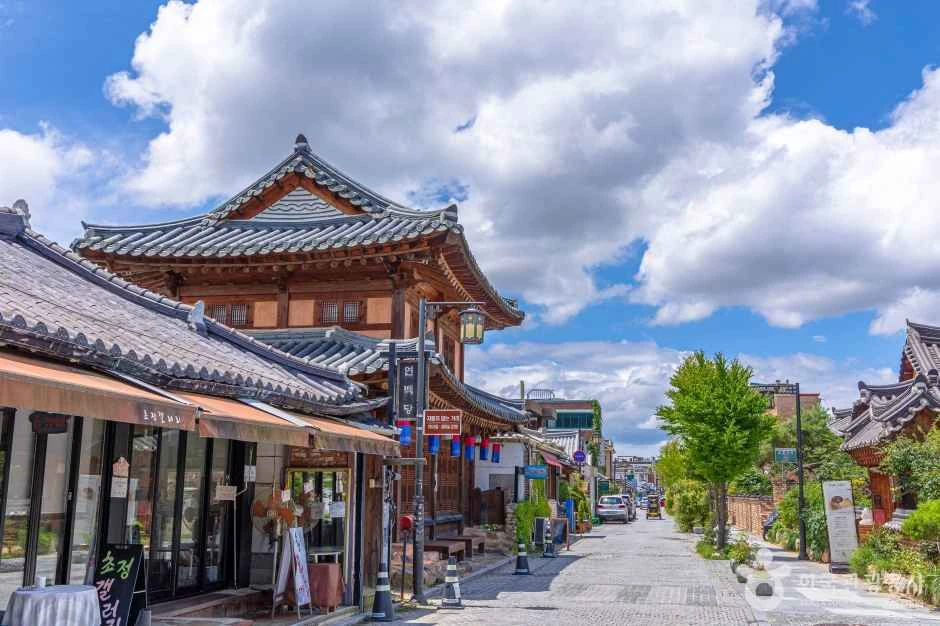
Direct trains normally make Jeonju reachable from the Seoul area in roughly two hours, depending on the service and departure station. Jeonju Station is not inside the hanok village, so include the final local transfer. The official Jeonju guide is best used for deciding what deserves time after arrival.
Three nights give two full days: enough to walk the hanok district without compressing every meal, then add markets, museums, or quieter streets outside its busiest core. Choose this over Gyeongju and Busan when food, a hanok stay, and an unhurried pace matter more than adding a second major city.
5. Seoul + Gangneung: the coast without an airport day
Night split: Seoul 5 → Gangneung 3 → Seoul 1
Transfer burden: Low; direct rail each way
Planning allowance: About half a day in each direction
The official Gangneung guide gives about two hours by KTX-Eum from Seoul. Gangneung's visitor areas are not one continuous walking district: the station and central market, Gyeongpo and Chodang, and Anmok each require a local handoff. Plan one coastal zone per half-day instead of bouncing among all three.
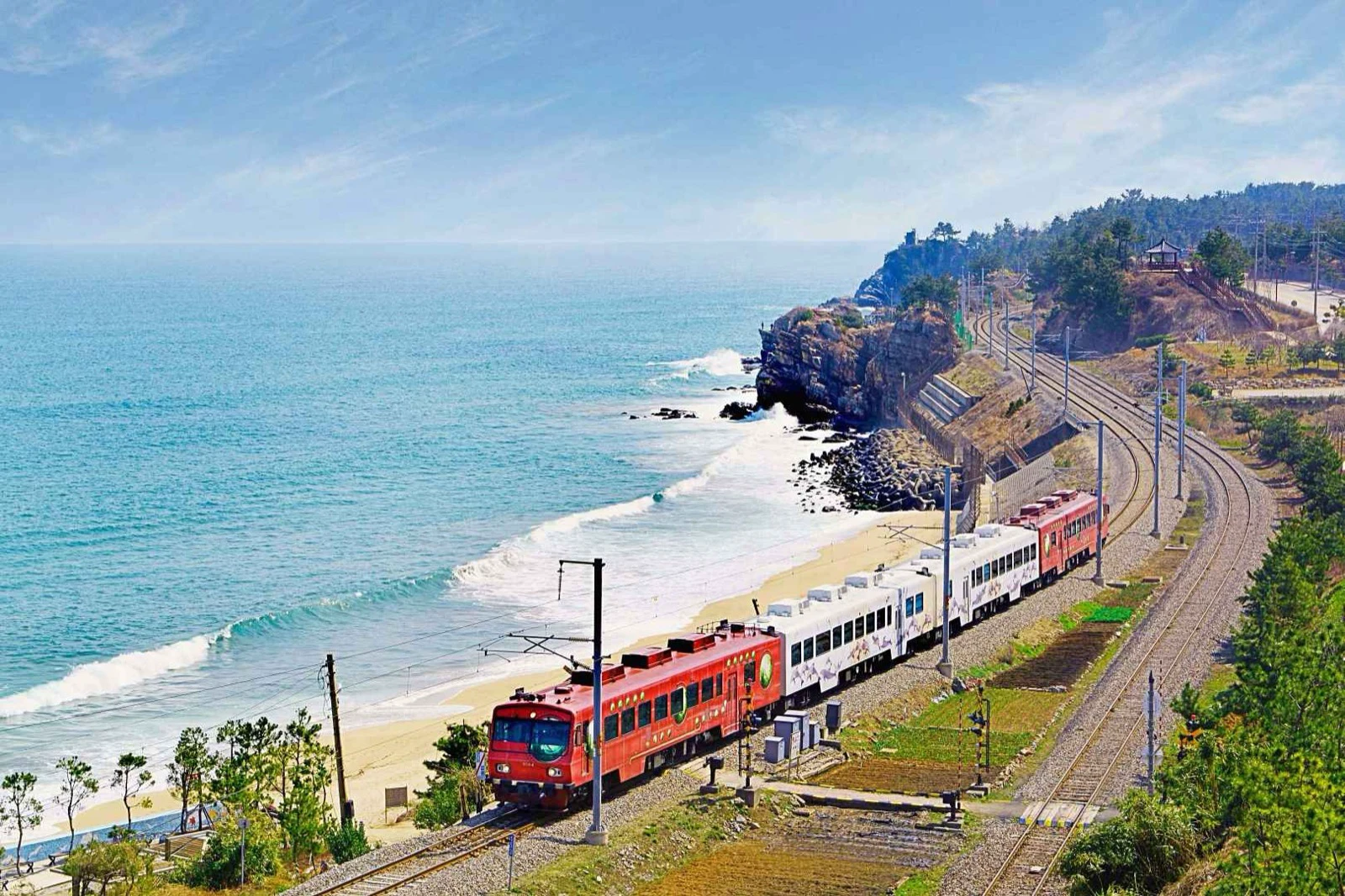
Three nights leave room for Jeongdongjin or another east-coast stop without turning the stay into an exhausting day trip. Since December 30, 2025, the Donghae Line KTX-Eum has also linked Busan's Bujeon Station with Gangneung in about 3 hours 50 minutes, with three trains in each direction daily according to the June 2026 VISITKOREA update. Adding that leg to a round trip through Seoul still creates a third long transfer, so it fits an open-jaw route better.
Why four destinations usually collapses
Seoul, Busan, Gyeongju, and Jeju can fit on a calendar only by creating consecutive transfer days. In one 2026 itinerary review, commenters recommended dropping Jeju or the Busan–Gyeongju portion after the proposed route left only one Jeju night. In another 10-day discussion, the most specific advice again separated Jeju from the Busan–Gyeongju pair. These are traveler opinions, not official rules, but they expose the same cost: airports and hotel changes consume usable days.
A practical ceiling is two bases plus the final airport night. The Seoul–Gyeongju–Busan route is the deliberate exception because the cities share a rail corridor. Jeju breaks that corridor and adds airport handling.
Book the international flights first, then the first and last nights, then the train or domestic flight that defines the route. Check departure times and seats on KORAIL; schedules and availability change. If checkout is in the morning and the flight leaves late, find a nearby place to leave your bags instead of carrying them through the final part of Seoul.
For a broader duration check, compare what 5, 7, 10, and 14 days in Korea actually allow. If the route still depends on the first destination, use the Seoul, Busan, or Jeju first-trip comparison.
Sources and image credits
- Delivery Spot cover image file — Web-ready copy of the KTX station image credited below.
- VISITKOREA — Trip length — Official guidance for the number of regions that fits a 6–10 day trip; rechecked August 11, 2026.
- VISITKOREA — Busan transport — Official Seoul–Busan KTX estimate and Busan arrival overview; rechecked August 11, 2026.
- VISITKOREA — Gyeongju guide — Official Seoul–Gyeongju rail estimate and destination overview; rechecked August 11, 2026.
- VISITKOREA — Jeonju guide — Official current destination guide for planning a Jeonju stay; rechecked August 11, 2026.
- VISITKOREA — Gangneung guide — Official Seoul–Gangneung KTX-Eum estimate and destination overview; rechecked August 11, 2026.
- VISITKOREA — Donghae Line update — June 2026 operating details for Bujeon–Gangneung KTX-Eum service.
- Jeju Air — 2026 route timetable — Airline timetable listing Incheon–Jeju flight 7C167 on Mondays and Fridays through October 24, 2026; rechecked August 11, 2026.
- VISITKOREA — Incheon–Jeju resumption notice — Background notice for the resumed route; its displayed end date is older than the current airline timetable.
- Jeju airport and rental-car return report — One traveler's description of the return, shuttle, and terminal sequence; used only as traveler perspective.
- Jeju arrival and rental-car pickup report — One traveler's description of the arrival handoff; used only as traveler perspective.
- Winter Gyeongju report — Personal example of the station-to-center taxi transfer; not treated as a fixed travel time.
- Recent KTX booking report — Personal example of late-booking seat constraints; current inventory must be checked on KORAIL.
- Reddit — Four-destination itinerary review — Traveler discussion showing the pressure created by a one-night Jeju stop and multiple transfers.
- Reddit — Ten-day route discussion — Traveler opinions comparing Jeju with the Busan–Gyeongju pair.
- KORAIL — Ticket search — Official place to verify live train schedules and seat availability.
- Busan Metropolitan City — Gwangalli Beach image — Photo by Summertree and Im Seong-hwan, resized under the license below.
- Korea Open Government License Type 1 — License terms for the Gwangalli Beach image.
- Korea Tourism Organization — Daereungwon — Source of the Daereungwon Ancient Tomb Complex image; resized.
- Korea Tourism Organization — Jeonju Hanok Village — Source of the Jeonju Hanok Village image; resized.
- Korea Tourism Organization — Hyeopjae Beach — Source of the Hyeopjae Beach image; resized.
- VISITKOREA — East Coast Train Trip — KTX station image credited to ClipartKorea and Jeongdongjin image credited to KTO Photo Korea–IR Studio; both resized.
Last updated


