
How Much of South Korea Can You See in 2 Weeks? A Realistic Range Beyond Seoul
With 13 hotel nights, most first-time visitors can comfortably combine Seoul with two regional bases. Three can work when the route follows one rail corridor; adding Jeju changes the calculation because a short flight still consumes much of a day door to door.

With 13 hotel nights, most first-time visitors can comfortably pair Seoul with two regional bases; three is possible when the route follows one corridor. Seoul, Busan, Gyeongju and Jeju can fit on paper, but the same plan can turn four or five half-days into packing, terminals and check-ins.
Fourteen calendar days usually includes an arrival day and a departure day. If you are flying long-haul, neither is a reliable sightseeing day, so plan with nights and full days rather than the number printed on the flight booking.
Start with hotel changes, not map pins
A relaxed two-week trip normally uses three places: Seoul plus two regions. A balanced trip uses four hotel stays but only three distinct places, because a final Seoul night protects an international departure. A fast trip uses four distinct places and asks you to enjoy repeated one- or two-night stays.
- Relaxed — Seoul 6 + one region 4 + another region 3: time for weather, laundry and unplanned evenings.
- Balanced — Seoul 5 + region 2 + region 4 + Seoul 2: three places and four check-ins, with enough full days.
- Fast — Seoul 4 + three regional stops of 2–3 nights + Seoul 1: workable with light luggage, but with little recovery time.
The destination count matters less than the line connecting it. Seoul–Gyeongju–Busan is one continuous rail corridor. Seoul–Jeonju–Yeosu is another sensible southwesterly direction. Seoul–Busan–Jeju–Gangneung is a zigzag, even though every individual ticket is easy to buy.
The southeast rail corridor gives you the most range
For a first trip, Seoul–Gyeongju–Busan is the cleanest way to cover a large distance without making the holiday feel like a transport project. The Korea Tourism Organization's train guide describes the Gyeongbu Line as the main Seoul–Busan axis. Its separate Gyeongju access guide puts the KTX journey from Seoul Station to Gyeongju Station at about two hours.
KTO lists the KTX ride from Seoul Station to Busan Station at about three hours, compared with roughly four hours by express bus. Those are vehicle times. From a Seoul hotel to a Busan hotel, four to five hours is a safer planning block once you add the trip to Seoul Station, boarding time and the final subway or taxi. Check the latest train rather than treating those examples as a timetable.
Gyeongju is the useful middle stop, but the station is not in the historic center. One Korean-language car-free Gyeongju trip report describes a 30-minute KTX delay followed by another 20–30 minutes on a local bus from the station toward Hwangnidan-gil. That is one person's journey, not a schedule promise; it is a good illustration of why station-to-hotel time belongs in the plan.
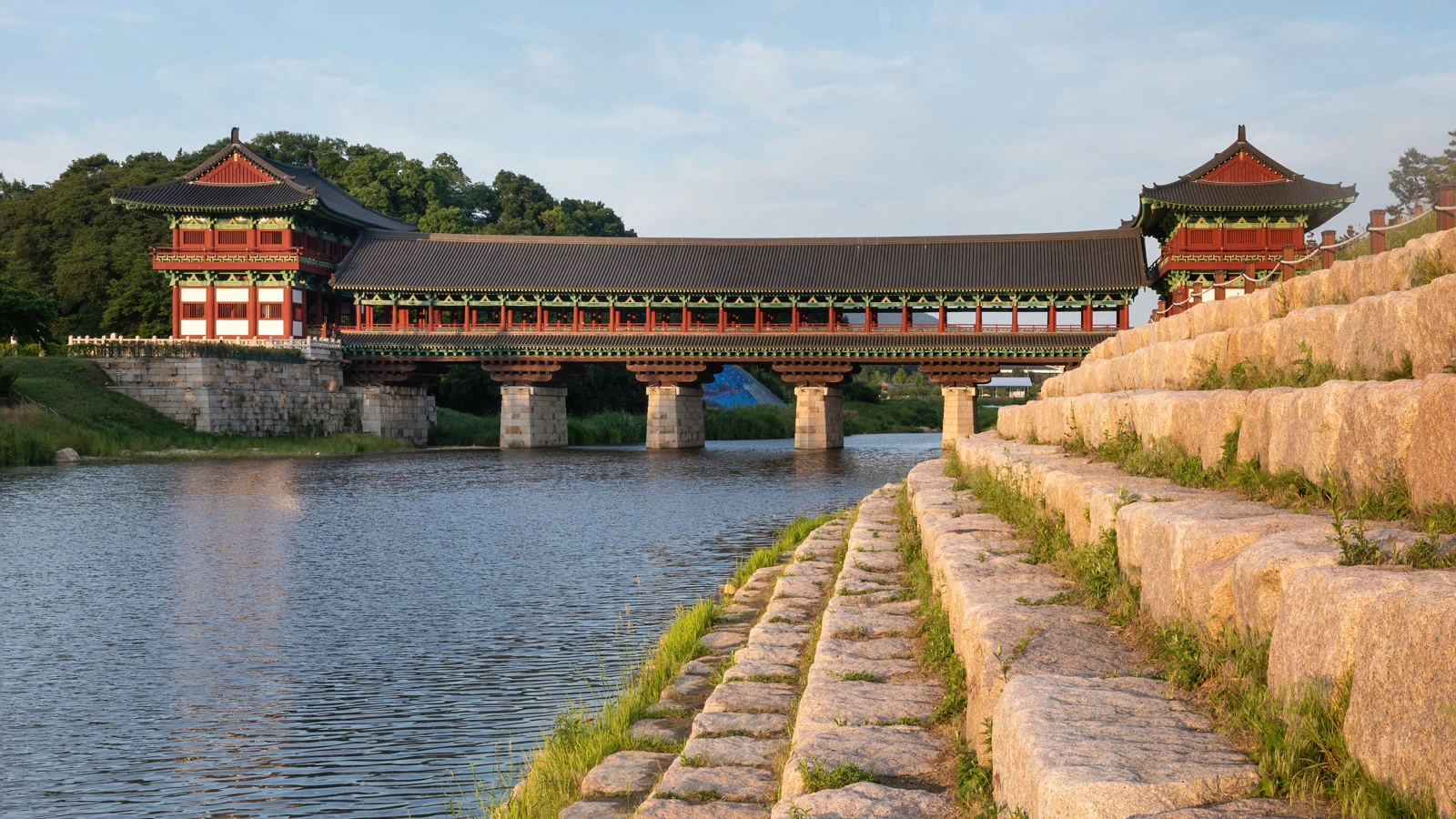
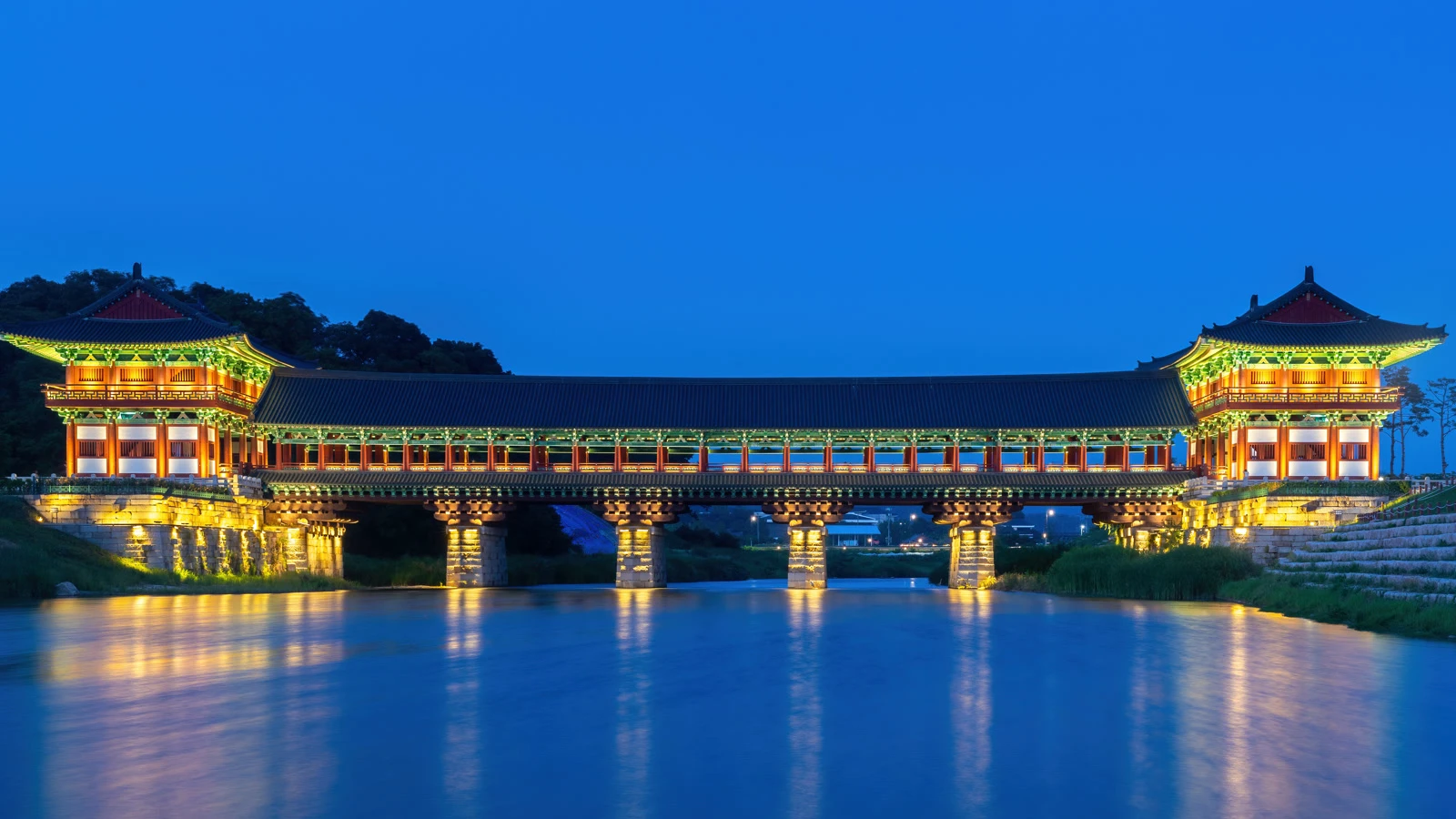
The same bridge before and after illumination also explains the real choice in Gyeongju. A Busan day trip can cover tombs, a museum and the historic center, but one overnight buys you the quieter evening and early morning without a new long-distance detour.
A balanced split is Seoul 5 nights → Gyeongju 2 → Busan 4 → Seoul 2. If you dislike changing hotels, use Seoul 6 → Busan 4 → Seoul 3, then make Gyeongju a day trip or leave it for another visit.
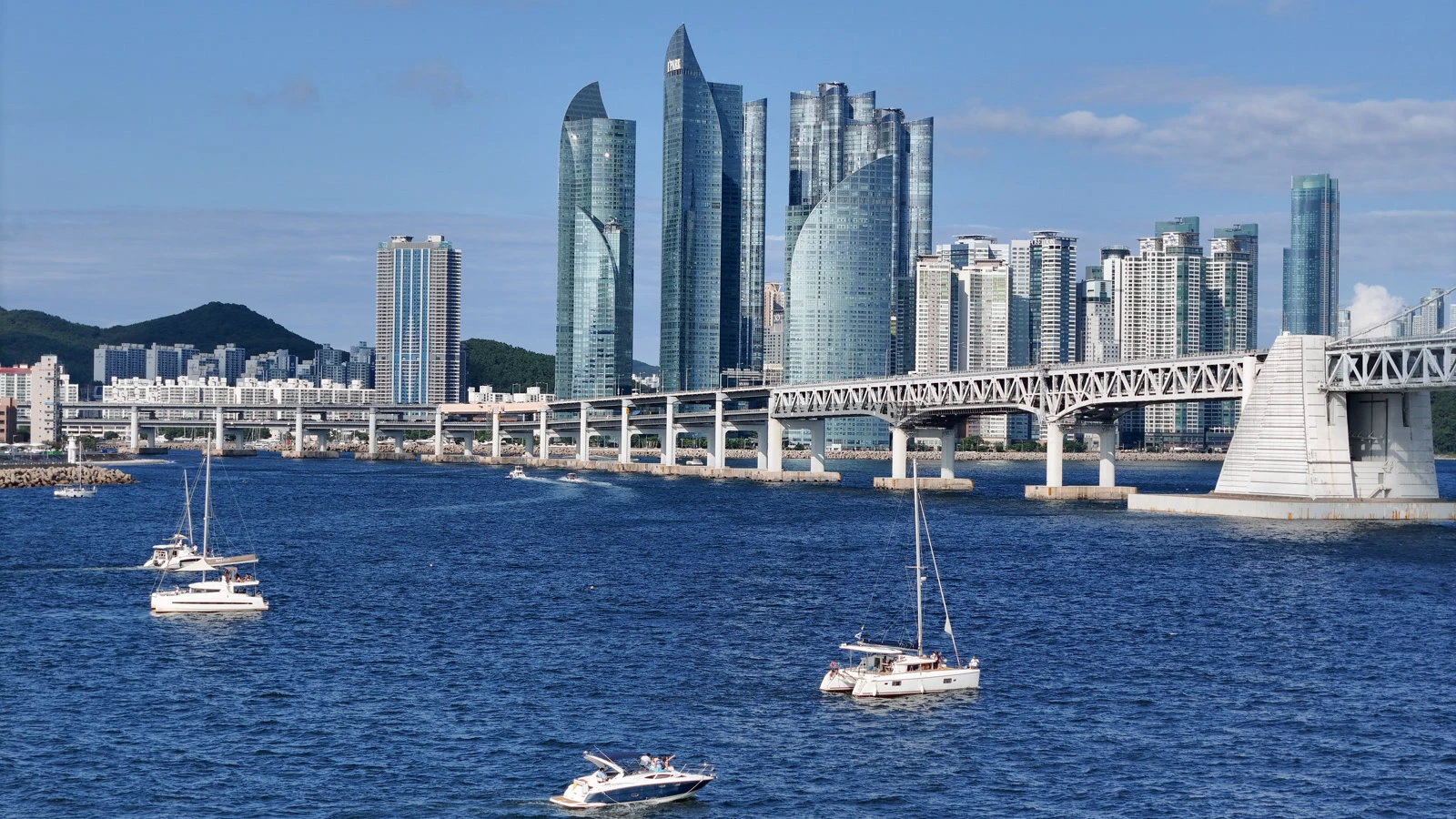
Do not treat Busan as a single beach stop. Gwangalli, Haeundae, the old port and Gamcheon sit across a wide city, so two nights often produces only one full day. In a recent 13-night itinerary discussion, opinions differed sharply, but one traveler who had just combined Seoul, Busan and Gyeongju said that alone already felt intense. It is individual experience, not a rule, and it is still a useful warning against counting only intercity mileage.
Jeju changes the calculation
A domestic flight may be short, but a Jeju transfer is not a one-hour event. Checkout, travel to Gimpo or Gimhae Airport, bag drop, security, the flight, baggage claim, the trip across Jeju and another check-in usually consume a large part of the day. Treat that as a half-day move and verify the actual date on the Korea Airports Corporation live schedule.
If Jeju is the place you are most excited about, keep it and remove a mainland stop. Seoul 6 → Jeju 5 → Seoul 2 is genuinely relaxed. Seoul 4 → Busan 3 → Jeju 4 → Seoul 2 is balanced but busy; adding an overnight in Gyeongju would turn it into a packing-heavy trip. A Gyeongju day trip from Busan is the least disruptive compromise.
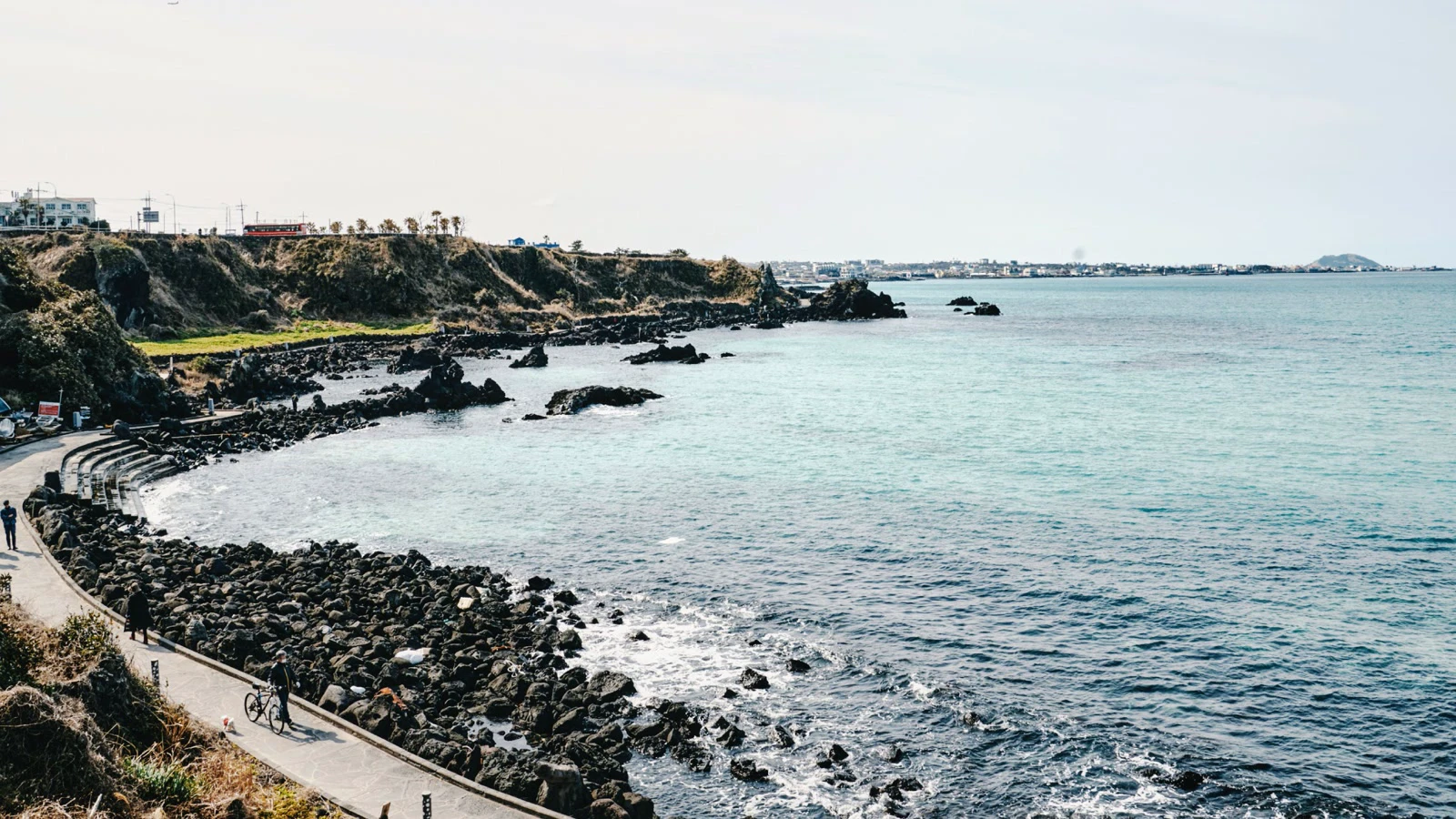
Jeju also rewards staying in one part of the island long enough to work with weather. The coast at Aewol, Hallasan and the eastern sights are not adjacent. Four nights does not mean four full island days if the first and last are airport days.
East or west works; zigzagging does not
You are not limited to the famous Seoul–Busan axis. For food, hanok streets and a slower urban base, Yongsan–Jeonju takes about 1 hour 40 minutes by KTX; KTO lists the Seoul–Jeonju express bus at about 2 hours 40 minutes. Its Jeonju access page also warns that estimates can change, which is especially relevant on road routes. Jeonju can lead naturally to Yeosu or Mokpo rather than backtracking east.
For beaches and cafés, Seoul–Gangneung followed by Sokcho is a coherent eastern branch. A more ambitious coast-to-coast trip became easier after the full Donghae Line KTX-Eum began operating on December 30, 2025. KTO's June 2026 guide gives about 3 hours 50 minutes between Busan's Bujeon Station and Gangneung, with six services in total—three in each direction. That makes Seoul–Gangneung–Busan possible, but the limited departures still need to fit your date.
Use these blocks when sketching the route. The first number is the published vehicle time; the second is a practical hotel-to-hotel allowance, not an official schedule.
- Seoul–Busan by KTX: about 3 hours on the train; allow 4–5 hours hotel to hotel.
- Seoul–Busan by express bus: about 4 hours on the bus; allow 5–6 hours.
- Yongsan–Jeonju by KTX: about 1 hour 40 minutes on the train; allow 3–4 hours.
- Seoul–Jeonju by express bus: about 2 hours 40 minutes on the bus; allow 4–5 hours.
- Bujeon–Gangneung by KTX-Eum: about 3 hours 50 minutes on the train; allow about 5 hours.
- Any mainland city–Jeju by air: flight time varies by origin and date; reserve at least half a day.
A bus can still be the better choice when its terminal is closer to your hotel or the rail route requires a transfer. Its weakness is predictability: a four-hour posted ride is not a four-hour hotel move when weekend road traffic and terminal access are included.
The route test that prevents an exhausting trip
Before booking, look at each relocation and ask whether the following day is still a full day in that place. If every regional stop has at least two nights, the route usually has room to breathe. A single Gyeongju night can work because it sits on the way to Busan; a single Jeju night rarely makes sense, because airport overhead is too large.
Also keep one Seoul night before a long-haul departure unless you have a confirmed through-ticket and a connection you are willing to risk. Putting the larger Seoul stay at the end has another practical benefit: shopping does not travel around the country with you.
KORAIL's reservation page allows schedule searches and ticket purchases up to one month before departure, though release details can change. Use the official KORAIL search for the exact date, and build the itinerary only after checking the departure that makes the sequence work.
If you are still deciding whether the trip needs a full fortnight, compare the trade-offs in our 5-, 7-, 10- and 14-day Korea guide. For a shorter version of the same regional choices, see five realistic 10-day Korea itineraries.
Transport times, operating frequency, and booking windows were rechecked on August 11, 2026. Published journey times are not promises: check the exact date with the operator before reserving accommodation around a particular departure.
Sources and image credits
- Delivery Spot cover image file — Web-ready KTX-Cheongryong cover image used by this guide.
- VISITKOREA — Train guide — Official overview of Korea's main rail lines and stations; rechecked August 11, 2026.
- VISITKOREA — Gyeongju access — Official Seoul–Gyeongju KTX planning time and access warning; rechecked August 11, 2026.
- KORAIL — Ticket search — Official schedule and ticket search used for date-specific planning; rechecked August 11, 2026.
- Traveler report — Car-free Gyeongju arrival — Individual example used only to illustrate delay and station-to-center steps, not to establish a timetable.
- Traveler discussion — 13-night Korea itinerary — Individual opinions used only as a planning-friction signal, not as official evidence.
- Korea Airports Corporation — Gimpo live schedule — Official date-specific flight lookup; rechecked August 11, 2026.
- VISITKOREA — Jeonju access — Official KTX and express-bus planning times, with a schedule-change qualifier; rechecked August 11, 2026.
- VISITKOREA — Donghae Line KTX-Eum — Official June 2026 travel time and three-services-per-direction frequency; rechecked August 11, 2026.
- Delivery Spot — Woljeonggyo by day — Published web asset derived from the credited Wikimedia Commons photograph.
- Delivery Spot — Woljeonggyo at night — Published web asset derived from the same credited Wikimedia Commons photograph.
- Delivery Spot — Busan skyline — Published web asset derived from the credited Busan Tourism Archive photograph.
- Delivery Spot — Jeju Handam coast — Published web asset derived from the credited Jeju Olle Foundation photograph.
- Takeshi Aida — Original KTX photograph — Cover-image source; cropped by Delivery Spot under the linked license.
- Creative Commons — CC BY-SA 2.0 — License for the credited KTX cover photograph.
- Basile Morin — Original Woljeonggyo photograph — Source of the day and night crops; cropped by Delivery Spot under the linked license.
- Creative Commons — CC BY-SA 4.0 — License for the credited Woljeonggyo and Jeju photographs.
- Busan Tourism Archive — Original skyline photograph — Source of the Busan crop; cropped by Delivery Spot under the linked license.
- Korea Open Government License — Type 1 — License for the credited Busan Tourism Archive photograph.
- Jeju Olle Foundation — Original Handam photograph — Source of the Jeju crop; cropped by Delivery Spot under the linked license.
Last updated


