
Seoul, Busan, or Jeju: Where Should You Go First in Korea?
Start with Seoul for the broadest first trip, Busan for an urban coast, or Jeju for hiking and island landscapes. Compare useful trip length, hotel location, transport friction, and weather flexibility.
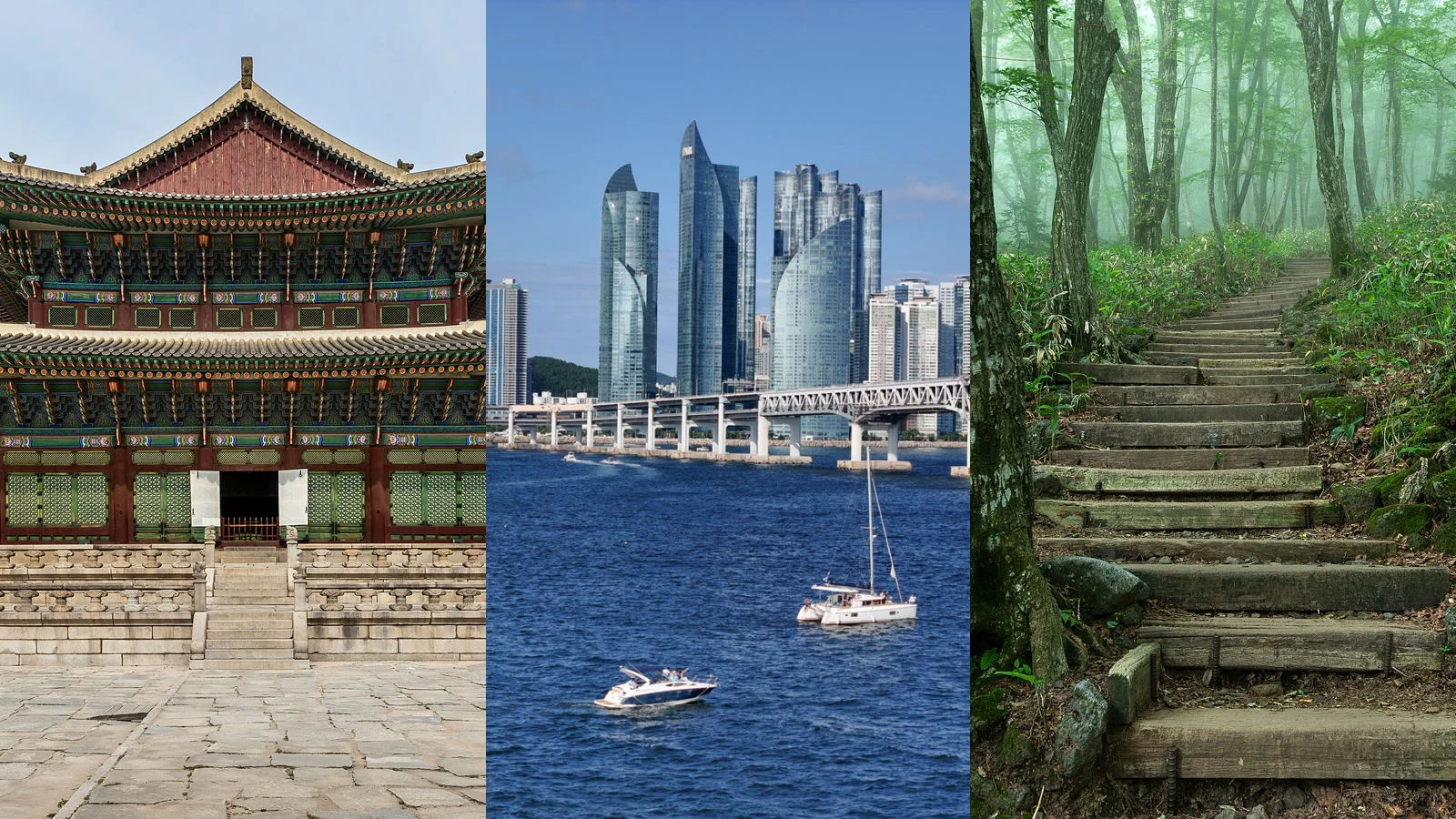
For the broadest first trip to Korea, start with Seoul. Choose Busan instead when an urban coast is the reason you are traveling. Choose Jeju when hiking, volcanic landscapes, and island time matter enough to accept longer daily transfers and a plan that may change with the weather.
This is not a ranking of which place is “best.” Seoul, Busan, and Jeju create three different trips. The right first stop depends on the days available, the transport effort you accept, and what you want to do after breakfast.
The one-minute decision
- Choose Seoul: you want palaces, neighborhoods, food, shopping, nightlife, museums, and easy changes of plan from one hotel.
- Choose Busan: beaches, seafood, markets, and a full-sized city should share the same trip.
- Choose Jeju: forests, oreum trails, lava coasts, and long outdoor days are the trip—not side excursions.
As a starting point, give Seoul three to five full days, Busan two to four, and Jeju at least three. These are planning ranges, not minimum-entry rules. Arrival time, hotel location, and the number of areas you cross matter more than an extra pin on the map.
Seoul is the safest first choice
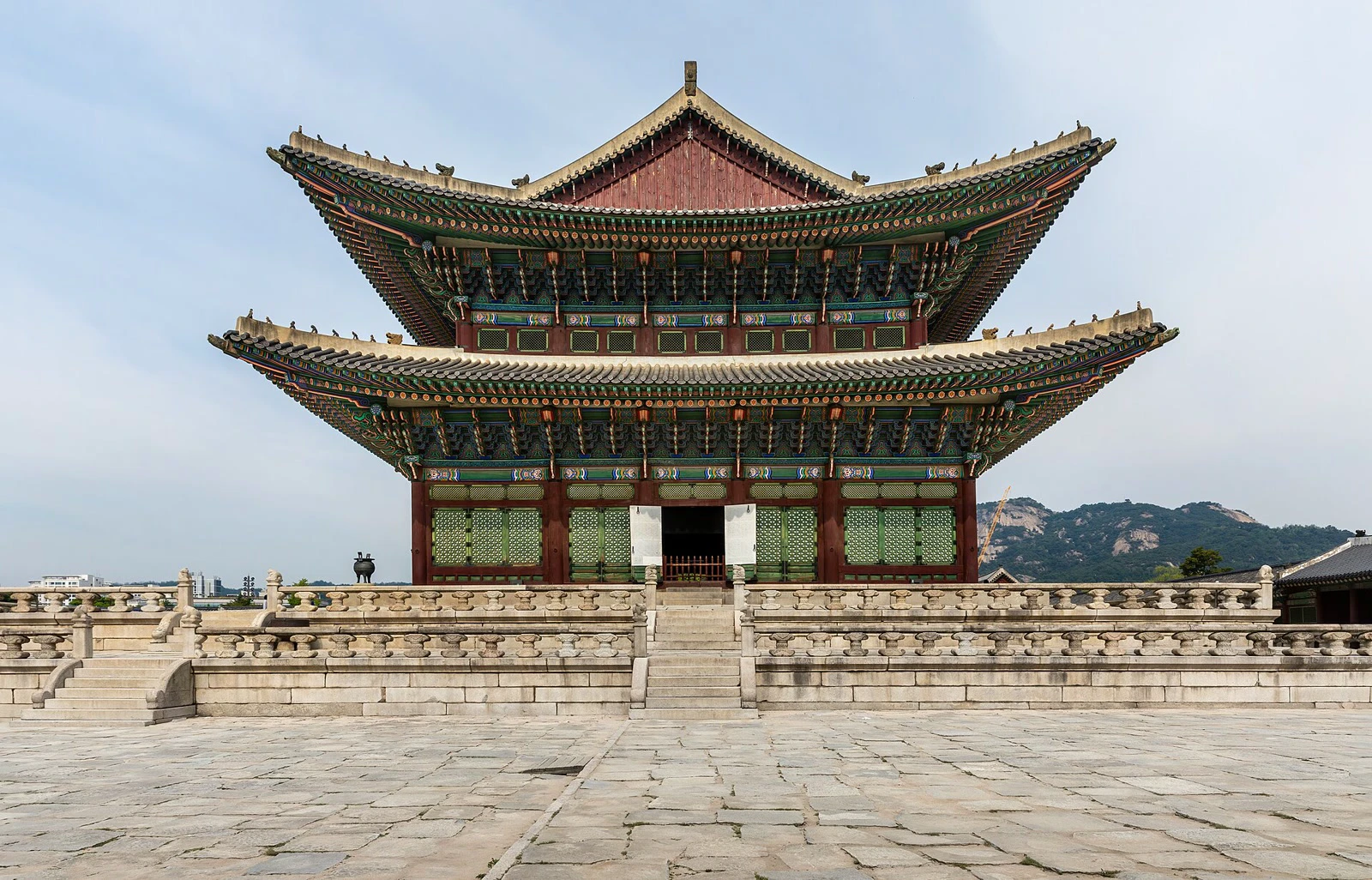
Seoul works for an undecided first-time visitor because one hotel can support very different days: royal palaces and older lanes around Jongno, contemporary art and cafés, markets, nightlife, shopping, and several easy day trips. The official five-day first-time Seoul route spreads its days across Myeong-dong and the historic center, Namsan and Itaewon, Gangnam, and Hongdae rather than treating the city as one compact sightseeing core.
That range also makes Seoul forgiving. Rain can move a museum or covered market higher in the plan. A tired morning does not force you to abandon the next two days. The official Seoul transport guide describes an extensive subway and bus network; for a normal city stay, a rental car usually adds parking and navigation work rather than useful flexibility.
The main trap is geography. Gyeongbokgung, Seongsu, and Gangnam may all look close in a saved list while creating repeated cross-city rides in one day. Group each day by neighboring districts and keep one optional indoor stop for bad weather.
Choose Seoul first when: this is your first visit, no single theme dominates, the trip is short, or you arrive and depart through Incheon Airport. It also gives the easiest opening if you plan to add Busan or Jeju later.
Busan is for an urban coast, not one compact beach
Busan makes sense as the first stop when your ideal day already includes a waterfront walk, seafood, a market, and bridge lights after dinner. It has metro lines, commercial districts, and late-night energy, but the coast changes both the view and the pace.
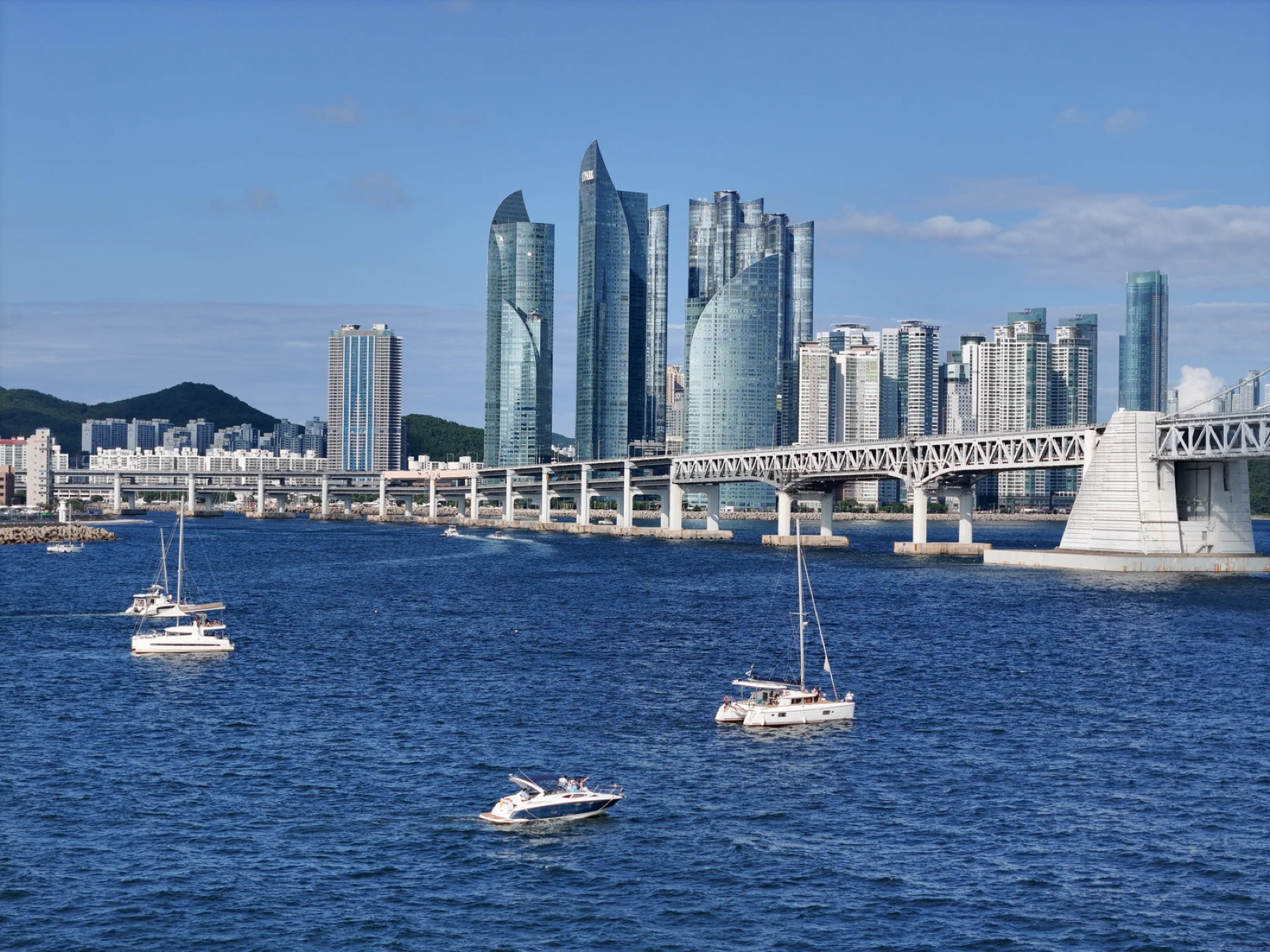
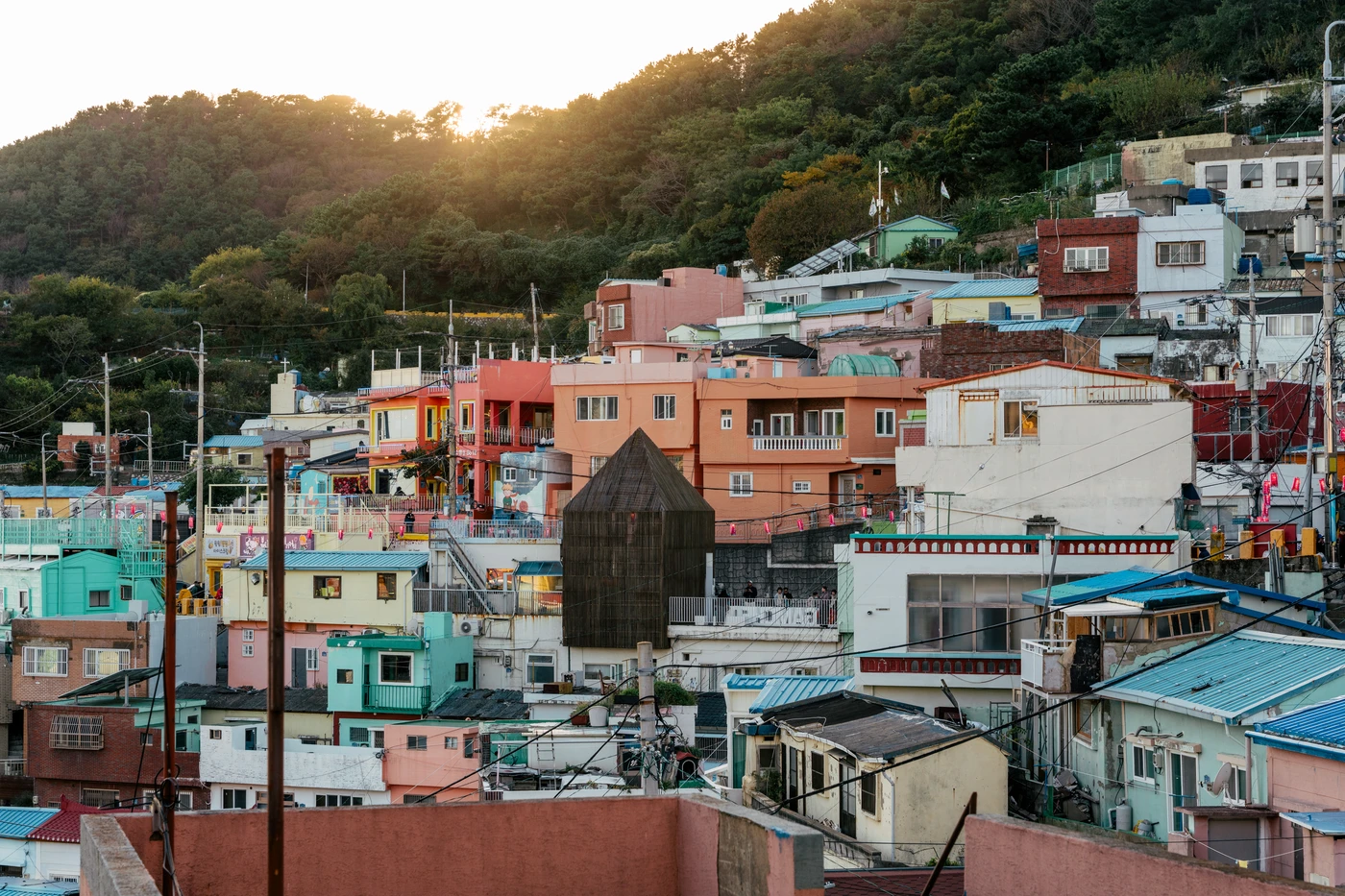
The two photographs show why “Busan” is not one small coastal zone. Gwangalli belongs to the eastern side of a typical trip; Gamcheon Culture Village sits near the older western attractions. The official Gwangalli guide places cafés, seafood, and the bridge view around the beach. The official Gamcheon page directs visitors from Metro Line 1 to a village bus and asks them to respect the residential area.
Hotel location therefore changes the trip:
- Haeundae or Gwangalli: better for beach mornings, bridge views, and eastern Busan.
- Nampo: better for markets, the harbor side, Gamcheon, and Yeongdo.
- A split stay: useful only when you have enough nights to make another checkout worthwhile.
Visit Busan notes that the broader Nampo area can take a full day or longer. Treating Nampo and Haeundae as casual neighbors is the quickest way to make Busan feel more tiring than expected.
Choose Busan first when: the urban coast is the reason you booked Korea, seafood and markets matter more than royal history, or your international route already brings you through Gimhae. If you land at Incheon without a strong coastal preference, Seoul remains the simpler opening.
Jeju is best when the island is the purpose
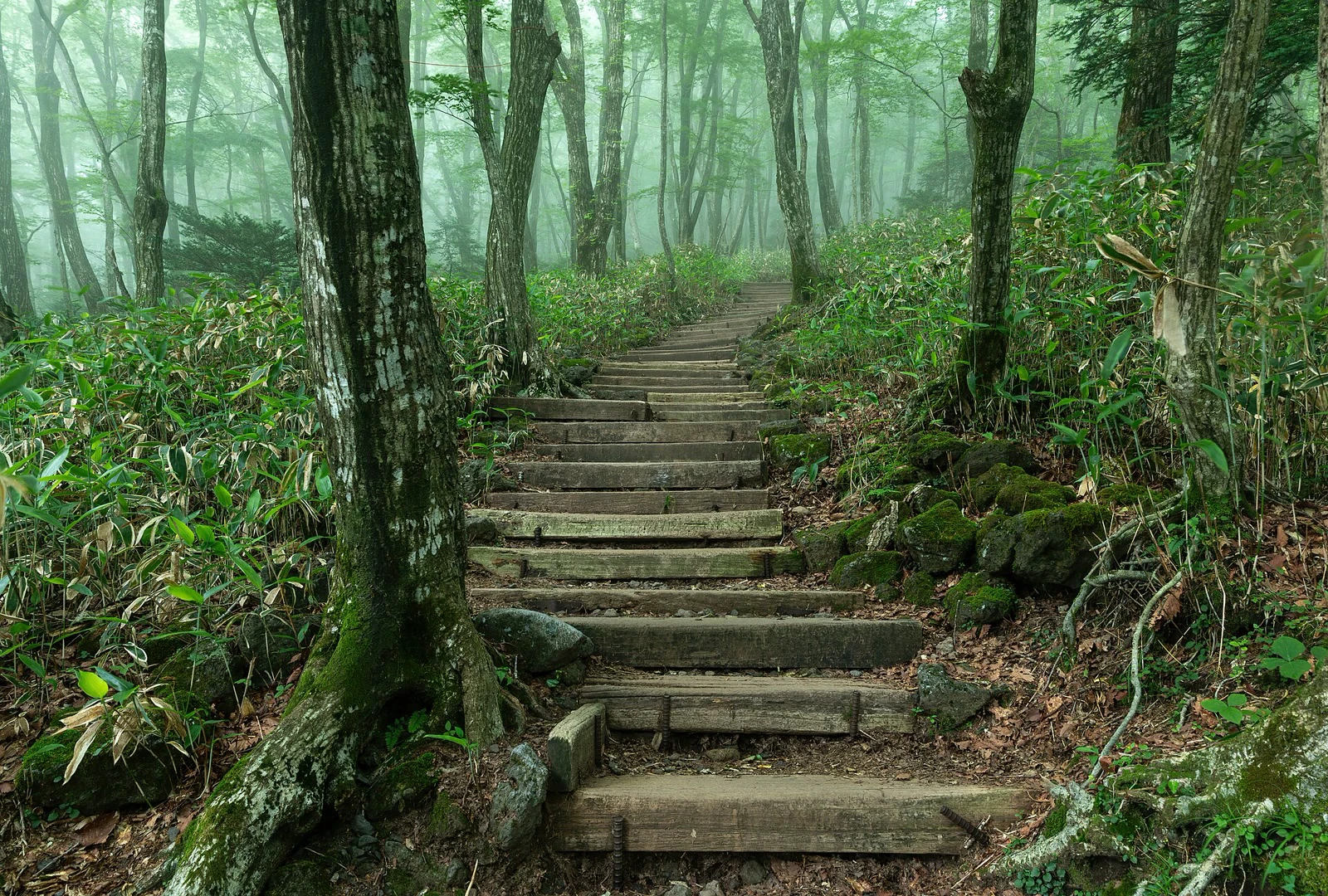
Jeju should come first when the holiday is built around Hallasan, oreum trails, lava coastlines, or long outdoor days. The current official Jeju tourism guidebook separates public transport, main roads, Hallasan trekking, Olle routes, and multi-day suggested itineraries. That organization reflects the central planning fact: on Jeju, the route is part of the trip.
Jeju City, Seogwipo, Hallasan, and the eastern and western coasts do not behave as one sightseeing center. Wind or rain can also change a mountain, boat, or coastal plan. A first stay is easier with several nights, one broad area per day, and at least one day that can move with the forecast.
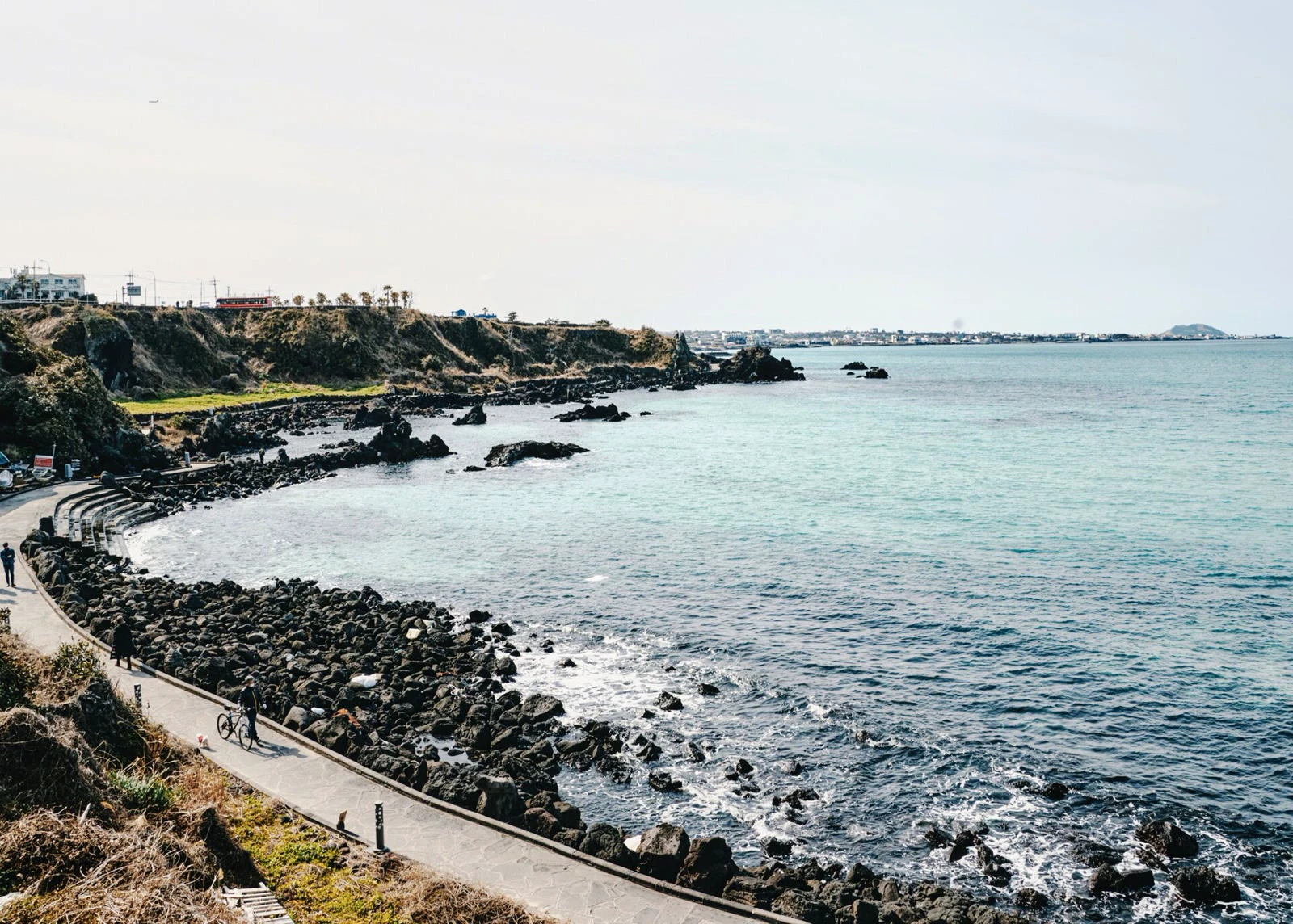
A car-free itinerary lets the bus network shape the schedule. In a 2025 Korean first-person account of a four-day bus-only trip, the writer reached Hamdeok and Seongsan from the Tapdong area on direct buses, while the western day became more complicated because it chained three moves. That is one person’s route, not a general timetable; its value is showing how quickly a workable bus plan changes when attractions sit on both sides of the island.
Choose Jeju first when: hiking and landscapes outweigh city variety, you can give the island several nights, and checking the forecast or bus plan feels like a reasonable trade. Save it for a later trip if those tasks would make the holiday feel like work.
Compare the friction before you decide
- Seoul’s friction: long cross-city rides when districts are mixed carelessly.
- Busan’s friction: east–west distances and a hotel on the wrong side of the places you value.
- Jeju’s friction: wider spacing, weather-dependent outdoor plans, and more route work without a car.
A July 2026 Reddit discussion about Busan versus Jeju produced no universal answer. Replies returned to trip length, willingness to drive, and the choice between city variety and nature. Use it as traveler perspective, not an official verdict.
If two or all three places are in the plan, count each airport or hotel move before booking. Compare the transfer cost in our realistic 5-, 7-, 10-, and 14-day Korea guide. Seoul is the cleanest default; a specific love of the coast or the island is the best reason to override it.
Sources and image credits
- Delivery Spot cover image file — Web-ready three-panel composite of Seoul, Busan, and Jeju using the credited source images below.
- Visit Seoul — If you visit Seoul for the first time — Official five-day route showing the city’s historic center, Namsan, Gangnam, and Hongdae; rechecked August 11, 2026.
- Visit Seoul — Transportation — Official overview of Seoul’s subway, bus, and taxi network; rechecked August 11, 2026.
- Visit Busan — Gwangalli — Official beach, café, seafood, metro-access, and bridge-view information; rechecked August 11, 2026.
- Visit Busan — Gamcheon Culture Village — Official Line 1 and village-bus access plus residential-area etiquette; rechecked August 11, 2026.
- Visit Busan — Nampo-dong — Official guidance that the wider district can take a full day or longer.
- Visit Jeju — Official Jeju Tourism Guidebook — Official public-transport, main-road, Hallasan, Olle, and multi-day planning sections; current guidebook rechecked August 11, 2026.
- Four-day Jeju bus trip — One traveler’s 2025 example of direct eastern buses and a more complicated multi-stop western day; not used as a universal timetable.
- Reddit — Busan or Jeju discussion — Traveler perspectives on trip length, driving, city variety, and nature.
- Gyeongbokgung Palace — Seoul and composite image by Basile Morin, resized under CC BY-SA 4.0.
- Gwangan Bridge and Gwangalli — Busan and composite image by Hyphen Group / Busan Tourism Organization Global Marketing Team, resized under KOGL Type 1.
- Gamcheon Culture Village — Busan image by Summertree and Shin Gyeong-min / Busan Metropolitan City Tourism Policy Division, resized under KOGL Type 1.
- Hallasan Eorimok Trail — Jeju and composite image by Basile Morin, resized under CC BY-SA 4.0.
- Jeju Olle Route 15-B at Handam Trail — Jeju coast image by Jeju Olle Foundation, resized under CC BY-SA 4.0.
Last updated


