
Naengmyeon, Kalguksu, Janchi Guksu or Bibim Guksu?
Choose naengmyeon for cold, chewy noodles; kalguksu for a hot, hearty bowl; janchi guksu for a lighter warm broth; or bibim guksu for cold, spicy-sweet wheat noodles. This guide compares texture, broth, season, ingredients, and the sides that make sense with each dish.
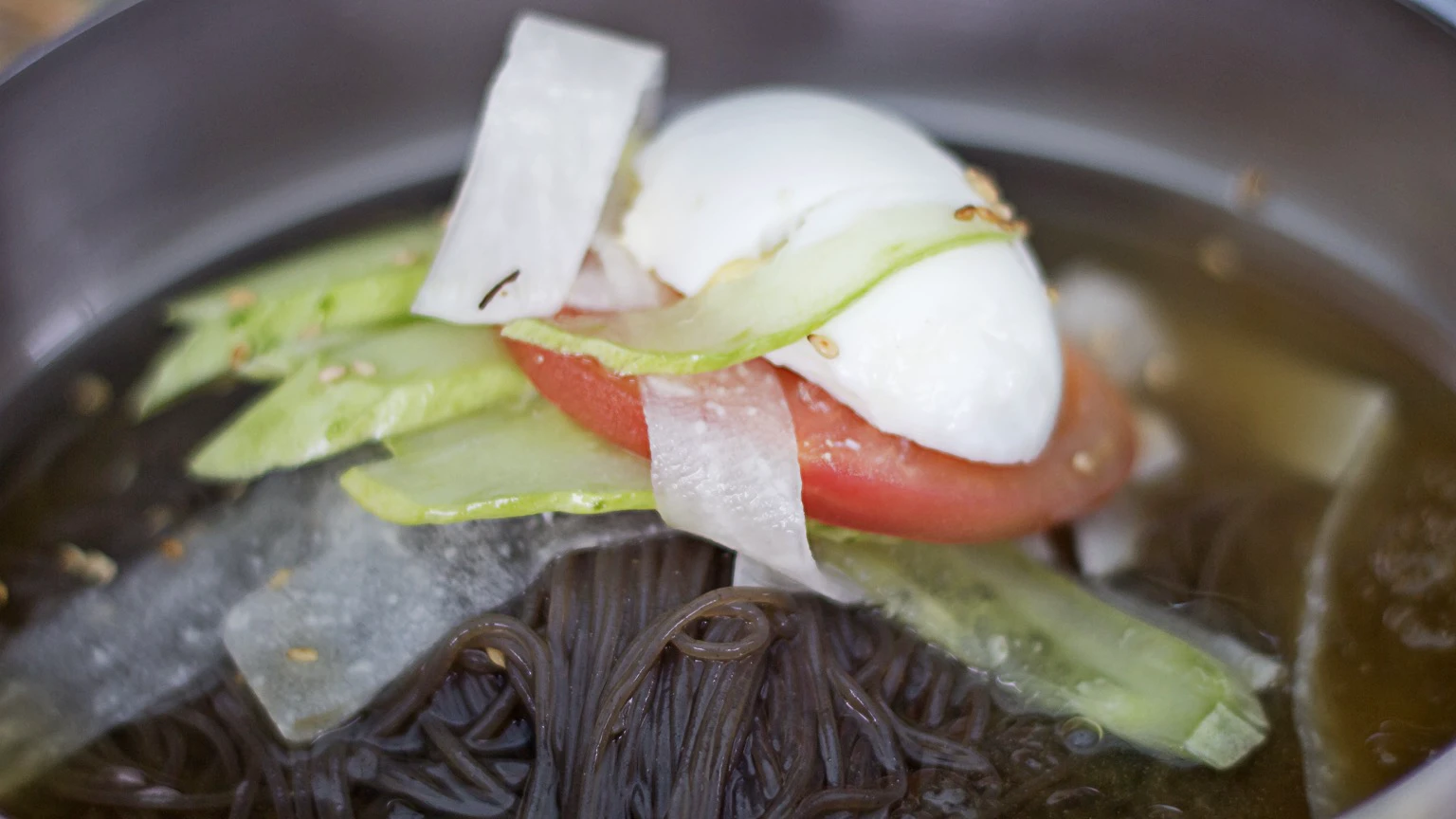
Choose naengmyeon for cold, chewy noodles; kalguksu for a hot, substantial bowl; janchi guksu for thin noodles in a lighter warm broth; or bibim guksu for cold wheat noodles coated in a spicy-sweet sauce. The quickest way to decide is temperature first, then broth, texture, and heat—not the English translation of guksu, which simply means noodles.
The 20-second choice
- Naengmyeon (냉면): cold, springy noodles. Order mul naengmyeon for chilled broth or bibim naengmyeon for a spicy mixed version.
- Kalguksu (칼국수): hot soup with wider, soft-chewy wheat noodles cut from rolled dough. The broth might be clam, anchovy, chicken, beef bone, or something regional.
- Janchi guksu (잔치국수): thin wheat noodles in a clear, warm anchovy, kelp, or meat broth. It is usually the gentlest-looking bowl, though a spoonful of red seasoning can add heat.
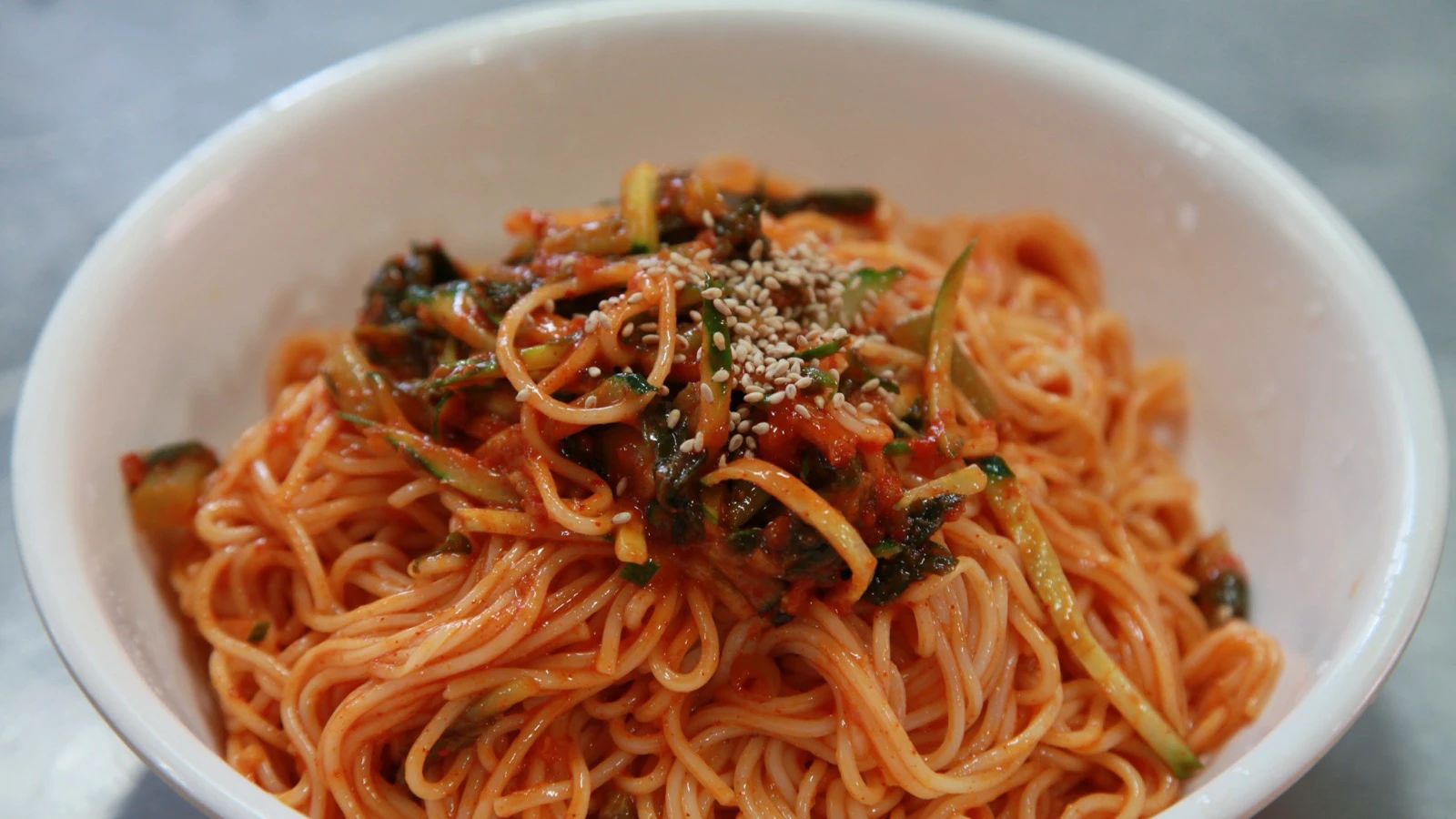
- Bibim guksu (비빔국수): cold or room-temperature thin wheat noodles tossed in a red, tangy, spicy-sweet sauce, usually without a bowl of broth.
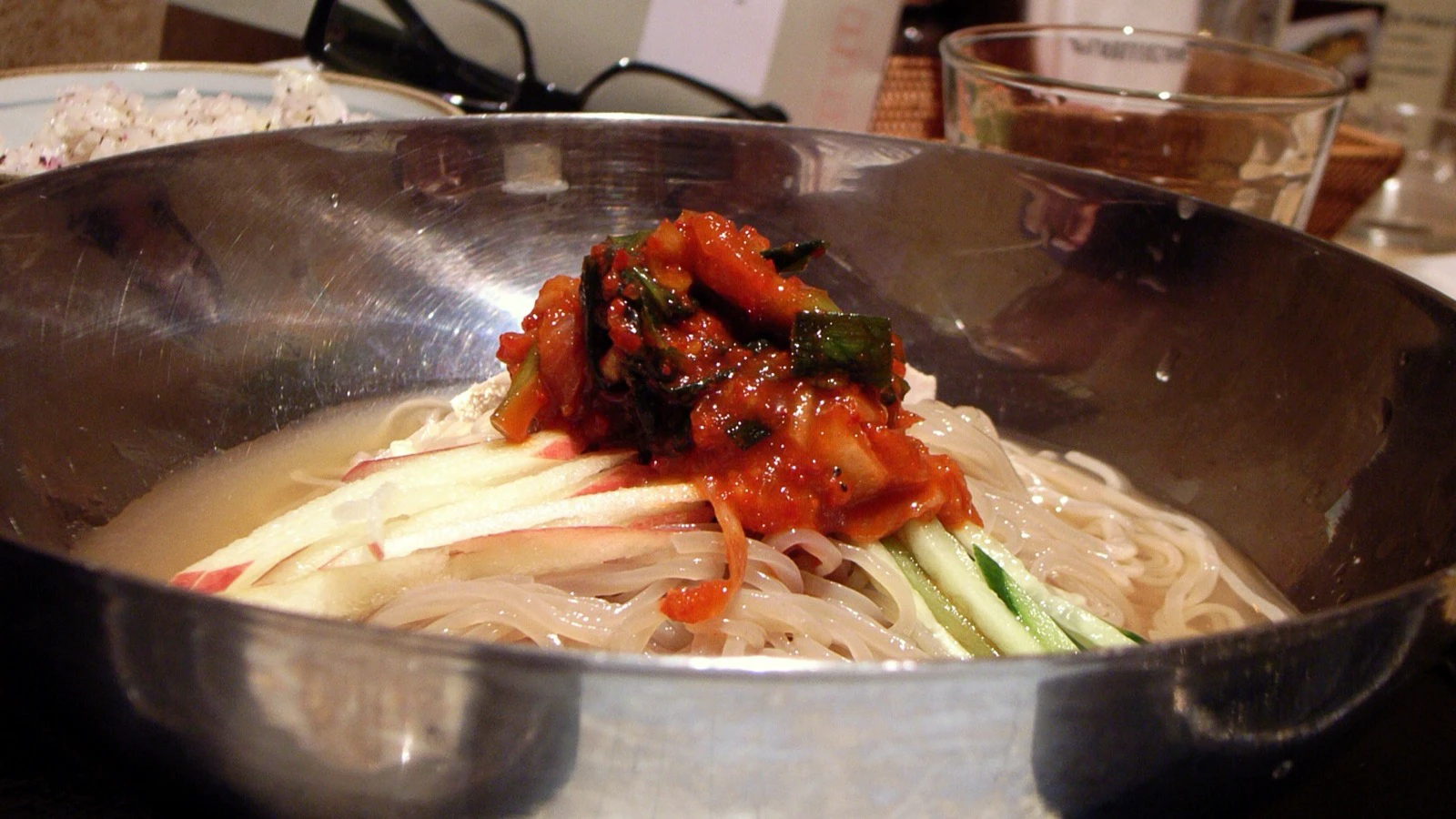
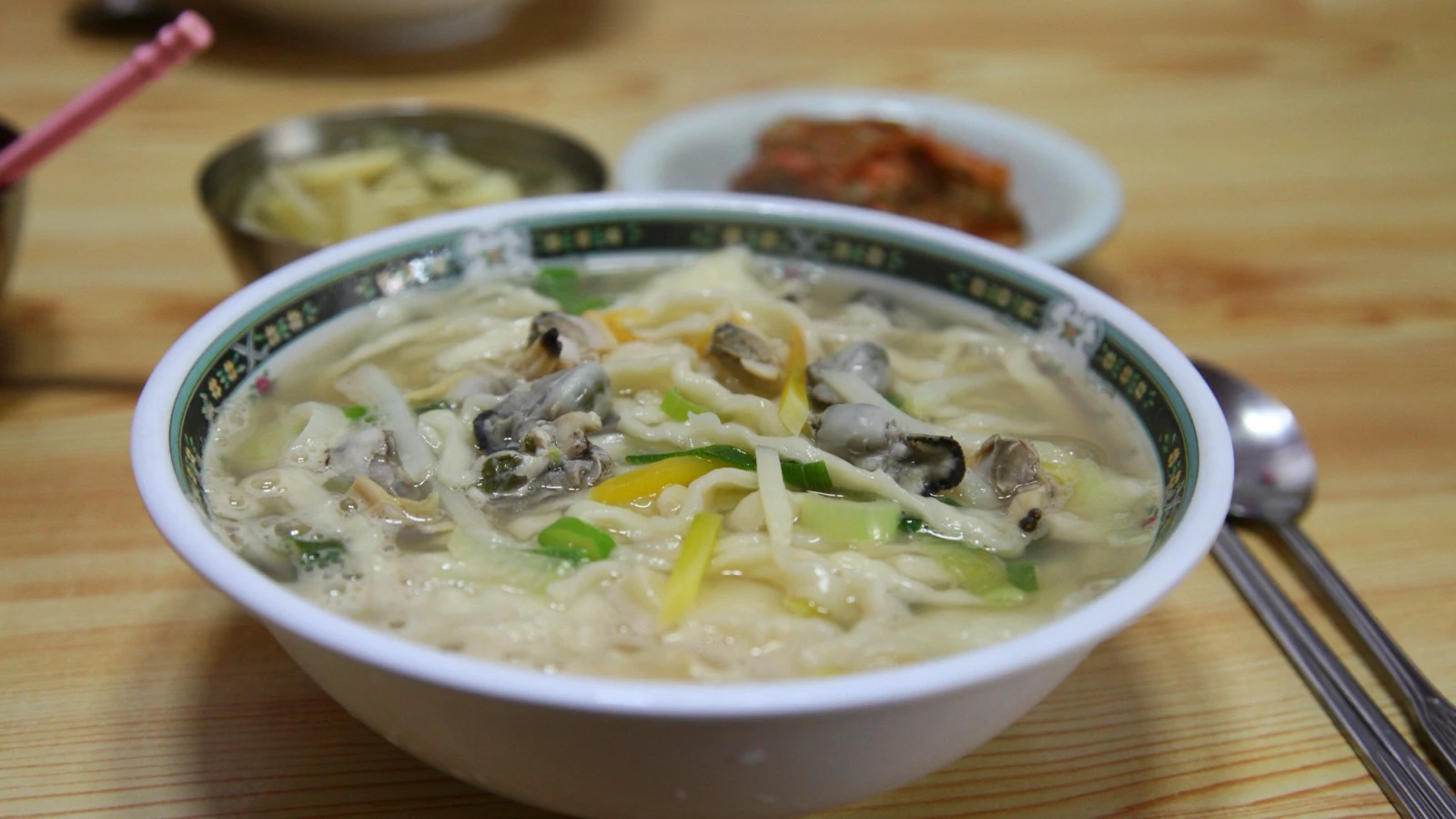
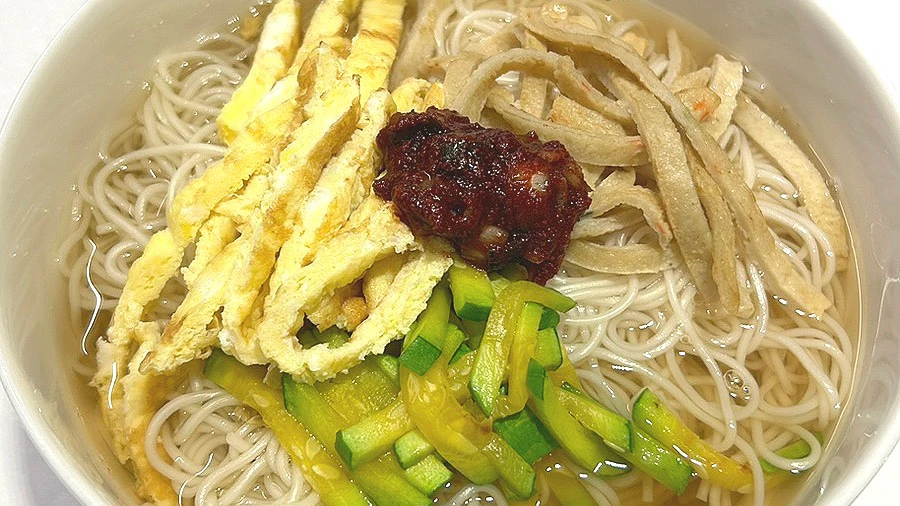
The four dishes look similar on a translated menu, but the noodles tell them apart. In slide order: naengmyeon, clam kalguksu, janchi guksu, and bibim guksu.
What changes from bowl to bowl
Naengmyeon: cold, elastic, and more varied than “buckwheat noodles”
Naengmyeon is a category, not one fixed recipe. Pyeongyang-style noodles typically lean on buckwheat and arrive in a subtle chilled broth; Hamheung-style noodles are commonly starchier, chewier, and paired with a red sauce. A restaurant can also sell both mul (water or broth) and bibim (mixed) versions using its own noodle formula.
The Korea Tourism Organization's noodle guide explains that the texture changes with the buckwheat and starch ratio. This is why one naengmyeon bowl may break cleanly while another stretches and resists your teeth. If scissors arrive, cutting the bundle once or twice is practical; there is no need to turn the meal into a test of endurance.
Choose mul naengmyeon if you want icy broth and a restrained flavor. Choose bibim naengmyeon if you want chew plus a stronger red sauce. Neither label makes the dish vegetarian: beef broth, meat garnish, fish-based seasoning, or egg may still appear.
Kalguksu: the name describes the noodle, not the stock
Kal means knife. Kalguksu uses wheat dough rolled and cut into wider strands, then cooked in soup. The result is hot, soft-chewy, and more filling than janchi guksu, with a little starch often giving the broth body.
That is where the certainty ends. The official VISITKOREA kalguksu feature documents meat-based, chicken, anchovy, and seafood versions, as well as regional variations. Bajirak kalguksu contains Manila clams; dak kalguksu uses chicken; haemul kalguksu signals seafood. Read the word before kalguksu rather than assuming every pale broth is the same.
Individual bowls are common, but some clam, chicken, or shabu-style restaurants cook a larger pot for two or more people. Check for 2인분 이상 (two servings or more) before sitting down alone.
Janchi guksu: thinner noodles, clearer broth, lighter meal
Janchi guksu uses fine wheat somyeon, not hand-cut noodles. The strands cook quickly and sit in a warm, usually clear broth with modest toppings such as egg, zucchini, carrot, laver, or beef. The official KTO overview connects the name with weddings and celebrations where long noodles expressed wishes for longevity; today it is also an ordinary snack-bar, market, or quick-meal dish.
This is the best default of the four if you want warm food without a thick or spicy broth. Still, “clear” does not mean plant-based: anchovy stock is especially common. A red soy-based seasoning may arrive on top or on the side, so mix a little first if you are sensitive to chili.
Bibim guksu: thin wheat noodles, no soup, sauce in every bite
Bibim guksu usually uses the same fine wheat-noodle family as janchi guksu, but the noodles are rinsed cold and mixed thoroughly with sauce. KTO's bibim guksu description notes red chili paste, chili powder, and fruit in a sweet-spicy sauce, with cucumber, lettuce, and egg among common toppings. Vinegar often adds the sharp finish diners associate with the dish.
This is not a mild bowl with optional chili on top: the sauce coats nearly every strand. If you need less heat, asking for the sauce separately is more useful than asking the kitchen to remove chili after mixing. See our practical less-spicy ordering phrases before relying on 안 맵게 alone.
Bibim guksu is not bibim naengmyeon
The red sauce makes them look like siblings, but the bite is different. Bibim naengmyeon generally uses buckwheat-and-starch or starch-heavy noodles with a firm, elastic chew. Bibim guksu usually uses thinner wheat somyeon, which feels softer and is easier to cut with your teeth.
That distinction repeatedly confuses English-language diners. My Korean Kitchen's side-by-side explanation reaches the same practical answer: look at the noodle composition, not just the red sauce. If a menu says only 비빔, check the full dish name before ordering.
Season is a clue, not a serving rule
Naengmyeon and bibim guksu are strongly associated with hot weather because both arrive cold. The community split between refreshing mul and fiery bibim naengmyeon is visible even in a Reddit summer comparison. Specialist naengmyeon restaurants may still serve the dish year-round, so summer is a cue rather than a limit.
Kalguksu is especially satisfying on rainy or cold days, while janchi guksu works as a lighter warm meal in any season. These are associations, not restrictions. Let the weather narrow the choice only after you decide whether you want cold or hot food.
Pair the bowl without over-ordering
- Naengmyeon: often follows grilled beef or galbi as a cool finish. At a naengmyeon specialist, mandu or sliced boiled meat is a more manageable shared side.
- Kalguksu: fresh kimchi or geotjeori is a common contrast to soft noodles. Clam versions commonly sit well with mandu; chicken versions may be part of a larger shared chicken meal.
- Janchi guksu: gimbap or a small mandu order turns a light bowl into lunch. In a market, the noodles can be enough on their own.
- Bibim guksu: grilled pork or boiled pork tempers the sharp sauce. If the restaurant offers a small cup of warm broth, sip it between bites.
Before ordering an extra dish, check the portion and whether the noodles are already sold as a set. Pairings are menu patterns, not obligations.
Three checks that prevent the wrong bowl
First, decide hot or cold. Second, decide broth or mixed sauce. Third, read the ingredient word attached to the noodle name. That last check matters for clams, anchovy stock, beef broth, egg, and premixed kimchi or chili sauces; our guide to hidden non-vegetarian ingredients in Korean food covers the questions to ask.
If you want the least surprising first order, choose janchi guksu for warm and light, kalguksu for hot and hearty, mul naengmyeon for cold and refreshing, or bibim guksu for cold and decisively spicy.
Photo credits
- Featured naengmyeon: Shene81 (John Seung-Hwan Shin) via Wikimedia Commons, CC BY 3.0; cropped and resized.
- Naengmyeon: yoppy via Wikimedia Commons, CC BY 2.0; cropped to 16:9.
- Kalguksu: Suh Jeong-ho via Wikimedia Commons, CC0; cropped to 16:9.
- Janchi guksu: 부산 새댁의 일상 블로그 on Naver Blog; used with operator-confirmed permission and cropped to 16:9.
- Bibim guksu: JeongHO Suh (daecheonnet) via Wikimedia Commons, CC0; cropped to 16:9.
Sources and image credits
- Korea Tourism Organization's noodle guide — Checked for guide details or image attribution.
- VISITKOREA kalguksu feature — Checked for guide details or image attribution.
- bibim guksu description — Checked for guide details or image attribution.
- My Korean Kitchen's side-by-side explanation — Checked for guide details or image attribution.
- Reddit summer comparison — Checked for guide details or image attribution.
- Shene81 (John Seung-Hwan Shin) via Wikimedia Commons — Checked for guide details or image attribution.
- yoppy via Wikimedia Commons — Checked for guide details or image attribution.
- Suh Jeong-ho via Wikimedia Commons — Checked for guide details or image attribution.
- 부산 새댁의 일상 블로그 on Naver Blog — Checked for guide details or image attribution.
- JeongHO Suh (daecheonnet) via Wikimedia Commons — Checked for guide details or image attribution.
Last updated


