
Mil-tteok, Ssal-tteok or Jeukseok? Why Tteokbokki Tastes So Different
Tteokbokki changes with the rice cake, sauce, cooking time and service style. Use this guide to choose between softer wheat cakes, denser rice cakes and a shared pan cooked at the table.
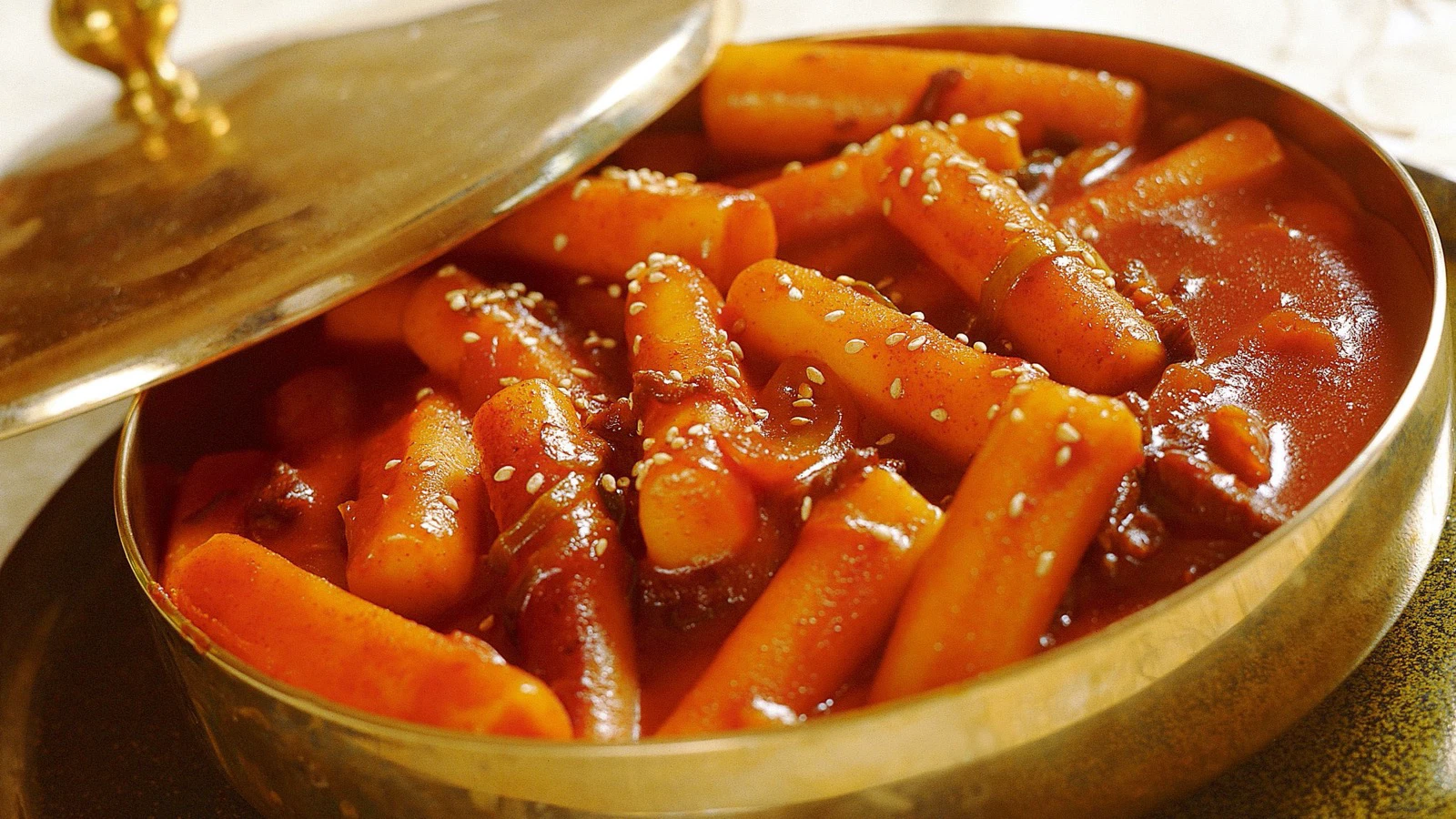
Tteokbokki tastes different from shop to shop because the rice cake, sauce, cooking time and serving method all change the result. Choose mil-tteok for a softer, bouncier, sauce-soaked bite; ssal-tteok for a denser rice chew; and jeukseok tteokbokki for a shared pan that cooks and thickens at your table.
One distinction prevents most ordering mistakes: mil-tteok and ssal-tteok describe what the cake is made from, while jeukseok describes how the dish is cooked and served. A jeukseok restaurant may use either kind of cake, and a packaged product labelled “instant tteokbokki” is not what Koreans mean by jeukseok tteokbokki.
The quick first-order decision
- Order mil-tteok (밀떡) if you want a relatively soft, springy cake that feels integrated with the sauce. It is a forgiving first choice when the compact chew of rice cake sounds heavy.
- Order ssal-tteok (쌀떡) if the cake itself is the attraction. It is usually firmer and denser, with a more distinct rice texture.
- Order jeukseok tteokbokki (즉석떡볶이) if you want a sit-down, shared meal rather than a ready-to-eat snack. The pan arrives with sauce and ingredients, then reduces on a tabletop burner.
These are tendencies, not guarantees. Flour ratios, whether a cake is fresh or frozen, its thickness, and how long it has simmered can outweigh the label. If texture matters, ask the shop which cake it uses instead of judging only by the menu photo.
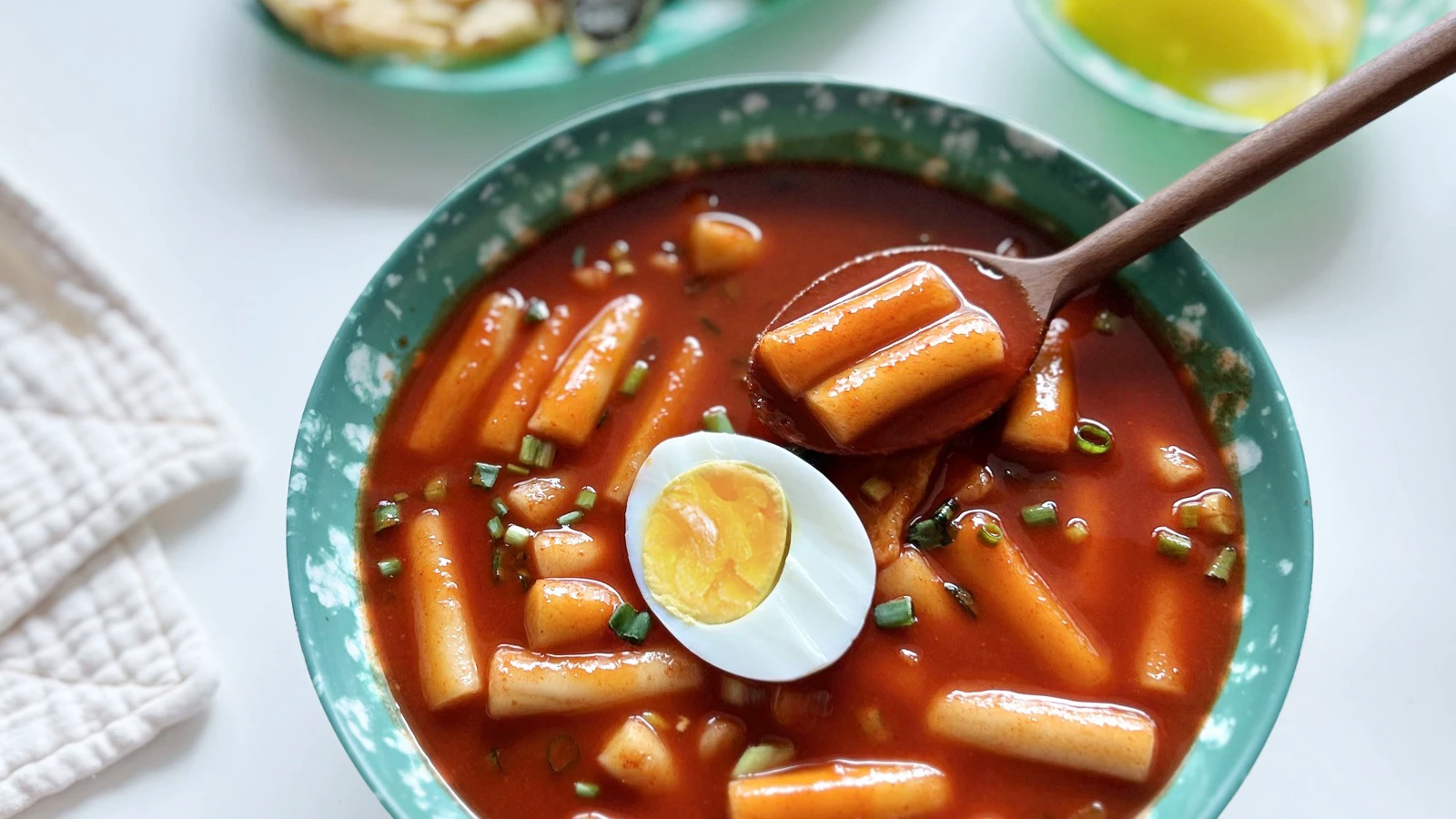
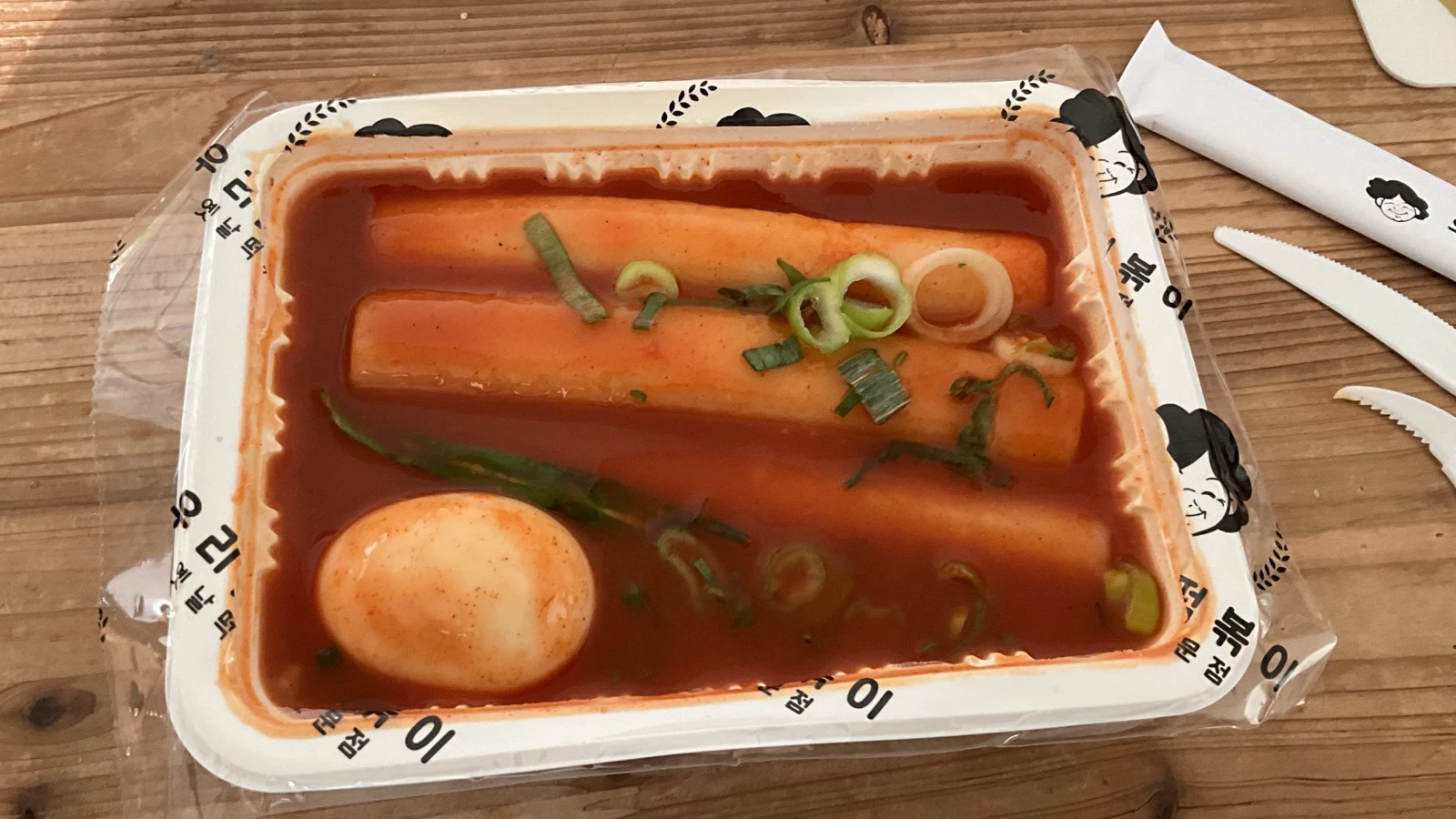
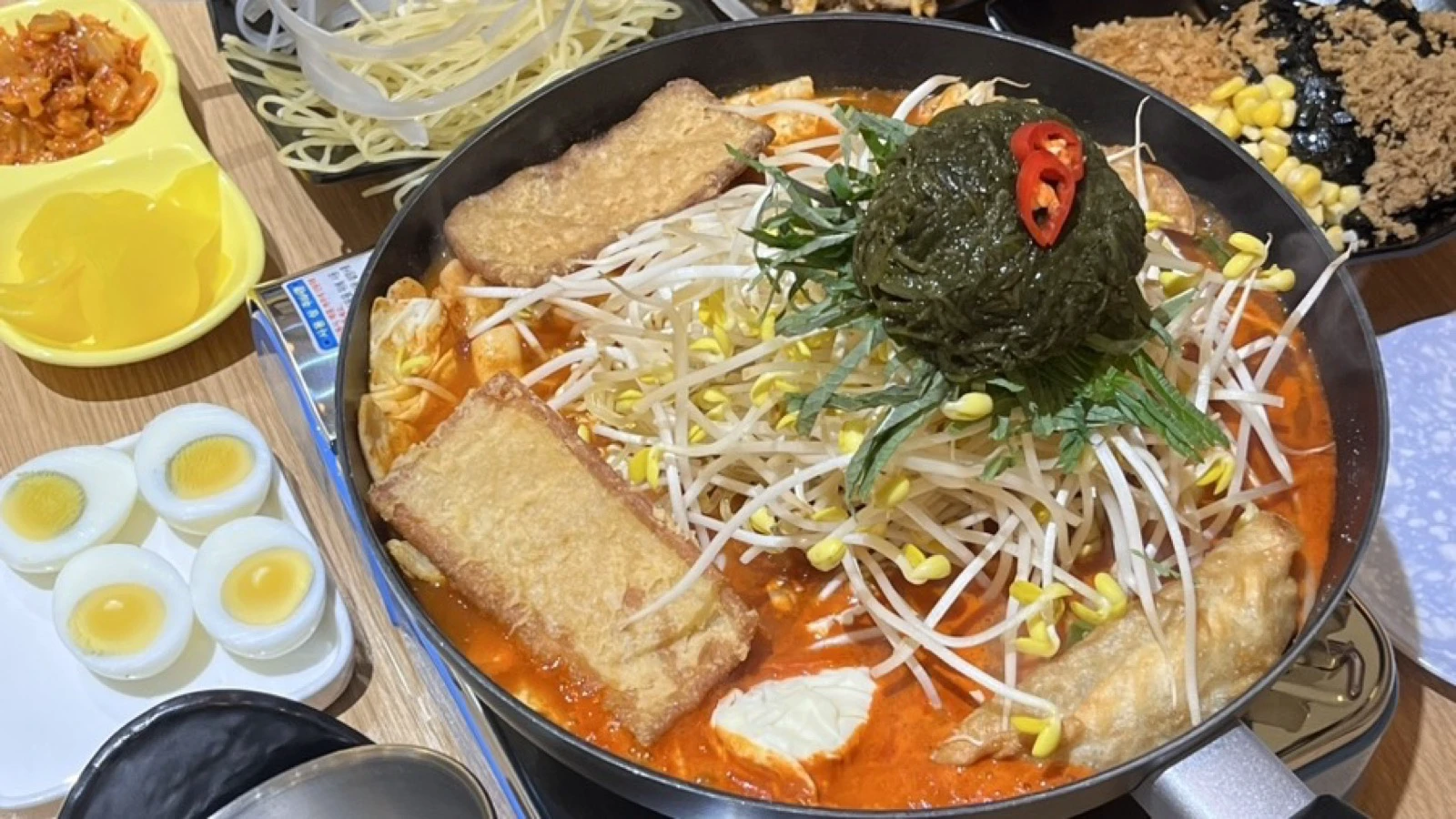
The first slide shows slim mil-tteok in a prepared bowl; the second shows thick garaetteok-style rice cakes; the third shows jeukseok tteokbokki still cooking in a wide tabletop pan. The third category is a cooking format, so its cakes may still be wheat- or rice-based.
Mil-tteok: softer, bouncier and closely coated
Mil means wheat. Mil-tteok generally has a softer, more elastic bite than a dense rice cake and tends to feel as if the sauce and cake belong together. Many people associate that easy chew with snack-bar or street-style tteokbokki, although no single cake defines every street stall.
Choose it when you want to focus on a sweet-spicy sauce, eat quickly, or share with fried snacks such as twigim. It can also be the better first try for someone who found thick rice cake unexpectedly dense. Reddit discussions about first-time tteokbokki repeatedly split on exactly this point: some diners chase a pronounced rice chew, while others prefer the softer wheat-based texture. That is a preference signal, not a rule about quality or authenticity.
Because mil-tteok contains wheat, it is not a gluten-free substitute. Sauce, fish cake, soy sauce and shared preparation create additional questions; our gluten-free Korean food guide explains why the cake alone cannot settle that decision.
Ssal-tteok: a firmer rice chew
Ssal means rice. Ssal-tteok is usually denser and springier, so each piece stays more distinct in the mouth. Thick cylindrical garaetteok can make the contrast especially obvious: the sauce coats the outside while the center keeps a substantial chew. Busan's official English food column even frames ssaltteok versus miltteok as a familiar preference question rather than a contest with one correct answer.
Choose it if rice-cake texture is the reason you are ordering the dish. Give thick pieces time to warm through, especially in a pan that is still cooking. A cake that is cold or underheated can feel much harder than the same product served at the right temperature.
Do not use the word ssal as an allergy guarantee. Commercial and restaurant recipes vary, and the sauce or accompanying fish cake may contain wheat or other ingredients even when the rice cake itself is rice-based. Ask about the exact product and the complete dish when a dietary restriction matters.
Jeukseok: the sauce changes while you eat
Jeukseok means prepared on the spot. In this style, a shallow pan arrives at the table with sauce, rice cakes and additions such as fish cake, cabbage, dumplings or noodles. As it boils, the broth reduces, starch enters the sauce and the flavour becomes stronger. Your first spoonful and last spoonful are therefore intentionally different.
This is the best choice for two or more people who want a meal to unfold at the table. Let the pan reach the stage the staff recommends before eating, stir gently so cakes do not stick, and lower the heat when the sauce becomes thick. Noodles cook faster than rice cakes, so follow the restaurant's sequence instead of adding every extra at once. If fried rice is offered at the end, leave enough sauce to coat it rather than reducing the pan completely dry.
Seoul's official tourism guide describes Sindang-dong as the birthplace of tteokbokki cooked and eaten at the table, and VisitKorea likewise calls Sindang the hometown of table-cooked tteokbokki. You do not need to visit Sindang to order the format, but those references explain why jeukseok on a menu signals a style of service, not a particular cake ingredient.
Sauce and timing can matter more than the cake
Two shops using the same cake can still produce opposite experiences. A thin, broth-like sauce tastes lighter at first; a reduced sauce clings more strongly and concentrates sweetness, salt and heat. Gochujang, gochugaru, stock, sugar and soy-based seasoning are balanced differently by each kitchen. Fish cake and its broth can also shift the savoury character.
Cooking time changes texture just as sharply. A slim cake sitting in a holding pan absorbs and softens differently from a thick cake cooked to order. A jeukseok pan keeps changing after it reaches the table. This is why “Is it rice or wheat?” is useful, but “Is it ready to eat or still cooking?” may be equally important.
Not every tteokbokki is red or fiercely hot. Korea's royal-court-style gungjung tteokbokki uses a soy-based preparation with beef and vegetables; the Korean Food Promotion Institute's recipe introduction is a useful reminder that chilli sauce is one branch of the dish, not its entire definition. For a red-sauce shop, ask for reduced heat only if the sauce is made to order—many snack bars use one prepared batch. These Korean phrases for requesting less spice help you ask without assuming the kitchen can change it.
What to look for on a Korean menu
The useful words are short:
- 밀떡 / 밀떡볶이 — wheat cake / wheat-cake tteokbokki
- 쌀떡 / 쌀떡볶이 — rice cake / rice-cake tteokbokki
- 즉석떡볶이 — tteokbokki cooked at the table
- 떡 선택 — choice of rice cake
- 맵기 선택 — choice of spice level
- 사리 — an extra ingredient, commonly noodles, dumplings or rice cake
- 볶음밥 — fried rice, sometimes made in the remaining sauce
If the menu does not say, ask 떡은 밀떡이에요, 쌀떡이에요? (Tteogeun mil-tteogieyo, ssal-tteogieyo? — “Are the cakes wheat or rice?”). For jeukseok, 언제 먹으면 돼요? (Eonje meogeumyeon dwaeyo? — “When is it ready to eat?”) is often more useful than guessing from the bubbling pan.
For a first order with no strong preference, start with mil-tteok at a snack bar if you want sauce-forward comfort, ssal-tteok if you actively enjoy a dense chew, or jeukseok if the shared cooking experience is the point. None is inherently more authentic. The best choice is the one whose texture and pace match the meal you want.
Photo credits
- Featured tteokbokki: wizdata via Wikimedia Commons, CC0.
- Mil-tteok bowl: foood1st via Naver Blog; used with written operator permission.
- Garaetteok-style rice tteokbokki: Kimseoeun2023079825 via Wikimedia Commons, CC0.
- Jeukseok tteokbokki at PANPAN: pinypiny08 via Naver Blog; used with written operator permission.
Sources and image credits
- the softer wheat-based texture — Checked for guide details or image attribution.
- ssaltteok versus miltteok — Checked for guide details or image attribution.
- tteokbokki cooked and eaten at the table — Checked for guide details or image attribution.
- table-cooked tteokbokki — Checked for guide details or image attribution.
- Korean Food Promotion Institute's recipe introduction — Checked for guide details or image attribution.
- wizdata via Wikimedia Commons — Checked for guide details or image attribution.
- foood1st via Naver Blog — Checked for guide details or image attribution.
- Kimseoeun2023079825 via Wikimedia Commons — Checked for guide details or image attribution.
- pinypiny08 via Naver Blog — Checked for guide details or image attribution.
Last updated


