
Where to Eat Korean Breakfast Before Cafés Open
Find a verified-open soup, gimbap, juk or market stall, and confirm the exact branch rather than trusting the dish’s breakfast reputation.
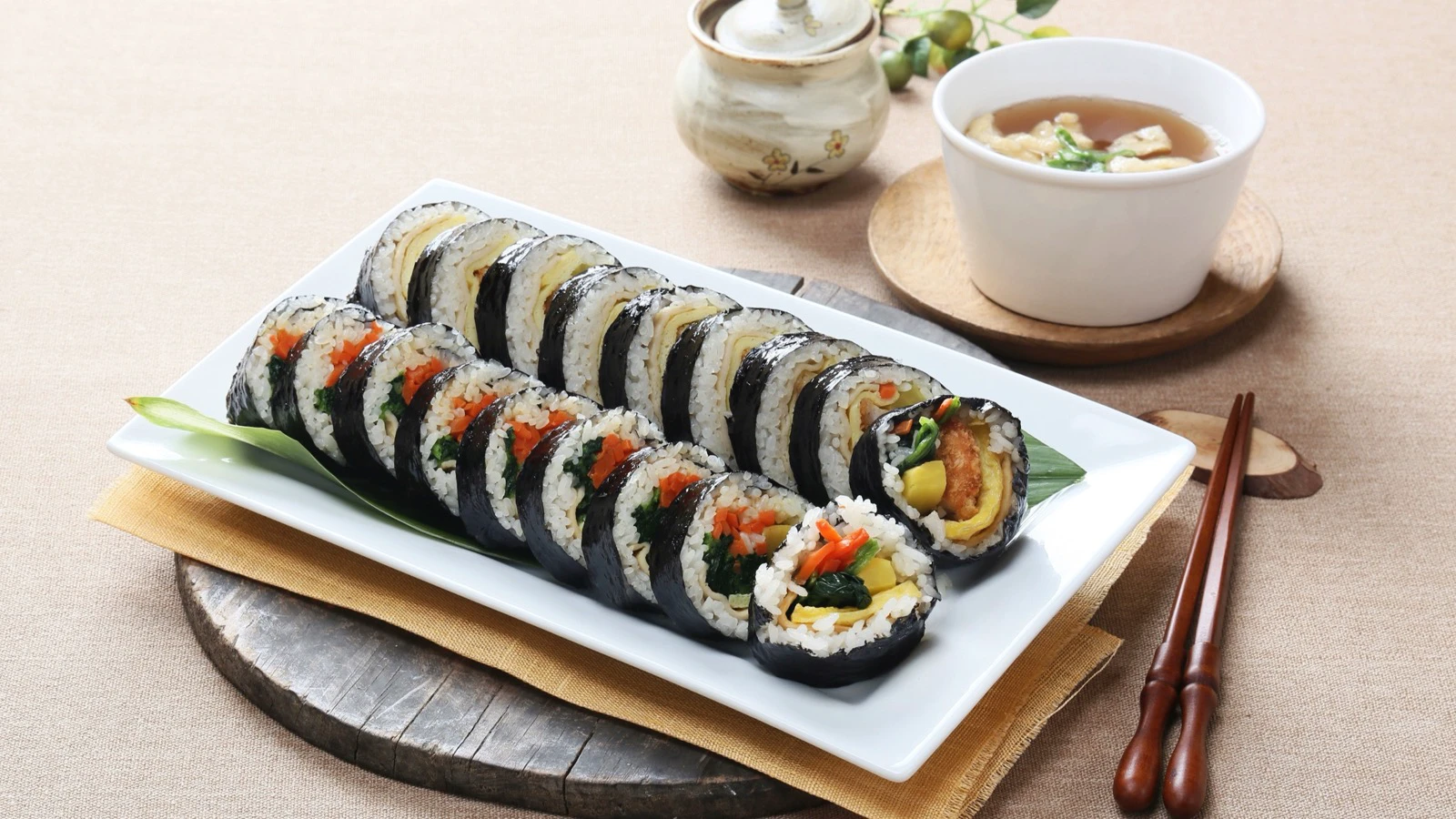
For an early Korean breakfast, look first for a verified-open gukbap, haejangguk or seolleongtang restaurant, then a gimbap shop. Juk and market stalls can work too, but their hours are less predictable than the food's breakfast reputation suggests—check the exact location, not just the brand or dish name.
This is not because people in Korea never eat breakfast. The practical mismatch is that many independent cafés and lunch-oriented restaurants do not serve the early commuter window that some visitors expect. In a 2025 r/koreatravel question about finding food near Hongik University at 7 a.m., the recurring suggestions were 24-hour soup and gimbap shops or convenience stores, while commenters warned that many cafés opened later. That is useful search behavior, not a nationwide timetable.
Choose by how you want to eat
- Gukbap, haejangguk or seolleongtang (
국밥,해장국,설렁탕): hot and filling; verify broth, meat, spice, noodles and the exact opening time. - Gimbap or bunsik (
김밥,분식): fast and portable; verify whether rolls and your preferred fillings are ready. - Juk (
죽,죽 전문점): soft and mild-textured; verify branch hours because many specialists open later. - Traditional-market food (
시장 아침식사,시장 국밥): local cooked food; verify the stall, not only the market.
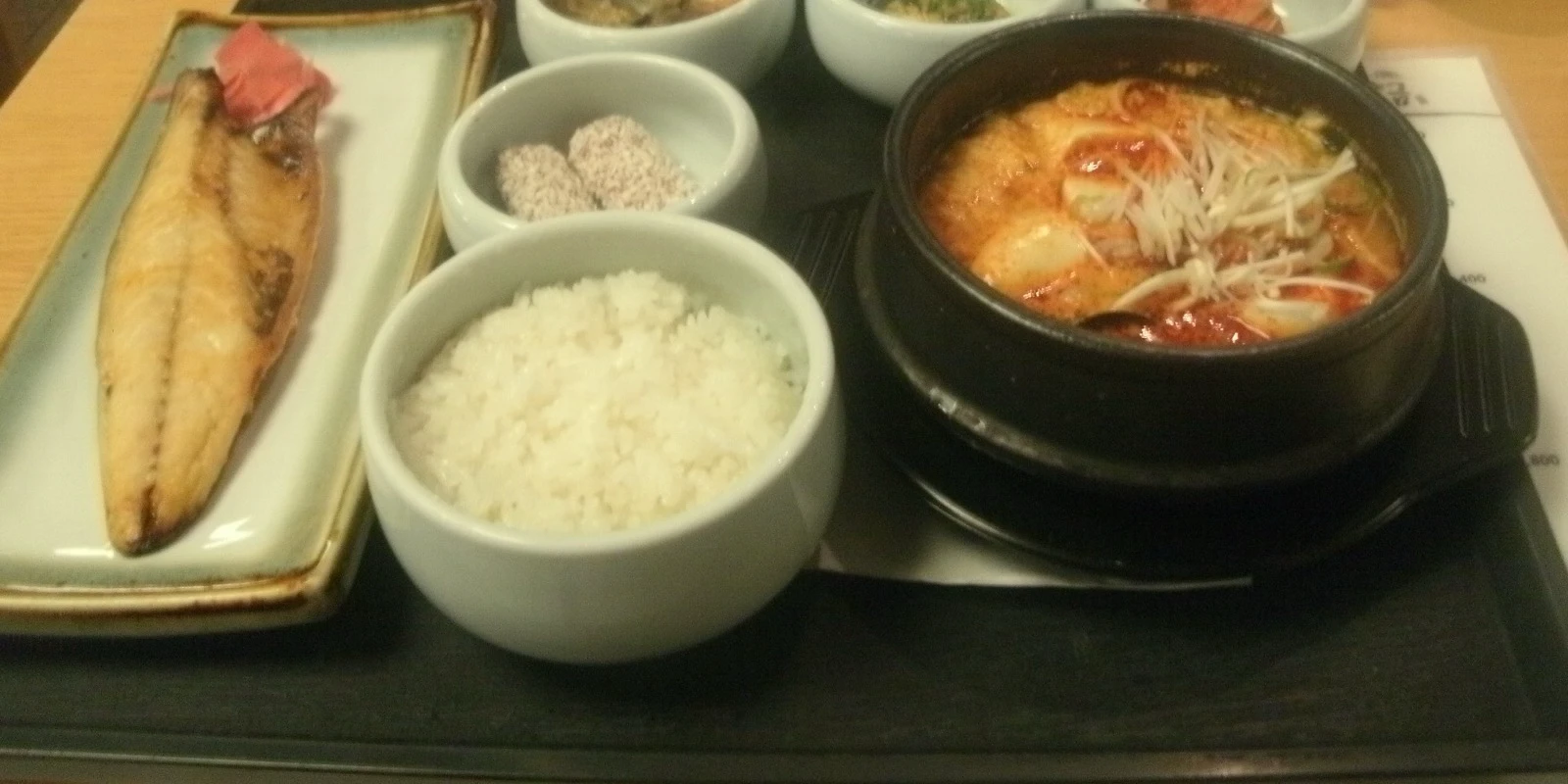
A full Korean breakfast can look like rice, soup, fish and banchan, but that does not mean restaurants market a separate breakfast menu. The useful question is which nearby kitchen has actually started service.
If you must leave before 7 a.m., confirm a place the previous evening and keep a sealed backup breakfast. At 8 or 9 a.m., the pool is usually wider, but Sunday, holiday and branch schedules can still change the answer.
Gukbap is the strongest hot-breakfast bet
Gukbap means rice and soup, either combined or served as a bowl of soup with rice beside it. Related early-morning searches include haejangguk (해장국, commonly translated as hangover soup), seolleongtang (설렁탕, ox-bone soup) and gom탕 (곰탕, long-simmered meat soup). You do not need a hangover to order haejangguk.
The Korea Tourism Organization's guide to dwaejigukbap describes gukbap as a quick, satisfying meal whose broth is prepared in large batches and reheated when ordered. That service model helps explain why some soup restaurants operate earlier or around the clock. It does not prove that every gukbap restaurant is open in the morning.
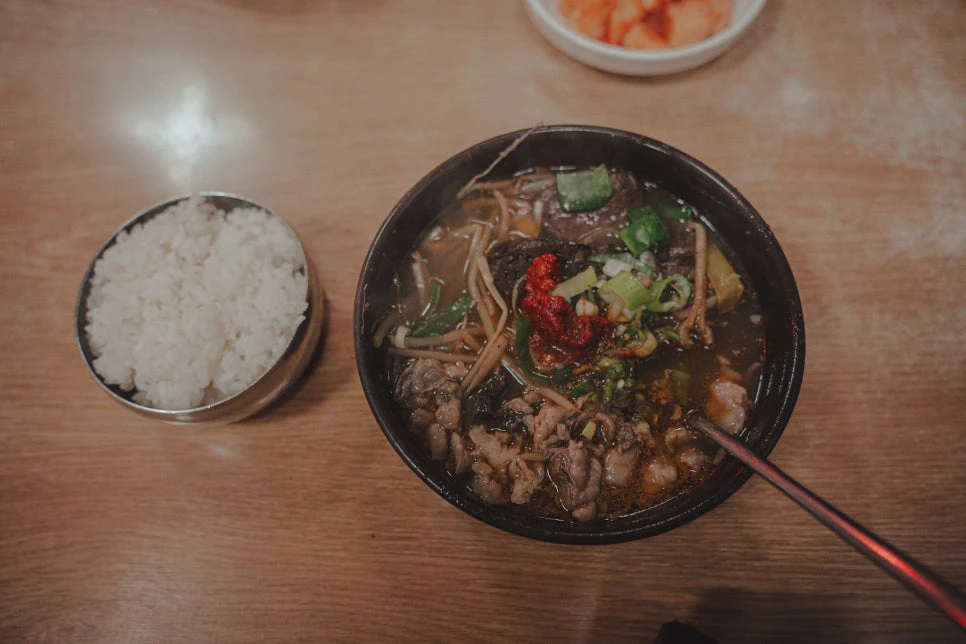
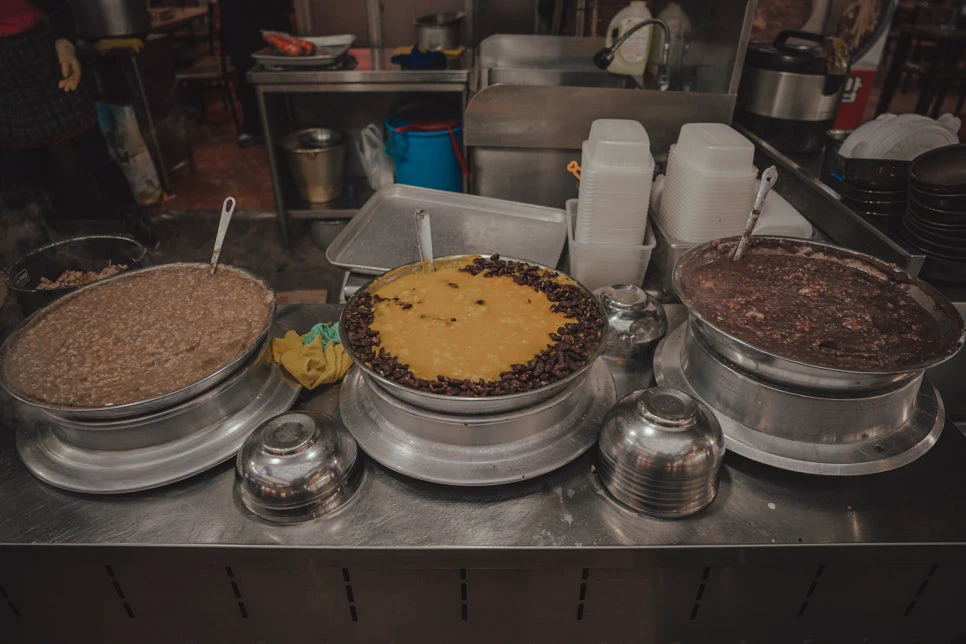
These photos come from one stall inside Busan's Bujeon Market: a bowl of seonji-gukbap and large pots of market porridge. The 2024 Naver post called it an early option but also told readers to phone because the listed hours were uncertain. That caveat is more useful than copying an old opening time into a current guide.
Gukbap is usually the heaviest of the four choices. Pork, beef, offal or blood curd may be central ingredients, and seemingly pale broths are not necessarily mild in flavor or suitable for a particular diet. Some bowls include noodles. Ask before ordering if any of those points matter; for gentler alternatives, see our guide to mild Korean dishes that are not necessarily spicy.
Gimbap is the quickest flexible option
A gimbap shop is often the best answer when you want food in minutes rather than a full sit-down breakfast. Search for 김밥 or 분식. Some shops display ready-made rolls; others make them after you order. A basic roll is portable, while a bunsik shop may also offer ramyeon, eomuk, dumplings or rice dishes if its kitchen is already running.
The Korea Tourism Organization's overview of Korean laver describes gimbap as rice and varied ingredients rolled in gim. “Vegetable gimbap” is not automatically vegetarian: egg, ham, imitation crab, fish cake, tuna, meat seasoning or shared preparation can still matter. Our guide to Korean foods that look vegetarian but may not be explains the hidden-stock and seasoning problem.
For speed, ask 포장해 주세요 (pojanghae juseyo, “Please pack it to go”). If only some fillings are prepared early, choose from what the shop can make rather than relying on a photo menu.
Juk feels like breakfast, but branch hours can start late
Juk ranges from savory beef-and-vegetable or abalone porridge to pumpkin, red-bean and pine-nut versions. It is warm, easy to portion and often associated with breakfast or recovery meals. The Korea Tourism Organization likewise says juk is often enjoyed for breakfast.
The same official listing is a useful warning: its featured porridge branch opens at 10 a.m. or later, depending on the day. The dish's cultural role does not determine the store's schedule. Search the exact branch, and check whether an independent market porridge stall opens earlier than a mall or office-district specialty shop.
Sweet-looking juk can still contain ingredients you may not expect, and savory juk can use meat or seafood stock. Confirm the variety rather than ordering simply by color.
Markets can open early while their cooked-food stalls do not
Traditional markets often begin activity early because vendors are receiving produce, meat or seafood. That does not mean every snack counter, noodle stall or seated restaurant inside is serving. A market's general hours and a tenant's food-service hours are separate facts.
Use market photos and reviews to identify the cooked-food section, then verify the specific stall. Morning-friendly categories include rice soup, porridge, kalguksu, toast and gimbap, but the mix is local. At wholesale-focused markets, early activity may be business-to-business rather than a convenient visitor breakfast.
Verify “open now” without trusting one old listing
The night before, search Naver Map or Kakao Map around your actual starting point. Use Korean terms because they return more small local businesses:
- 24시 국밥 — 24-hour gukbap
- 아침식사 — breakfast available
- 김밥 / 분식 — gimbap / snack shop
- 죽 전문점 — porridge specialist
- 영업 중 — open now
Open the individual place page and check the hours for the correct weekday. A name containing 24시 is not enough; it can remain in a business name after operations change. Compare the official listing with recent reviews that mention morning visits, and call if missing breakfast would disrupt a train, flight or tour. When you arrive, look for 영업 중 (open), 준비 중 (preparing) or a handwritten notice on the door.
Also check whether breakfast service and full-menu service begin together. A shop may be open while only a limited menu is available, or it may accept takeaway before seating customers.
Keep a no-wait fallback
Convenience stores are the dependable fallback when the verified restaurant is closed. Triangle gimbap, boiled eggs, yogurt, fruit, packaged porridge and hot or iced coffee are common categories, but stock changes by store and time. Read the allergen label and heating instructions rather than assuming a familiar-looking product is the same as one at home.
For the simplest decision: choose gukbap for hot and filling, gimbap for fast and portable, juk for a softer meal only after checking the branch, and a market when you have verified the actual cooked-food stall. The dish tells you what breakfast will feel like; the live place listing tells you whether you can eat it now.
Photo credits
- Korean breakfast set: Akinori Takemoto, via Wikimedia Commons, CC BY-SA 3.0; cropped to 16:9.
- Gukbap and market porridge: mumu (ohrr0806), via Naver Blog; used with written operator permission.
- Gimbap: changupn, via Wikimedia Commons, CC0 1.0.
Need a secure place for parcels while you are out early? Find a nearby delivery spot.
Sources and asset credits
- Traveler discussion on 7 a.m. Hongdae breakfast — Anecdotal search context, not a national timetable.
- Hosted Korean breakfast-set image — Akinori Takemoto/Wikimedia Commons, CC BY-SA 3.0.
- Korea Tourism Organization: dwaejigukbap — Dish and service-model context; not proof of every restaurant's hours.
- Hosted seonji-gukbap image — mumu (ohrr0806), used with written operator permission.
- Hosted market-juk image — mumu (ohrr0806), used with written operator permission.
- Korea Tourism Organization: Korean laver and gimbap — Ingredient and dish context.
- Korea Tourism Organization: juk — Breakfast context and a branch-hours counterexample.
- Wikimedia Commons: Korean Breakfast — Original breakfast-set asset.
- CC BY-SA 3.0 — License for the breakfast-set asset.
- Naver Blog source for market images — Original gukbap and juk assets; hours were explicitly uncertain.
- Wikimedia Commons: Gimbap — changupn, CC0 1.0; cover source.
- Hosted gimbap cover image — Hosted crop of the credited Wikimedia Commons gimbap image.
Last updated


