
Non-Spicy Korean Food: 20 Mild Dishes to Order
Korean food is not all spicy. Start with 14 dishes whose common versions are usually mild, then use six quick checks for sauces, broths, fillings and allergies.
No. Korean menus include plenty of grilled meats, egg dishes, noodles, porridge, and clear or milky soups that are commonly served without a red-chili base. The safest way to use this guide is to start with the 14 options whose common version is usually mild, then treat the final six as dishes that need one quick check.
“Not spicy” describes chili heat only. It does not mean allergy-safe, garlic-free, low-fat, low-sodium, acid-free, or medically suitable for a sensitive stomach. Recipes, broths, fillings, sauces, pepper and garnishes vary by restaurant. If an allergy or medical restriction is involved, name the exact ingredient and ask about both ingredients and cross-contact; a dish name or the word mild is not enough.
14 common dishes that are usually mild
Grilled and cooked meats
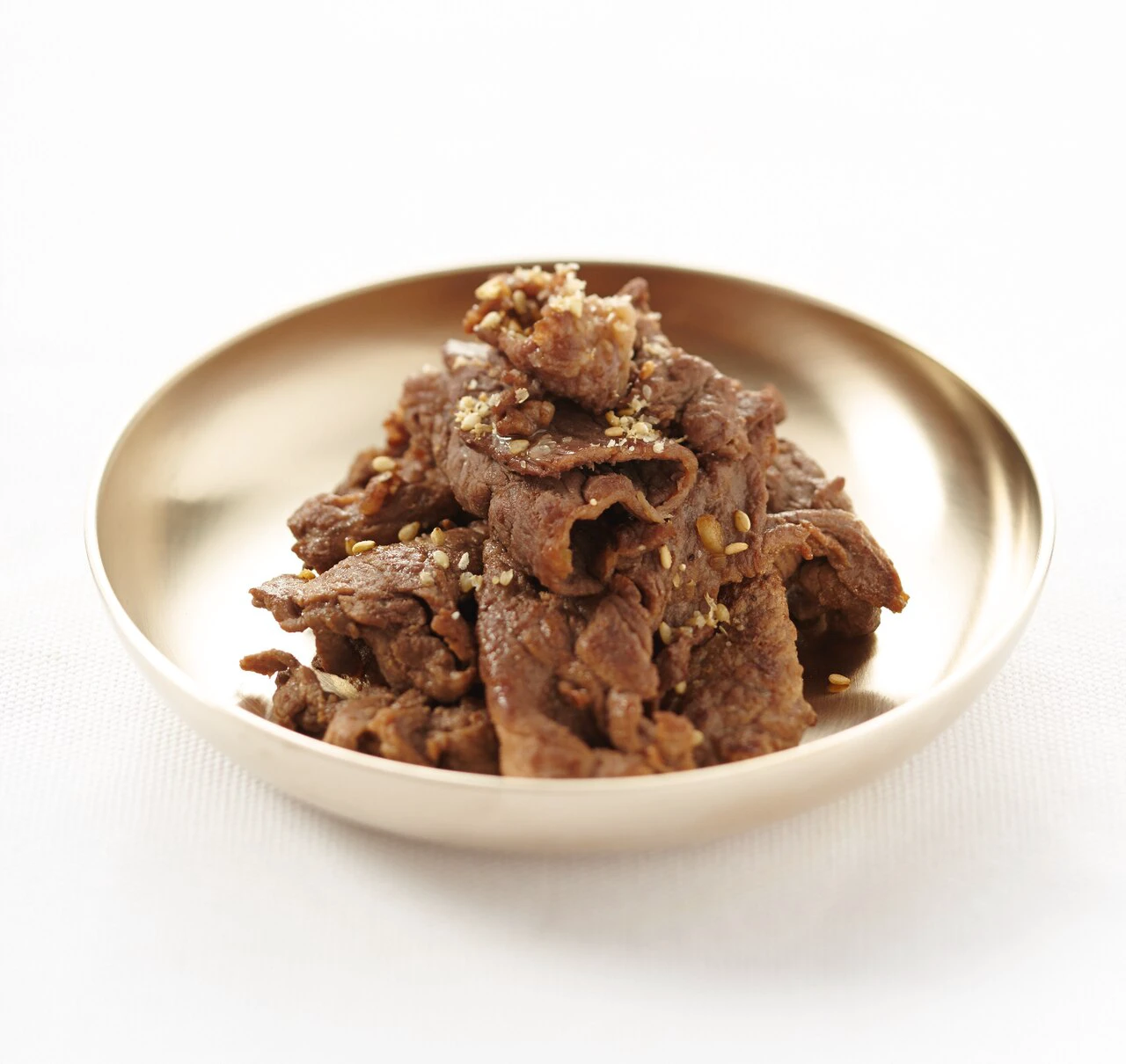
- Bulgogi (불고기) — Thin beef in a sweet-savory marinade. The familiar version is not chili-forward, but a restaurant can sell a separate spicy bulgogi. VisitKorea describes the familiar marinade and sweet flavor, rechecked August 12, 2026.
- Soy-sauce galbi (간장갈비 or 양념갈비) — Marinated beef or pork ribs are commonly sweet and savory. Look for ganjang or ask whether gochujang or gochugaru is in the marinade; ribs also mean bones.
- Samgyeopsal (삼겹살) — Plain pork belly grilled at the table has no chili coating. Keep ssamjang, seasoned scallion salad, kimchi and dipping sauces separate if heat is the concern.
- Bossam (보쌈) — Boiled pork slices are mild on their own. Kimchi, salted shrimp and dipping condiments usually arrive alongside, so build each bite selectively.
- Tteokgalbi (떡갈비) — A minced rib patty with a soy-based glaze. It is often an approachable first meat dish, but garlic, soy, sesame and black pepper can still be present.
Noodles, eggs and one handheld option
- Japchae (잡채) — Sweet-potato glass noodles with vegetables, mushrooms and often meat in soy-and-sesame seasoning. The standard dish is savory-sweet rather than chili-hot; VisitKorea confirms the soy-seasoned base, rechecked August 12, 2026.
- Gyeran-jjim (계란찜) — Soft steamed egg with a gentle flavor. It often arrives bubbling hot, which can matter more than chili for a child or anyone eating slowly.
- Gyeran-mari (계란말이) — A rolled omelet that may contain vegetables, ham or seaweed. Check the filling if the menu mentions kimchi or Cheongyang chili.
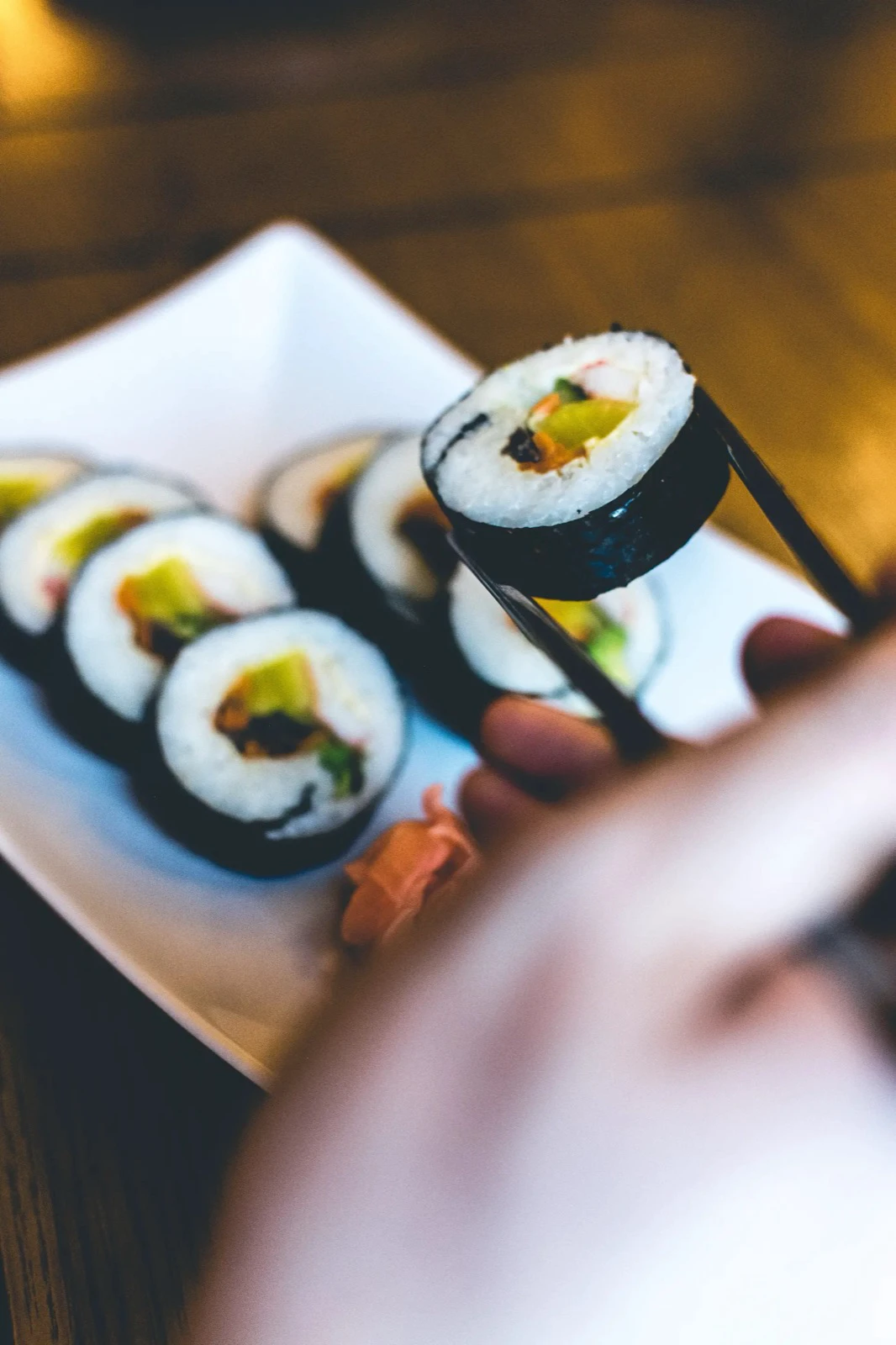
- Classic gimbap (기본 김밥 or 일반 김밥) — Rice and fillings rolled in seaweed. Choose the basic version and avoid names containing spicy, kimchi or Cheongyang; fillings differ by shop.
- Jajangmyeon (짜장면) — Wheat noodles in a dark black-bean sauce. The common version is rich and salty-sweet rather than chili-hot, though raw onion, chili powder or pickled sides may be offered separately.
Clear and milky soups
- Seolleongtang (설렁탕) — Milky ox-bone soup that diners commonly season at the table with salt and scallions. Kimchi is a side dish, not the soup base; black pepper may already be added or placed nearby.
- Gomtang (곰탕) — A beef soup that is usually clear or pale and mild. Ask for no black pepper if pepper is also irritating.
- Galbitang (갈비탕) — Clear beef short-rib soup with a savory broth. Expect bones and a serving temperature that can be more of a concern than spice.
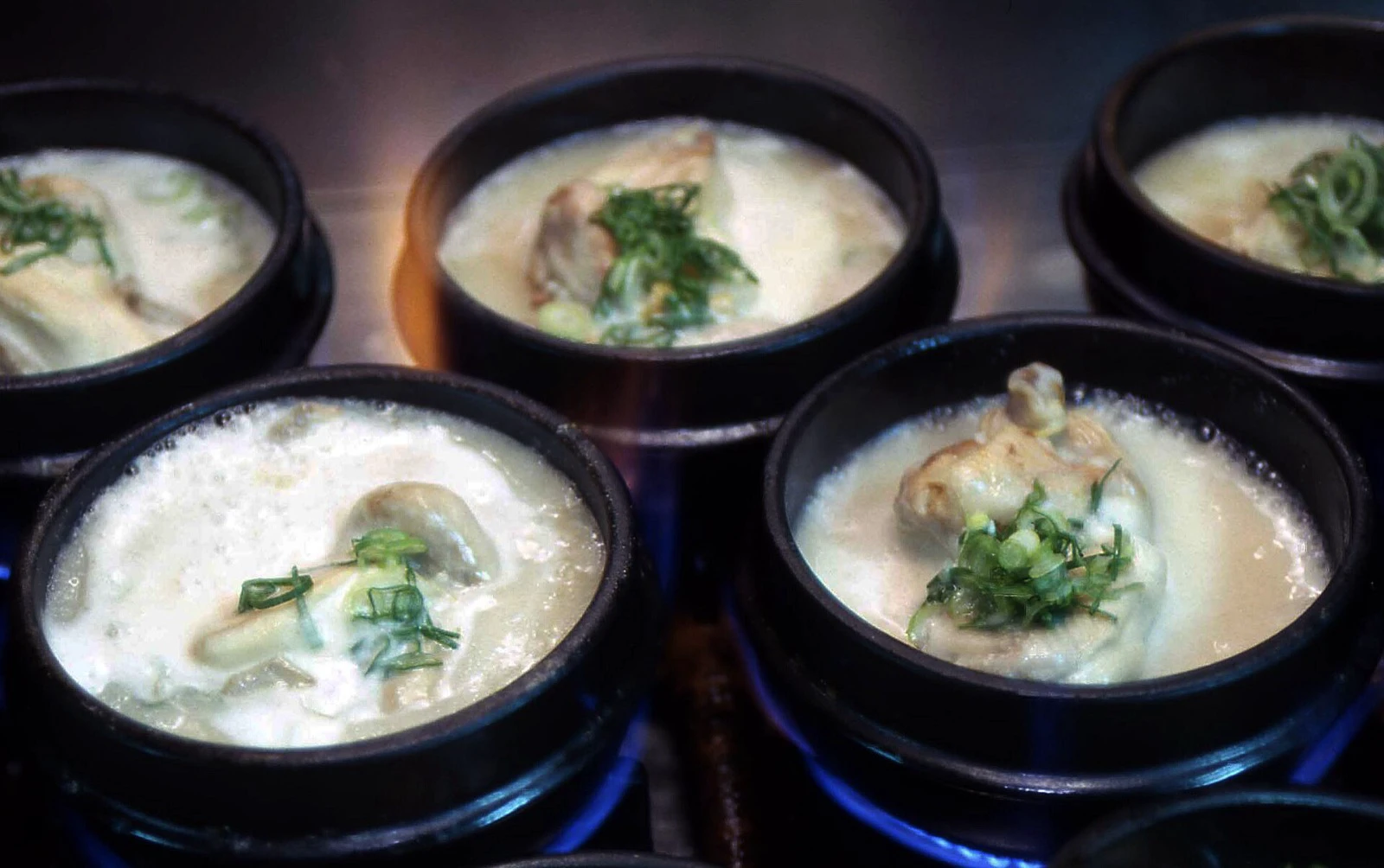
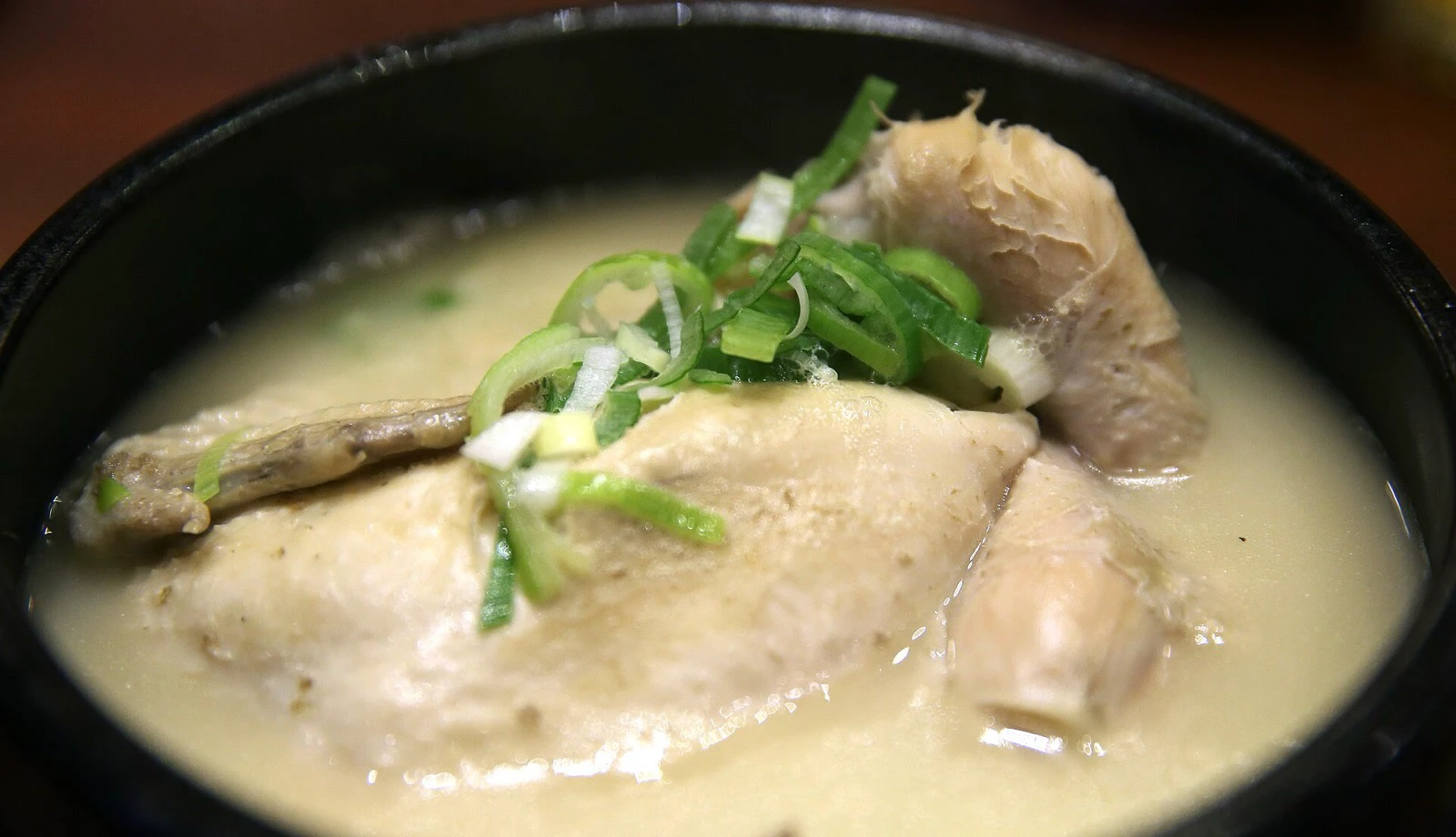
- Samgyetang (삼계탕) — A whole young chicken in a pale ginseng broth, often stuffed with rice. It is not a red-chili soup, but it contains bones and arrives extremely hot; VisitKorea's samgyetang page shows the traditional whole-chicken format, rechecked August 12, 2026.
6 dishes that need one quick check
- Tteokguk (떡국) — Sliced rice cakes in a light broth. Ask about black pepper or chili garnish. The chewy rice cakes are also a texture consideration for very young children.
- Manduguk (만둣국) — Dumplings in broth. Ask for regular meat or vegetable dumplings rather than kimchi mandu when minimizing chili.
- Jeonbokjuk (전복죽) — Abalone rice porridge with a soft texture. It can be low in chili heat but is never an allergy-safe default: it contains shellfish and may use sesame oil.
- Plain kalguksu (칼국수) — Knife-cut wheat noodles in broth. Chicken, clam and anchovy-broth versions are often mild, but regional styles vary; avoid jang-kalguksu and ask about fresh chili in seafood versions. VisitKorea's kalguksu overview documents several broth bases and regional preparations, rechecked August 12, 2026.
- Janchi-guksu (잔치국수) — Thin wheat noodles in a light anchovy broth. Ask for the chili garnish or spicy seasoned sauce to be omitted or served separately.
- Bibimbap with gochujang on the side (비빔밥, 고추장 따로) — Rice, vegetables and egg do not need to be hot, but the usual gochujang is. Request it separately and add only what you want; soy sauce or sesame oil may be an alternative when the restaurant offers it.
Choose by the problem you are solving
For a first cautious meal, bulgogi, japchae, gyeran-jjim, classic gimbap or tteokgalbi are easy to recognize and portion. For a child, also consider serving temperature, bones, chewy rice cakes and unfamiliar fillings—not only chili.
For a sensitive stomach, porridge or steamed egg may feel simpler, but no menu name is a medical guarantee. Fatty pork, garlic-heavy marinades, black pepper, very hot broth and rich stock can still be difficult without any chili. For an allergy, tell staff the exact ingredient and ask about sauces, broths and cross-contact rather than relying on “mild.” Korea's official Food Safety portal likewise advises people with food allergies to check for the causative ingredient before ordering and request its exclusion.
Removing chili from a red stew after cooking rarely solves the problem because the base is already seasoned. Choose a dish whose base is normally mild, then keep optional sauce and garnish separate.
Two short requests cover most low-heat situations:
- 안 매운 메뉴가 뭐예요? (An maeun menyuga mwoyeyo?) — Which menu item is not spicy?
- 고추장과 매운 양념은 따로 주세요. (Gochujanggwa maeun yangnyeomeun ttaro juseyo.) — Please serve the gochujang and spicy sauce separately.
A label such as mild or 순한맛 can still feel hot to someone with almost no chili tolerance. If zero heat matters, name gochujang, gochugaru and fresh chili instead of asking only for “a little less spicy.” If staff cannot confirm a serious allergy requirement, choose another restaurant rather than treating this list as a guarantee.
Sources and image credits
- Bulgogi source image — National Institute of Korean Language; CC BY-SA 2.0 KR.
- Samgyetang pots source image — Korea.net / Korean Culture and Information Service; CC BY-SA 2.0.
- Samgyetang close-up source image — Jeon Han / Korea.net / Korean Culture and Information Service; CC BY-SA 2.0; cropped.
- Gimbap source image — Jakub Kapusnak / Foodiesfeed; CC0.
- VisitKorea bulgogi guide — familiar preparation and sweet flavor; rechecked August 12, 2026.
- VisitKorea japchae guide — glass noodles and soy-seasoned preparation; rechecked August 12, 2026.
- VisitKorea samgyetang guide — traditional whole-chicken soup format; rechecked August 12, 2026.
- VisitKorea kalguksu guide — different broths and regional preparations; rechecked August 12, 2026.
- Korea Food Safety portal: food allergies — official allergen awareness and ingredient-check guidance; rechecked August 12, 2026.
- Cover image asset — soy-marinated bulgogi; Delivery Spot asset derived from the credited Wikimedia source above.
- Gimbap image asset — gimbap held with chopsticks; Delivery Spot asset derived from the credited Foodiesfeed source above.
- Samgyetang pots image asset — multiple stone bowls of samgyetang; Delivery Spot asset derived from the credited Korea.net source above.
- Samgyetang close-up image asset — whole chicken in pale broth; Delivery Spot asset derived from the credited Jeon Han / Korea.net source above.
Last updated


