
How Hallyu Entered the US and European Mainstream
Hallyu did not cross into the US and European mainstream because of one viral hit or one government plan. Korean production, Asian export experience, social platforms, fan translation, streaming investment and a chain of breakthrough works reinforced one another over two decades.

Hallyu did not suddenly wash over the West. It accumulated: Korean television and music first learned to travel within Asia, online fans reduced the language and discovery barriers, global platforms supplied scale, and a sequence of unusually visible hits persuaded Western gatekeepers that Korean work could hold mass attention. Industry investment and public policy helped build the runway, but neither could manufacture affection on command.
This analysis is current as of August 10, 2026. Here, ‘mainstream’ means durable access and recognition across major platforms, charts, awards, cinemas and everyday consumer culture—not that every American or European follows K-pop or watches Korean dramas.
First, how mainstream is Hallyu really?
There is strong evidence of structural reach. In the IFPI’s worldwide 2025 artist chart, Stray Kids ranked No. 2 and SEVENTEEN No. 14; BTS had topped the same chart in 2020 and 2021. Parasite became the first non-English-language film to win the Academy Award for Best Picture. Netflix’s decision to announce $2.5 billion of Korean-content investment over four years made Korean production part of a global platform’s core supply strategy rather than an occasional import experiment.
The latest official audience survey also shows western expansion, with an important limitation. The 2026 Overseas Hallyu Survey covered 27,400 people in 30 markets who had already experienced Korean cultural content. Within that audience, the United States recorded year-on-year gains of more than 10 percentage points for experience with Korean film, drama and variety, while music experience rose 11.3 points in France, 9.7 in Italy and 6.4 in Spain. Because the sample begins with people who have encountered Korean content, it measures depth and change among users—not the share of every resident who is a fan.
That distinction prevents two opposite mistakes. Hallyu is no longer a tiny subculture that can be explained by one superstar. It is also not a universal Western taste. Mainstream access and continuing niche intensity can exist at the same time.
The sequence mattered: Asia came before the West
1. Korea built export experience before Western gatekeepers opened
The first Korean Wave was already moving through East and Southeast Asia in the late 1990s and 2000s. Broadcasters, labels and distributors learned how to license dramas, package stars, schedule overseas promotion and adapt products to markets with different languages. Japan, China and Southeast Asia were not a rehearsal whose value began only when the United States noticed. They were major audiences, revenue sources and fan networks in their own right.
That regional base gave later Western expansion something viral moments alone do not provide: a production pipeline, trained performers and crews, catalogues of finished work, export staff, touring experience and companies willing to reinvest. When YouTube, streaming audio and global OTT services widened the door, Korean entertainment had a large supply ready to move through it.
2. The work felt familiar enough to enter and specific enough to remember
K-pop has always exchanged ideas with American R&B, hip-hop, electronic dance music and European songwriting. Korean dramas use recognizable genres—romance, crime, family melodrama, medical drama, workplace comedy and survival thriller. This familiarity lowers the first barrier. Viewers do not need a lecture on Korea before recognizing a hook, cliff-hanger or chorus.
But simple imitation would not explain lasting interest. Idol training, synchronized group performance, comeback cycles and dense visual storytelling created a different product rhythm. Dramas kept Korean speech levels, food, family obligations, housing pressure, schooling and workplace hierarchy inside globally legible plots. In the 2026 Hallyu survey, respondents were more likely to define Korean content through its ‘Korean cultural elements’ than merely its country of production. The combination is hybrid rather than pure: recognizable forms carrying a texture audiences cannot get from an interchangeable Western copy.
Distribution changed discovery, then fandom changed distribution

3. Social video bypassed old programming gates
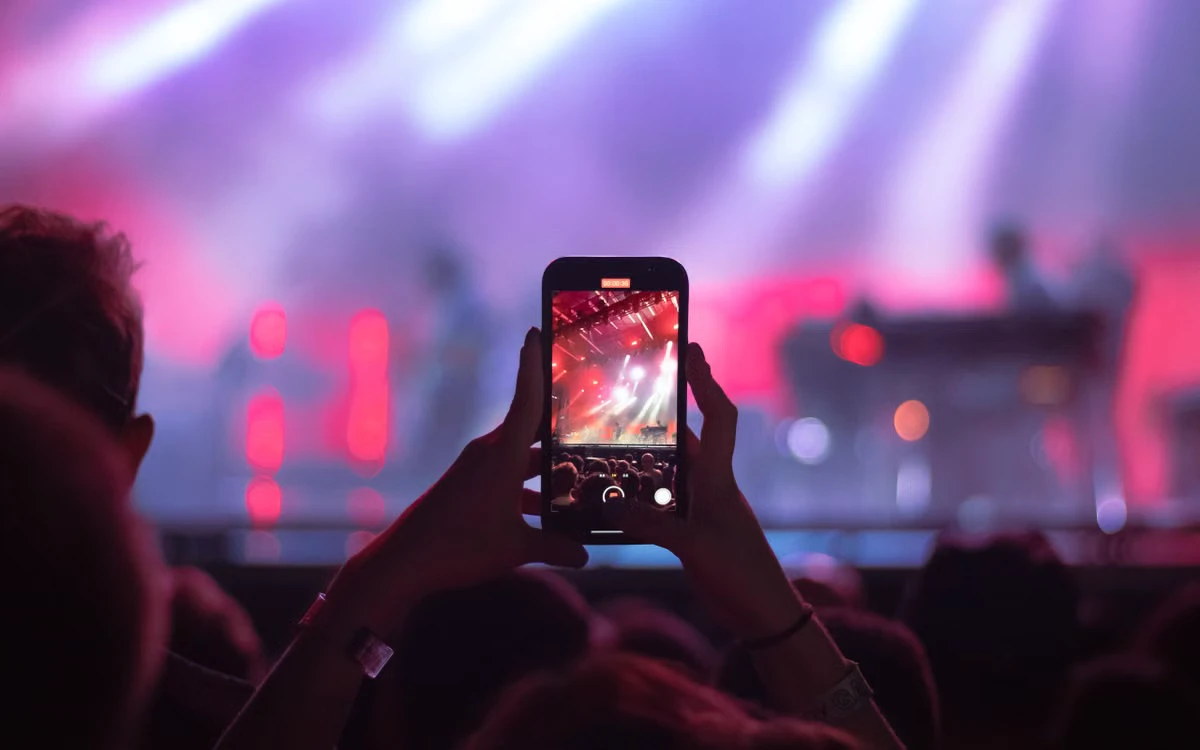
Before global video platforms, a US television buyer, European broadcaster or record distributor could decide that a Korean-language work was too risky. YouTube and later short-form feeds changed the unit of discovery. A choreography clip, reaction, fancam, meme, beauty look or dramatic scene could circulate before a full album or series had Western distribution. The viewer encountered a compelling moment first and its national origin second.
The current path is visible in official data. KOFICE reports that viewers increasingly discover Korean drama and film through SNS or short-form clips and then move to OTT services for the full work; for variety content, SNS and short-form contact reached 61.4% of surveyed users. Algorithms helped, but they did not act alone. Clips were uploaded, translated, explained, remixed and deliberately shared by people.
4. Fans performed the early localization and marketing labor
Fan translators made lyrics, interviews, jokes, honorifics and episodes usable before official subtitles became routine. They also wrote cultural notes, built archives, coordinated streaming and voting, organized local events and taught newcomers how to follow a release. A study comparing 26 Korean dramas and 451 episodes found systematic differences between Viki fan subtitles and Netflix professional subtitles, showing that localization is not a neutral switch: communities and companies foreground different language, register and cultural concepts.
Lived fan discussions reinforce the point without turning anecdotes into statistics. In a discussion about English and Western expansion, participants repeatedly described social media and readily available translations as more important than requiring every artist to speak fluent English. Early fan labor was not automatically fair or legal—volunteer translation could sit in a copyright gray area or create unpaid value for platforms—but it reduced friction and demonstrated demand.
5. Global platforms converted scattered interest into simultaneous access
Fan networks could create desire; licensed platforms made repeated, legal mass consumption easier. YouTube offered global music-video availability, streaming audio collapsed physical distribution delays, and Viki cultivated subtitled Asian-drama audiences. Netflix then placed Korean series beside US and European originals in the same interface, with professional subtitles, dubbing, recommendation systems and near-simultaneous release.
This is why ‘Netflix made Hallyu’ is too simple. Hallyu supplied an audience and production system that made the investment attractive. Netflix supplied reach, localization, capital and a low-friction next episode. The two systems amplified each other. Travelers deciding what to watch can use our guide to legal K-drama platforms and regional availability; the broader point is that availability now depends on licensing by country, not only on whether interest exists.
6. Breakthroughs formed a relay, not a single miracle
‘Gangnam Style’ proved in 2012 that a Korean-language track could become a mass Western meme. BTS and BLACKPINK turned visibility into durable fandom, touring, chart performance and brand recognition. Parasite broke a prestige-film barrier in 2020. Squid Game demonstrated that a Korean series could become shared global popular culture rather than a specialist import. Later successes arrived in a market where audiences, journalists, buyers and recommendation systems were already primed to try the next title.
Each breakthrough solved a different credibility problem. A novelty video could attract clicks; an arena tour could prove paying demand; an Oscar could change institutional prestige; a streaming hit could prove long-form, subtitled mass viewing. No single work explains the whole wave, but together they reduced perceived risk for the work that followed.

Money and policy mattered—without dictating taste
7. Korean companies industrialized attention and reinvested
Labels, broadcasters, studios, webtoon platforms and game companies built repeatable systems around production, rights, merchandise, touring and global promotion. Some of those systems have serious labor, trainee-welfare and market-concentration questions, but they also explain why Hallyu could follow a hit with another release instead of disappearing after one news cycle.
The scale is broader than music and television. KOCCA estimated that Korean content exports reached $14.9 billion in 2025, across industries that include games, music, broadcasting, comics and webtoons. A portfolio spreads risk: someone who enters through a drama may later try food, beauty, language study, a webtoon adaptation or a concert. The latest Hallyu survey found the highest experience rates in food, film, drama and music, which is evidence of cross-category circulation rather than one genre carrying the country alone.
8. Government built infrastructure and promotion, not a remote control for hits
South Korean governments treated culture as an industry, funding infrastructure, training, export support, overseas cultural centers, market research and international showcases. Public institutions such as the Ministry of Culture, Sports and Tourism, KOCCA and KOFICE reduce information and financing gaps that smaller creators cannot easily solve alone. Policy also benefits from Korea’s broadband infrastructure and a long national investment in digital access.
Yet the slogan ‘the government created K-pop’ reverses cause and effect. Ministries do not write every hook, choose every cast or make a viewer finish an episode. Companies pursue profit, artists and crews make work, platforms rank it, and audiences can ignore it. Public support increased capacity and lowered export friction; success still depended on uncertain creative and commercial choices. Policy is one layer in an ecosystem, not a master explanation.
9. Western institutions changed after demand became visible
US labels, distributors, festivals, cinemas, award bodies, retailers and brands did not simply receive a finished wave. They signed partnerships, stocked albums, booked venues, acquired rights, commissioned dubbing and created marketing teams because measurable audiences reduced the risk. In parts of Europe, festival, art-cinema and subtitling channels gave Korean film a different route through prestige institutions even as K-pop grew through youth networks and online fandom.
Mainstreaming therefore involved negotiation. Korean companies localized schedules and promotion; Western institutions adjusted their assumptions about language; diaspora communities and early adopters acted as bridges; and fans demanded access loudly enough to become a market signal. The resulting culture is transnational even when the work remains recognizably Korean.
What the one-cause explanations miss
A few shortcuts are tempting and wrong:
- ‘It was all social media.’ Social platforms accelerated discovery, but they needed professional content, committed communities, touring, licensing and follow-up releases.
- ‘It was all Netflix.’ Korean drama traveled before Netflix, and music, games, film and webtoons use different distribution systems.
- ‘It was all government strategy.’ Support can fund capability; it cannot guarantee voluntary attention or explain why some heavily promoted releases fail.
- *‘It was all BTS, Parasite or Squid Game.’* Each was transformative, but each arrived on infrastructure and audience habits built by earlier Korean and Asian circulation.
- ‘COVID created Hallyu.’ Lockdowns accelerated home streaming and online fandom, but the major music, drama and film breakthroughs were already under way.
- ‘Language stopped mattering.’ Subtitles, dubbing, bilingual members and translators did the work of making language manageable. Poor localization can still flatten relationships, jokes and social hierarchy.
Is Hallyu’s Western mainstream position permanent?
No cultural position is permanent. Platform algorithms can change, touring can become too expensive, a small number of stars can dominate visibility, and audiences can tire of aggressive release and merchandise cycles. A 2025 Reddit discussion asking whether K-pop had peaked in the West produced no consensus; some blamed saturation, while others pointed to ticket prices and group-specific cycles. That is useful evidence of fan uncertainty, not a market forecast.
Official data carries its own warning. In the 2026 Hallyu survey, 37.5% of experienced users agreed with negative perceptions of Hallyu, unchanged for a second year. The leading reason was excessive commercialism, followed by political, celebrity-conduct and domestic-industry-protection concerns. Growth can therefore deepen resistance at the same time.
The more durable achievement is not that every Korean release is now mainstream. It is that Korean-language work no longer has to prove from zero that a large American or European audience can exist. The route—from a short clip to a translated conversation, from a recommendation to a licensed stream, from one hit to a catalogue—is now familiar. Hallyu entered the mainstream because creators, industries, fans, platforms and public institutions each solved a different part of that route. Remove any one of them and the wave becomes smaller; crown any one of them as the sole cause and the history stops making sense.
Hallyu can encourage curiosity without serving as a complete picture of Korea. Our comparison of K-drama expectations with daily life is a useful next step for separating cultural themes from television compression.
Photo credits
- Concert audience: anna-m. w. on Pexels
- Couple using a streaming platform: Anastasia Shuraeva on Pexels
- Concert filmed on a smartphone: Chase R. Smith on Pexels
- Cinema audience: Bence Szemerey on Pexels
Sources and image credits
- Stray Kids ranked No. 2 and SEVENTEEN No. 14 — Checked for guide details or image attribution.
- first non-English-language film to win the Academy Award for Best Picture — Checked for guide details or image attribution.
- $2.5 billion of Korean-content investment over four years — Checked for guide details or image attribution.
- 2026 Overseas Hallyu Survey — Checked for guide details or image attribution.
- study comparing 26 Korean dramas and 451 episodes — Checked for guide details or image attribution.
- discussion about English and Western expansion — Checked for guide details or image attribution.
- $14.9 billion in 2025 — Checked for guide details or image attribution.
- K-pop had peaked in the West — Checked for guide details or image attribution.
- anna-m. w. on Pexels — Checked for guide details or image attribution.
- Anastasia Shuraeva on Pexels — Checked for guide details or image attribution.
Last updated


