
12 K-Drama Expectations About Korea vs Real Life
K-dramas amplify genuine parts of Korean life—hierarchy, food delivery, beauty pressure and public safety—then compress them into television. These 12 comparisons show what is broadly recognizable, what varies by person and workplace, and what is pure plot machinery.

K-dramas show recognizable pieces of Korea, but they are poor instructions for predicting individual Koreans. Treat food, hierarchy, dense city life, appearance pressure and late hours as real context; coincidences, chaebol romances, flawless styling and total safety are television compression.
This comparison is current as of August 10, 2026. It focuses on urban daily life while making room for differences by age, region, job, income, gender and personality.
Romance and social expectations
1. Expectation: a chance encounter is the start of a romance
Repeated meetings in a subway station, convenience store or neighborhood are efficient screenwriting. Real couples may meet through friends, school, work, hobbies or dating apps, and most interactions stay ordinary. Shared places can create familiarity; they do not turn every collision or borrowed umbrella into fate.
The useful lesson from a drama is that routines matter. The misleading part is how quickly coincidence replaces the slow work of learning whether two people actually like and trust each other.
2. Expectation: a chaebol heir is a normal dating possibility
Korea's family-controlled conglomerates are real. Their heirs are not a social type most people expect to meet, and a luxury apartment or executive title does not make the class divide in a romance realistic. The rich-heir character gives a writer money, family conflict and power in one package.
Most dating is shaped by familiar questions instead: time, distance, housing costs, career plans and whether two people fit into each other's existing lives.
3. Expectation: one grand gesture fixes a relationship
A confession in the rain, an airport chase or an all-night vigil gives an episode a climax. Off screen, boundaries still matter. Grabbing a wrist, tracking someone's movements or refusing to accept a breakup can feel controlling rather than romantic, regardless of the soundtrack.
Korean couples do celebrate anniversaries and may use matching items, but those visible customs say little about how any particular couple communicates. Affection, formality and public displays vary widely.
4. Expectation: every stranger is warm, curious and ready to help
Help in Korea is often practical and quiet. Someone may point to the correct platform, fetch a staff member or walk part of the way without starting a long conversation. Another person may avoid eye contact or give a brief answer. Reserved public behavior should not automatically be read as hostility, and one kind encounter should not become a claim about an entire country.
The mixed evidence matters. In Seoul's 2025 survey, foreign residents rated overall quality of life 7.62 out of 10 and 81.8% said they would recommend living in the city. The city's 2022 survey also found that 38.1% of foreign respondents had experienced discrimination, most often connected to nationality, Korean ability or appearance. Satisfaction and exclusion can exist in the same city.
5. Expectation: everyone looks camera-ready
Actors arrive with professional hair, makeup, wardrobe, lighting and carefully chosen angles. A street in Seoul still contains puffer jackets, uniforms, work clothes, wet-weather shoes and tired commuters. The gap is production, not a national failure to match the cast.
Appearance pressure is not fictional. Skincare, fashion, grooming and comments about looks can be more visible than some visitors expect. How strongly people participate depends on workplace, peer group, age and personal interest; it is not evidence that every Korean is stylish, thin or surgically altered.
Work, money and ordinary routines
6. Expectation: every office runs on rigid hierarchy
Titles, seniority and careful speech still shape many Korean workplaces, so dramas have real material to use. The intensity changes across public institutions, conglomerates, small firms, international teams, startups, schools, hospitals and service jobs. A scene from one industry is not a national employee handbook.
Community discussions about office dramas make the same distinction. In one K-drama discussion, people with Korean work experience described hierarchy and overtime as recognizable while repeatedly noting that company and industry changed the experience. That is useful lived context, not a workforce statistic.
7. Expectation: everyone works until dawn and drinks with the boss
Long hours remain a genuine concern, yet the legal baseline is more specific than a montage of sleeping at a desk. Korea generally caps a standard 40-hour week plus overtime at 52 hours; the OECD's 2024 Korea survey also notes that annual-leave use was 76%, so a right on paper and the ability to use it are not identical. Rules, exemptions, enforcement and actual schedules differ by employment type.
Company dinners, or hoesik, still exist. Their frequency and pressure vary by team, and a dinner can be welcome, optional, awkward or effectively compulsory depending on the manager. Ask about working hours, overtime records and after-hours expectations for the specific job instead of treating a drama's office as a promise or a warning for every employer.
8. Expectation: a rooftop room is cheap romance and a glossy apartment is normal
Housing is one of the biggest distortions because a set must communicate class immediately. Rooftop rooms signal independence and vulnerability; spotless high-rise interiors signal stability or wealth. Neither image tells you the deposit, debt, commute or legal status of the unit.
For scale, Seoul's April 2026 average apartment transaction price per square meter converts to about ₩1.3771 billion for 84㎡, though that calculation is not the median price of a specific home. Our K-drama housing cost guide separates apartment, one-room, jeonse and rooftop-room benchmarks and explains why a rooftop extension must be checked against the building register.
9. Expectation: ramyeon, fried chicken, soju and delivery are every meal
These foods and habits are real because they are visually clear, social and easy to place in a scene. They are also selected moments. Home cooking, workplace cafeterias, convenience meals, salads, regional dishes, dietary restrictions and uneventful leftovers do not receive equal screen time.
The better question is when a food makes sense. Our guide to 15 K-drama foods and when Koreans actually eat them distinguishes late-night comfort food, group meals, drinking food and ordinary staples without turning a menu into a national daily diet.
Safety and systems
10. Expectation: Korea is completely safe at any hour
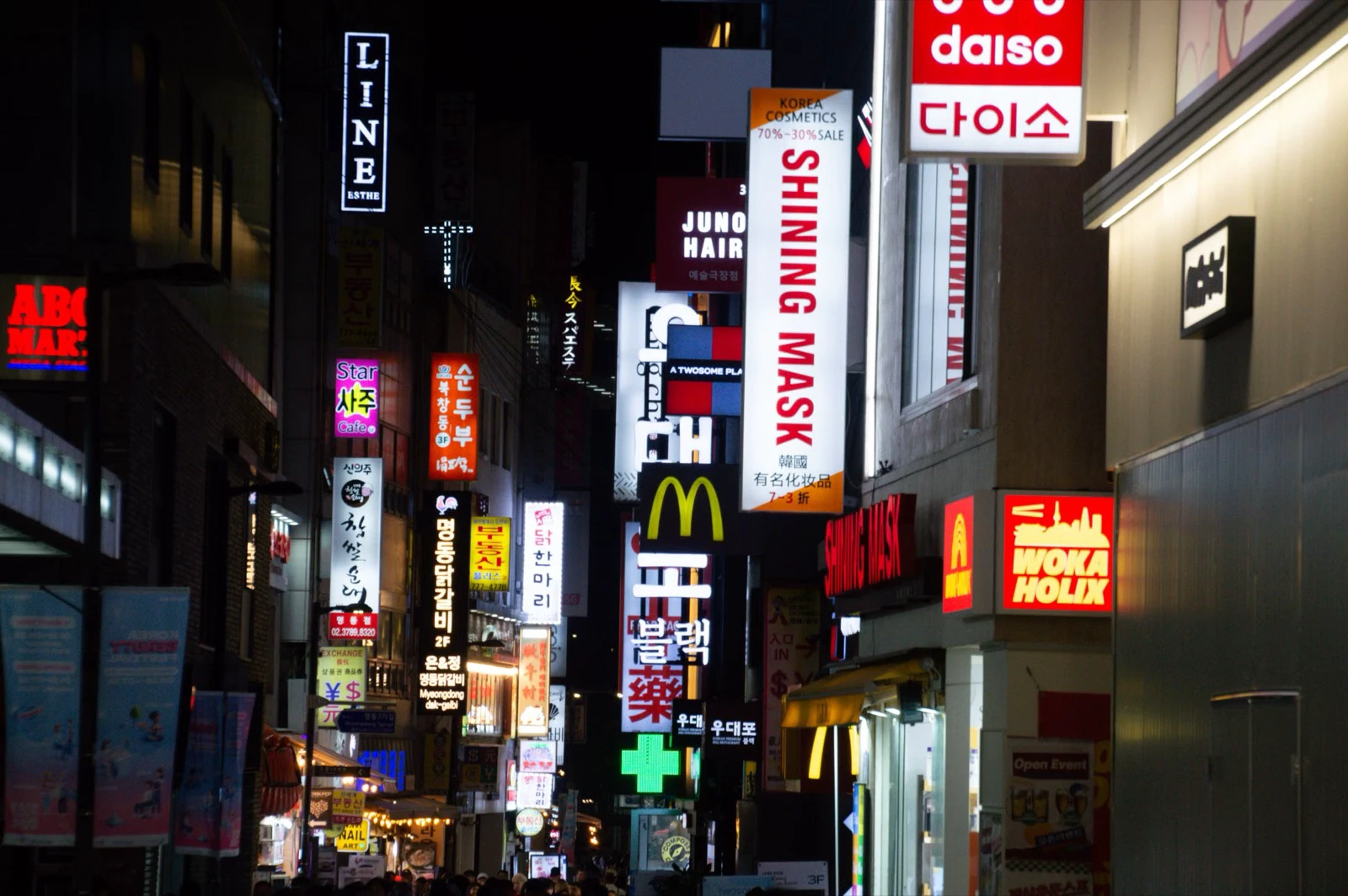
The strong street-safety impression has evidence behind it. The OECD reports that in 2022–23 close to 80% of Koreans felt safe walking alone at night, and Korea recorded fewer than one homicide per 100,000 people in 2021. That supports a comparison with other countries; it does not guarantee a particular street, relationship or night out.
Some risks are less visible in a romantic city scene. The Ministry of Gender Equality and Family said its support center assisted 10,305 victims of digital sex crimes in 2024. Stalking, intimate-partner violence, illegal filming, scams, traffic and alcohol-related situations do not disappear because street robbery is uncommon. Use normal precautions and take discomfort seriously.
11. Expectation: clean public transport makes every part of Korea effortless
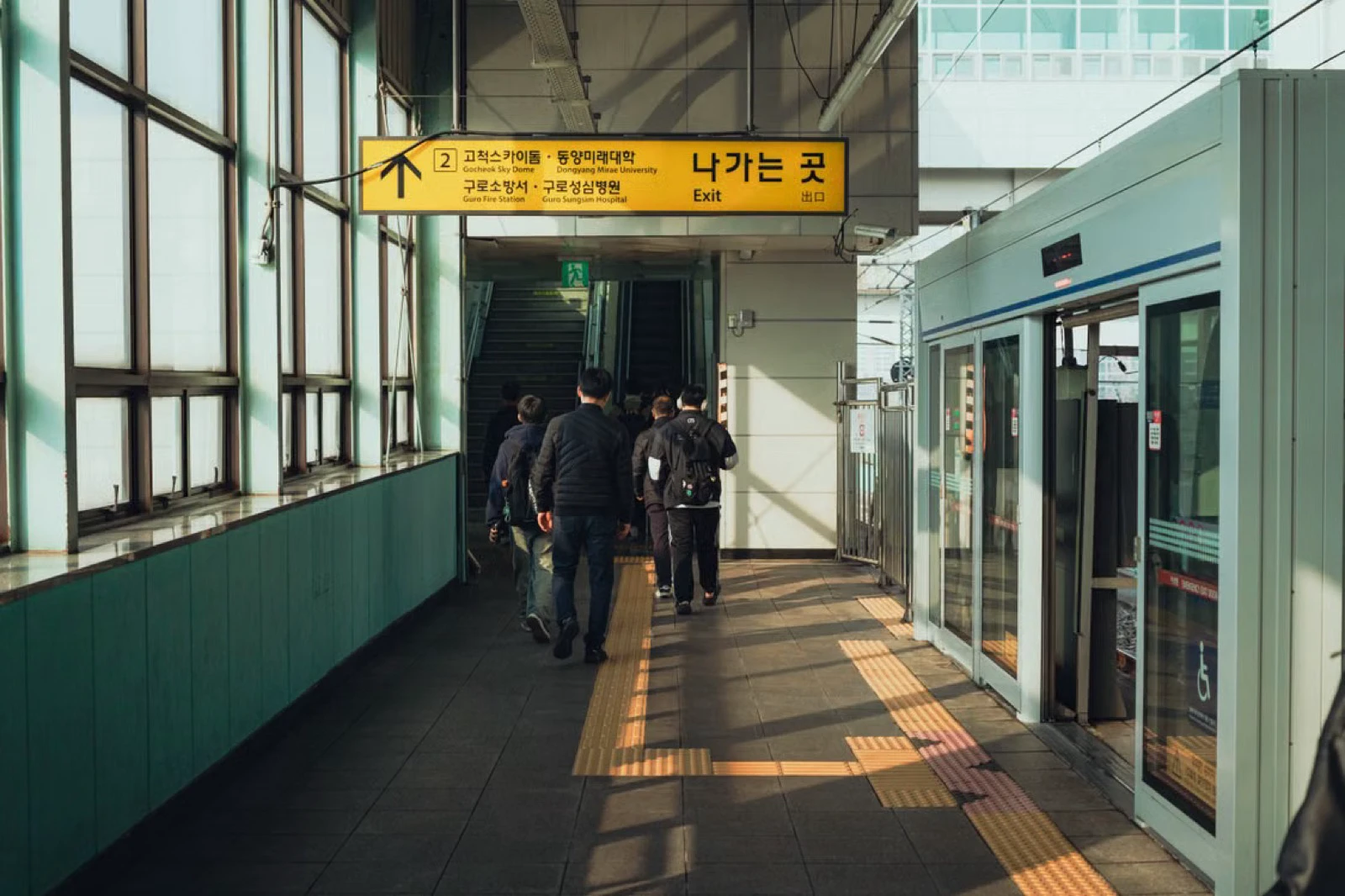
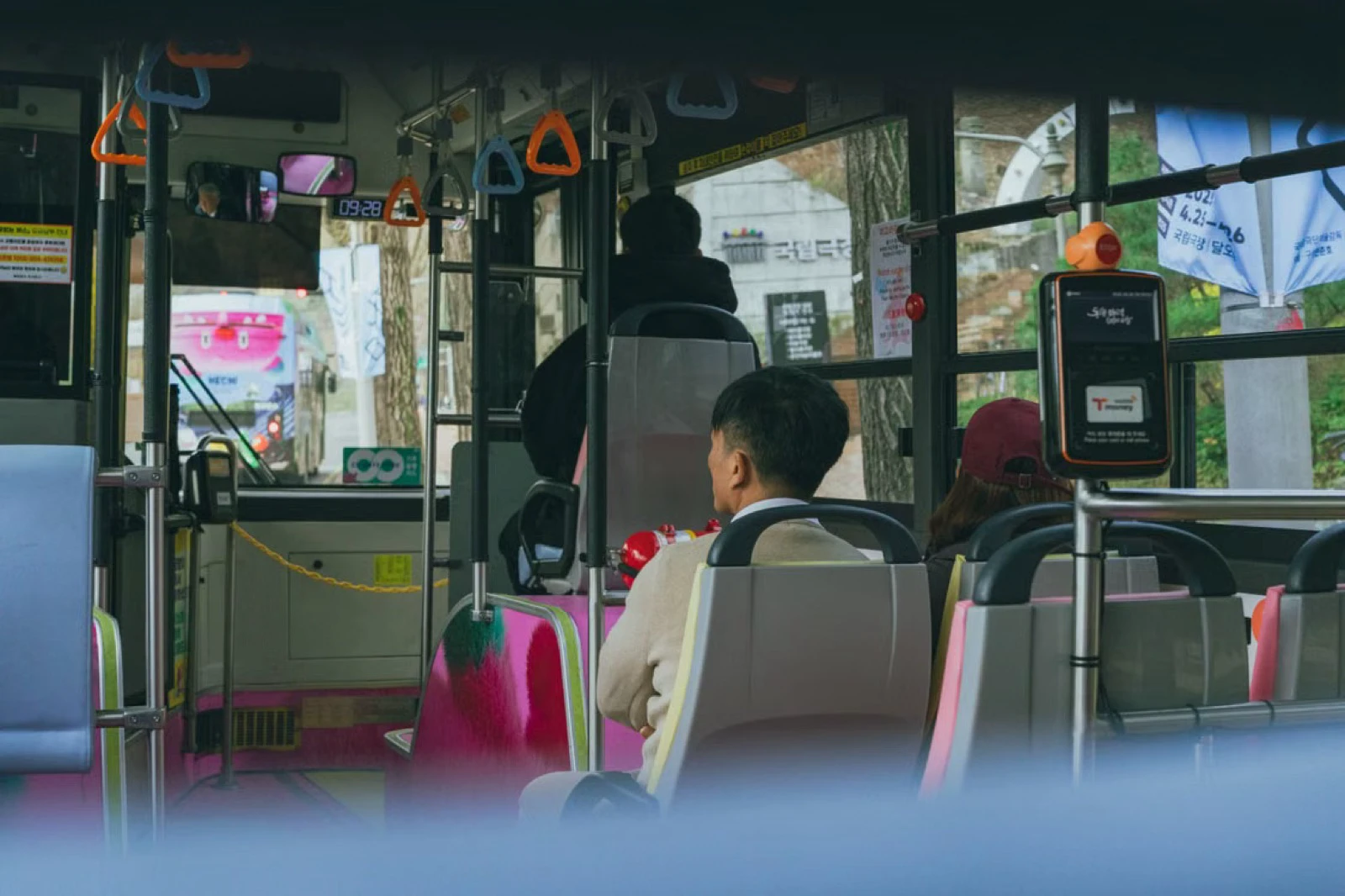
Seoul's subway and buses can make daily movement remarkably convenient. Dramas then collapse geography: homes, offices, hospitals and riverside meetings appear one transition apart, last trains rarely complicate the plot, and a long commuter journey disappears between scenes.
The real experience depends on the address and the clock. A job in Seoul can involve a long trip from another city in the capital region; late-night service ends; rural and smaller-city networks work differently. Check the actual door-to-door route rather than assuming that a subway icon means a short day.
12. Expectation: high-tech Korea is frictionless for everyone
Once a resident has a Korean phone number, matching identity record, bank account and familiar apps, deliveries and payments can feel exceptionally fast. Visitors and newly registered foreign residents may encounter a different layer: names that do not match across systems, resident-card checks, domestic payment steps or services that expect phone ownership in the user's name.
Access is improving. The Ministry of Justice introduced a mobile foreigner residence card in January 2025, but issuance itself requires an eligible physical card and a supported phone registered to the user. Recent foreign-resident discussions describe both sides: English apps, kiosks and foreign-card acceptance have improved, while identity-gated domestic services still create friction.
A drama can be a useful map of themes—status, work, family, food, housing and aspiration. It becomes misleading when a recurring device is treated as a prediction about a person. Use the screen to form better questions, then let the neighborhood, workplace and people in front of you supply the answers.
Photo credits
- Featured Seoul street: Theodore Nguyen on Pexels
- Seoul subway commute: Theodore Nguyen on Pexels
- Seoul city bus commute: Theodore Nguyen on Pexels
- Seoul night street: Saksham Vikram on Pexels
Sources and image credits
- 2025 survey — Checked for guide details or image attribution.
- 2022 survey — Checked for guide details or image attribution.
- K-drama discussion — Checked for guide details or image attribution.
- OECD's 2024 Korea survey — Checked for guide details or image attribution.
- OECD reports — Checked for guide details or image attribution.
- 10,305 victims of digital sex crimes in 2024 — Checked for guide details or image attribution.
- mobile foreigner residence card in January 2025 — Checked for guide details or image attribution.
- foreign-resident discussions — Checked for guide details or image attribution.
- Theodore Nguyen on Pexels — Checked for guide details or image attribution.
- Theodore Nguyen on Pexels — Checked for guide details or image attribution.
Last updated


