
Why Korean Bakery Cafés Are So Huge—and How to Visit One
Korea’s mega bakery cafés combine suburban land, parking, bread, scenery and long stays. Learn why the format works and when the trip is worth it.
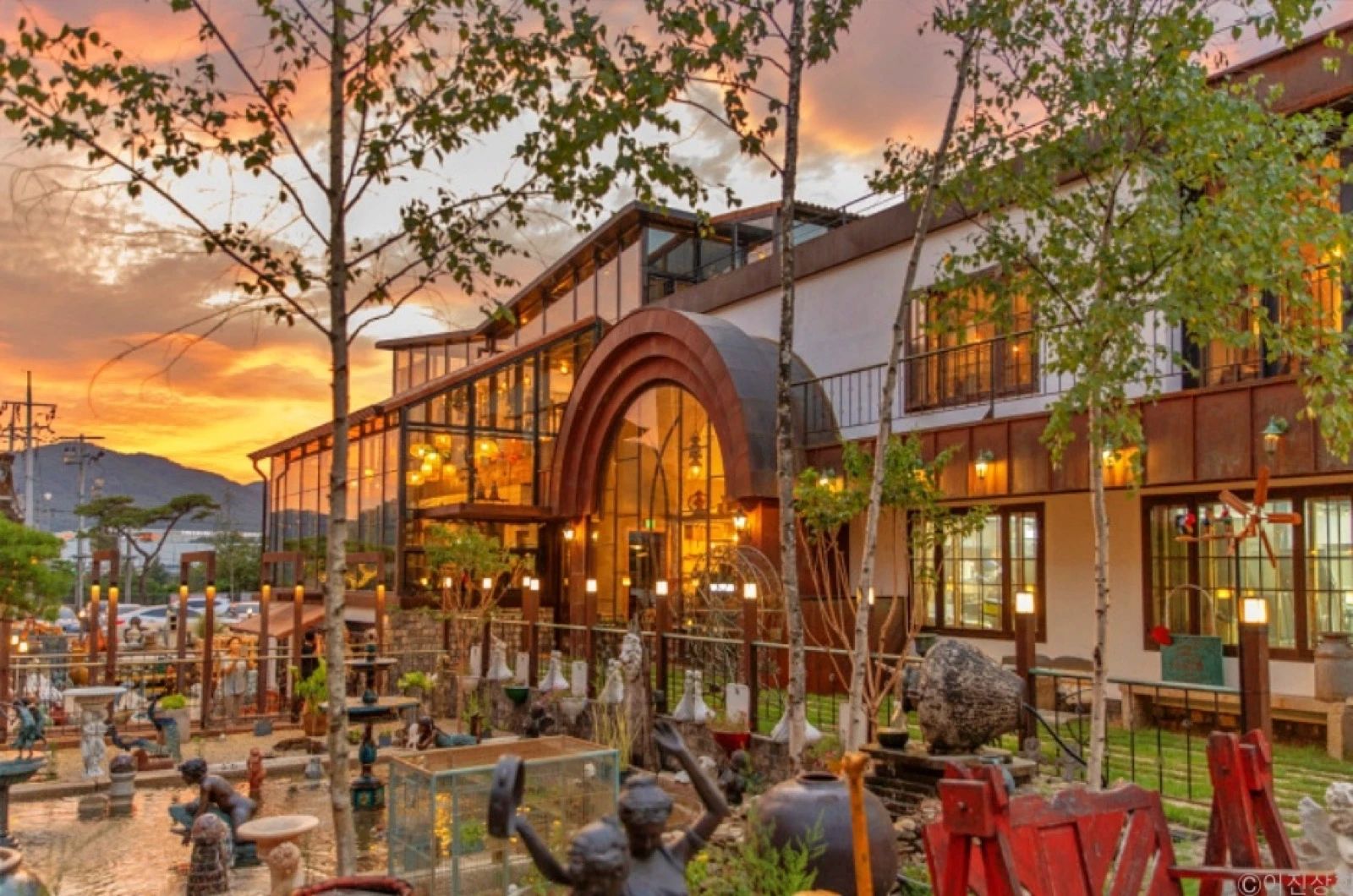
A Korean mega bakery café is not an ordinary coffee shop with extra seats. The strongest examples work as compact leisure destinations: bakery, garden, gallery-like architecture, family meeting place, and drive outing in one address. Coffee starts the visit, but the room, bread, view, and permission to linger are the real product.
That distinction is the key to deciding whether one belongs in your trip. Go when you want a relaxed half day and the building itself sounds fun. Skip it when your schedule is tight, you are chasing specialist coffee, or the last mile turns one drink into a difficult transfer.
The short answer: they sell an outing, not convenience
A neighborhood café succeeds by being close. A suburban bakery café must give people a reason to travel, so it stacks several small activities together: browse a long bread counter, choose among very different seating zones, walk through a garden or atrium, take photographs, talk for an hour, and perhaps add brunch or a nearby attraction.
Official tourism listings show the pattern without making it universal. Ijin Sanghoe in Icheon is listed as a 16,000 m² complex with restaurants, a shop, outdoor sculptures, and a bakery café. So All Too Bakery, beside the entrance to Gwangmyeong Cave, is listed with indoor and outdoor seating and a spacious car park. They are examples—not a checklist every large café follows.
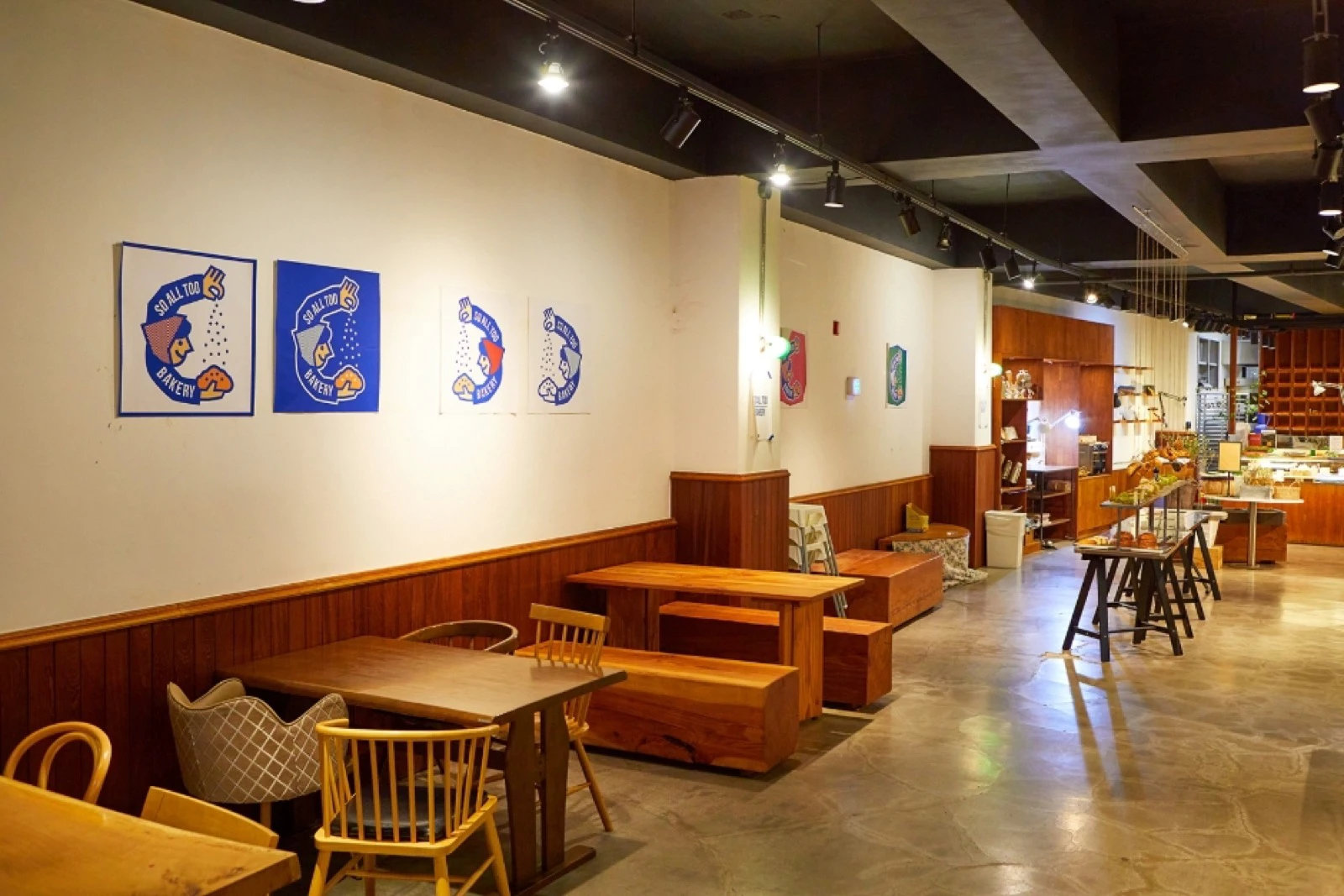
Wide aisles, varied seating, and a visible bakery counter let the visit behave more like a leisurely outing than a quick drink stop.
Why the suburbs make the format possible
Land, production space, and parking arrive together
A multi-floor café with ovens, proofing and storage areas, bread displays, gardens, terraces, and hundreds of seats needs a large site. Outside the most expensive commercial districts, an operator can fit those functions together and place parking beside them. For couples, families, and multigenerational groups, arriving in one car is part of the convenience.
The journey also changes expectations. After driving out of town, most groups do not want to collect one takeaway coffee and immediately leave. They explore the building, order something to share, wait for a new batch of bread, and stay long enough to make the trip feel worthwhile. Distance is a weakness that the venue tries to convert into dwell time.
Scenery can do the job of a central address
Rice fields, a river, a reservoir, a wooded edge, or a landscaped garden can give an outlying site what a city-centre branch cannot reproduce cheaply. Large windows frame the view; terraces and rooftop decks make it part of the circulation. A seemingly ordinary rural landscape becomes seasonal scenery.
Greenhouse cafés use the same logic indoors. Plants soften a warehouse-scale room, divide it into smaller zones, and give visitors paths and photo backgrounds. The trade-off is real: the most dramatic room may also be louder, warmer, or busier than the photographs suggest.
The tax story needs careful limits
Korean news reports in December 2024 and January 2026 examined whether some large bakery-café businesses could qualify for family-business succession tax provisions. In February 2026, Korea’s National Tax Service also announced a fact-finding review of large bakery cafés and distinguished eligible business categories such as bakeries and restaurants from ineligible categories such as coffee shops.
That is a supply-side issue worth knowing, but it is not a universal explanation. A building that sells bread is not automatically eligible; business form, principal industry, operating history, ownership, assets, employment, and post-transfer obligations can matter. The reporting does not prove any individual café’s motive or guarantee a tax result. Travelers should treat this as policy context, not as a verdict on every venue and certainly not as tax advice.
Why bread is central, not decoration
Bread makes a large café easier to use as a group. One table can share a savory item, a sweet pastry, cake, and drinks without agreeing on a full restaurant meal. The counter also adds aroma, color, browsing time, and take-home purchases across breakfast, afternoon snack, and evening visit.
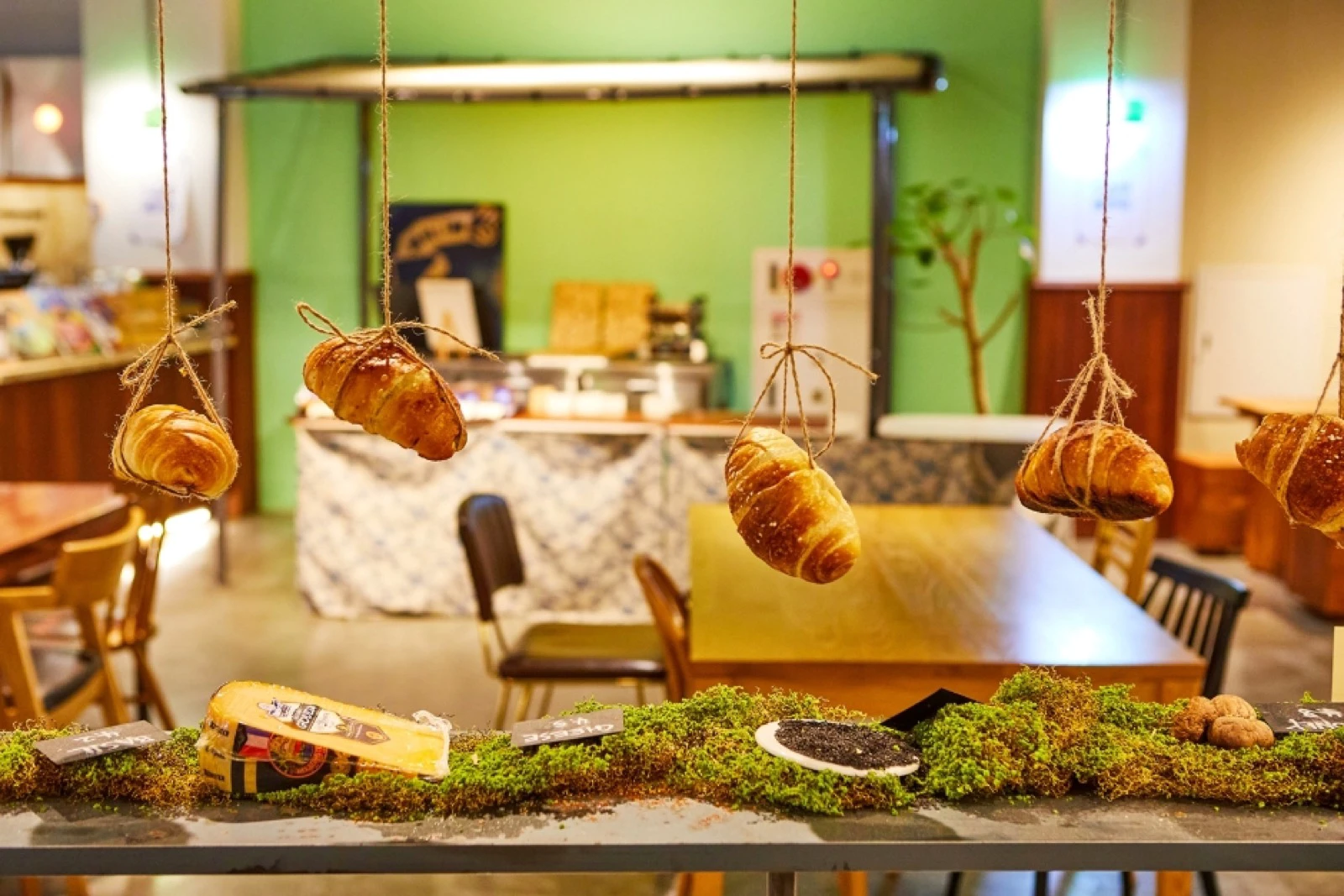
A theatrical display turns ordering into browsing and makes the bakery part of the room rather than a separate transaction.
There is a practical operating logic too. Ovens, mixers, proofing, cooling, storage, and repeated production batches require space. A large room also needs more spending per group than a small takeaway shop; pastries make sharing and add-on purchases easy. The bakery operation and the big floor plan reinforce each other.
For visitors, the lesson is simple: size does not guarantee better coffee or bread. Look for fast turnover, fresh batches, and one or two items the venue is known for. Menu prices, minimum-order rules, parking benefits, and admission-style policies are venue-specific and can change; check the exact branch on the day you visit instead of carrying an old price screenshot.
Photo culture shapes the architecture
Social media did not create Korea’s café culture, but it rewards spaces that can be recognized in one image. Tall atriums, footbridges, pools, mirrors, planted staircases, sculptural façades, and floor-to-ceiling windows give each venue a visual signature.
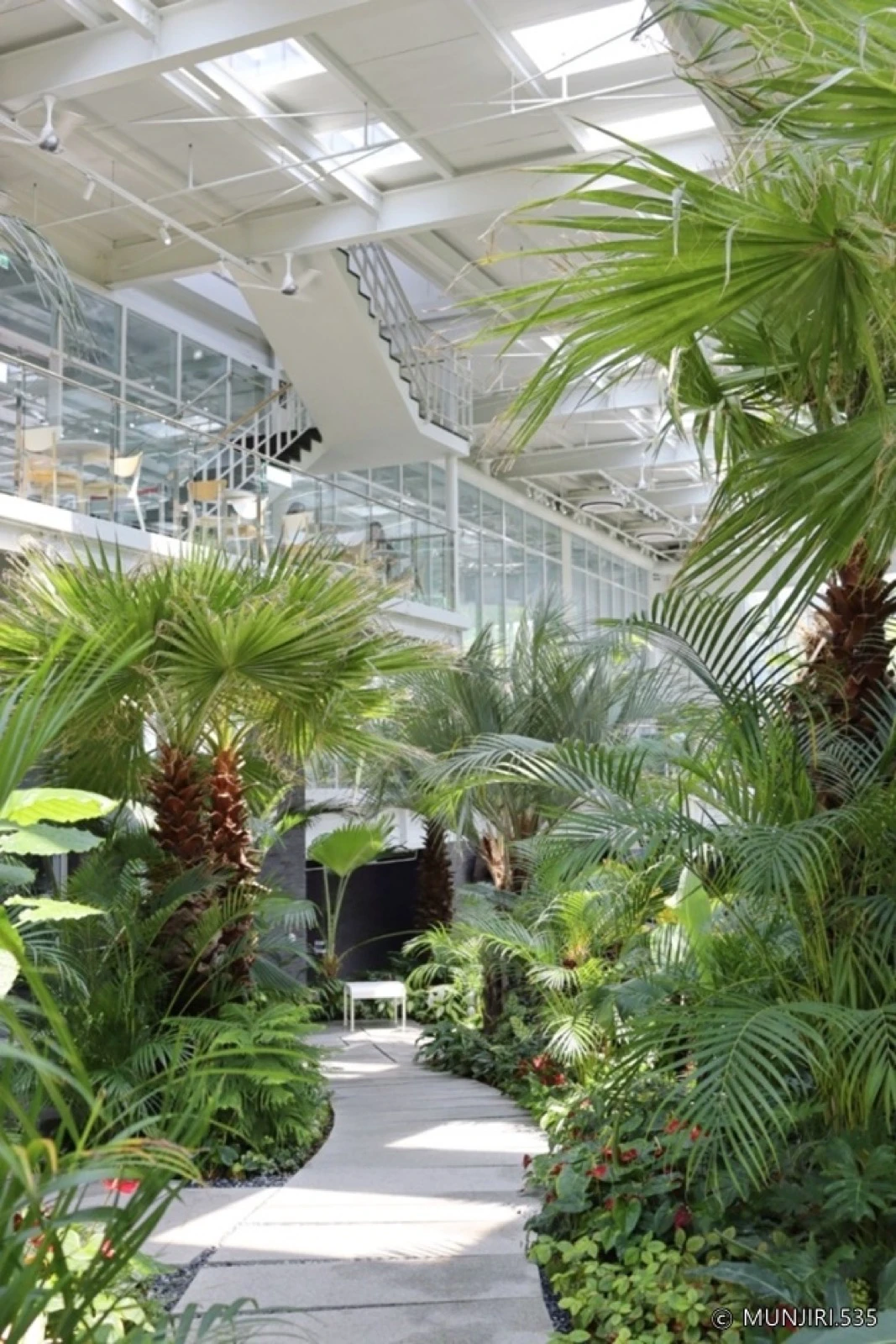
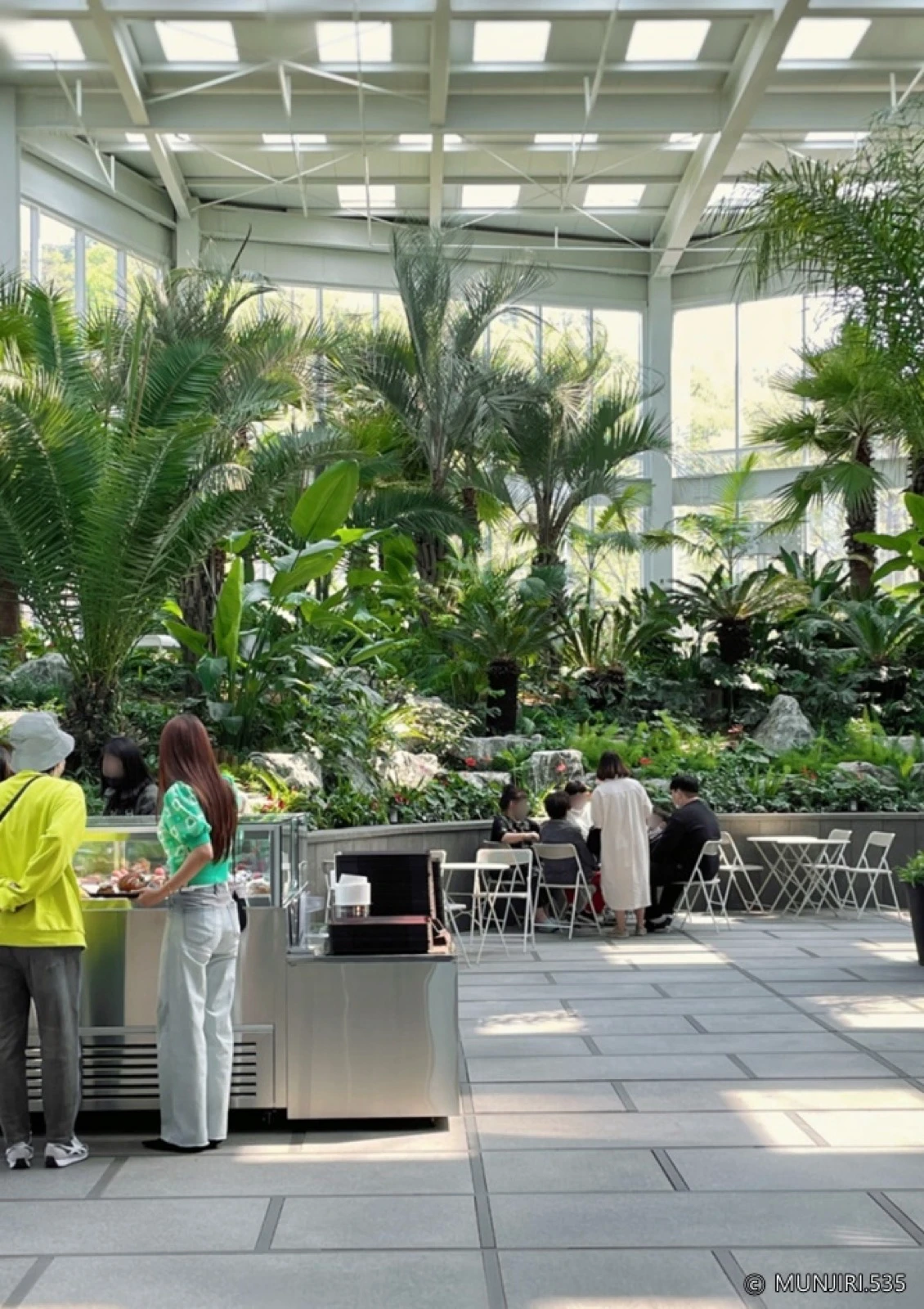
At Munjiri 535, the planted path invites a walk and a portrait, while seats beside the indoor garden support the longer stay.
The most effective buildings provide several scenes rather than one famous corner. Visitors move from façade to bread table, garden, staircase, and window view. That movement animates a very large room, but it also creates friction: popular seats turn over slowly, photo sessions can obstruct walkways, and peak periods may feel more like an attraction than a quiet café.
Why long stays feel normal
Korean cafés often work as living rooms outside the home: friends catch up, couples date, families rest after a drive, and people work or wait between plans. A suburban mega café amplifies the social version with large tables, multiple seating zones, food for sharing, and enough space for different groups to coexist.
OpenSurvey’s 2024 café report is about broader café use rather than mega cafés specifically. Its nationwide survey found widespread recent café use and differences in how people use value and premium brands. That supports the larger point that Korean café visits serve different social purposes, but it does not measure how long visitors remain in giant bakery cafés.
A 2026 traveler discussion on Reddit includes an observation that sitting in cafés for hours can feel normal in Korea. It is useful as an anecdote only, not survey evidence. Lingering still depends on a reasonable purchase and the venue’s current rules; it is not permission to occupy extra seats, ignore time limits, or bring outside food.
How to visit one without wasting half the day
1. Verify the last mile in both directions
Search the exact Korean venue name in Naver Map or Kakao Map. Check the route at the time and weekday you plan to travel. Some cafés that look close to Seoul require an infrequent local bus, an uncomfortable roadside walk, or a taxi that is harder to find on the return. If you are not driving, solve the journey home before leaving.
Recent venue notices and visitor photographs are more useful than an old “best cafés” list. Confirm construction, garden or rooftop closures, parking rules, pet zones, order minimums, and whether the space you want is still operating.
2. Choose timing by your real priority
- Quiet rooms and cleaner photographs: go close to opening on a weekday.
- The broadest bread choice: late morning often works better than the first few minutes after opening, but every bakery has its own batch schedule.
- Sunset and night lighting: expect more atmosphere and a higher crowd risk, especially on weekends.
- A genuinely quick coffee: choose a city bakery. A remote mega café rarely rewards a rushed 30-minute detour.
3. Order in two passes
First learn the queue and seating system, and ask whether each guest must order a drink. Then choose one signature bread, one savory item if the group needs it, and drinks. If everyone is still hungry, return to the counter. This is better than buying a photogenic tray and carrying cream-filled leftovers all day.
Ask which breads travel well before buying gifts. A warm loaf may be excellent now but a poor suitcase item; chilled cream pastries need more care than most sightseeing days allow.
4. Treat the room as shared space
Keep bags off spare chairs at busy times. Do not stop on stairs or service aisles for photographs, keep strangers out of close-up frames, and watch children around water and railings. Follow current adult-only, pet, rooftop, and outside-food rules.
If accessibility matters, verify the route from parking or the drop-off point, step-free entrances, lifts, accessible toilets, and whether the garden itself is navigable. A large building is not automatically barrier-free.
Is a mega bakery café worth it for your trip?
Choose one when you have a car or an easy taxi plan, want a weather-flexible group outing, enjoy architecture or gardens, and can pair it with a nearby attraction. It is a weaker choice when your main goal is precision-brewed coffee, you have only a short Seoul visit, or public transport makes the last mile uncertain.
Plan it as one anchor, not an extra stop squeezed between landmarks. If you are carrying luggage, leave it before the drive or find a nearby Delivery Spot. For a city-focused alternative, use our Seoul café guide by neighborhood and avoid spending your day in transit.
The format makes sense once you stop asking why a coffee shop needs to be so big. The size is the product: it absorbs a drive, a meal-like snack, photographs, conversation, and rest into one destination. The bread gives the group something to share; parking and scenery make the location workable; and long-stay café habits make the floor area useful.
Facts and live listings were rechecked on August 12, 2026. Hours, menus, prices, access rules, and tax law can change; confirm the exact venue and seek qualified advice for any tax question.
Sources and image credits
- Delivery Spot — wide bakery-café interior — Published web asset retained from the original guide; the original venue or photographer was not recorded, so no more specific attribution is asserted.
- Delivery Spot — theatrical salt-bread display — Published web asset retained from the original guide; the original venue or photographer was not recorded.
- Delivery Spot — Munjiri 535 greenhouse walkway — Published web asset retained from the original guide; venue identification follows the original caption and KTO coverage.
- Delivery Spot — Munjiri 535 indoor garden seating — Published web asset retained from the original guide; venue identification follows the original caption and KTO coverage.
- VISITKOREA — Ijin Sanghoe — Official 16,000 m² site description, bakery café, restaurants, shop, ceramics, and outdoor sculptures; rechecked August 12, 2026.
- VISITKOREA — So All Too Bakery — Official location, indoor and outdoor seating, parking, and bakery range; rechecked August 12, 2026.
- VISITKOREA — Munjiri 535 — Official venue reference retained from the original guide; the page was intermittently unavailable during the August 12, 2026 recheck.
- Korea Tourism Organization — greenhouse café feature — Official feature used for greenhouse paths, planting, views, and photo-oriented design; page intermittently unavailable during recheck.
- OpenSurvey — Café Trend Report 2024 — Nationwide café-use context; surveyed 2,000 people aged 15–59 and 1,400 recent franchise-café users, not mega-café dwell time.
- Channel A — December 2024 large bakery-café report — News reporting on growth and family-business succession questions; treated as reporting, not proof of any venue’s motive.
- MoneyToday — January 2026 follow-up — Follow-up reporting on the policy controversy and potential review; not tax advice.
- r/koreatravel — cultural-surprises discussion — Personal traveler observations used only as anecdotal context.
- Delivery Spot cover image file — Published web-ready cover retained from the original guide; the original venue or photographer was not recorded.
- National Tax Service — family-business succession support — Official overview showing that eligibility and post-transfer obligations are conditional; rechecked August 12, 2026.
- National Tax Service — February 2026 large bakery-café fact-finding notice — Official distinction between listed eligible sectors and coffee shops, plus the announced review; rechecked August 12, 2026.
Last updated


