
Is Seoul Really Open 24 Hours? A Guide to Its Different Clocks
Seoul stays active late, but every door, kitchen and return route follows a different clock. Use this time-band guide to verify the exact branch and trip.
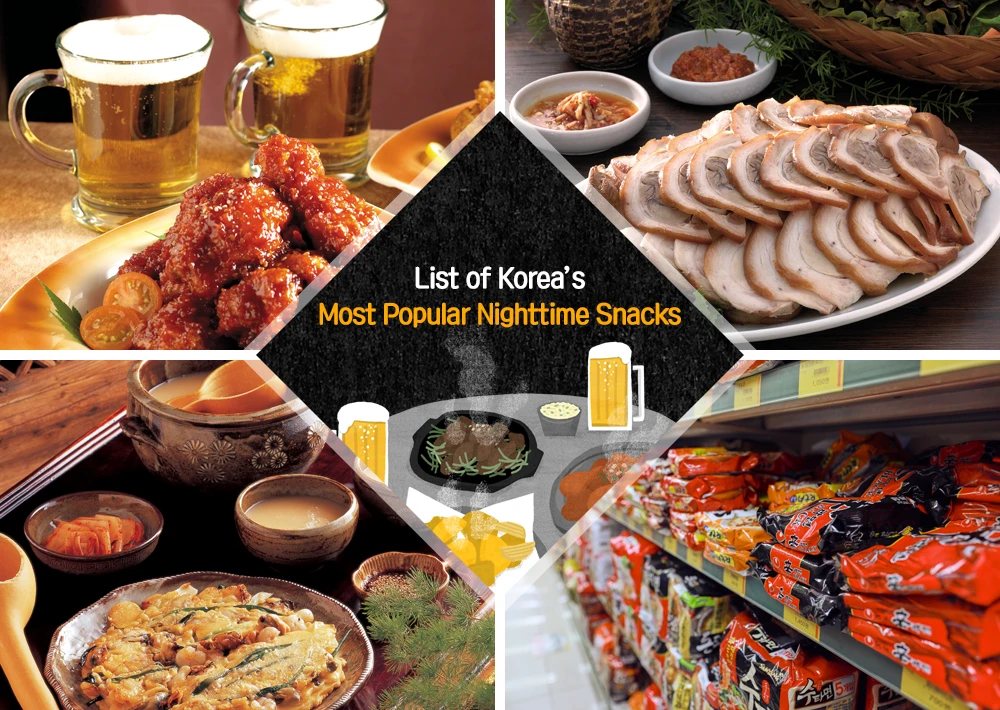
Seoul is not one 24-hour machine. It is a city of overlapping clocks: the door may be open while the kitchen is between services, an attraction may still be open after last admission, and a district may be lively after the last useful train for your route has gone.
The practical answer is therefore no—Seoul is not universally open around the clock. It has genuine late-night food, transport and entertainment, but those services are concentrated by branch, category, neighborhood and date. A traveler discussion about arriving at 5–6 a.m. illustrates the gap: early arrivals found selected restaurants, convenience stores, saunas and outdoor walks, not a fully open sightseeing city. Treat that thread as experience, not an operating-hours authority.
The three clocks to check
Before fixing any early or late plan, confirm three separate things:
- The venue clock: opening, last admission, break time, last order and closing.
- The service clock: whether the kitchen, ticket desk or activity you need is still operating.
- The return clock: the last comfortable route back to your actual hotel, including every transfer.
The official Visit Seoul subway guide gives approximately 5:30 a.m. to midnight as a network summary and says times vary by station. That range is orientation, not a promise for one platform, direction or connection. Search the complete trip for the date and leave margin.
The current VISITKOREA apps and resources guide says Naver Map can show routes, estimated travel times and, when available, business hours, reviews and related links. Use the live listing to identify what needs checking; for a must-do stop, confirm the exact branch on its official notice or reservation page.
A 60-second check before leaving
- Is this the correct branch and date?
- Is today a regular closing day or temporary closure?
- Does 브레이크타임 (break time) interrupt service?
- Is there a separate 라스트오더 (last order) or last admission?
- Is “24 hours” attached to this branch, not only the brand?
- Can the full return route still work after the visit?
If two listings disagree, prioritize the venue’s current dated notice. A map entry is useful, but it can lag behind a same-day closure or seasonal schedule.
5–8 a.m.: the transport day begins before visitor Seoul
Early trains and commuter services start before most museums, shops and destination cafés. Plan a confirmed breakfast plus an outdoor fallback—a riverside path, park or neighborhood walk—rather than wandering until something opens. If you have just landed, count these hours as arrival and luggage time, not as a free sightseeing block.
8–10 a.m.: branch choice matters
An office district may have coffee for commuters while a famous café nearby is still closed. Palaces, markets and museums also open independently. “The neighborhood is awake” does not tell you whether your exact door is open.
For a fixed morning booking, read the venue page once more before departure. For a flexible café, save two options within the same area so one late opening does not send you across Seoul.
10 a.m.–2 p.m.: the broadest overlap, with one trap
Late morning and lunchtime usually offer the widest overlap among attractions, cafés, shopping and meals. The trap is confusing closing time with the last time you may enter or order.
- Opening time: customers may enter.
- Last admission: a ticketed venue stops admitting visitors.
- Last order: the kitchen or bar stops accepting orders.
- Closing time: customers are expected to leave.
Record the last admission beside a must-see attraction and the last order beside an important meal. Arriving ten minutes before “closing” may be too late even when the lights are on.
2:30–5 p.m.: restaurant break time can erase a late lunch
Many restaurants separate lunch and dinner with 브레이크타임, although the practice and hours are not universal. Two Korean first-person posts show the planning problem: one Yeouido diner deliberately chose a restaurant serving through the afternoon, while one Yongsan visitor arrived just before the listed break. These are individual visits, not evidence that every restaurant follows the same schedule.
Useful labels on Korean listings:
- 영업 중: open now
- 영업 종료: closed for the day
- 브레이크타임: pause between services
- 라스트오더: last order
- 정기휴무: regular closing day
- 24시간 영업: open 24 hours—verify the branch and date
If lunch may slip past 2 p.m., select the restaurant before leaving the previous stop and save one continuous-service backup nearby.
5–9 p.m.: dinner is available, but time is not unlimited
Busy dinner areas introduce waits, reservations and early last orders. Market buildings are especially easy to misread because individual stalls can keep different hours. For a meal that matters, arrive inside the service window rather than at its edge, and work backward from last order—not from the room’s closing time.
9 p.m.–midnight: lively streets, narrowing choices
At 10 p.m. a street may look energetic while shops are closing and kitchens are taking final orders. Late-night eating is real, but it is neighborhood- and category-specific. The Visit Seoul collection of popular nighttime foods is useful inspiration; it does not confirm that the nearest chicken, jokbal, jeon, noodle or soup restaurant is serving tonight.
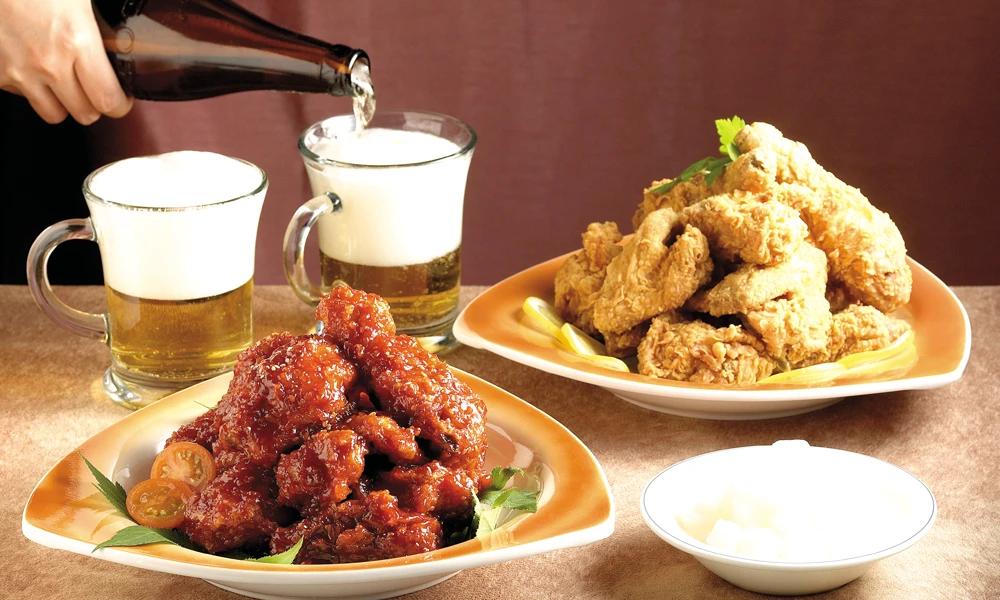
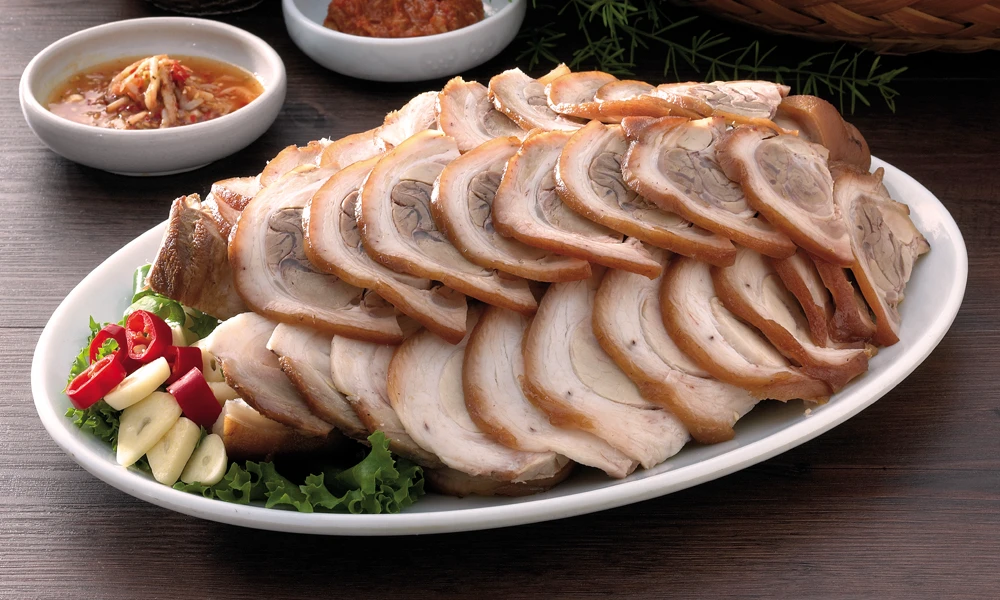
Photos: Seoul Tourism Organization / Visit Seoul. A food associated with late-night dining is not proof that every seller stays open late.
Ask two questions before sitting down: Can the kitchen still take my order? Can I still get back afterward?
After midnight: plan a pocket and a route
Seoul has selected N-numbered nighttime bus services known as Owl Buses. The Seoul Metropolitan Government’s Owl Bus explainer explains the concept, but it was published in 2016; its route counts and operating details are historical, not a current timetable. Check the live route, direction and stop for your date.
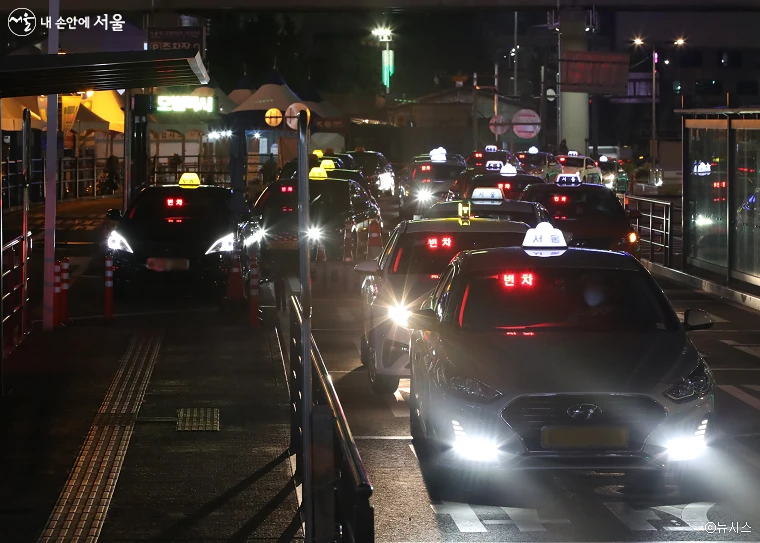
Photo: Newsis via Seoul Metropolitan Government. Taxis exist overnight, but pickup conditions, queues, traffic and fares can differ from a normal subway trip.
Decide before dinner whether the return will be a verified night bus, taxi, a walk within the same district or an overnight venue. “The subway runs until midnight” is not enough: your last useful journey depends on the station, direction, day and transfers.
The safer last-train routine
- Search your hotel as the destination, not a major station nearby.
- Set the expected departure time and inspect every transfer.
- Note the final walking segment and station exit.
- Save the last comfortable trip, then aim one train earlier.
- Save a fallback pickup point or night-bus stop before going out.
For multilingual visitor assistance, the official 1330 Korea Travel Helpline can help with general travel information. For exact same-day venue hours, the venue’s own current notice remains the stronger source.
What changed in the current official picture
Seoul’s 2026 Seollal transport notice says 14 night-bus routes normally operate from 11 p.m. to 6 a.m., while its holiday subway extensions were special measures and last-train schedules differed by operator. In other words, a holiday notice can confirm that exceptions exist; it should never be copied as an ordinary-night timetable.
The city’s current bus overview still identifies Owl Bus as a night-service category. A separate 2022 city announcement on the expanded night-bus network lists the 14 N routes and points riders to live transport information. Use those pages to understand the system, then use current journey data for the trip itself.
Build a day that survives one closed door
- Before 9 a.m.: one confirmed breakfast and one outdoor backup.
- Late morning: timed attractions and destination cafés.
- 2–5 p.m.: a verified continuous-service meal or deliberate snack fallback.
- Dinner: arrive before last order, not merely before closing.
- After 10 p.m.: choose the meal and return route together.
- After midnight: stay in a known late-night pocket and verify the exact route home.
If this is your arrival day, pair these checks with the first-day plan after a long flight. If luggage or shopping bags make a closing-time plan awkward, choose a nearby handoff point through Delivery Spot before you set out.
Seoul feels generous late into the night because different versions of the city overlap—not because every door stays open. Plan the door, the service and the return separately, and one changed hour will not undo the whole evening.
Sources and image credits
- Reddit — Early-morning arrival discussion — Traveler experience used only to illustrate the limited 5–6 a.m. choice set.
- Visit Seoul — Subway — Official network-level operating-hours orientation; station and route times vary.
- VISITKOREA — Helpful Apps & Resources — Official description of live route and business-information tools; rechecked August 12, 2026.
- Naver blog — Yeouido afternoon meal — One diner’s no-break-time example; not a citywide rule.
- Naver blog — Yongsan break-time arrival — One branch-specific visit; not a universal schedule.
- Visit Seoul — Popular nighttime foods — Official food inspiration, not current branch-hours confirmation.
- Seoul Metropolitan Government — Owl Bus explainer — Historical 2016 service overview; route details must be checked live.
- Seoul Media Hub — Late-night taxi photo — Original source for the taxi image used in the article.
- VISITKOREA — 1330 Korea Travel Helpline — Official multilingual visitor-help information; rechecked August 12, 2026.
- Seoul Metropolitan Government — 2026 Seollal information — Current official evidence for 14 normal night-bus routes and holiday-specific subway exceptions.
- Seoul Metropolitan Government — Bus overview — Current official description of Owl Bus as a night-service category.
- Seoul Metropolitan Government — Night-bus expansion — 2022 network context and 14 N-route list; use live information for current trips.
- Delivery Spot cover image file — Web-ready collage derived from the credited food imagery in this guide.
- Delivery Spot fried-chicken image file — Web-ready copy credited to Seoul Tourism Organization / Visit Seoul above.
- Delivery Spot jokbal image file — Web-ready copy credited to Seoul Tourism Organization / Visit Seoul above.
- Delivery Spot taxi image file — Web-ready copy credited to Newsis via Seoul Metropolitan Government above.
Last updated


