
Korea Arrival Day: A First-Day Plan That Survives Jet Lag
Build a safe, flexible Korea arrival day around actual hotel-arrival time, one easy meal, a short local activity, and a protected local night.
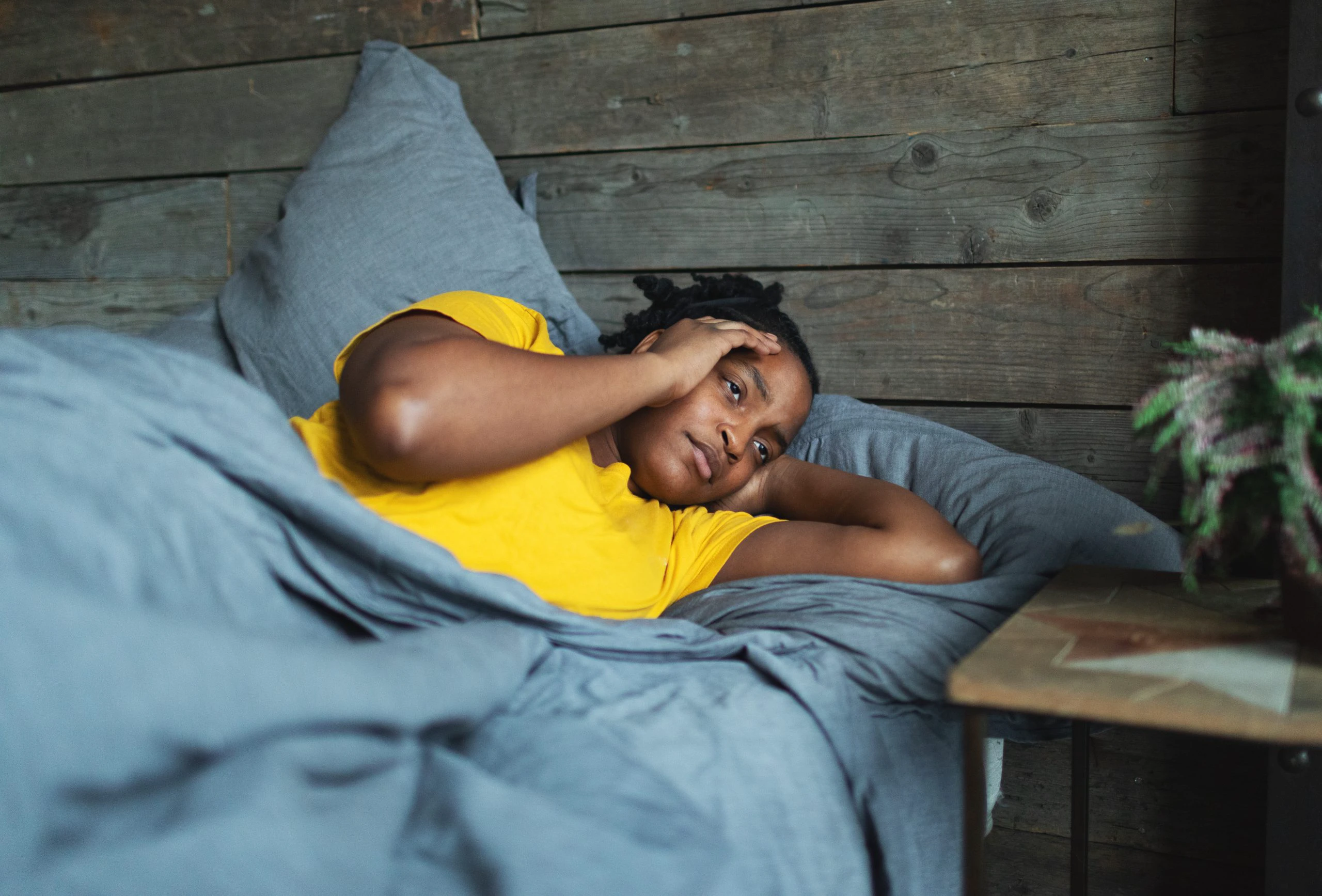
Treat your first day in Korea as a landing-and-adjustment day, not a compressed sightseeing day. The strongest plan has one easy meal, a short activity near your accommodation, and a realistic local bedtime. Everything else stays optional.
This protects the rest of the trip. Jet lag can involve daytime sleepiness, reduced concentration, disturbed sleep, malaise, and stomach symptoms. Immigration, baggage, the airport transfer, bag storage, and room readiness add another unpredictable chain before Seoul even becomes usable.
The non-negotiable safety gate
If you feel unsteady, confused, sick, or unable to stay alert around traffic, skip the walk and go somewhere safe. Do not drive, cycle, hike, or force yourself across a busy city to “beat” jet lag. A short nap or early stop is a better travel decision than an accident.
This guide is general itinerary planning, not diagnosis or personal medical advice. Precise light timing depends on direction of travel and your internal schedule. If you have a sleep disorder, significant health condition, take medicines that affect sleep, or want to use melatonin or another sleep aid, make a plan with a clinician rather than copying a travel post. New or severe symptoms should not automatically be blamed on jet lag.
The four rules for arrival day
- Stay close. Keep the useful part of the day within an easy return radius of your accommodation.
- Keep it reversible. Use activities with no deposit and no penalty for stopping after 15–20 minutes.
- Follow actual hotel-arrival time. Flight landing is not the start of your itinerary.
- Protect the local night. Eat and wind down broadly on Korea time; avoid turning a needed short nap into a multi-hour afternoon sleep.
The CDC's 2026 Yellow Book recommends destination-time activities, hydration, natural light at the destination, avoiding lengthy daytime naps, and using a short nap when necessary for alertness. It describes 20–30 minutes as a useful short-nap range. The CDC's traveler page uses an even tighter 15–20-minute suggestion. The practical common ground is simple: set an alarm for about 20 minutes and do not plan a long sleep in the middle of the local day.
Choose by the time you actually reach the accommodation
Allow for passport control, baggage, the airport journey, and check-in. Then use the row matching the time you reach the hotel—not the scheduled landing.
- Before 11:00 — Keep: confirm bag storage, easy breakfast/lunch, and a short daylight loop. Skip: a cross-city tour, all-day pass, or major shopping. Decision point: reassess when the room is ready.
- 11:00–15:00 — Keep: check-in if available, a shower, a simple meal, and one local walk. Skip: a multi-stop afternoon plan or anything requiring a deposit. Decision point: end after an early dinner if energy drops.
- 15:00–18:00 — Keep: check-in, brief outdoor time, and dinner nearby. Skip: a timed attraction or distant night market. Decision point: be back near the hotel around 20:00–21:00.
- After 18:00 — Keep: direct check-in, easy food, and preparation for tomorrow. Skip: any attraction you would regret missing. Decision point: move toward a reasonable local bedtime.
If the room is not ready, leave luggage only after the accommodation confirms storage. Do not design a plan that depends on dragging a suitcase through cafés, palaces, stairs, or crowded shopping streets.
A realistic sequence from airport to bed
1. Finish the practical setup before sightseeing
Confirm check-in and late-arrival instructions, connect the phone, save the property's Korean name and address, and download tomorrow's first route. Check that your payment and transit options work. Buy only what is needed for the night: water, a simple snack, and essential toiletries.
Delay large shopping decisions, skincare experiments, and complex reservations until rested. Fatigue is a poor time to compare return policies, ingredients, sizes, or treatment options.
2. Eat a simple meal on local time
Choose an ordinary restaurant near the hotel with no deposit and no long wait. Your first meal does not have to be famous barbecue, a tasting menu, or a market crawl. A shifted meal schedule and flight fatigue can make a complicated dinner feel like another task.
Drink water. The CDC notes that volume depletion can worsen physical jet-lag symptoms and recommends avoiding excess alcohol. If you use caffeine, keep the local bedtime in mind; the traveler-facing CDC page advises avoiding caffeine in the evening. This is not a mandate to consume caffeine—choose it only if it normally agrees with you.
3. Use outdoor time as a flexible activity, not a treatment prescription
A short outdoor loop provides gentle movement and destination-time daylight without locking you into a ticket. Pick a flat route near the hotel, with seating and simple exits. Set a turnaround time, not a list of landmarks.
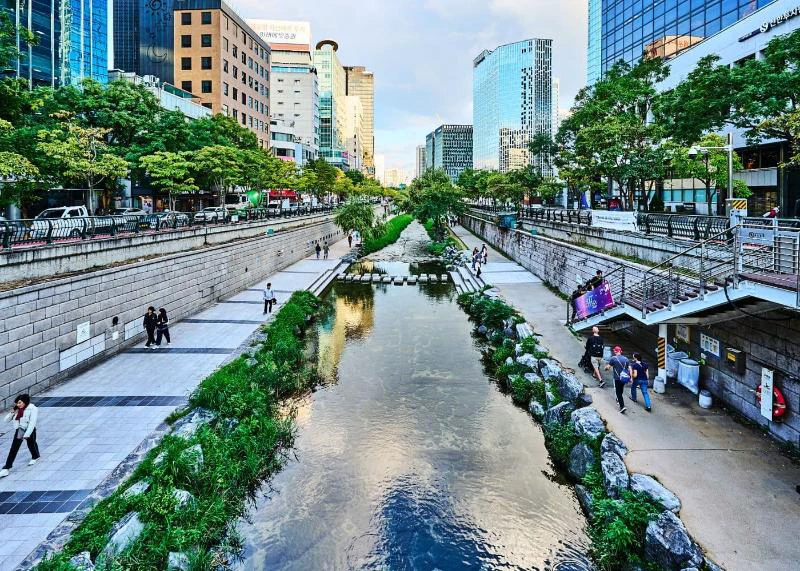
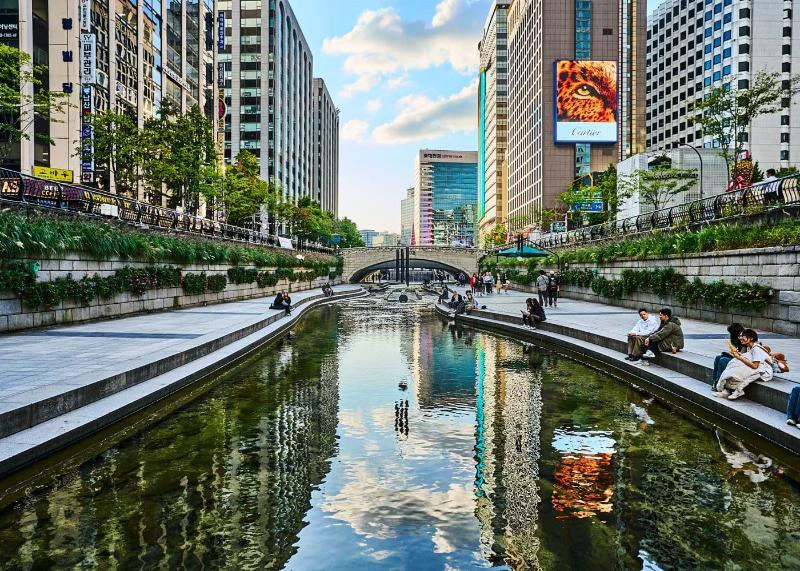
Cheonggyecheon is one example for a traveler already staying in central Seoul: short sections, seating, and many street-level exits make turning back easy. It is not a required arrival-day attraction. A neighborhood park, a calm shopping street, or one block around the hotel can be better if it avoids another transfer.
Light is not one-size-fits-all. The Yellow Book explains that ideal exposure or avoidance changes with eastward or westward travel and personal timing. A casual walk is a low-commitment arrival activity; it is not an individualized circadian-light schedule.
4. Nap for safety, not to erase the whole afternoon
If you cannot function safely, go to the room or another secure resting place and set an alarm for roughly 20 minutes. Do not nap on public transport while responsible for luggage, or in a place where you could miss check-in or become vulnerable.
Afterward, open the curtains if it is still local daytime, wash your face, drink some water, and reassess. If you still feel unwell or profoundly sleepy, stop the itinerary. If you arrive in the evening, skip the tactical nap and move toward sleep instead.
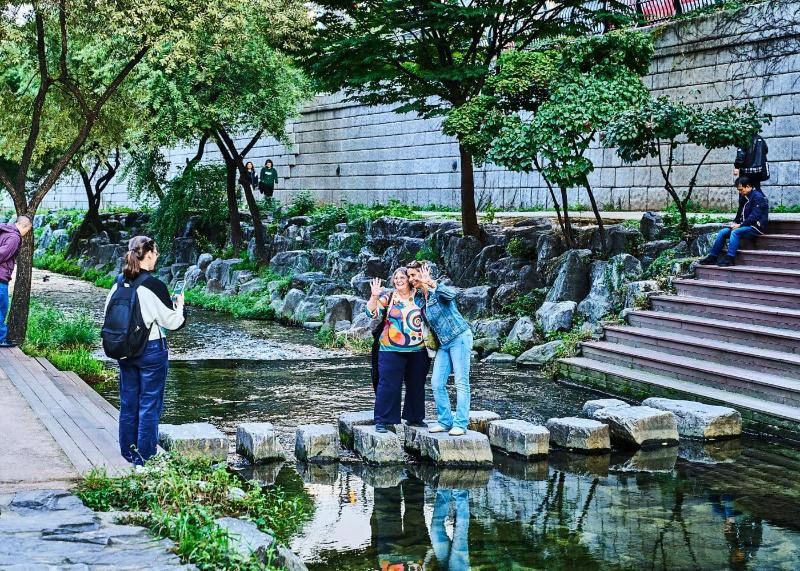
A good arrival-day activity works the same way as this rest stop: you can sit, turn around, or end it immediately without losing money.
5. Close the day before decision quality collapses
Return while navigation and judgment still feel easy. Put tomorrow's clothes, route, ticket, and alarm in order. Lower stimulation near bedtime and let the first night be imperfect; do not keep adding activities because the body has not become sleepy at the expected hour.
Plans that usually survive delay and fatigue
Choose one or two, not all of them:
- one loop in the accommodation's immediate neighborhood;
- a no-reservation café or casual meal;
- a convenience-store stop for water and breakfast supplies;
- a short free public space with benches and several exits;
- one practical task, such as locating tomorrow's station entrance;
- an early return with no sense of failure.
A flexible activity becomes an inflexible itinerary when five are stacked together.
What not to book between landing and first sleep
Unless the booking is fully refundable and you genuinely accept missing it, avoid:
- palace tours, performances, concerts, sports, or timed museum entry;
- restaurant deposits, tasting menus, and strict late-arrival policies;
- a DMZ tour, regional train, domestic flight, or another long transfer;
- salon services, photo shoots, medical appointments, or any service needing careful decisions;
- steep hikes, long bicycle rides, driving, or activities where poor alertness adds risk;
- major purchases that need comparison, fitting, or a possible return.
Also protect the next morning. An 08:00 prepaid tour after long-haul travel leaves no margin for a difficult first night. When the trip allows, place the first irreplaceable reservation late morning or later on day two. CDC Travelers' Health suggests arriving at least two days before an important event when possible; do not make arrival day carry an event that matters most.
Four arrival examples
Morning landing, room available only in the afternoon
Leave bags with confirmed storage, eat nearby, take a flat 30–60-minute loop, and return toward the hotel. Check in and shower. Take a short alarmed nap only if necessary, then use an early casual dinner and quiet evening.
Morning landing, exhaustion is already severe
Drop the walk. Secure the room or another safe rest option, eat something simple, and reassess after a short rest. “Morning arrival” does not create an obligation to stay out for eight hours.
Mid-afternoon hotel arrival
Check in first. After a shower, choose one neighborhood loop, eat nearby, download tomorrow's route, and stop. Do not cross Seoul merely because several evening hours remain on paper.
Evening hotel arrival
Check in, eat something simple if hungry, prepare the next morning, reduce light and stimulation, and sleep. The airport transfer was the day's activity. There is no prize for adding a night market.
Adjust the plan to season and weather
Korean summer heat, monsoon rain, winter cold, fine-dust alerts, or icy paths can turn a “gentle walk” into unnecessary strain. Use the live forecast and air-quality information, carry suitable layers or rain protection, and replace the outdoor loop with a bright indoor common area or short covered errand when conditions are poor.
Daylight availability also changes by season and arrival time. Do not travel across the city chasing one named walking route after dark. The principle is easy return, not completing Cheonggyecheon.
Why traveler reports favor staying local
In a Korea travel discussion about arrival after a 14-hour flight, useful suggestions focused on compact areas and an optional Cheonggyecheon walk near the traveler's Insadong hotel. A Naver community discussion from travelers arriving from North America similarly emphasized short naps and a light first day.
These are anecdotes, not medical evidence or universal itineraries. Their value is the decision pattern: eat, move gently, and return without another major transfer. That pattern is consistent with the official guidance to use destination-time cues and avoid lengthy daytime sleep.
Your arrival day succeeds when you reach the accommodation safely, eat, complete essential setup, and give yourself a reasonable chance to sleep on Korea time. Save the non-refundable highlight for when your attention, appetite, and energy have arrived too.
Clinical guidance, location references, and links were rechecked on August 12, 2026. Hours, weather, air quality, luggage rules, and personal health needs change; current providers and your clinician control where relevant.
Sources and image credits
- CDC Yellow Book 2026: Jet Lag Disorder — current clinical guidance on destination-time activity, hydration, natural light, short naps, and individualized timing; updated April 23, 2025
- CDC Travelers' Health: Jet Lag — traveler-facing overview of water, alcohol, caffeine timing, short naps, and important-event buffer
- Visit Seoul: Cheonggyecheon Stream — official location reference for the optional central-Seoul walking example
- Reddit: first day after a 14-hour flight — attributed traveler experiences only, not clinical guidance
- Naver community: adapting after arrival — attributed traveler experiences only, not clinical guidance
- Delivery Spot cover image — tired traveler awake after crossing time zones; published editorial asset
- Cheonggyecheon promenade image — official Seoul Tourism Organization destination photograph
- Cheonggyecheon resting image — official Seoul Tourism Organization destination photograph
- Cheonggyecheon stepping-stones image — official Seoul Tourism Organization destination photograph
Last updated


