
Seoul Dermatology Clinic vs Esthetic Salon: What's the Difference?
Choose a medical clinic for diagnosis, prescriptions, injections, or medical-device procedures; choose an esthetic salon for non-medical cleansing, masks, massage, and cosmetic skin care. The real difference is legal scope, who assesses you, and how the price is built.
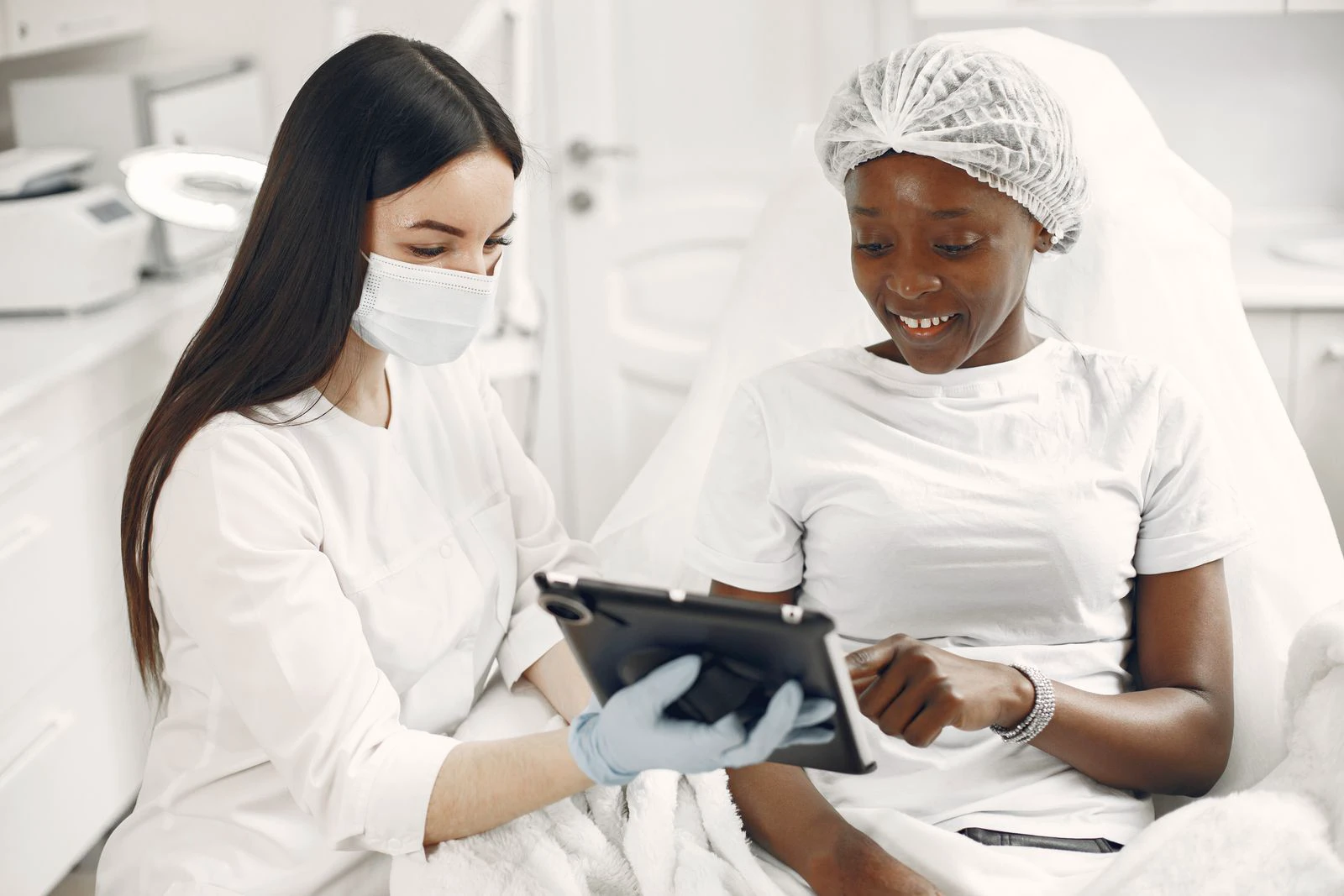
In Seoul, book a medical clinic when you need a diagnosis, prescription, injection, or procedure using a medical device; book an esthetic salon when you want non-medical cosmetic care such as cleansing, masks, or massage. Legal scope and clinical responsibility draw the line. Luxurious décor or the English label ‘skin clinic’ does not.
The choice matters because Seoul's beauty market puts hospitals, 의원 clinics, facial salons, spas, and ‘skin clinics’ in the same search results. Start with what you want done, then verify what kind of establishment it is and who will actually assess you.
The shortest useful comparison
Medical clinic or hospital — Choose this for diagnosis or treatment, including prescription acne care, examination of a changing mole, injections, medical lasers, and other medical-device procedures. A licensed doctor should assess the medical plan even when staff handle translation, logistics, or prices. Cosmetic care is commonly self-pay and may be priced by the procedure, area, dose, shot count, tip, or session.
Esthetic salon or skin-care shop — Choose this for cosmetic, non-medical care such as cleansing, masks, facial massage, and non-medical skin-condition analysis. A skin-care practitioner can explain the service but cannot make a medical diagnosis. Prices are more often based on time, a single facial, a series, a membership, or a product bundle.
A medical clinic is not automatically a dermatologist-specialist clinic. Many Korean medical institutions offer skin and cosmetic procedures, but that does not mean the doctor is a board-certified dermatologist. The Association of Korean Dermatologists' official search lets you verify specialists; search the doctor's name rather than relying on an English label or décor.
What legally belongs on each side
Korea's Medical Service Act, Article 27 prohibits people who are not medical professionals from performing medical practice. The current Enforcement Rule of the Public Health Control Act, effective March 4, 2026, describes a skin beautician's scope as skin-condition analysis, skin care, hair removal, and eyebrow grooming without medical devices or medicines.
In practical terms, use a medical institution when the service involves diagnosing a rash or lesion, prescribing medicine, breaking the skin with an injection, or operating a device classified as a medical device. Botulinum toxin, fillers, skin-booster injections, and medical laser treatments belong in a medical setting. An esthetic salon can care for appearance and comfort; diagnosis, prescriptions, disease treatment, and worrying symptoms need a doctor.
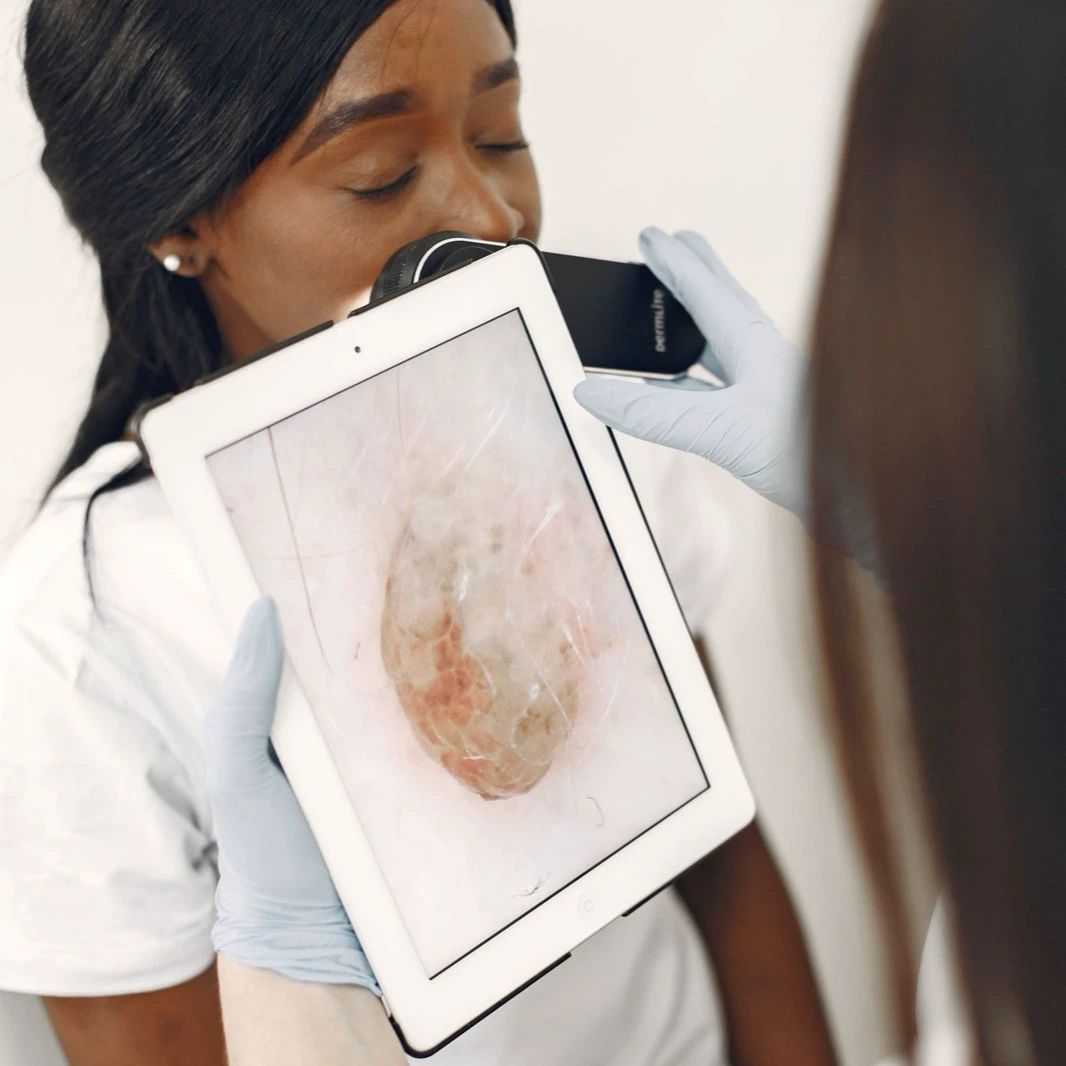
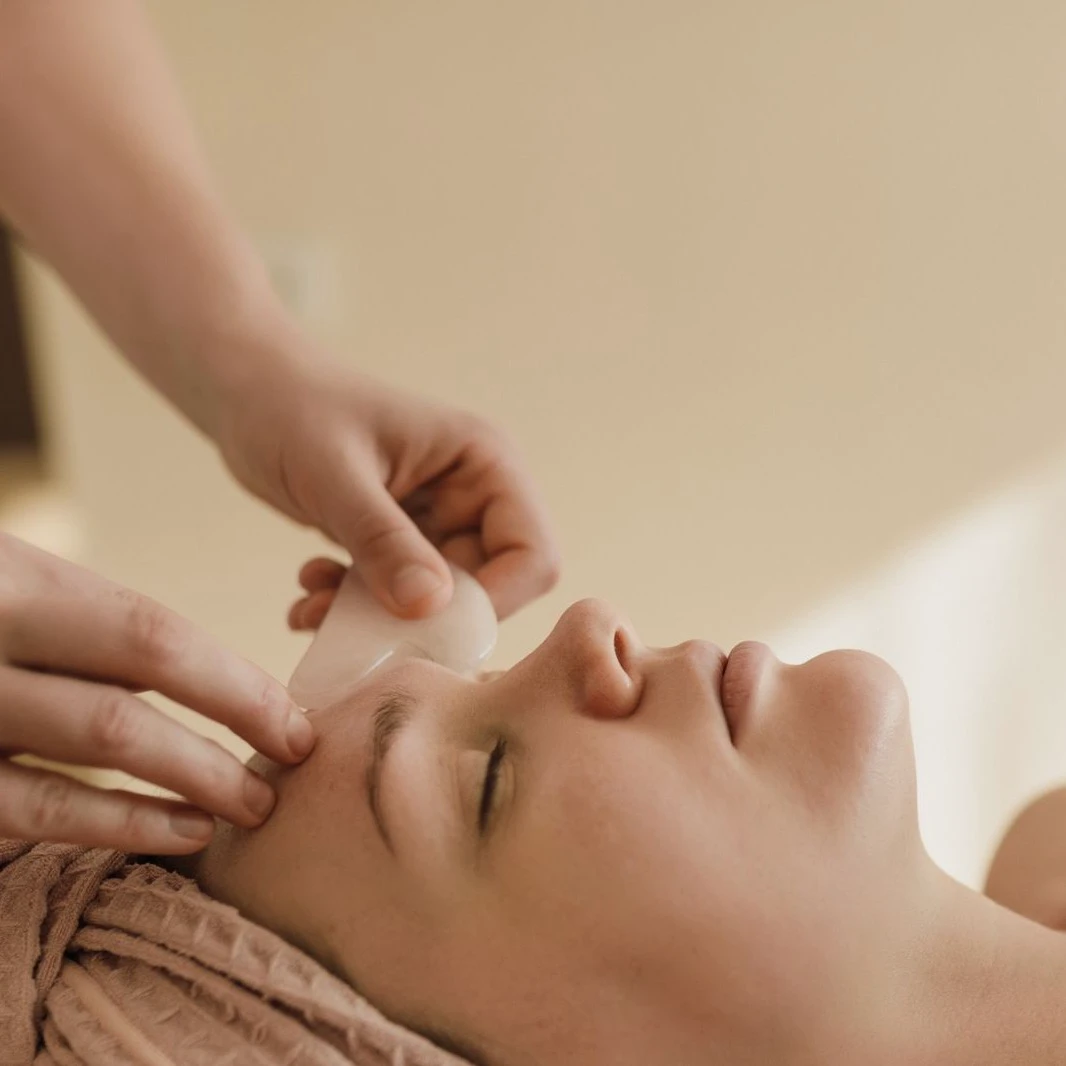
The first slide shows a dermatoscope-style examination, where observing and judging a lesion is a medical question. The second shows a gua sha facial massage, a cosmetic service that does not diagnose or treat disease. Both are illustrative stock photographs and do not endorse a Seoul provider.
A “consultation” may mean two different conversations
At a busy cosmetic clinic, a coordinator may collect your goals, explain event packages, translate, and quote prices before you meet a doctor. That administrative conversation can be useful. The medical assessment begins with the doctor who decides the diagnosis, device, settings, dose, and treatment area, so ask when that conversation will happen before you consent.
A skin scan does not settle that question. Device scores can help document surface features under controlled conditions, but they do not independently diagnose acne, rosacea, melasma, or a suspicious lesion; our guide to skin-analysis device accuracy explains why repeatable measurements and diagnostic accuracy are different claims.
This distinction also appears repeatedly in traveler discussions. In one r/koreatravel thread about finding a dermatologist, users worried about sales-led consultations, language gaps, and whether a doctor would evaluate existing skin conditions. Treat those reports as anecdotes rather than clinic ratings. Their recurring question is still useful: identify the medical decision-maker before paying.
At an esthetic salon, the practitioner can discuss comfort, pressure, products, allergies, and the order of a facial. If the conversation turns into diagnosing a disease or recommending a medical procedure, pause and book a medical consultation instead.
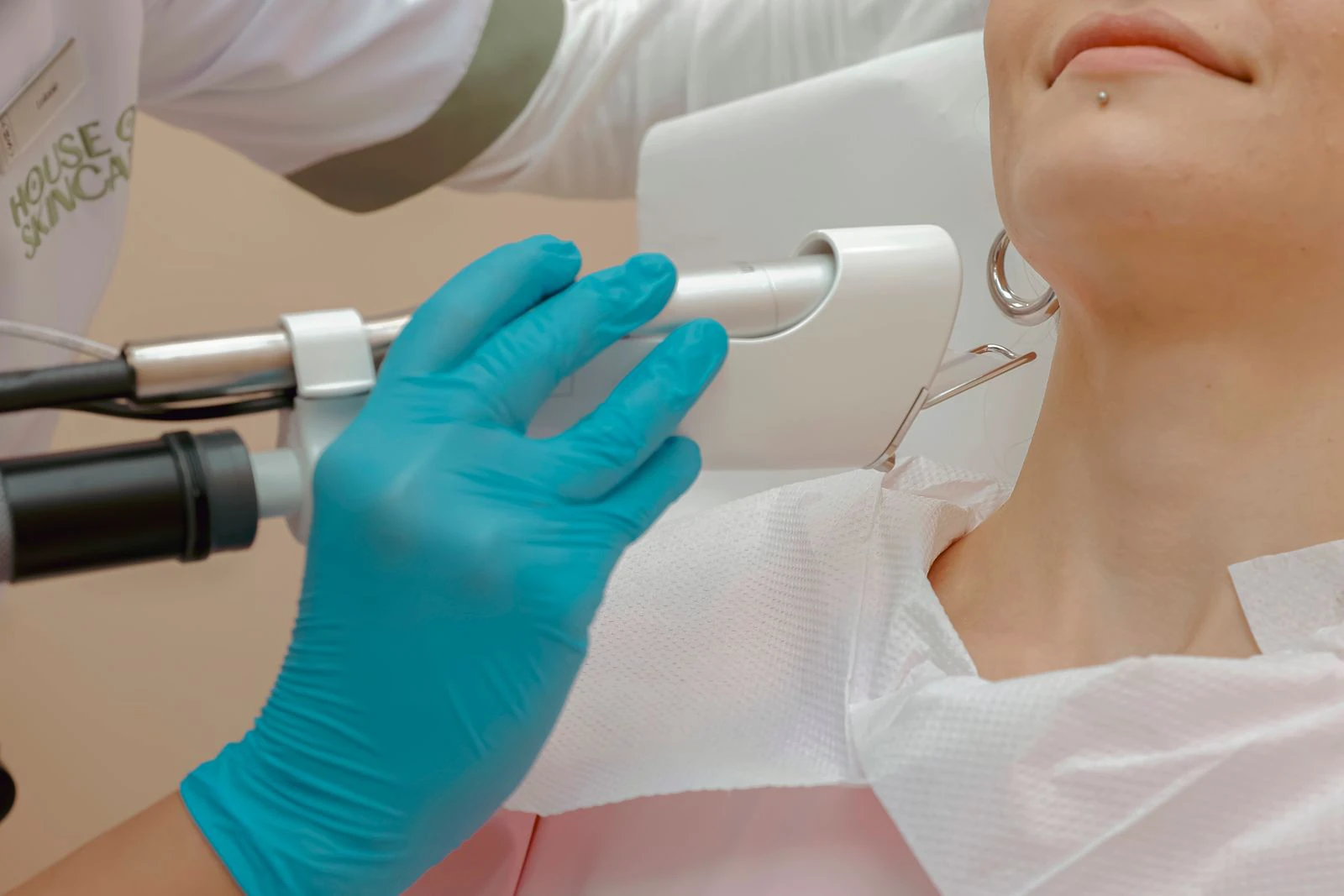
A machine's marketing name does not tell you whether it is legally a medical device. Ask for the exact device and procedure name, then confirm that a licensed medical institution is providing any medical-device treatment.
Compare the final plan, not the poster price
Cosmetic medical treatment is commonly quoted as non-covered, self-pay care. A headline price may refer to one area, one session, a limited dose or shot count, a specific tip, or an event condition. The HIRA non-covered fee portal can provide a reference point for listed items, but it is not a guaranteed live quote. HIRA currently warns that during its April–August 2026 collection and verification period, changes may not yet appear and the displayed amount can differ from the provider's current price.
Ask a clinic to write down:
- the exact procedure and device or product name;
- the treated area, dose, shot count, tip, or session length;
- whether doctor consultation, numbing, consumables, aftercare, and VAT are included;
- the total for today's plan, not only each event item;
- the cancellation, refund, and unused-session terms before buying a series.
An esthetic salon is more likely to price by facial type and duration, then offer a multi-session package, membership, or retail products. Ask for the single-session price first, what products and steps are included, and the written refund terms for any prepaid package. Judge either option by the complete service and whether it fits your goal; duration, package discounts, and event prices do not answer that on their own.
Which one should you book?
Choose a medical clinic first for persistent or painful acne, a spreading rash, infection, sudden swelling, blistering, a changing or bleeding mole, prescription questions, injections, or medical-device procedures. If you specifically want a dermatologist, verify the doctor's specialist status separately.
Choose an esthetic salon when the goal is a non-medical facial, gentle cosmetic care, or relaxation and you are comfortable with the disclosed products and methods. If you have an active skin disease, recent procedure, broken skin, or a reaction that has not settled, ask a doctor before adding spa care.
You can use both at different times because they do different jobs. A salon can make skin feel cared for; a medical clinic can diagnose and treat. The safest booking is the one whose legal scope, responsible person, and total price all match the service you actually want.
Sources and image credits
- Association of Korean Dermatologists — Official specialist search used to verify a doctor's dermatologist status.
- Medical Service Act, Article 27 — Legal restriction on medical practice by non-medical professionals.
- Enforcement Rule of the Public Health Control Act — Current scope of skin-beautician services, effective March 4, 2026.
- r/koreatravel dermatologist discussion — Anecdotal traveler concerns about consultation roles and language; not used as a clinic rating.
- HIRA non-covered fee portal — Reference fees and the April–August 2026 data-update notice.
- Gustavo Fring on Pexels — Featured consultation image under the Pexels License.
- Gustavo Fring on Pexels — Illustrative medical skin-examination image under the Pexels License.
- Arina Krasnikova on Pexels — Illustrative esthetic facial-massage image under the Pexels License.
- Khuram Naseem on Pexels — Illustrative laser-treatment image under the Pexels License.
Last updated


