
How Accurate Are Skin Analysis Devices? What the Scores Really Mean
Skin analysis devices can standardize photos and track selected features, but their scores are not diagnoses or universal measurements. Accuracy depends on the sensor, validation, capture conditions, reference database, and the exact number being reported.
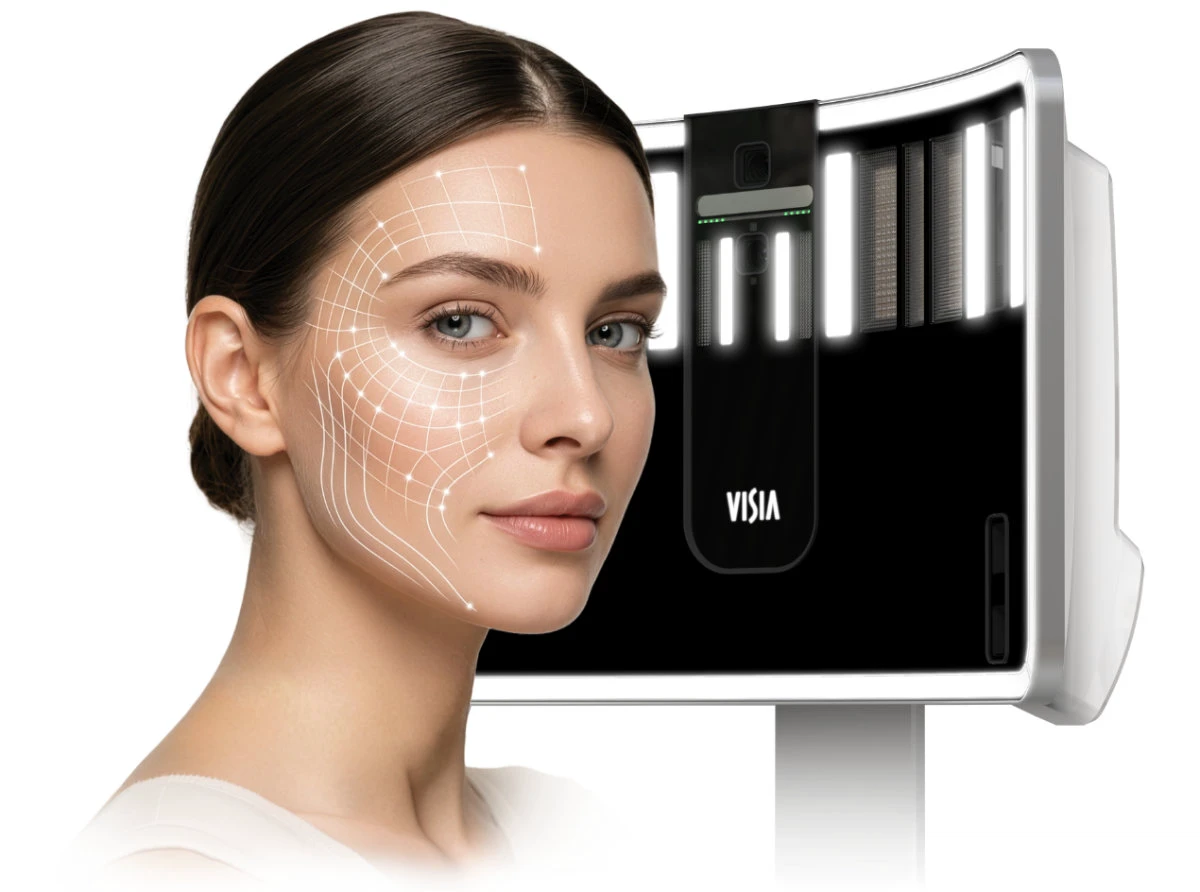
Skin analysis devices can be useful for standardized photos and tracking the same feature over time, but a single scan is not a diagnosis and its scores are not universal measurements. Accuracy depends on what is being measured, whether that metric was independently validated, the capture conditions, the reference database, and whether you are looking at a raw value or a comparative score.
A machine can be very repeatable at finding dark circles in an image and still be unable to tell you why they are present. It can also produce a precise-looking number that changes when the lighting, skin preparation, operator, software, or comparison group changes.
First ask what the machine actually measures
“Skin analyzer” covers several different tools. An imaging booth uses standardized visible, cross-polarized, or UV photographs and software to identify patterns such as spots, lines, darker circular pore openings, red areas, or fluorescence. A contact probe may measure an electrical property related to stratum-corneum hydration, sebum, temperature, or elasticity at one small site. A phone or tablet app usually infers features from an ordinary camera image using an algorithm.
These outputs are not interchangeable. A camera's “hydration” or “sensitivity” grade may be an image-based estimate unless the system also uses a dedicated sensor. A contact hydration probe reports its own instrument units, not a literal percentage of water in your entire face. An AI selfie score depends heavily on the camera, lighting, pose, training data, and software version.
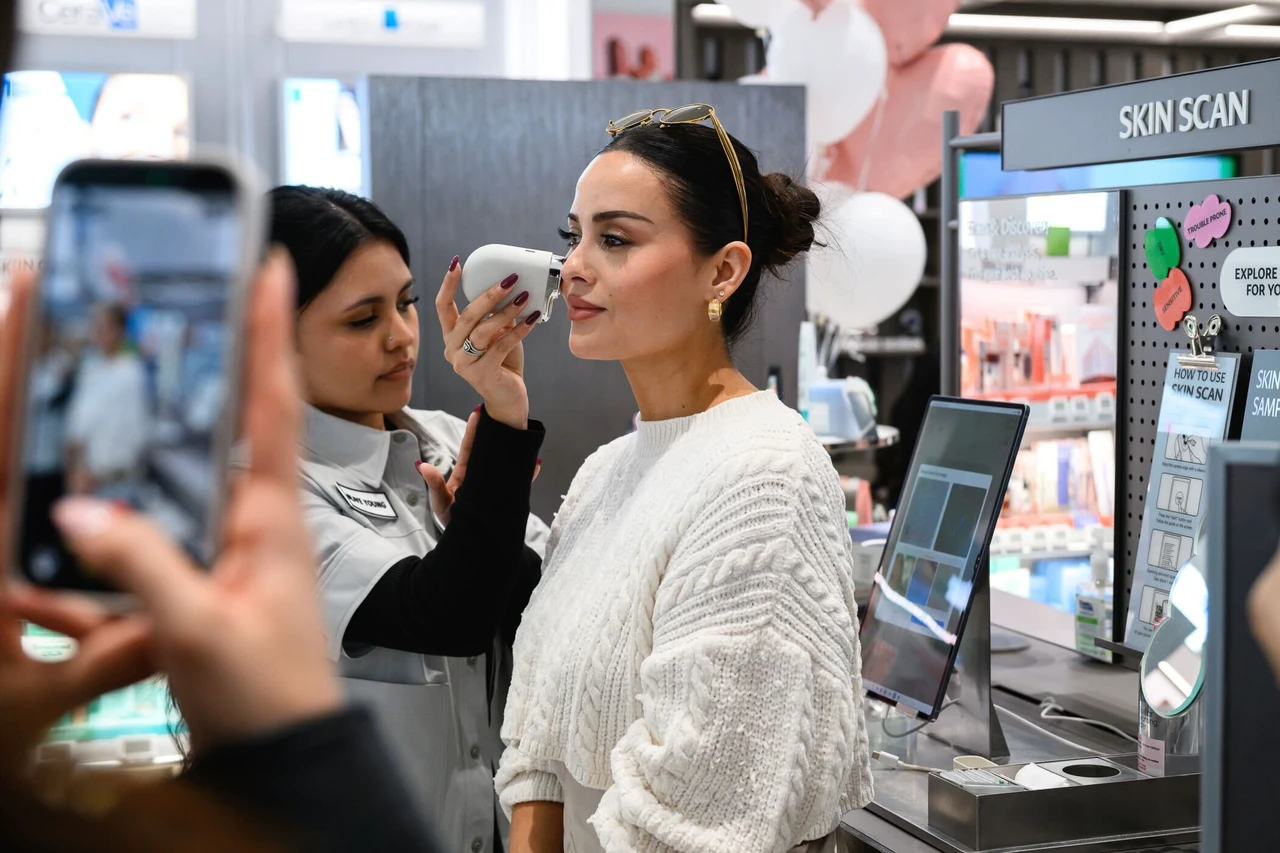
Becon's official AI scanner page, for example, describes image analysis plus moisture, temperature, and odor sensors and says the system analyzes 11 skin parameters. This is an inventory of the device's inputs and outputs. Sensitivity, specificity, error ranges, and independent validation still need separate evidence for each claim.
Repeatable is not the same as diagnostically accurate
Repeatability asks whether the same device gives a similar result under similar conditions. Accuracy asks whether the number agrees with an appropriate reference standard. Clinical usefulness asks whether that information improves a real decision. A study can answer one of these questions without answering the others.
A small independent 2022 VISIA precision study repeated images of eight volunteers. Differences were under 2% for texture, UV spots, brown spots, and porphyrins; 2%–4% for pores and red areas; and about 6% for spots and wrinkles. That supports repeatable imaging under the study protocol, but eight clinic staff volunteers are not enough to validate every skin tone, disease, device version, or treatment recommendation.
A later 2023 study of 19 participants found roughly 3% variation for repeated absolute wrinkle scores and roughly 9% for wrinkle percentiles. The authors therefore preferred absolute scores over percentiles for precision. Their skin-age estimate correlated with chronological age, but the study tested wrinkles and age—not whether the machine could diagnose acne, rosacea, melasma, or a suspicious lesion.
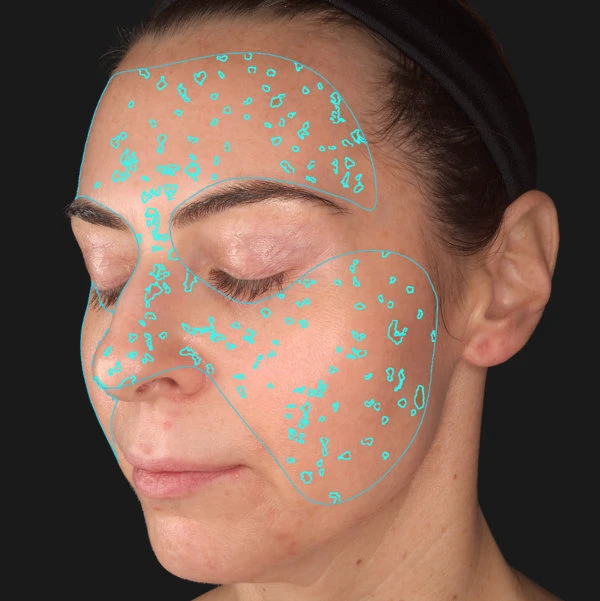
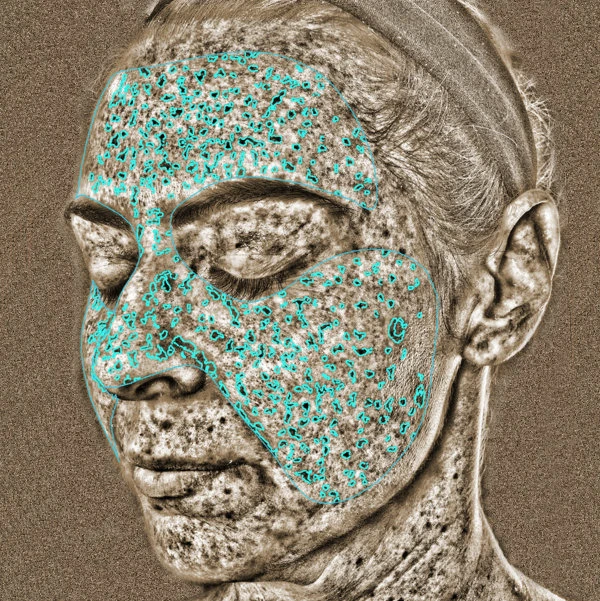
These official VISIA frames show why the distinction matters. Software marks features in a normal image and a UV-light image; the second view reveals a different optical signal. The manufacturer's current overview says standard, cross-polarized, and UV lighting are used for surface and subsurface features. The markings are a measurement aid. They do not name a disease or prove that a promoted treatment is necessary.
Hydration numbers need controlled conditions
A dedicated probe can be highly reproducible, but preparation still matters. A 2024 prospective study at Samsung Medical Center compared two hydration devices in 184 healthy volunteers. The Corneometer and DermaLab hydration probe study reported excellent repeatability and high correlation between devices. Yet the protocol used a room controlled at 20–22°C and 45%–55% humidity, a 30-minute rest, cleaned measurement sites, skilled operators, and three repeated measurements.
Those details put a retail reading in context. Walking through humid weather, cleansing, applying moisturizer, or changing sensor pressure can make that setting very different from the study protocol. The study measured forearms and shins in healthy volunteers, so its instrument values support comparison within a controlled method rather than a universal claim that a face is “68% hydrated.”
Percentile, raw score, grade, and “skin age” answer different questions
A raw or absolute score counts or quantifies what the software detected in a defined area. A percentile compares that result with a reference group selected by the system, often using age and skin-type categories. A grade compresses one or more measures into a simpler label. “Skin age” is a model output assembled from chosen features and its database.
Ask which direction is better and who is in the reference group. In the 2022 VISIA study, a higher percentile meant fewer detected problems than the comparison group and 50 represented its average. That is a rank, not the percentage of your face affected. If the database, matching rules, or software version changes, the percentile can change even when your photograph looks similar.
Each device has its own scale. A 50-patient comparison of a tablet app and a photobooth system found 67.7% overall agreement across spots, wrinkles, redness, texture, and pores, with agreement varying by feature. The study was funded by the app company. Its result supports potential usefulness while ruling out a direct conversion from a score of 72 on one platform to 72 on another.
Keep the consultation separate from the sales pitch
A good consultation explains the image, its limits, and whether the finding matches your history and a professional examination. It should be possible to leave with the report without buying a package. A scan becomes marketing when every colored area is framed as damage, an overall grade creates urgency, and the same business immediately sells the only proposed solution.
One Reddit user's VISIA account described receiving a free scan and assuming the offer was intended to encourage spending. That is one person's interpretation, not evidence about a clinic, but it captures a common reason to separate measurement from recommendation.
Before agreeing to products or procedures, ask:
- Which sensor or image mode produced this number?
- Is it a raw measurement, percentile, model estimate, or sales-facing grade?
- What independent study validates this exact device, software version, feature, and population?
- Were makeup, recent skincare, lighting, humidity, pose, and rest standardized?
- Can the same feature be repeated on the same device under similar conditions?
- What would you recommend if the scan were unavailable?
- Can I take the report away and decide later?
Also ask what happens to your facial images. Find out how long they are stored, who can access them, whether they are sent to a cloud provider, whether they can train an algorithm, and how to request deletion. A detailed face scan should not be treated like a disposable receipt.
Use the scan for tracking, not self-diagnosis
For a baseline, arrive with clean skin if instructed, avoid changing the routine immediately before the scan, and record time, products, weather exposure, and menstrual or medication factors that may matter. Repeat on the same device, with the same software and preparation, at a sensible interval. Follow one or two measures connected to your goal instead of chasing a better overall score.
If an app or analyzer claims to diagnose a disease, be more cautious. The American Academy of Dermatology's consumer guidance warns that apps intended to diagnose skin conditions can be inaccurate and recommends a dermatologist for diagnosis. Seek medical evaluation for a changing or bleeding spot, a persistent rash, pain, infection, rapidly worsening acne, or another symptom—not a retail scan or product recommendation.
The most useful result from a skin analyzer is a standardized image or specific measurement that can be explained, repeated, and considered alongside your symptoms and goals. When the operator cannot explain what a score measures or how it was validated, treat the number as consultation graphics rather than clinical evidence.
Sources and image credits
- Becon Co., Ltd. — Official scanner inputs and 11-parameter feature description; SkinScan image used with written operator permission.
- 2022 VISIA precision study — Repeat-image precision in eight volunteers and feature-specific variation.
- 2023 VISIA wrinkle study — Absolute-score and percentile precision in 19 participants.
- Canfield Scientific — Official VISIA lighting and feature overview; hardware, visible-spots, and UV-spots images used with written operator permission.
- 2024 hydration-device study — Repeatability, device correlation, participant count, and controlled measurement protocol.
- Tablet app and photobooth comparison — Feature-level agreement in 50 patients and disclosed company funding.
- Reddit VISIA account — One person's interpretation of a free scan, used only as anecdotal sales-context evidence.
- American Academy of Dermatology — Consumer guidance on the limitations of diagnostic skin apps and the role of a dermatologist.
Last updated


