
Why Pork-Free Is Not the Same as Halal in Korea
Pork-free in Korea does not prove halal meat, alcohol-free stock, or kitchen separation. Use KTO’s four categories and ask the right questions.
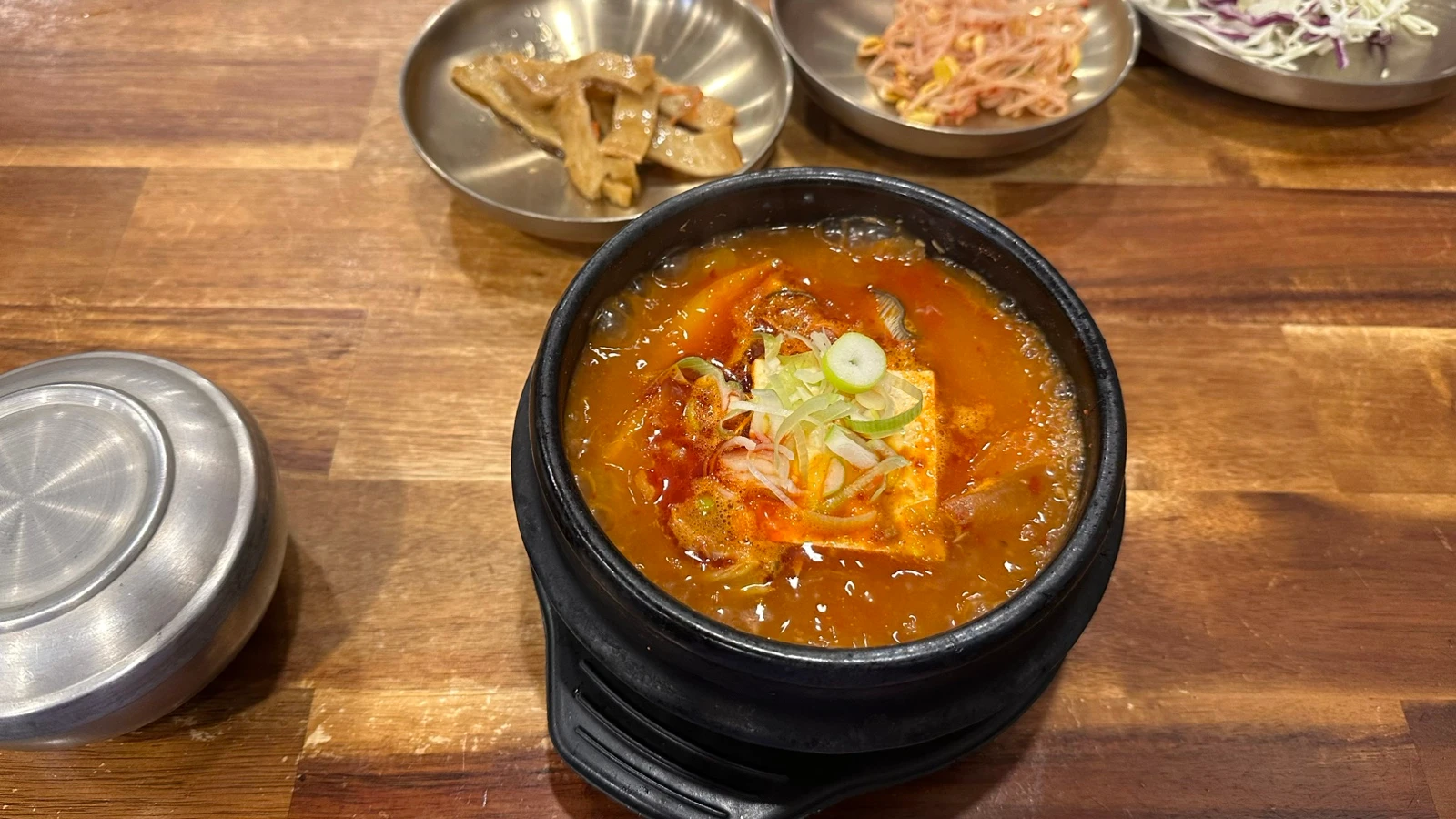
A pork-free sign in Korea answers one narrow question: the restaurant says it does not use pork. It does not, by itself, confirm halal-slaughtered meat, alcohol-free sauces, a halal stock base, or separation from non-halal food.
That distinction is explicit in the Korea Tourism Organization’s current Muslim-friendly restaurant categories. Read the category literally, then ask only the questions required by your own religious standard.
The four KTO categories promise different things
- Halal Certified: certified by an accredited halal certification agency such as the Korea Muslim Federation (KMF).
- Self-certified: the Muslim restaurant owner states that all food is halal.
- Muslim Friendly: some halal dishes are available; alcohol may be sold.
- Pork free: no halal menu is offered, pork is not used, and alcohol may be sold.
These are not four grades of the same certification. “Pork free” can be useful when pork is your only restriction. It is not evidence that beef or chicken is halal, and it says nothing about cooking wine or shared equipment. “Self-certified” may fit one diner’s standard while another requires an accredited certificate. The diner—not a travel article—sets that threshold.
KTO also warns that a hotel restaurant or buffet categorized as Muslim Friendly may still serve pork-containing dishes. At a buffet, verify the exact tray and utensil rather than applying the venue label to every item.
Why the visible dish is not enough
1. Species and slaughter are separate checks
Chicken and beef are not automatically halal just because they are not pork. Ask whether the meat itself is halal and, if certification matters to you, ask whose certificate applies and whether it is current.
The Korea Halal Authority’s certification procedure illustrates the difference between a claim and a documented process. It asks for raw-material lists, supplier documents, production-flow information, and evidence concerning animal-derived ingredients. Its criteria reject meat not slaughtered according to Islamic law. A handwritten “no pork” note does not provide that chain of evidence.
2. Stock, sauce, and cooking alcohol can decide the answer
The ingredient that matters may be invisible: broth concentrate, a premixed marinade, cooking wine, mirin, or seasoning derived from animal material. Heat does not give travelers a reliable shortcut for deciding whether an alcoholic ingredient meets their standard.
A recent traveler question about halal food in Yeosu described a diner who ate seafood but needed it prepared without wine or alcohol. That community post is an example of the question, not a statement of Korean restaurant policy.
Vegetarian-looking food is not a substitute for checking. Our guide to hidden non-vegetarian ingredients in Korean dishes explains why stock, kimchi seasoning, fish sauce, and premixed sauces need their own questions. Vegetarian and halal are different standards; both can be missed when you judge only the topping.
3. Ingredients and kitchen separation are different checks
If shared fryers, grills, knives, storage, or serving utensils matter to you, ask directly. The certification criteria cited above require separation from non-halal materials through production, storage, and transport. A restaurant is not a factory, but the practical lesson is the same: a halal ingredient does not answer a shared-equipment question.
Travelers repeatedly raise that distinction. One community thread about non-pork contamination asked about broth and food made in the same kitchen; another asked for a phrase that covered pork broth as well as visible pork. Treat those as anecdotal evidence of recurring uncertainty, not as authority on halal rules.
What stronger evidence looks like
A higher-confidence decision begins with a named category, a current certificate if your standard requires one, and a restaurant that can answer specific ingredient and process questions.
The KTO’s older Eid restaurant listing described Eid in Itaewon as Halal Certified. Because that page is historical, do not use its old address, menu photograph, or certification wording as a permanent guarantee. The current Visit Seoul Eid page, published in April and edited in June 2026, lists the restaurant at 15 Usadan-ro 10-gil, says it prepares food with halal ingredients, shows no alcohol for sale and a Muslim cook, and lists 11:30–21:00 with last order at 20:30. A current Naver place search is useful for same-day hours and closure notices.
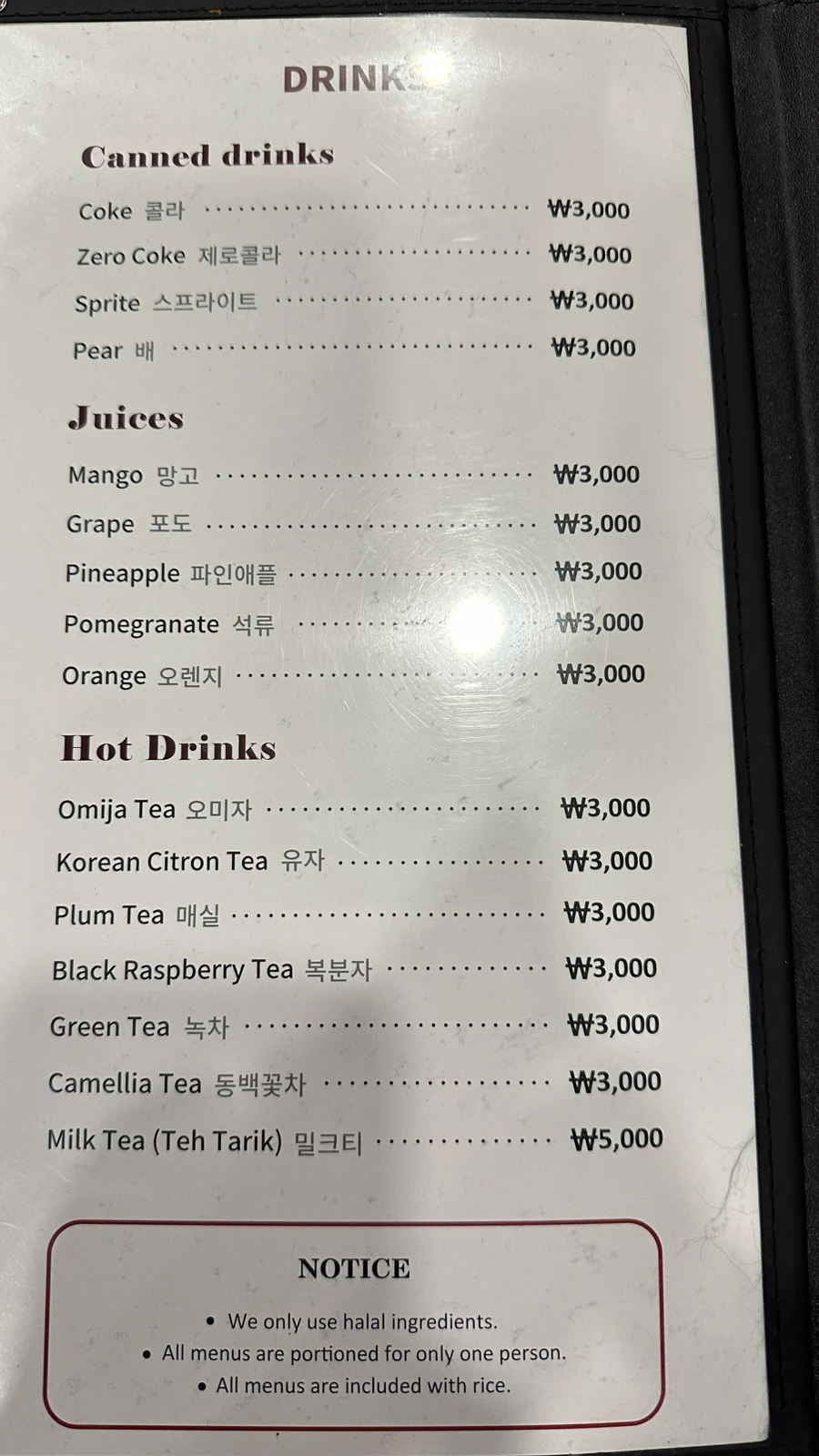
The 2026 menu photograph above shows a direct restaurant statement that only halal ingredients are used. That is stronger than “no pork,” but it is still not a substitute for seeing a current certificate when accredited certification is your non-negotiable.
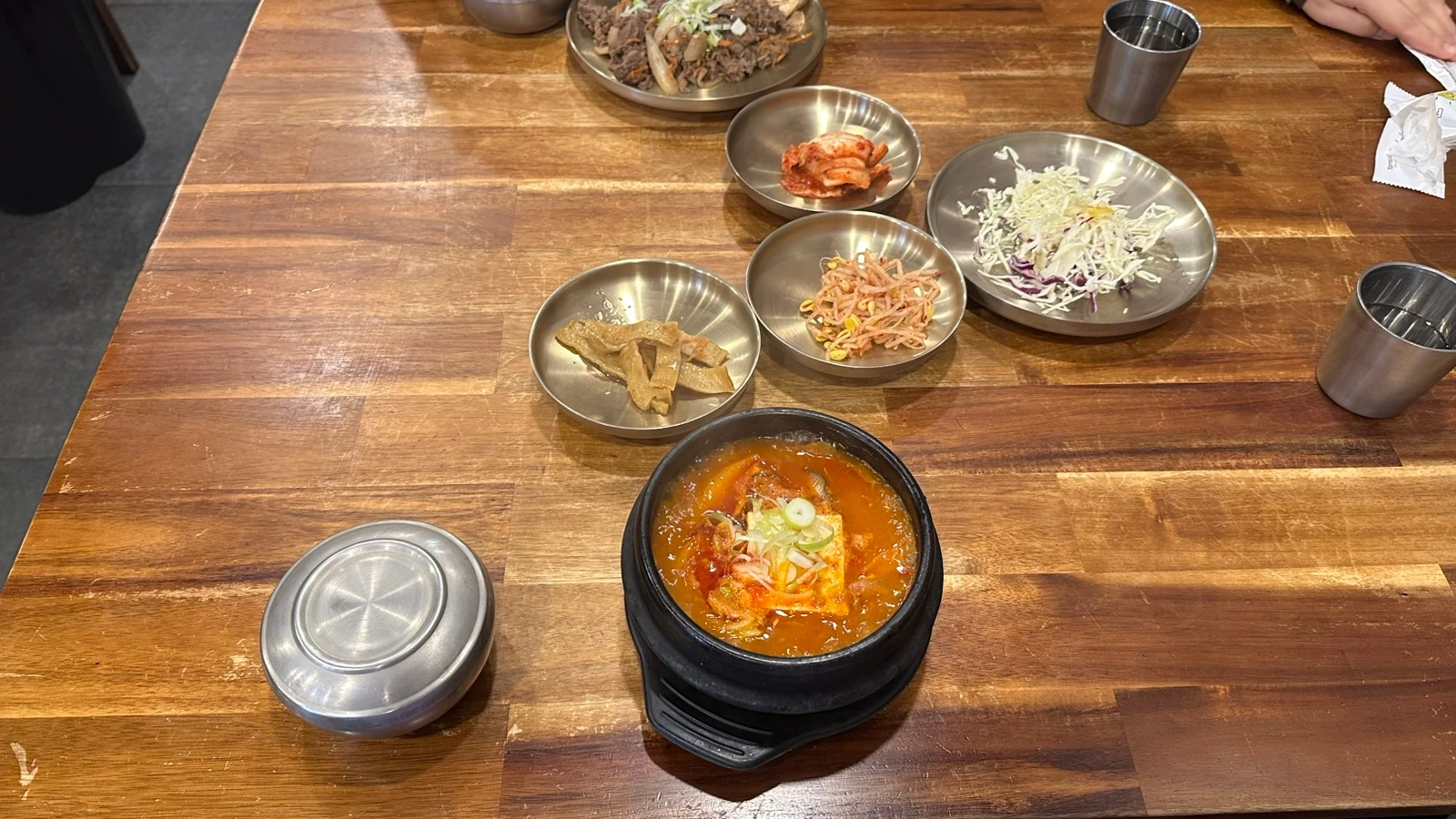
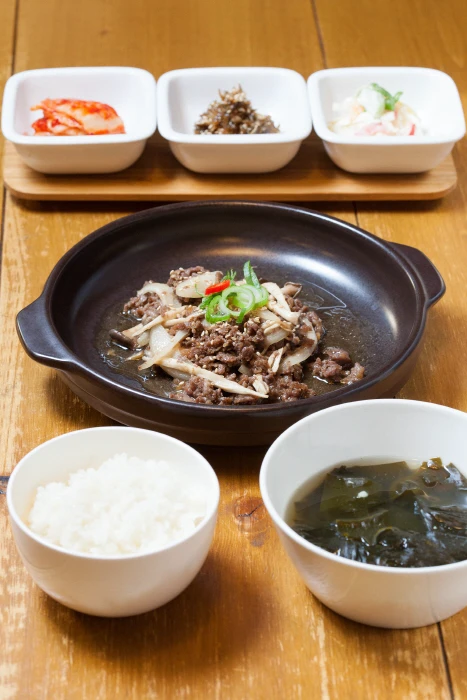
The first slider image is a February 2026 restaurant photograph; the second comes from the older KTO listing. They show examples of Korean halal dining, not a guarantee that today’s recipe, price, certificate, or availability is unchanged.
Ask in this order
Start with the venue’s current category or certificate. Then narrow the check to the dish and preparation.
할랄 인증서가 현재 유효한가요? 어느 기관 인증인가요?— Is the halal certificate currently valid? Which organization issued it?이 메뉴는 할랄 메뉴인가요?— Is this a halal menu item?고기와 육수도 할랄 재료인가요?— Are both the meat and the stock halal ingredients?조리용 술이나 미림, 알코올 성분이 들어가나요?— Does it contain cooking wine, mirin, or another alcoholic ingredient?비할랄 음식과 같은 기름, 그릴, 조리도구를 쓰나요?— Do you use the same oil, grill, or utensils as non-halal food?
KTO’s current Muslim visitor FAQ presents separate questions for pork-derived ingredients, alcohol including mirin, and shared utensils. That separation is useful: one “yes” or “no” cannot reliably cover all three.
A quick decision rule
- You require accredited certification: begin with a current Halal Certified listing, then inspect or verify the current certificate and the exact branch.
- Owner attestation fits your standard: Self-certified restaurants expand the options, but confirm that the category is current.
- You are considering Muslim Friendly: identify the specific halal dish and ask about alcohol and shared preparation; the venue may sell alcohol or other non-halal items.
- The venue is only Pork free: treat it as information about pork, not proof about meat sourcing, stock, alcohol, or kitchen separation.
Seafood and vegetarian dishes can be practical options, but neither label automatically resolves broth, seasoning, alcohol, or shared equipment. If staff cannot verify a premixed sauce or shared fryer, choose another dish or venue rather than asking them to improvise a religious guarantee.
Sources and asset credits
- KTO Muslim-friendly travel categories — Current four-category definitions and hotel/buffet caveat; rechecked August 12, 2026
- Korea Halal Authority certification procedure — Raw-material, supplier, slaughter, alcohol, and separation requirements; original URL preserved
- Traveler question about seafood and cooking alcohol — Anecdotal question only, not policy
- Traveler discussion about non-pork contamination — Anecdotal cross-contact concern
- Traveler phrase discussion covering pork broth — Anecdotal language context
- Historical KTO Eid listing — Historical certification, food image, and former listing details; not used as a live guarantee
- Current Visit Seoul Eid listing — Address, hours, halal-ingredient description, no-alcohol flag, and Muslim-cook flag; edited June 29, 2026
- Eid Naver place search — Same-day operating-status check
- Eid halal-ingredients notice image — Delivery Spot stored image; original by 뉴데이즈
- Eid table image — Delivery Spot stored February 2026 image; original by 뉴데이즈
- Eid bulgogi image — Delivery Spot stored KTO image
- 뉴데이즈 Naver Blog source — Original menu-notice and table photographs; used with written operator permission
- KTO Eid image source — Original KTO bulgogi asset; used with written operator permission
- KTO Muslim visitor FAQ — Current separate questions for pork, cooking alcohol, and shared utensils
- Current Korea Halal Authority procedure — Current English procedure page; rechecked August 12, 2026
- Cover image file — Delivery Spot licensed Eid stew/table image
Last updated


