
How Korean Restaurants Work: Enter, Order, and Pay
Read four cues instead of assuming one rule: the entrance system, seat direction, ordering channel, and payment location.
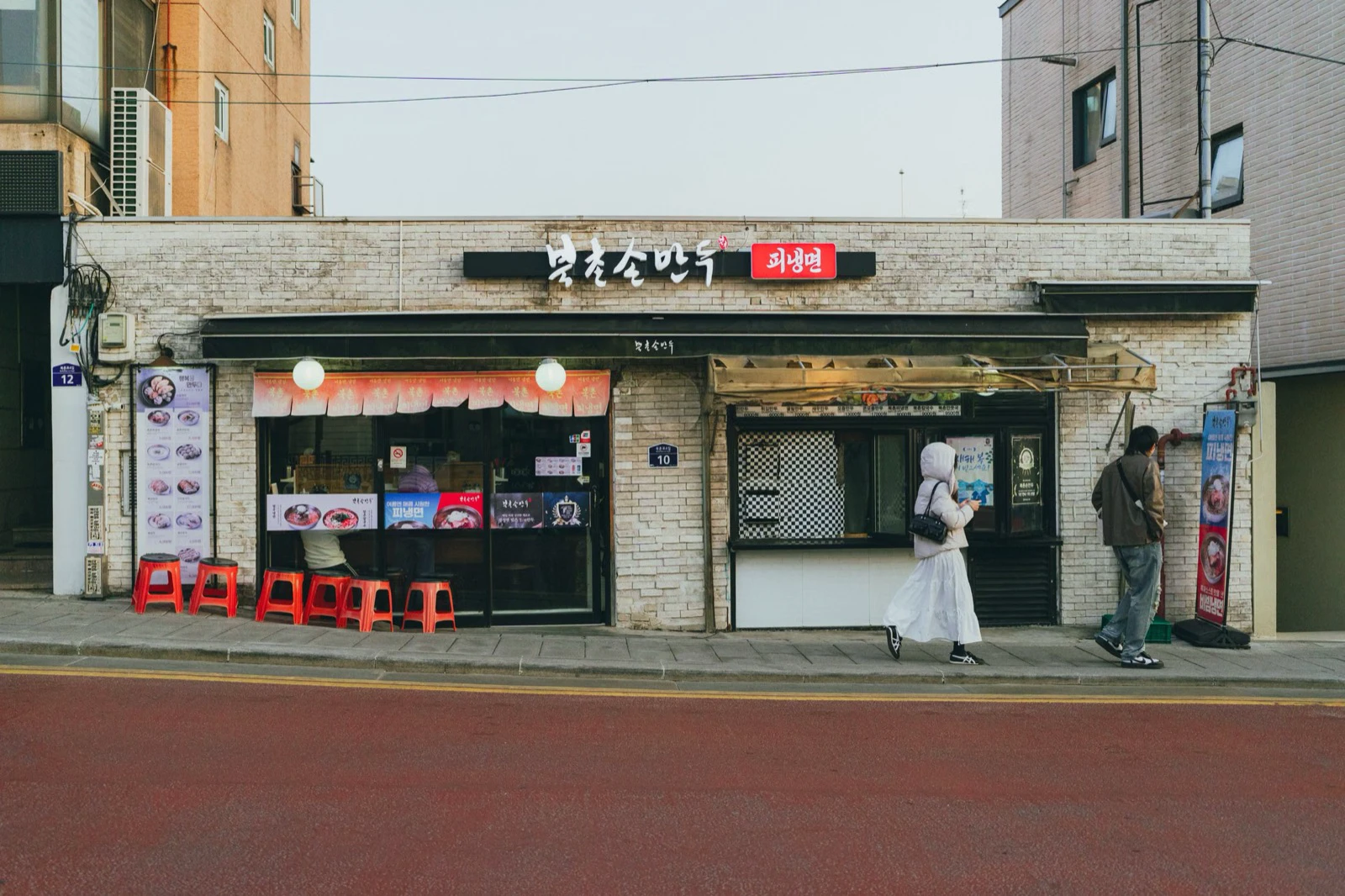
Pause at the entrance first. If staff point to a table or say 아무 데나 앉으세요 (sit anywhere), take that seat; if you see a queue tablet, reservation desk, or host managing arrivals, wait for instructions.
Korean restaurants do not share one universal seating, ordering, or payment routine. Read the next visible cue instead of trying to memorize one etiquette rule: entrance system, seat direction, ordering channel, and payment location.
1. Read the entrance before choosing a table
Stop just inside, make eye contact, and say the number in your party: 두 명이에요 (du myeong-ieyo, two people), for example. Staff may lead you to a table, point to one, or tell you that any open seat is fine.
Wait rather than self-seat when you see any of these:
- a queue tablet or number display;
- a reservation list or reception counter;
- a sign asking guests to wait;
- staff actively assigning and clearing tables.
The Korea Tourism Organization's current Catchtable Global explainer notes that restaurant waiting systems differ: some support remote waiting, some require an on-site queue, and some restaurants do not accept walk-ins. It is an example of why an empty-looking table does not prove that it is available.
If the signal remains unclear, ask 아무 데나 앉아도 돼요? (amu dena anjado dwaeyo?, may we sit anywhere?). A short question is more reliable than judging the restaurant by its décor or price.
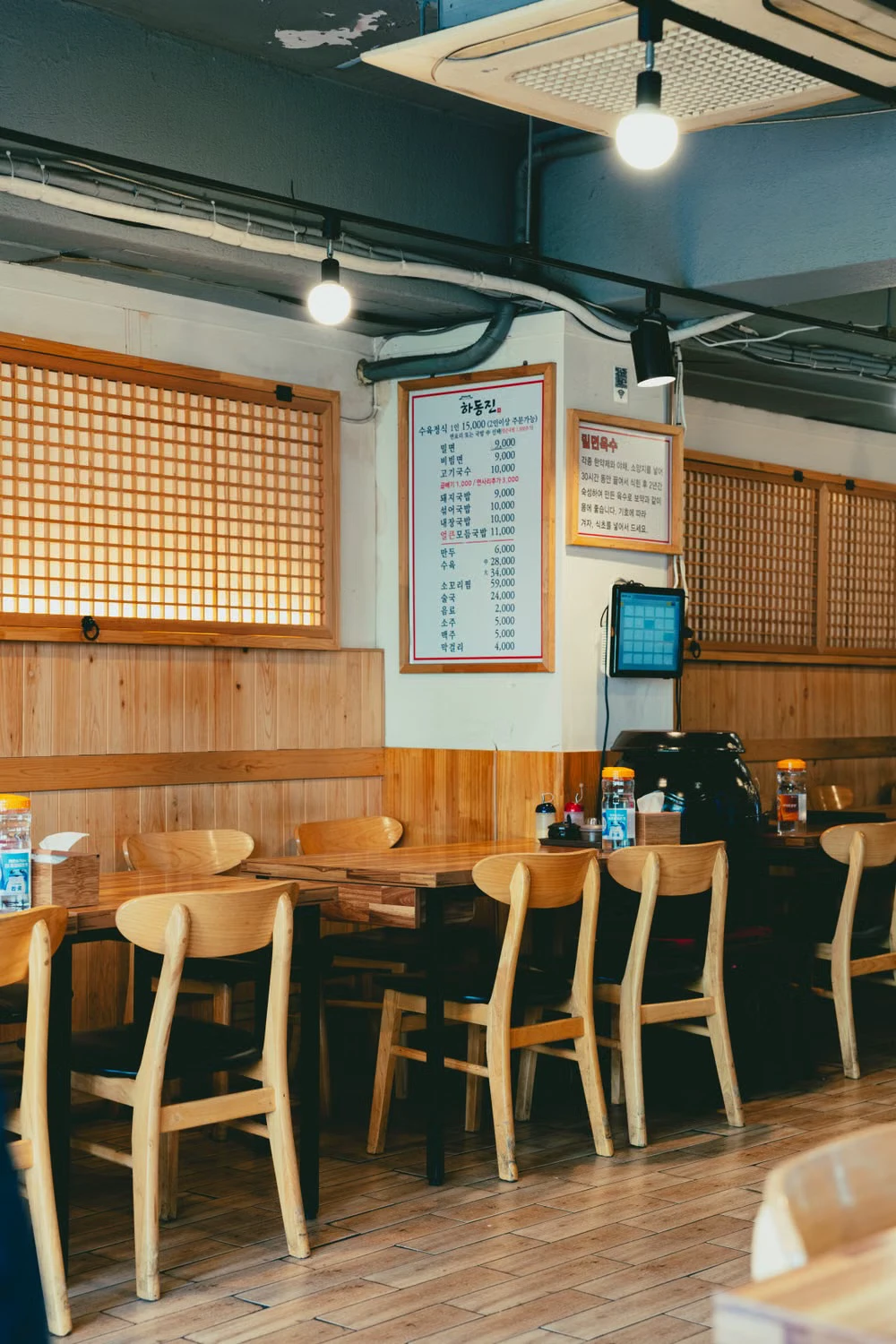
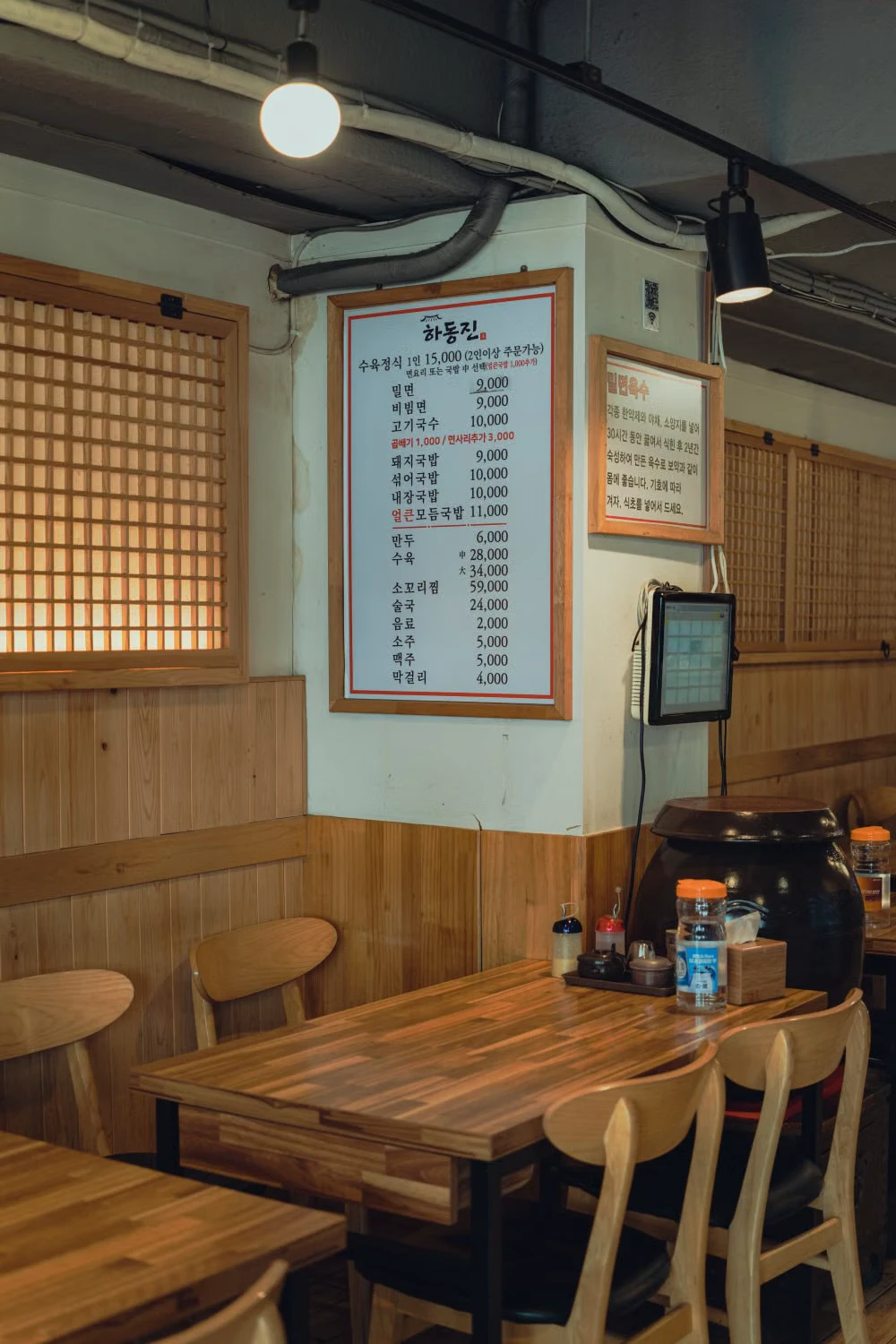
Visible open tables do not automatically mean self-seating. A queue screen, wall menu, table setup, and staff gesture together tell you how that particular room works.
2. Find the ordering channel after you sit down
Before waiting for a server to return, look at the table, wall, and entrance counter. Most situations fit one of these channels:
- Table tablet or QR code: Choose the language if available, review the basket, and submit the order on screen.
- Paper menu and call bell: Decide first, then press the bell once.
- Kiosk or order counter: Order there; payment may also be required before you sit.
- No device or obvious counter: Make eye contact and say 주문할게요 (jumunhalgeyo, we're ready to order).
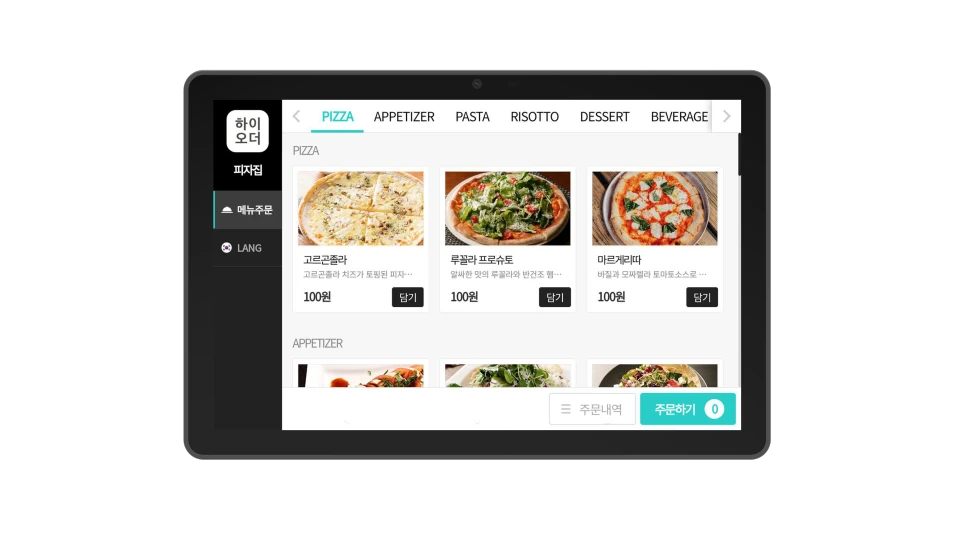
A table tablet is an instruction, but it may not perform every step. Look for 주문하기 (place order), 주문내역 (order history), and 결제 (payment). Check that the basket has actually been submitted; leaving items in the cart is not the same as sending the order. If the interface is unclear, ask 이 태블릿으로 주문하면 돼요? (i taebeulliseuro jumunhamyeon dwaeyo?, should I order on this tablet?).
Do not assume that a server will keep checking whether you are ready. In this recent traveler discussion about ordering in Korean restaurants, people describe several different workflows and the same avoidable problem: a guest waits politely while staff assume the table is still deciding. The discussion is experience evidence, not restaurant policy. Use the device provided, press the bell once, or get attention calmly.
저기요 (jeogiyo) and 여기요 (yeogiyo) are routine calls for attention in casual dining. Say either in a normal, audible voice; do not shout across the room. The Korea Tourism Organization restaurant overview, last updated in 2023 and rechecked on August 12, 2026, also describes call buttons, unmanned ordering machines, and self-service water or side-dish stations. Treat those as common possibilities, not a promise that every table has them.
3. Check minimum orders and self-service separately
The ordering channel does not tell you the restaurant's minimum. Barbecue, hot-pot, set-menu, café, and one-person dining policies can all differ by business. Read the menu header and table notice before submitting. A rule such as one menu per person is separate from whether you seat yourself or order on a tablet.
Likewise, a water or side-dish station is only self-service when it is clearly labeled or staff direct you there. Do not walk behind a counter or into a work area. If you need more and cannot identify the system, point to the item and ask 더 받을 수 있어요? (deo badeul su isseoyo?, may I have more?). Check the menu for any separately priced refill or add-on rather than assuming every item is free.
4. Identify where and when to pay
Two Korean words settle much of the timing:
- 선불 (seonbul) means pay first. Order and pay at the counter or kiosk before eating.
- 후불 (hubul) means pay afterward. Finish the meal, then pay through the table device or at the front counter.
In a common post-paid setup, no bill is brought to the table. Take the table slip or order receipt, if there is one, to the register near the entrance. If the tablet has a clear 결제 button, follow the prompts—but the presence of a tablet alone does not prove that in-seat payment is available. Some devices send orders only.
If you cannot find the payment cue, ask 계산은 어디에서 해요? (gyesaneun eodieseo haeyo?, where do I pay?). If the register is beside the exit and no check arrives, that is a useful clue, but asking is safer than walking out with an unpaid table.
The KTO overview says tipping is not expected in ordinary Korean restaurant service. It also describes extra water and side dishes as generally not carrying a separate charge, while noting the rise of self-service. A priced refill, premium add-on, or restaurant-specific table-setting fee is still governed by the menu, so check what your restaurant actually lists.
The whole visit in five decisions
- Pause at the entrance. Look for a queue, reservation desk, or staff direction.
- Confirm the seat. Follow the gesture, or ask whether you may sit anywhere.
- Identify the ordering channel. Tablet, QR code, bell, kiosk, counter, or staff.
- Confirm the order was sent. Check the order history or wait for an on-screen confirmation.
- Read the payment cue. 선불 is before the meal; 후불 is after. Ask where to pay if neither is visible.
This sequence is more useful than a list of supposed national rules because each decision is based on the restaurant in front of you.
Seven phrases worth keeping on screen
- 두 명이에요. (Du myeong-ieyo.) — Two people.
- 아무 데나 앉아도 돼요? (Amu dena anjado dwaeyo?) — May we sit anywhere?
- 주문할게요. (Jumunhalgeyo.) — We're ready to order.
- 이 태블릿으로 주문하면 돼요? (I taebeulliseuro jumunhamyeon dwaeyo?) — Should I order on this tablet?
- 더 받을 수 있어요? (Deo badeul su isseoyo?) — May I have more?
- 계산은 어디에서 해요? (Gyesaneun eodieseo haeyo?) — Where do I pay?
- 선불이에요? (Seonbur-ieyo?) — Do I pay first?
You do not need perfect pronunciation or a complete script. Pause, point to the relevant screen or item, and ask the one short question that resolves the next step.
Sources and image credits
- Delivery Spot cover image — Published cover showing a Korean restaurant entrance and counter windows.
- Korea Tourism Organization: About Korean Food — Official overview of call buttons, self-service, unmanned ordering, and tipping; the page says it was updated March 24, 2023, and it was rechecked August 12, 2026.
- Korea Tourism Organization: Catchtable Global — Official 2024 explanation of reservation, remote-waiting, and on-site waiting differences; rechecked August 12, 2026.
- Traveler ordering discussion — Used only to identify recurring traveler confusion and varied workflows, not as official policy.
- Restaurant exterior — Theodore Nguyen on Pexels; original source credited for the cover.
- Restaurant interior, wider view — Theodore Nguyen on Pexels; original source for the first slider image.
- Restaurant interior, closer view — Theodore Nguyen on Pexels; original source for the second slider image.
- Table-order interface — KT HiOrder official Naver Blog; original source credited for the ordering-screen image.
- Delivery Spot restaurant interior 1 — Published web asset derived from the credited Pexels source.
- Delivery Spot restaurant interior 2 — Published web asset derived from the credited Pexels source.
- Delivery Spot table-order image — Published web asset derived from the credited KT HiOrder source.
Last updated


