
Korean Restaurant Break Time and Last Order, Explained
Closing time is not the entry deadline. Separate break time, last order, split service and temporary notices, then ask whether the kitchen can still take your meal.
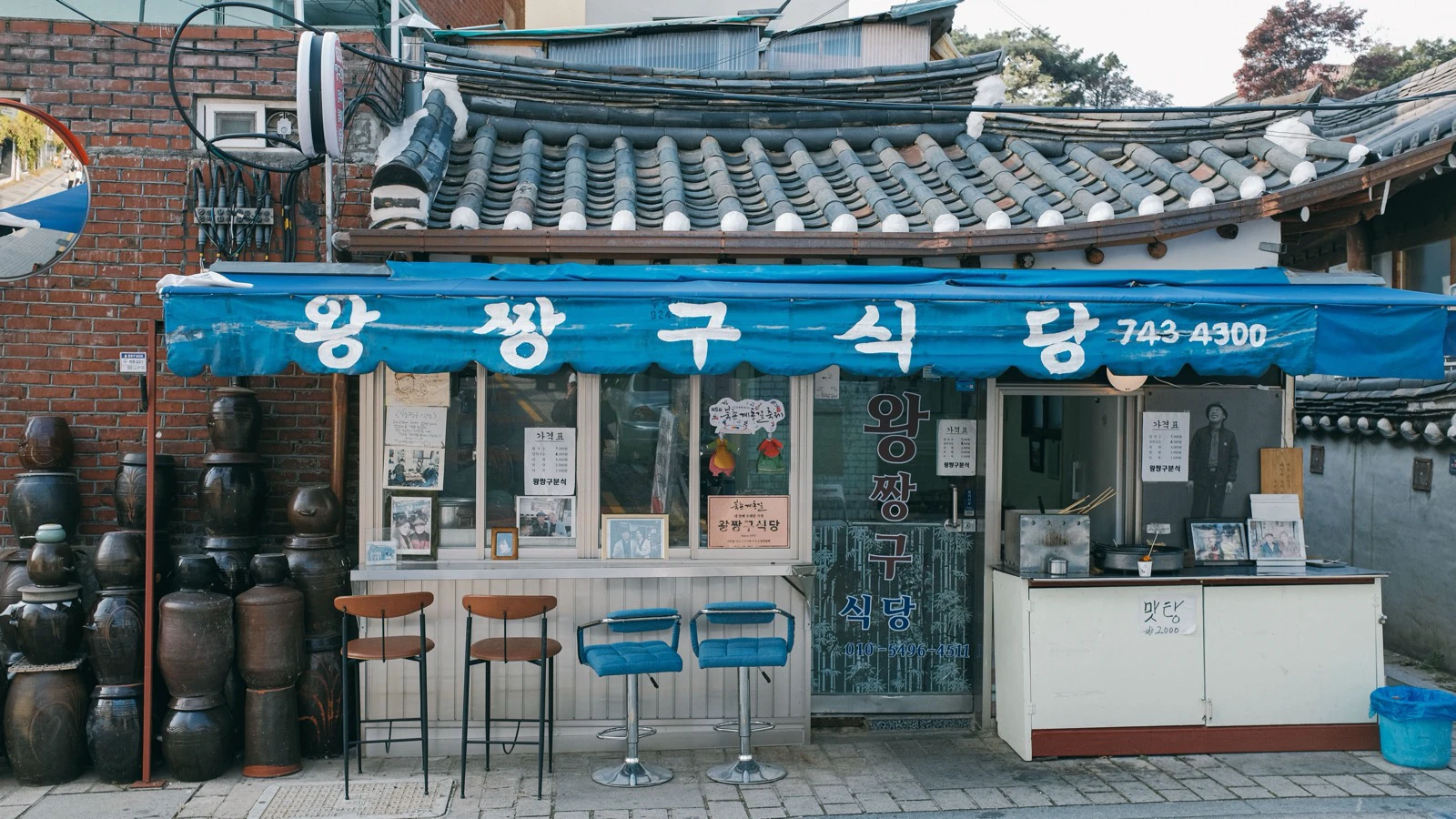
A restaurant’s posted closing time is not the deadline for arriving and ordering. Before making the trip, check today’s service blocks, 브레이크타임 (break time), 라스트오더 (last order), and any temporary notice. If you will arrive near a cutoff, call and ask whether the kitchen can still take your order.
Read the four labels separately
- `영업시간` — business hours: the scheduled operating window. It does not promise that every menu or the kitchen is available for the entire window.
- `브레이크타임` / `준비시간` — break or preparation time: a gap between service periods. Do not assume you may enter, wait inside, or order takeaway during it.
- `라스트오더` / `주문마감` — last order: the stated deadline for a new kitchen order. A queue, sold-out menu, or lengthy course can make the practical seating cutoff earlier.
- `영업 종료` / `마감` — closing: when the day’s operation ends. It is not a promise that a new table will be accepted until that minute.
There is no single Korea-wide rule that converts “closes at 9 PM” into an entry deadline. Think of the sequence as seat → order → eat → close. A restaurant can stop at any earlier step because of its menu, queue, ingredient stock, reservation load, or cleanup schedule.
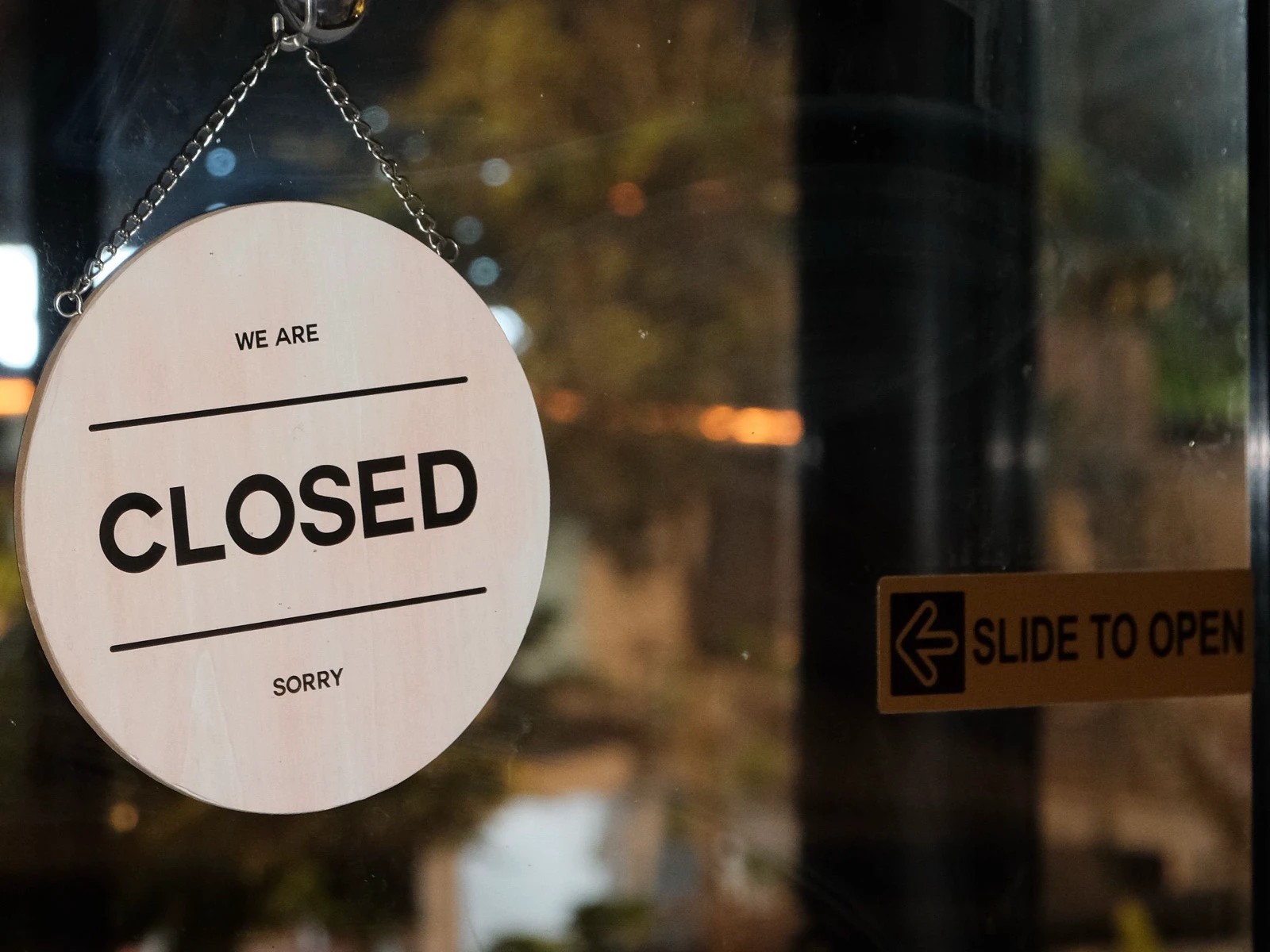
Why “open now” can still mean a closed kitchen
Listings are maintained fields, not a live feed from the pass. Naver’s current SmartPlace hours help, rechecked on August 12, 2026, lets owners enter weekday hours, breaks, temporary schedules, holidays, and restaurant last order. It also says an edit can take up to one day to reach search, and only the first basic-hours entry drives the search-list “open” state and filter. A second service block can therefore be invisible in the small result card.
Google’s current Business Profile hours guide tells owners to show a midday break as two opening periods and use special hours for holidays or temporary changes. On either platform, open the full listing, choose the exact date, and compare recurring hours with the newest dated notice.
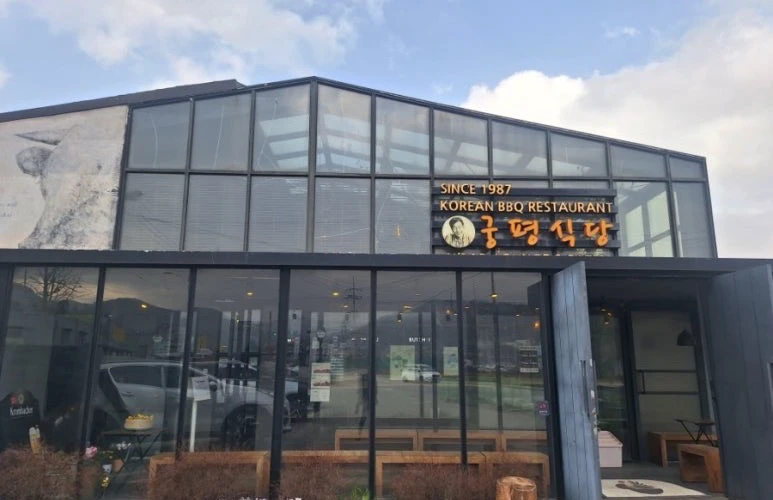
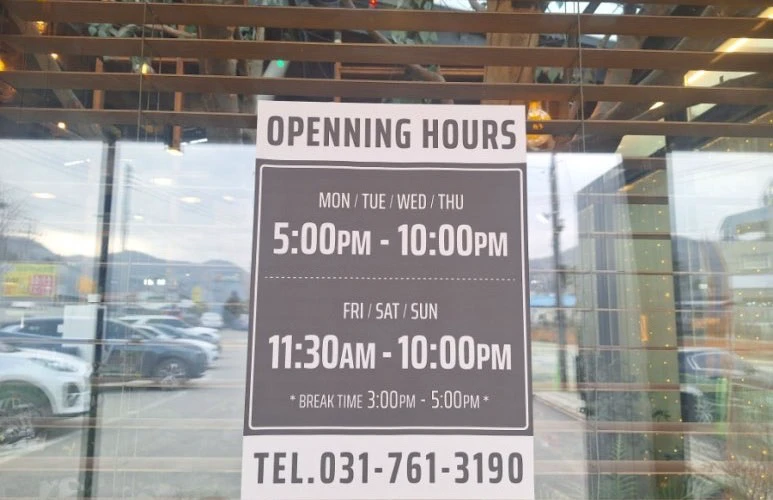
The next two images show a Korean restaurant entrance and door schedule photographed in April 2024. They illustrate where a break notice may appear; they are not current hours for that venue.
The 90-second check
- Open the full Place or Maps page; ignore the search-card badge by itself.
- Select today’s weekday and look for a dated holiday or temporary-hours override.
- Read every service block.
11:30–15:00 / 17:00–22:00means no normal service from 3 to 5 PM. - Find last order separately. If it is absent, do not invent a universal 30- or 60-minute buffer.
- Check the newest business notice for a sell-out, private event, or same-day closure.
- Call when the meal depends on a detour, a large party, a course menu, or an arrival near the cutoff.
A traveler discussion about restaurant hours contains conflicting experiences—useful evidence that practice varies, not a rule for Korea. The current restaurant’s notice and answer take priority.
Ask whether you can order, not merely whether the door is open
지금 식사 주문 가능해요?— Can I order a meal now?브레이크타임 몇 시부터예요?— What time does break time start?라스트오더 몇 시예요?— What time is last order?지금 들어가도 돼요?— Can I come in now?8시 30분쯤 도착하는데 주문 가능할까요?— I will arrive around 8:30; can I still order?
The first and last questions are most precise. “Are you open?” can receive a technically correct yes while only seated guests are being served.
Three common failure points
Ten minutes before break
Lunch ending at 3 PM and break beginning at 3 PM do not guarantee a 2:50 seating. Last order may be earlier, or staff may need current tables finished by 3. Ask before entering a long queue.
Before closing, after last order
If closing is 9 PM and last order is 8:30 PM, an 8:35 arrival is late for a new meal even if the lights are on. Move to the backup instead of arguing from closing time.
Late for a reservation
A reservation holds a time, not an unlimited arrival window. Contact the restaurant immediately. The table can be released or the kitchen cutoff can pass while the booking still appears in the app.
Save a backup with a different service pattern
Choose one nearby alternative that is less likely to share the same gap—for example, a verified continuous-hours soup or gimbap shop rather than another split lunch-and-dinner restaurant. After 11 PM, use the live-check method in our Seoul late-night food guide. Once service is confirmed, the enter–order–pay guide covers what happens next.
The practical rule is simple: closing time tells you when the business day ends; last order and the kitchen’s current answer tell you whether your meal can begin.
Image notes
- Door and exterior images: Delivery Spot editorial archive; the two slider images retain their April 2024 date qualifier.
- Featured image: original unbranded editorial image created for Delivery Spot.
Sources
- Naver SmartPlace business-hours help — Official fields, update delay, and first-hours search-display limitation
- Google Business Profile hours help — Official split-hours and special-hours guidance
- Traveler restaurant-hours discussion — Anecdotal variation only
- Closed-door image — Delivery Spot editorial asset
- Restaurant exterior image — Delivery Spot editorial asset, April 2024 context
- Door-hours image — Delivery Spot editorial asset, April 2024 context
- Featured cover asset — Original Delivery Spot editorial asset
Last updated


