
King, Crown Prince, Queen, Daegam: A Beginner’s Sageuk Title Guide
Learn the difference between a royal position, a direct form of address and an honorific, then decode the five court titles heard most often in sageuk.

You do not need to memorize the Joseon bureaucracy to follow a Korean historical drama. Sort each word into one of three layers: the position (wang, king), the direct form of address (jeonha, used to the king), or an honorific (daegam, respect for a senior official rather than his job).
English subtitles often flatten several Korean forms into “Your Highness” or “my lord.” This guide is a viewing key for Joseon-style court language used in many sageuk, not a universal chart for every Korean state, century, fantasy world or production.
The 20-second decoder
- 주상 전하 (jusang jeonha) / 전하 (jeonha): the reigning king.
- 세자 저하 (seja jeoha): the formally designated crown prince.
- 중전마마 (jungjeon mama): the current queen.
- 대비마마 (daebi mama): a queen dowager, usually senior to the current queen by generation.
- 대감 (daegam): respectful address for a senior male official; another word must tell you his office.
The useful question is not “Which English title is this?” Ask instead: role, address or honorific?
King: wang is the role, jeonha is what people say to him
왕 (wang) means king. Characters speaking about the ruler may use wang or 주상 (jusang), while direct speech commonly uses 전하 (jeonha) or 주상 전하 (jusang jeonha). The Standard Korean Language Dictionary entry for jeonha identifies it as a Joseon form used to address or elevate the king.
This is why a subtitle can move from “the king” during a policy discussion to “Your Majesty” when he enters. The Korean has shifted from position to direct address.
The king may call himself 과인 (gwain), a conventional royal first-person term. 폐하 (pyeha) is more closely associated with an emperor or another political framework; do not automatically replace the usual Joseon king's jeonha with it. Fantasy and alternate-history dramas can deliberately build different systems, so follow the rules established on screen.
Crown prince: an invested heir, not merely the oldest son
왕세자 (wangseja), often shortened to 세자 (seja), is the son formally designated to succeed the king. The official dictionary definition of wangseja centers that formal designation. It does not simply mean “the king's oldest boy.”
Before investiture, an eldest son may be called 원자 (wonja). A faction trying to make its preferred prince the seja is therefore fighting over recognized succession, not vocabulary. The crown prince is addressed as 세자 저하 (seja jeoha); the dictionary entry for jeoha records the Joseon use for the crown prince. His wife is 세자빈 (sejabin), crown princess.
A robe or an English subtitle saying “prince” cannot prove succession status. This still from Under the Queen's Umbrella shows a royal prince; the story, investiture and full title must identify his place.
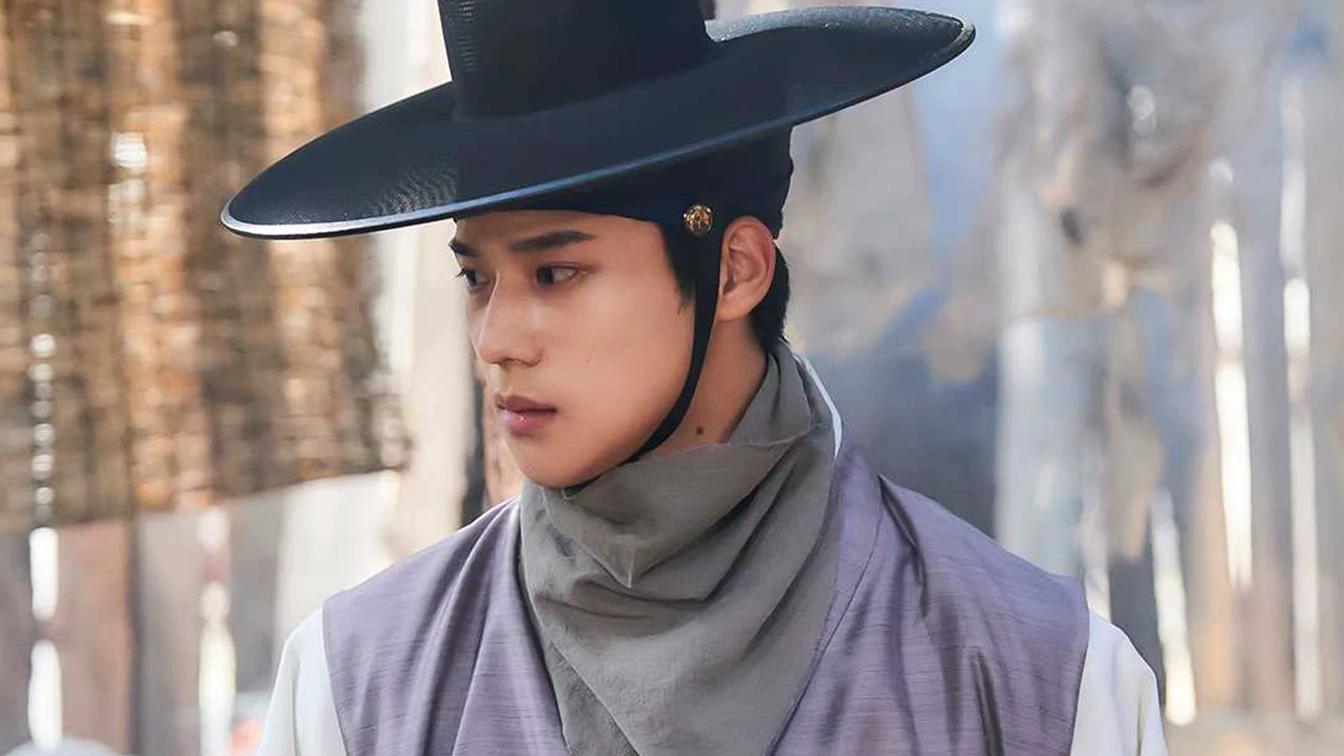
Costume can signal rank without functioning as a complete name badge. The same distinction matters in our guide to how accurate sageuk costumes and palaces are.
Queen: wangbi, jungjeon and mama
왕비 (wangbi) is the king's principal wife, the queen. 중전 (jungjeon) literally points to the central palace or queen's residence and also stands for the queen herself. 중전마마 (jungjeon mama) is the respectful address familiar from palace dramas. Mama supplies royal respect; it is not the job title.
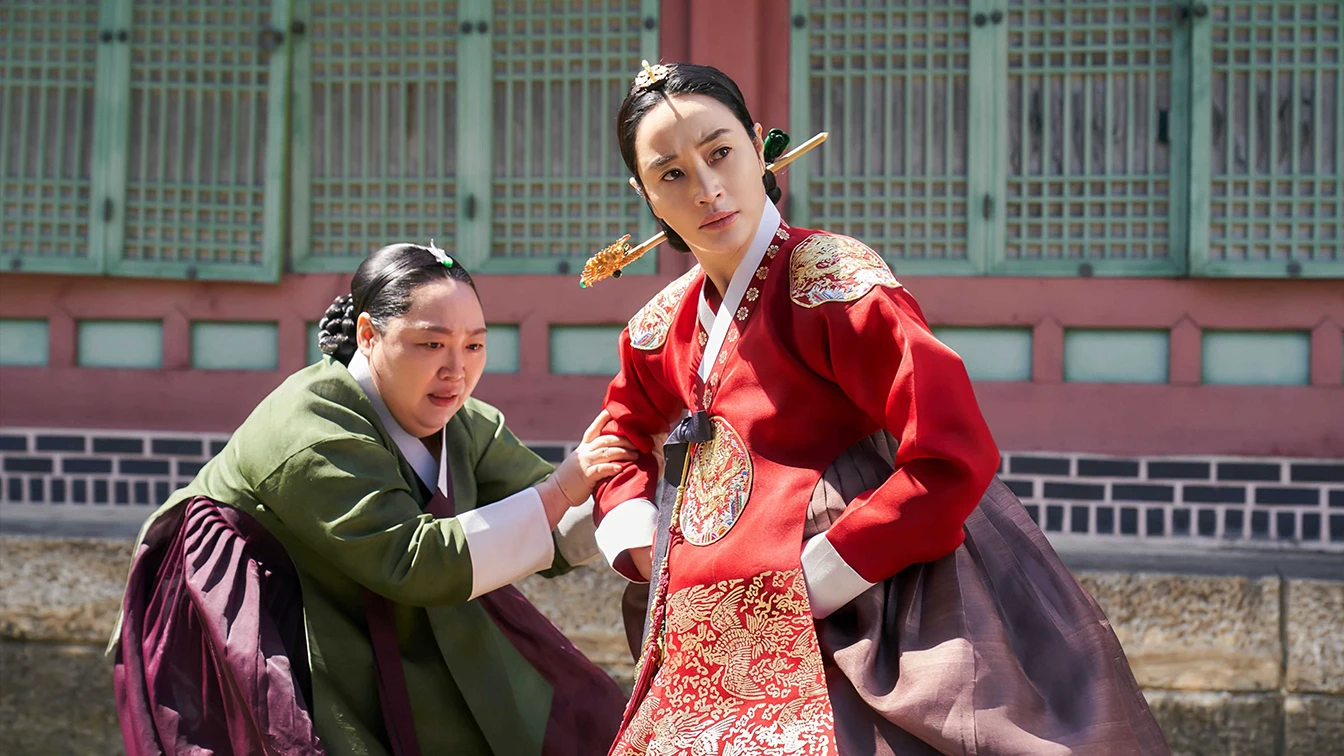
The queen's place extends beyond “the king's spouse.” In a Joseon-style drama she occupies the central consort position and may be treated as legal or ceremonial mother to royal children even when a concubine gave birth to them. That can produce different family language in private and formal scenes. “Queen” and “queen mother” are not synonyms.
Queen dowager: daebi is the senior generation
대비 (daebi) is a queen dowager, often the reigning king's mother or a woman in that senior generation, addressed as 대비마마 (daebi mama). A still more senior dowager can be 대왕대비 (daewangdaebi). Exact family history still matters; do not assume every dowager fits one identical biography.
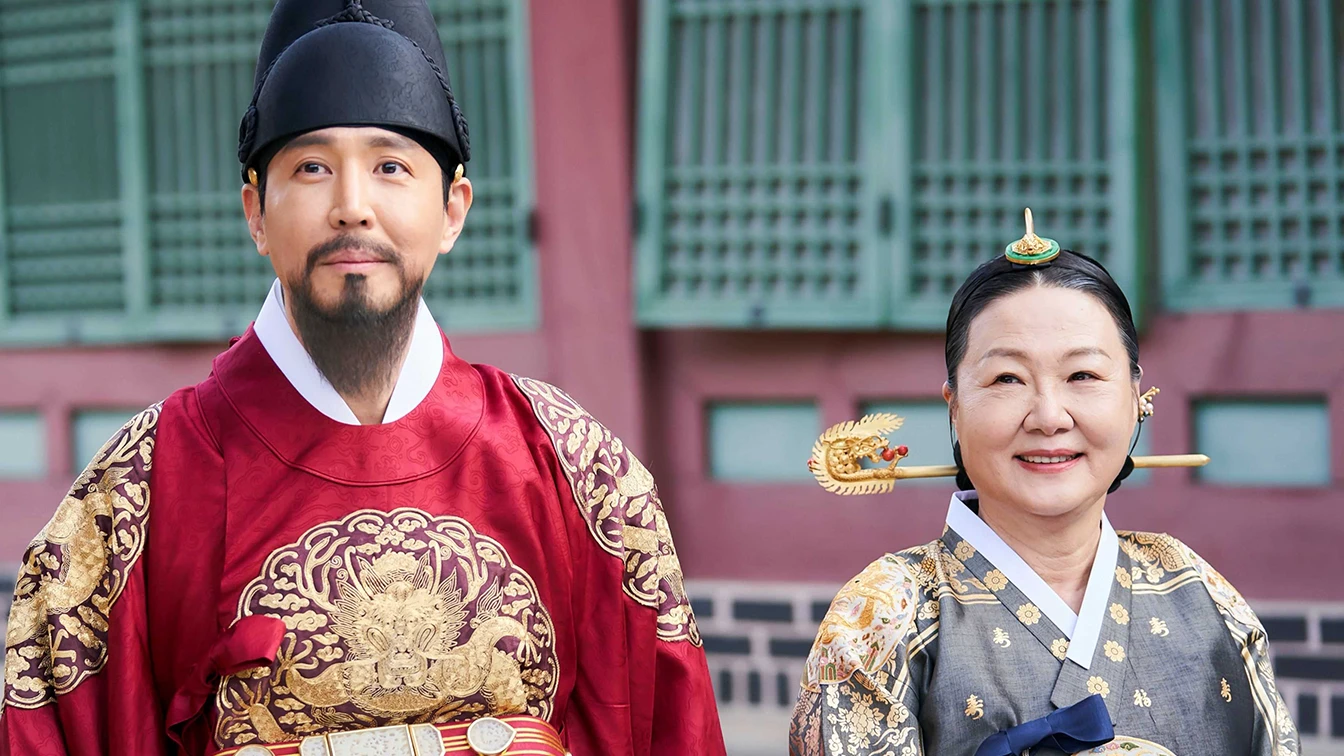
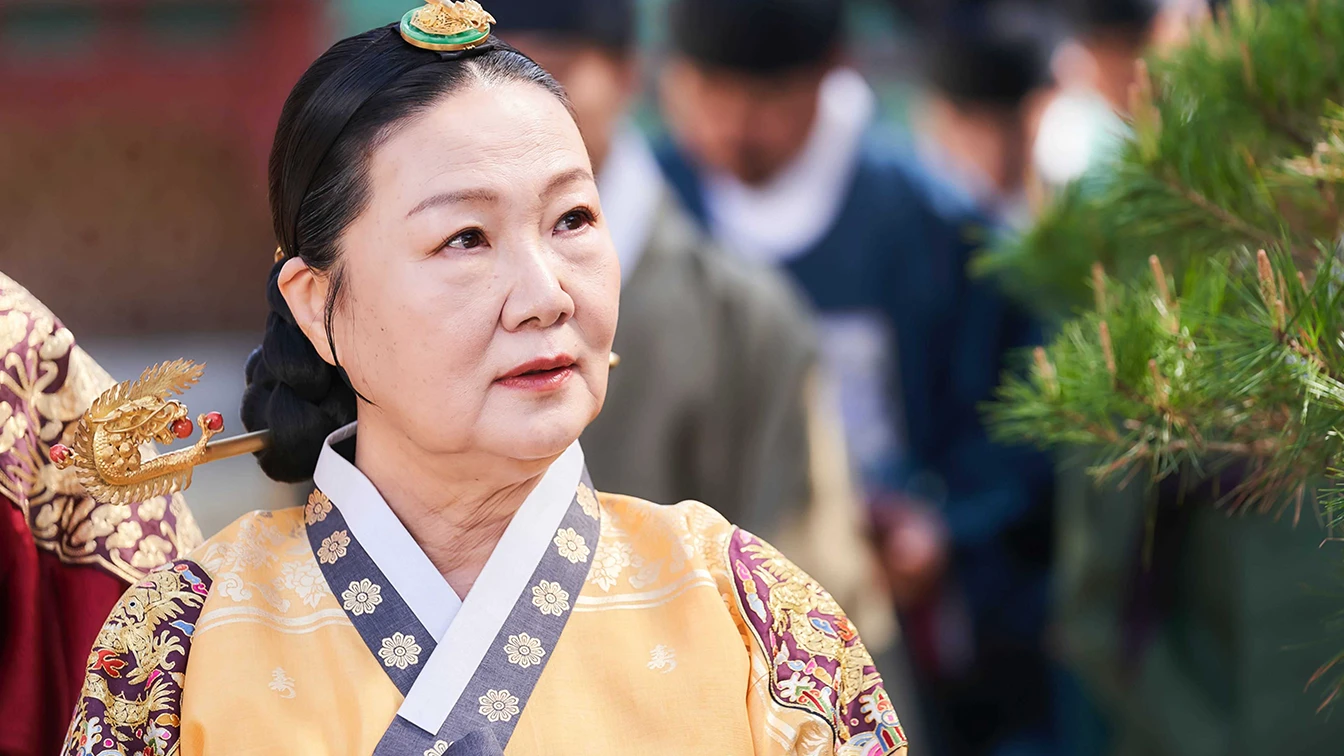
In a spoiler-light reading of Under the Queen's Umbrella, Kim Hye-soo's character is the current queen, Kim Hae-sook's is the queen mother, and King Lee Ho is identified separately on the official CJ ENM character page. The queen is the king's wife; the queen mother is his mother and the queen's mother-in-law. Her husband need not be alive on screen for her to outrank the current queen inside the palace.
Other royal children: use the title as a first-pass family clue
- 대군 (daegun), Grand Prince: commonly a son of the king and queen.
- 군 (gun), Prince: commonly a royal son born to a concubine, though gun also appears in other royal and noble titles.
- 공주 (gongju), Princess: commonly a daughter of the king and queen.
- 옹주 (ongju), Princess: commonly a king's daughter born to a concubine.
These labels can reveal the mother's court status. They do not automatically show personality, affection or power: a gun may be influential and a daegun vulnerable. Period rules, posthumous usage and exceptional grants complicate the pattern, so treat it as a first pass and let the drama's family tree finish the work.
Concubines: hugung is broad, bin is a rank
후궁 (hugung) is the broad term for a royal concubine. Dramas often foreground ranked titles such as 빈 (bin) and 귀인 (gwiin), which can change after promotion or demotion.
Listen to the full word. Bin can be a high consort rank, but 세자빈 (sejabin) is the crown prince's wife. The shared syllable does not make the positions equivalent. A concubine's rank and her son's succession title can be politically connected while remaining separate appointments.
Officials: daegam gives respect, the office gives power
대감 (daegam) often becomes “my lord” in subtitles. It is respectful address for a senior male official, not the name of his ministry or authority. Listen to the office placed before it:
- 영의정 (yeonguijeong): Chief State Councillor.
- 좌의정 (jwauijeong) / 우의정 (uuijeong): Left / Right State Councillor.
- 판서 (panseo): minister heading a major board or ministry.
좌의정 대감 means the job is Left State Councillor and the respectful address is daegam. 김 대감 (Kim daegam) identifies a respected senior official by family name but still hides his portfolio. 영감 (yeonggam) may address an official too; dramas often place it lower than daegam, but period and scene still control usage.
Palace staff: rank and access are different kinds of power
- 상궁 (sanggung): a senior court woman with an official role and authority over women in her area, not simply “maid.”
- 나인 (nain): a court woman serving inside the palace, generally below a sanggung in the household hierarchy dramas depict.
- 내관 (naegwan): a male palace attendant, conventionally a eunuch official in Joseon settings. The official dictionary entry describes the Joseon role as serving the king.
A trusted sanggung or naegwan may rank far below a minister but hear private conversations first. Sageuk plots repeatedly use that gap between official rank and personal access.
Decode a scene without pausing every line
- “전하, 신이 아뢰옵니다.” A subject addresses the king: “Your Majesty, I report...”
- “세자 저하께서 오십니다.” The crown prince is arriving.
- “중전마마를 뵙습니다.” Someone pays respects to the current queen.
- “좌의정 대감의 뜻입니까?” The office is Left State Councillor; daegam adds respect.
Then watch seating, verb endings and who may interrupt. A childhood name in private and a full title in court can signal intimacy, hierarchy or political danger.
When subtitles compress everything into Majesty, Highness, Queen, Prince or Lord, ask three questions: is the Korean a position, direct address or honorific; is the scene about royal family, inner-palace staff or government; and did the title change through investiture, marriage, promotion, demotion or succession?
For a beginner, five sounds unlock most scenes: jeonha, seja jeoha, jungjeon mama, daebi mama and daegam. The rest can be learned when the plot makes it matter.
Sources and asset credits
- National Institute of Korean Language: Standard Korean Language Dictionary — official National Institute of Korean Language dictionary home; linked term entries retained inline and checked August 12, 2026.
- tvN: Under the Queen's Umbrella photo archive — official tvN photo archive; source and operator-confirmed August 9, 2026 reuse record for the four retained drama stills.
- tvN: Under the Queen's Umbrella — official tvN program page confirming the series’ character labels and fictional framing.
- Featured asset — retained featured asset from the published English master; operator-confirmed August 9, 2026 reuse record preserved.
- Korea Tourism Data Lab — 2025 completed-year inbound-market framework used for localization.
Last updated


