
How Accurate Are Sageuk Costumes and Palaces?
Learn how to separate historical reconstruction, practical production design, and deliberate adaptation in Korean period-drama costumes and palace scenes.
Sageuk costumes and palaces are usually historically informed, not documentary replicas. A single scene can combine a correct rank badge, camera-friendly tailoring, a restored palace exterior and a studio interior built larger than any surviving room. Judge each layer against the drama's claimed period, character rank, occasion and genre.
This guide was checked against official museum, heritage and tourism records on 12 August 2026. It does not assign one accuracy score to every historical drama. A political series set in a named reign makes a narrower historical promise than a fusion romance or fantasy inspired by Joseon.
Use three labels instead of “accurate” or “fake”
- Reconstruction: supported by surviving garments, paintings, manuals, architecture or archaeology.
- Plausible production design: compatible with the period, but simplified, combined or enlarged for actors and cameras.
- Deliberate adaptation: altered to express character, romance, fantasy or a distinctive visual world.
All three can appear in one episode. The useful question is what a choice communicates and whether it contradicts the date, rank, ceremony or setting established by the story.
Costume accuracy begins with date, rank and use
There was no single timeless “Joseon outfit.” The dynasty lasted more than five centuries, and clothes changed. Daily office dress, formal audience robes, weddings, mourning, military duties and state rituals required different combinations. The wearer's rank, age and marital status could also change badges, headgear, belts, hairstyles and accessories.
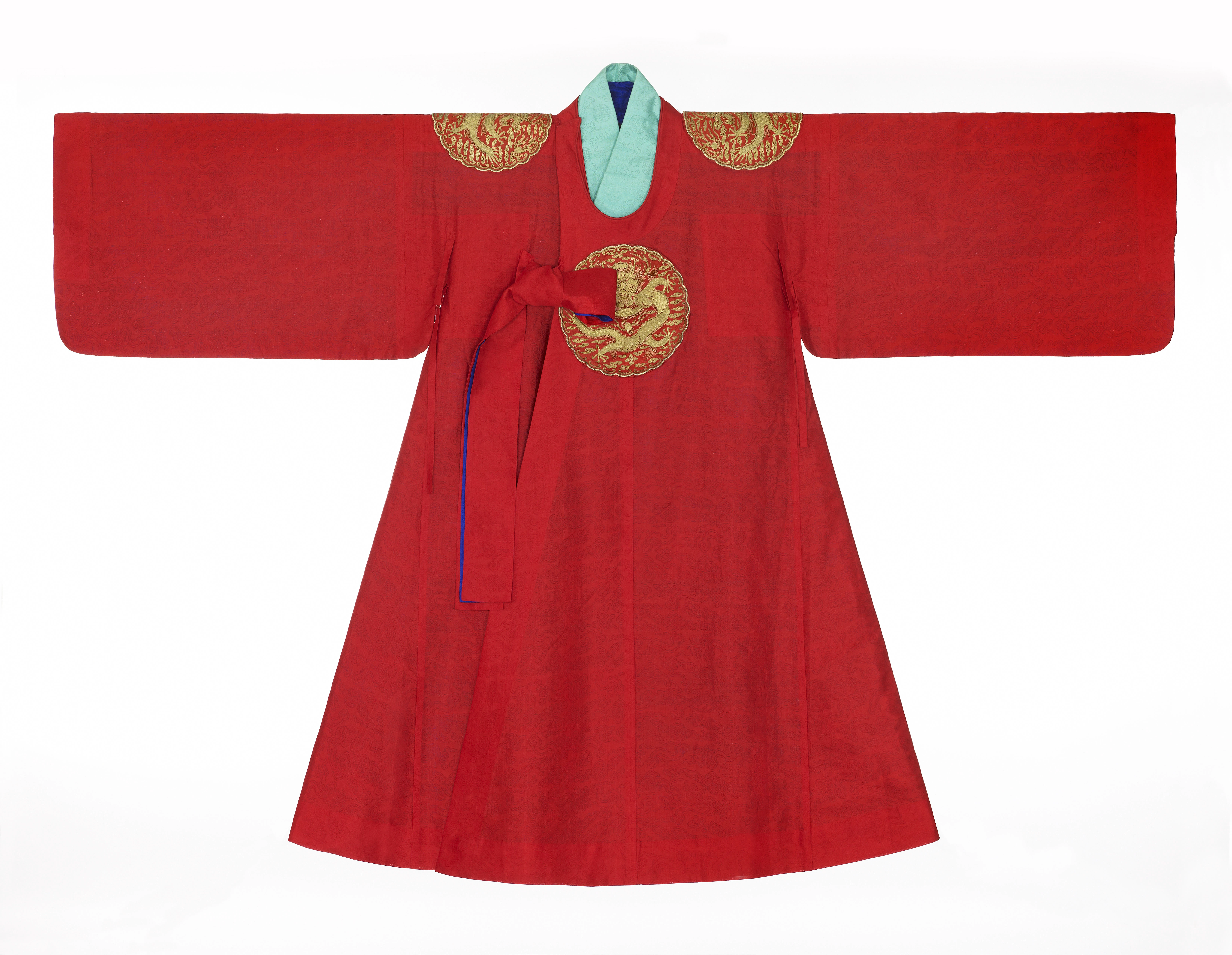
The National Palace Museum of Korea identifies gollyongpo (곤룡포) as dragon robes used by rulers and heirs for ordinary official duties. Its record for Imperial Prince Yeong's red robe dates this specific object to the twentieth century. Color, badge shape and placement, and even the number of dragon claws distinguished emperor, king, crown prince and royal grandson.
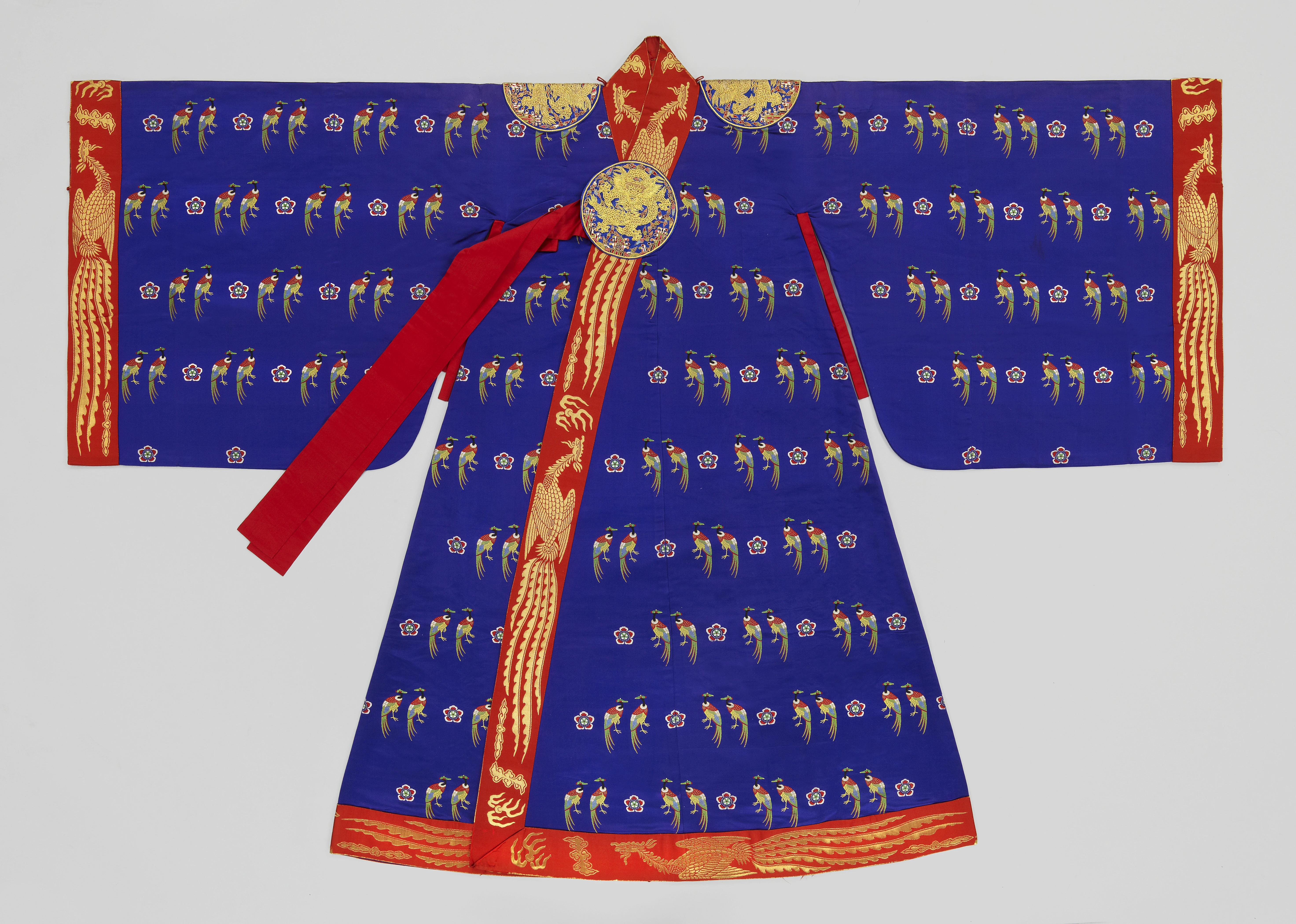
The neighboring jeogui (적의) shows the same problem for women's ceremonial dress. The museum dates this specific deep-blue robe to 1922, after the Korean Empire had been proclaimed. Its record notes 138 pairs of pheasants, floral motifs and five-clawed dragon badges; it also explains that Joseon queens and crown princesses had used red or black forms, while imperial consorts used deep blue.
These garments are strong evidence for the objects they document, not templates to copy unchanged into every fifteenth- or sixteenth-century scene. Surviving royal pieces are often late, exceptional or ceremonial. Reliable costume analysis matches the exact date, status and activity before comparing a screen costume with a museum object.
What to look for on screen
A careful production may adjust materials while preserving historical “grammar.” Check five things:
- Silhouette and layers: sleeve width, waist position, collar and underlayers suit the stated century.
- Rank markers: badges, hats, belts and robe colors change when a character's position changes.
- Occasion: private work, court audience, funeral and military review do not use one interchangeable outfit.
- Life stage: hair and accessories reflect age or marital status when the period's evidence supports it.
- Institutional consistency: officials in the same category follow a coherent dress system.
Bright color alone is weak evidence of anachronism. Silk, mineral pigments, plant dyes, gold thread and painted architecture could be vivid. Ask whether the hue and motif belong to that person's rank and moment, rather than comparing a lit television set with a faded textile behind museum glass.
If royal titles are part of the confusion, our beginner's guide to sageuk titles explains why a wangseja, daegun and ordinary official should not share the same visual privileges.
Why researched costumes still change
Screen clothes must accommodate movement, microphones, repeated takes, stunts, weather, laundering and continuity. Designers may lighten fabric, reduce layers, reshape shoulders or waists, coordinate faction colors, simplify accessories and use contemporary makeup so viewers recognize characters quickly.
That is not automatically careless. In a Koreana interview with costume designer Cho Sang-kyung, she describes archival and material research while emphasizing that costumes must help actors inhabit their roles and remain wearable. The interview also acknowledges an incorrectly placed military emblem. Serious research reduces mistakes; it does not make a production infallible.
Separate stylization from contradiction. A slightly cleaner silhouette can be a camera choice. Giving a minor official a ruler's exclusive dragon emblem with no narrative explanation breaks the rank system the costume is meant to communicate.
A real palace is still a layered historical site
Real palace exteriors feel authoritative, but today's heritage sites are not frozen snapshots of one Joseon year. The Royal Palaces and Tombs Center's official Gyeongbokgung history records that the palace was founded in 1395, destroyed in 1592, rebuilt in 1867, systematically dismantled during the colonial period, and restored in stages from the 1990s onward.
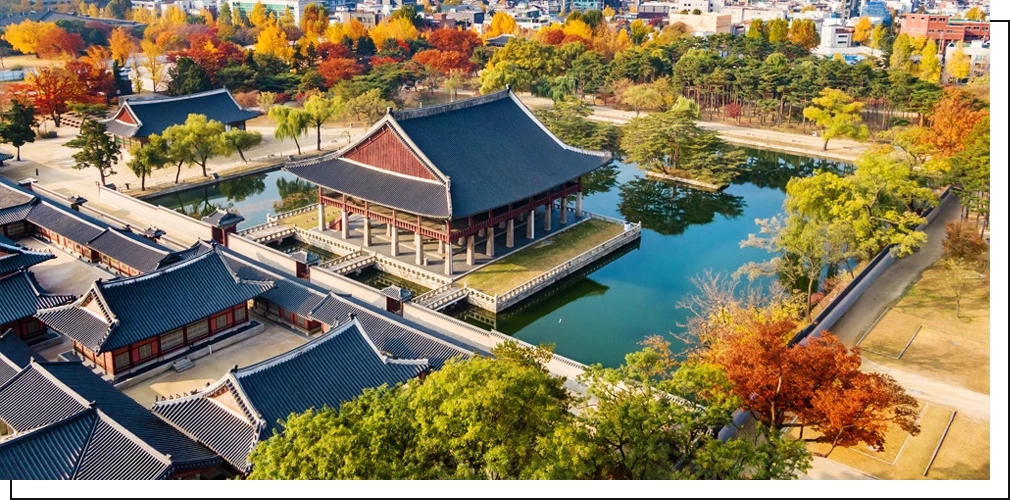
The featured aerial photograph shows Gyeonghoeru and its compound today. It is an authentic palace landscape, not an untouched view of 1450 or 1880. A production set in either year may need to hide modern systems, replace later details or use digital work.
Heritage protection, visitors, fire equipment, signs, nearby buildings and restricted shooting hours also shape the camera angle. Editors may combine an exterior at one palace, a gate at another site and an interior soundstage into one fictional compound.
Why a set may look more complete
VISITKOREA's Dae Jang Geum Park page identifies it as MBC's largest historical drama set in Korea, with architectural sets reconstructed from different periods. That is both useful and cautionary: the complex can supply lost spaces and controlled filming conditions, but one courtyard may represent several eras.
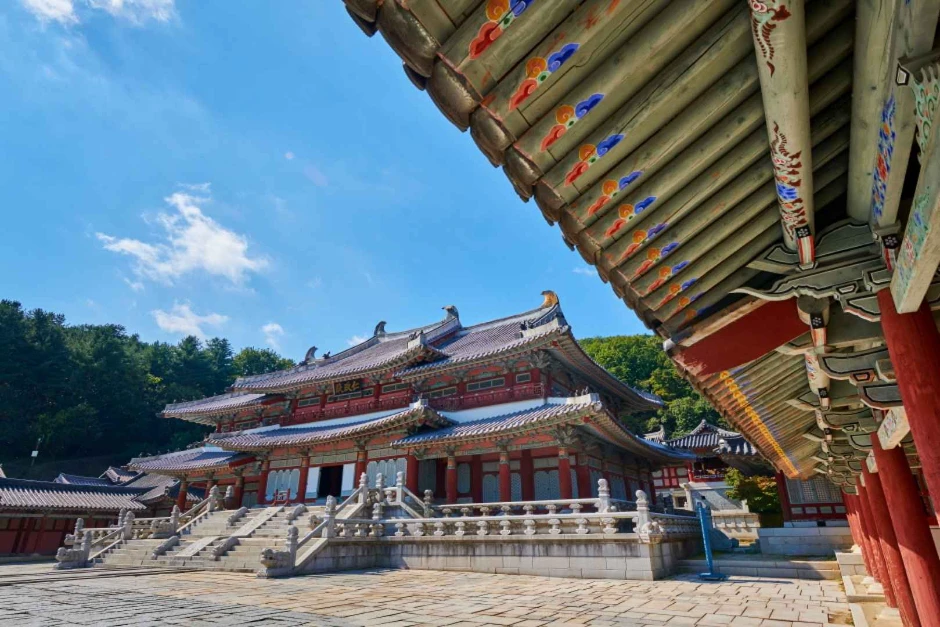
A working set can widen a hall for tracks and lights, shorten a courtyard so actors remain visible, remove a wall for reverse angles, or make interiors brighter and more richly furnished than ordinary rooms. Screen geography may be convincing without matching a measured palace plan.
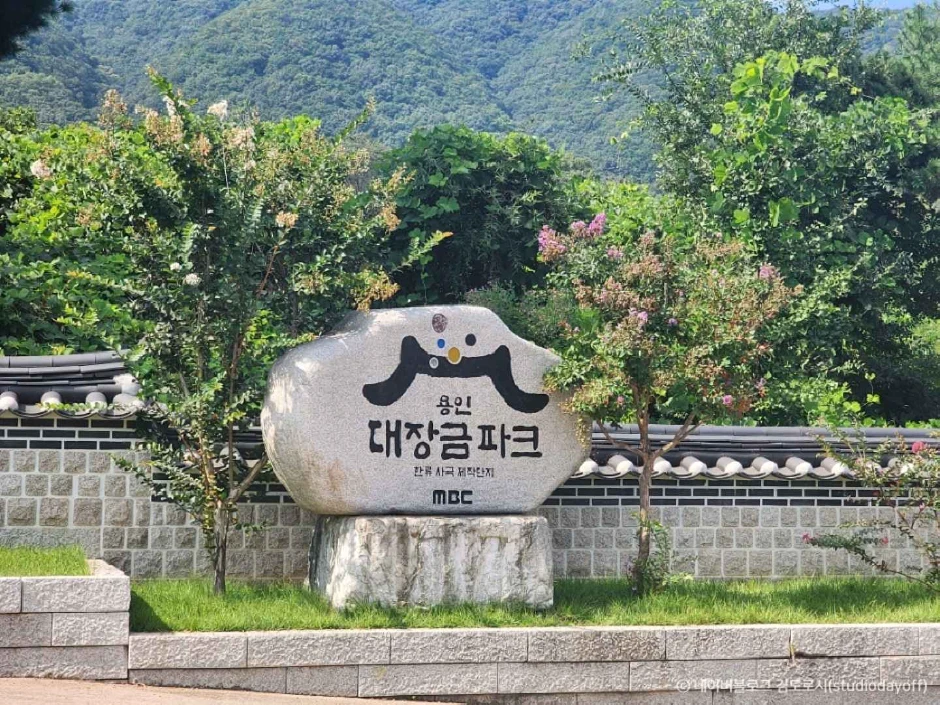
Recurring gates across unrelated series may be the same structure redressed with banners, furniture, paint and digital extensions. Reuse alone does not prove inaccuracy; it tells you the space was built to be adaptable.
A five-question scene test
- What exact period is claimed? “Joseon-inspired” is broad; a named king and year narrow the standard.
- What is the character doing? Daily work, ritual, mourning and battle dress are different categories.
- Does rank grammar hold? Compare badges, hats, belts, seating and access to space.
- What kind of location is it? Surviving, restored, reconstructed and studio spaces each solve different production problems.
- What genre promise was made? Fusion, fantasy and alternate history should first be judged for internal consistency.
Museum records, palace histories, portraits, ritual manuals and production interviews beat a viral claim that a color or hairstyle “never existed.” Also distinguish omission from invention: removing a layer for movement is not the same as inventing an impossible rank badge.
The fair verdict
The strongest sageuk designs translate evidence into a modern production. They can be accurate in broad visual grammar, uneven in exact period detail and intentionally adapted for storytelling. Watch date, rank, occasion and location. Their alignment indicates historical work; a mismatch may be a practical compromise, an error or a deliberate new world.
Sources and image credits
- VISITKOREA — current Dae Jang Geum Park listing — current official description checked 12 August 2026.
- National Palace Museum of Korea — Imperial Prince Yeong red dragon robe — official English collection description and rights statement; source credit for the red-robe image.
- National Palace Museum of Korea — asset owner and source credit for the jeogui image; the exact collection record is linked above.
- Royal Palaces and Tombs Center — Korean Gyeongbokgung history — source credit for the Gyeonghoeru featured image and cross-check of the restoration chronology.
- Korea Tourism Organization / VISITKOREA — asset owner and source credit for both Dae Jang Geum Park body photographs; exact listing linked above.
- Uploaded featured image — published copy of the credited Gyeonghoeru aerial asset.
Last updated


