
Jeonse Ended but the Deposit Was Not Returned: What Next?
Protect possession and registration first, confirm the lease ended, then use leasehold registration, guarantee claims, court orders, or enforcement in the right sequence.

A jeonse contract reaching its end date does not put the deposit back in your account. If the landlord says repayment must wait for a new tenant, treat that as a warning about cash flow—not as a reason to move out first. Your first job is to prove that the lease ended, preserve the protections linked to possession and registration, and put every repayment demand in writing.
Under Korea’s current Housing Lease Protection Act, the lease relationship is generally deemed to continue until the deposit is returned. The government’s Easy Law guide in English lays out the main route for foreign residents: keep evidence, protect opposing power and preferential repayment rights, complete a leasehold registration order if a move cannot wait, and then consider a payment order, lawsuit, guarantee claim, or enforcement. None of these steps guarantees full recovery when senior mortgages, tax claims, other tenants, or a low sale price absorb the property value.
This article reflects official information checked on 12 August 2026 and is general legal information, not advice for a specific case. Notice history, ownership, trust registration, tax claims, guarantee terms, immigration status, and the exact address-registration record can change the result.
Prove when and how the lease ended
Build one dated file before negotiating. Include the original contract, renewal or extension documents, the fixed-date record, your move-in report or foreign-resident change-of-place record, the current property registry, and every termination message.
A written fixed term and a tacitly renewed lease do not end in the same way. Under the current Act’s tacit-renewal termination rule, a tenant in a tacit renewal may give notice at any time, but termination takes effect three months after the landlord receives that notice. A late non-renewal message or an agreed extension can also move the effective end date. Record the contract dates, notice date and delivery method, deposit amount, and promised repayment date in one timeline.
Send a written demand identifying the property, contract, unpaid balance, and a reasonable payment deadline. Save messages, email, call notes, and bank records. A Korean content-certified letter can prove that a formal demand was sent; it does not create priority over a mortgage, tax claim, or another tenant.
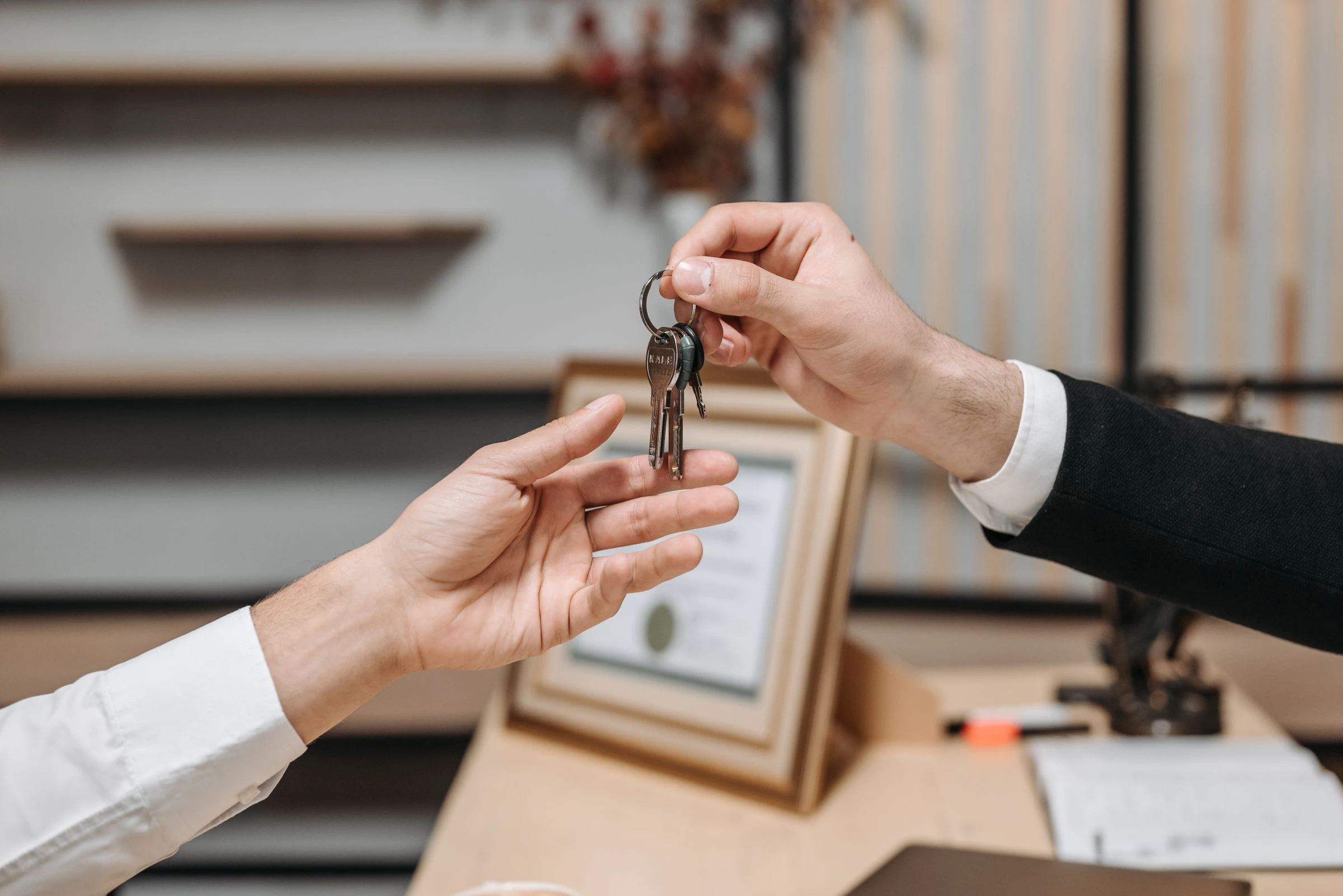
If the landlord proposes installments, a new repayment date, or payment after a replacement tenant arrives, write down every term. Do not sign wording that confirms full settlement, releases the remaining balance, or silently changes the lease end date. When only part of the deposit is paid, state the exact amount still due.
Do not surrender the home before protecting priority
For a typical residential lease, opposing power depends on delivery of the home and the relevant address registration; a fixed date supports preferential repayment priority. The Easy Law guide explains that a foreign national’s alien registration and reported change of place of stay can have the same legal effect as a Korean move-in report for this purpose. Overseas Koreans may use the applicable domestic-abode report route.
The dangerous sequence is handing back the keys, leaving the unit, and changing the protected address before receiving the deposit or completing the substitute protection. The Seoul Foreign Resident Center’s English guidance likewise tells tenants not to move first while the deposit remains unpaid.

This does not mean living in the unit forever. It means getting the sequence right. Keep proof of possession, avoid a casual handover or full-settlement form, and obtain case-specific advice before changing the registered address. The landlord’s duty to return the deposit and the tenant’s duty to return the home are normally linked obligations; rent, utilities, damage, or restoration disputes can affect the final balance.
If you must move, wait for the leasehold registration to appear
After the lease has legally ended and all or part of the deposit remains unpaid, the tenant may apply to the court with jurisdiction over the home for an order for leasehold registration, imchagwon deunggi myeongnyeong (임차권등기명령). Once the registration based on the order is completed, previously acquired opposing power and preferential repayment rights remain even after possession or the address-registration condition is given up.
The decisive word is completed. Filing the application, receiving a case number, or obtaining the court decision is not automatically the same as seeing the leasehold registration entered in the property registry. Confirm the registry entry before returning the unit or changing the protected address unless a lawyer who has reviewed your documents gives different advice. The process can also protect the unpaid balance after a partial return.
Typical documents include the lease, proof of termination, property registry, evidence of possession and registration, fixed-date record, and proof of the unpaid amount. Court requirements can differ by property and procedural posture, so use the current checklist for the court handling the home.
A payment order, judgment, and auction solve different problems
A demand asks for payment. A court payment order can create an enforceable title when it is properly served and the landlord does not object; an objection generally moves the dispute into ordinary civil proceedings. A deposit-return lawsuit is the fuller route when termination, ownership, deductions, service, or liability is disputed.

An enforceable title still does not put cash in the account. It allows compulsory execution against assets, potentially including an auction of the home. Sale proceeds follow legal priority. Possession and registration dates, the fixed date, leasehold registration, senior mortgages and seizures, certain tax claims, other tenants, and the sale price can all change recovery. Small-deposit priority exists only within the regional and temporal limits applicable to the lease.
That is why “the apartment can be auctioned” never means “the deposit will be recovered in full.” Obtain a current registry, confirm ownership and trust status, note senior security interests, and preserve every auction or seizure notice. When the likely sale proceeds may not cover senior claims plus your deposit, professional review becomes urgent.
A return guarantee has its own clock
A jeonse deposit return guarantee is a separate claim against the named guarantor, not an automatic substitute for preserving tenant rights. HUG’s English overview describes the product as paying covered deposit loss when a landlord fails to return the deposit after the lease ends.
For HUG’s current product, the official terms and claim page says one guarantee-accident route arises when the deposit remains unpaid for one month after the lease ends. It also says the customer must notify HUG in writing within one month after the accident and claim performance within two months, and that the leasehold-registration step applies to that route. Your certificate, covered amount, termination evidence, exclusions, and provider may differ; HF and SGI procedures are not interchangeable with HUG’s.
Contact the guarantor as soon as non-payment becomes likely and request the current checklist in writing. Do not move, cancel the protected address, or amend the contract date because someone informally says the guarantee will handle it. Our guide to jeonse deposit return guarantee limits explains why enrollment, coverage, and payment timing do not equal a 100-percent safety promise.
Escalate before the priority picture worsens
Move beyond informal promises quickly if you see an auction or seizure notice, ownership transfer, trust registration, large senior mortgage, tax-arrears warning, multiple tenants demanding payment, suspected forged documents, an unreachable landlord, or pressure to sign a false settlement. Save dated copies of the contract and registry.
The Korea Legal Aid Corporation confirms 132 as its national legal-information and consultation number on its official site. Seoul’s rental support notice, updated in March 2026 lists the Seoul Jeonse/Wolse Support Center at 02-2133-1200–1208 for housing-lease and deposit-return help. The Seoul Foreign Resident Center remains reachable at 02-2229-4900 for multilingual support. When fraud is suspected or an auction deadline is running, ask specifically for a lawyer or an official jeonse-fraud channel rather than relying only on a broker or online comments.
The safe order in six moves
- Confirm the effective termination date and create a dated evidence file.
- Demand repayment in writing; record any partial payment or extension without releasing the balance.
- Keep possession and the protected address until payment or the leasehold registration is actually complete.
- Notify the named guarantee provider early and follow its exact claim clock.
- Check the registry and get legal help before auction, objection, or priority deadlines pass.
- Use a payment order or lawsuit when negotiation fails, remembering that enforcement and actual collection are another stage.
The costliest mistake is often moving out on an unwritten promise. Preserve the legal position first; then negotiate timing from evidence, not hope.
Sources and image credits
- National Law Information Center — tacit-renewal termination rule — current Article 6-2 checked 12 August 2026.
- HUG — current return-guarantee terms and contacts — guarantee-accident, notice, claim, and leasehold-registration conditions checked 12 August 2026.
- Seoul Housing Portal — deposit non-return support — Seoul Jeonse/Wolse Support Center details updated 17 March 2026.
- Korea Legal Aid Corporation — official 132 consultation channel checked 12 August 2026.
- Atlantic Ambience via Pexels — featured keys and model-home image; Google-discovered.
- Uploaded featured image — published copy of the credited cover asset.
- Pavel Danilyuk via Pexels — office key-handover image; Google-discovered.
- Jakub Zerdzicki via Pexels — keys inside a modern home; Naver-discovered.
- Dogukan Sahin via Pexels — Seoul housing and office districts at dusk; Naver-discovered.
- Sora Shimazaki via Pexels — legal desk and auction-gavel image; Google-discovered.
Last updated


