
Is Jeonse a Legal Ponzi Scheme? What the Comparison Gets Right—and Wrong
Ordinary jeonse is a housing lease, not a Ponzi scheme. The comparison does reveal real rollover risk when a landlord needs the next tenant's deposit to repay the last one.

No. An ordinary jeonse lease is not legally a Ponzi scheme. The comparison captures one real cash-flow danger—some landlords repay an outgoing tenant with an incoming tenant’s deposit—but jeonse is a housing contract with a repayment obligation and a real property behind it, not an investment fraud promising fake returns.
If the basic structure is new to you, start with how a jeonse deposit works. The question here is narrower: why does a legitimate rental system sometimes produce a cash flow that looks alarmingly similar to money rolling from one participant to the next?
Why the comparison feels plausible
In a pure jeonse lease, the tenant transfers a very large deposit, lives in the home with little or no monthly rent, and is owed the principal back at the end. The landlord receives control of that cash during the lease. It is not automatically placed in a separate escrow account for that tenant.
Imagine Tenant A pays a ₩300 million deposit. The landlord uses the money to reduce a loan, buy another property, or cover other needs. Two years later, Tenant B pays a new ₩300 million deposit, and that money is used to return Tenant A’s deposit. From Tenant A’s viewpoint, later money funded the exit. A Living in Korea discussion asked almost exactly this question; it is a useful signal of the confusion, not proof that every landlord operates this way.
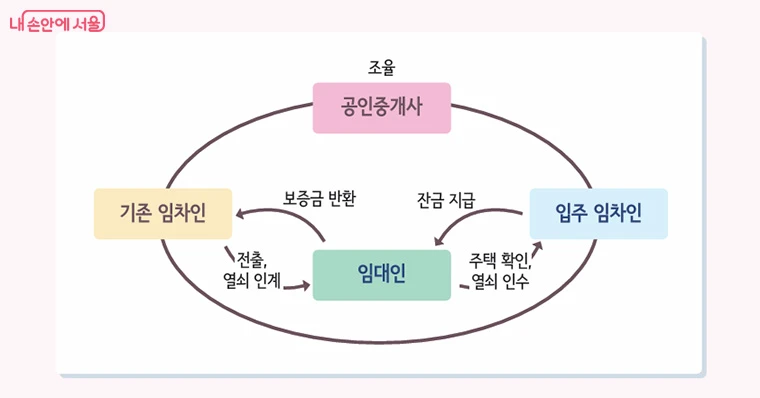
The structural concern becomes sharper with gap investment. A buyer can acquire a home using a tenant’s existing deposit for much of the purchase price, contributing only the difference between the sale price and the deposit. The Korea Development Institute’s analysis of return guarantees describes the deposit as the landlord’s debt and warns that jeonse loans and guarantees can encourage deposit-funded gap investment when repayment capacity is not properly priced.
What breaks when the next deposit is smaller
Suppose Tenant A is owed ₩300 million, but the market now supports only a ₩250 million deposit. A new tenant does not solve the whole problem: the landlord must find the missing ₩50 million from cash, a loan, or a sale. If no new tenant arrives, the full ₩300 million has to come from somewhere else.
That is reverse jeonse risk. It is especially dangerous when the owner has little cash, the property is hard to sell, several leases end together, or senior loans already consume much of the home’s value. A Korea Research Institute for Human Settlements study separates delayed or failed repayment from outright fraud and examines how falling deposit prices, high deposit-to-value ratios, and weak landlord liquidity can overlap.
A home can therefore be valuable on paper while the landlord still cannot repay on the due date. Jeonse creates a maturity mismatch: the tenant’s claim is due at a specific time, while the owner’s wealth may be tied up in an illiquid property.
Why “Ponzi scheme” is still the wrong classification
The U.S. Securities and Exchange Commission’s investor site defines a Ponzi scheme as investment fraud that pays existing investors with funds collected from new investors, usually while promising returns that do not come from legitimate earnings. It needs new money to keep the deception alive.
Jeonse differs in four important ways:
- The tenant receives housing, not an investment return. The amount due back is normally the deposit principal, not a promised profit.
- A real contract and property exist. The tenant has a debt claim against the landlord and may acquire legal priority connected to the home. The property can still be worth too little, but it is not fictional revenue.
- A new tenant is not a required source of repayment. A solvent landlord can repay from cash, financing, or a property sale. Using the next deposit is common in some cases, not a legal element of jeonse.
- Deception changes the case. False ownership, hidden senior claims, manipulated values, or acquiring many homes without a realistic ability or intent to repay may form part of actual jeonse fraud. Korea has a separate special statute for recognized jeonse-fraud victims; ordinary leases are not declared fraudulent merely because they use a large deposit.
The strongest criticism is therefore about rollover dependence, not the legal identity of the contract. A lease can be lawful and still be financially fragile.
Three very different risk levels
- Ordinary, well-buffered lease: The deposit is comfortably below a supportable property value, senior debt is limited, ownership is clear, and the landlord can repay without waiting for a successor. This is a large secured-looking debt, although no private lease is risk-free.
- Rollover-dependent lease: The landlord has little liquid money and expects the next tenant’s deposit to fund repayment. A vacancy or lower market deposit can cause delay or default. That is a serious warning sign, but it does not by itself prove criminal intent.
- Fraudulent arrangement: The parties misstate the owner, rights, value, debt, or repayment capacity, or build a pattern of deposit-funded acquisitions with circumstances suggesting intentional non-repayment. The criminal and victim-support questions require evidence and case-specific legal review.
This distinction matters because calling every jeonse landlord a fraudster hides the more useful question: how much independent repayment capacity and property-value buffer exist for this exact lease?
What legal protection changes—and what it cannot
Korea’s Housing Lease Protection Act gives a residential tenant tools that no Ponzi investor receives. The government’s current Easy Law guide explains that possession plus resident registration creates enforceability against third parties, and a fixed date on the contract can add priority in an auction or public sale. Foreign residents should confirm the equivalent residence-reporting step for their status rather than assuming that signing the contract alone completes protection.
Priority is not the same as guaranteed full recovery. Earlier-ranking claims and a low auction value can leave too little money. A return guarantee can transfer eligible risk: HUG’s current product page says its jeonse-deposit return guarantee covers the landlord’s repayment obligation after the contract ends, subject to application timing, property type, value, senior claims, and other conditions. Coverage is not automatic, and eligibility should be confirmed before treating it as protection.
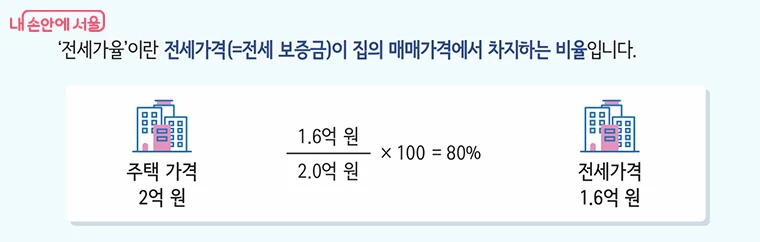
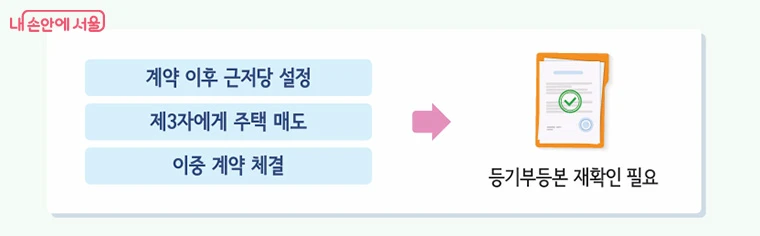
The two most revealing pre-contract numbers are the deposit as a share of a realistic property value and the claims that rank ahead of you. Seoul’s illustrated prevention guide also tells tenants to recheck the property register immediately before the final payment because new mortgages, ownership transfers, or duplicate contracts can change the risk after the first viewing.
Use the metaphor as a stress test, not a verdict
Ask one blunt question: If no new tenant appears, how will this landlord return the deposit on time? The answer should be supported by property value, senior-debt information, guarantee eligibility, and professional review—not only an assurance that another renter will arrive.
A landlord saying “I can pay you after I find the next tenant” reveals liquidity dependence. It may lead to a civil repayment dispute, an insured claim, or evidence in a broader fraud case; the sentence alone does not decide which.
This article explains the structure as checked on August 12, 2026. It is general information, not legal or financial advice for a specific lease. Before transferring a large deposit, have the current register, market value, senior claims, identity documents, contract, residence-reporting plan, and guarantee eligibility checked by an appropriate Korean housing or legal professional.
Photo credits
- Lease-counseling photo: Seoul Metropolitan Government via Seoul MediaHub.
- Deposit-flow, deposit-ratio, and property-register graphics: Seoul Metropolitan Government via Seoul MediaHub.
Need a secure address for everyday deliveries after moving? Find a nearby delivery spot.
Sources and asset credits
- Living in Korea traveler discussion — A source of the comparison, not evidence about every landlord.
- Hosted deposit-flow diagram — Seoul Metropolitan Government graphic via Seoul MediaHub.
- Korea Development Institute analysis — Deposit debt, guarantees, loans, and gap-investment incentives.
- Korea Research Institute for Human Settlements study — Repayment failure, deposit-price decline, leverage, liquidity, and fraud distinctions.
- Investor.gov: Ponzi schemes — Public definition of Ponzi investment fraud.
- Korean statute for recognized jeonse-fraud victims — Current official statutory text; eligibility is case-specific.
- Easy Law: Housing Lease Protection Act guide — Possession, resident registration, fixed date, and priority overview.
- Hosted jeonse-ratio graphic — Seoul Metropolitan Government graphic via Seoul MediaHub.
- Hosted property-register warning graphic — Seoul Metropolitan Government graphic via Seoul MediaHub.
- HUG jeonse-deposit return guarantee — Official product scope and eligibility conditions; coverage is not automatic.
- Seoul MediaHub lease-counseling source — Source for the counseling cover photograph.
- Seoul MediaHub prevention-guide source — Source for the three body graphics.
- Hosted counseling cover image — Cover asset from Seoul Metropolitan Government via Seoul MediaHub.
Last updated


