
Incheon 10-Hour Layover: Seoul or the Airport?
A 10-hour Incheon layover can support one focused Seoul stop when daylight, through baggage, entry permission, punctuality, and energy align. Otherwise, use the airport or a confirmed transit tour.
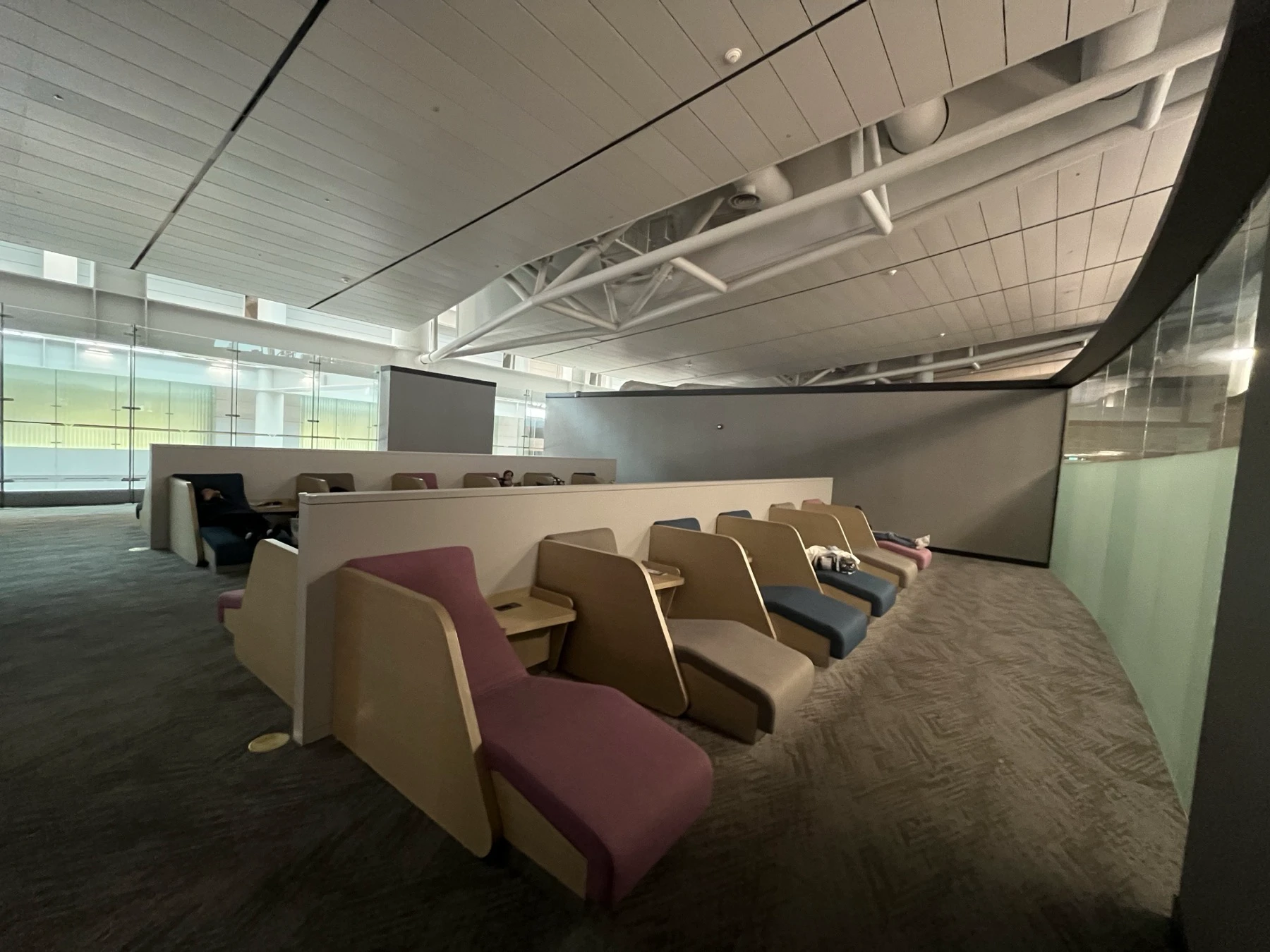
A 10-hour Incheon layover can be enough for one focused Seoul stop when the usable part of the connection is daytime, your checked bag is through, you may enter Korea, and you still have the energy for a tightly timed outing. Stay at the airport—or use an airport-run transit tour that staff confirms fits—when the connection is overnight, you must handle bags, the tickets are separate, or fatigue turns the city trip into a chore.
Plan around the usable time left after deplaning, immigration, rail waits, the return trip, security, and your airline's boarding or gate-closure instructions.
Make the choice in this order
Choose an independent Seoul visit only when all of these are true:
- Your arrival and return both fall in a useful daytime window.
- The airline has confirmed that your checked bag goes to the final destination.
- You already have the onward boarding pass and do not need a self-transfer or ticket fix.
- You have confirmed that you may enter Korea.
- The arrival is on time, both rail directions work, and your airline's required return margin still fits.
- You and any companion feel well enough to walk, navigate, and turn back on schedule.
Choose the official transit tour when its terminal, desk deadline, duration, seat availability, and return time match your flights. This is the middle option for travelers who want to leave the airport without managing every transfer independently.
Choose the airport when even one major condition is uncertain. An overnight connection, bag collection, separate tickets, a delayed arrival, a tired child or senior companion, limited mobility, or simple travel exhaustion can outweigh the appeal of a brief city visit.
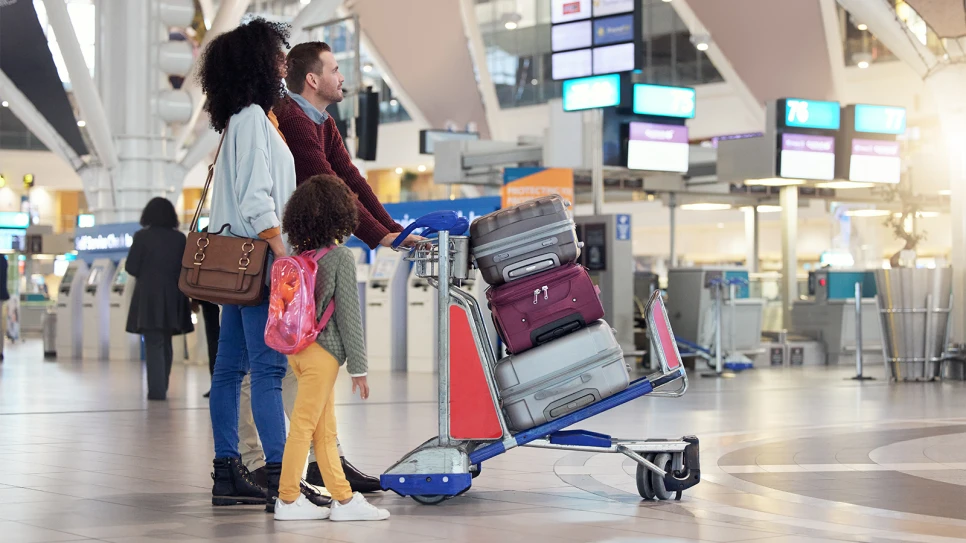
The luggage scene below shows why baggage deserves equal weight with the clock. A cart full of bags changes the calculation before sightseeing begins.
Turn the ten-hour window into usable time
Seoul Metropolitan Government's airport transport guide lists the non-stop AREX Express at 43 minutes from Terminal 1 and 51 minutes from Terminal 2 to Seoul Station, with departures every 20–40 minutes. A bare rail round trip is therefore 86 minutes from T1 or 102 minutes from T2, before train waits or any movement beyond Seoul Station.
The remaining time is not automatically yours to spend. It still has to absorb:
- walking from the aircraft and any immigration queue
- reaching the airport rail station and waiting for the train
- navigation and local movement in Seoul
- the return train wait
- airport security and the walk to the onward gate
- any boarding or gate-closure requirement set by your airline
Check the official AREX timetable in both directions for your travel date. There is no honest universal rule that converts a 10-hour ticketed connection into a fixed number of city hours; the terminal, arrival performance, immigration, rail timing, and onward flight all change the result.
For comparison, our six-hour Incheon layover guide explains why simply reaching Seoul Station is not the same as having a worthwhile city visit. Four extra hours make a focused outing possible in better conditions, but they do not erase the transfer steps.
Bags and entry permission can decide before the clock does
“My bag is checked through” should mean the airline has confirmed it for this exact itinerary. Do not infer it from a shared airline alliance, a baggage tag you have not read, or someone else's connection. If you must collect and recheck a bag, or transfer between separate tickets, plan to remain at Incheon unless the airlines involved give you a clear process and enough margin.
A city visit also requires legal entry into Korea. Airside transit by itself is not permission to pass immigration. Check your passport and itinerary on the official Korea Visa Portal and K-ETA website. Our 2026 K-ETA guide explains how to use the official checker without relying on copied nationality lists.
Community reports make the baggage condition tangible. One traveler described an 11-hour daytime layover that included a focused central-Seoul outing, but their checked bag was already through and they carried only a backpack. That KoreaTravel report is an anecdote, not a timing guarantee; its value is showing how favorable conditions—not the headline number alone—made the visit workable.
If you go to Seoul, choose one anchor
Do not turn a 10-hour layover into a miniature first-day itinerary. Pick one area, one main activity, and one meal, then define the time you will leave before you exit the airport.
Seoul Station is the simplest central rail anchor for travelers using the non-stop AREX Express. From there, stay in one nearby cluster rather than combining Hongdae, a palace, Myeongdong, and a market. If your priority is a palace or Gwanghwamun, treat that as the single outing and check the attraction's official opening information for your date. Every extra subway ride, taxi queue, or cross-city move adds another place for the plan to slip.
The map marks Seoul Station only. It is an orientation anchor for a central-Seoul layover, not an airport-to-city rail diagram or turn-by-turn itinerary.
- 1Seoul Station
The two palace views below belong together: one shows Gyeonghoeru Pavilion, while the other is Incheon Airport's May 2026 graphic for a five-hour Gyeongbokgung–Insadong transit-tour example. They illustrate a focused heritage stop, not a promise that the course or palace will fit your flight.
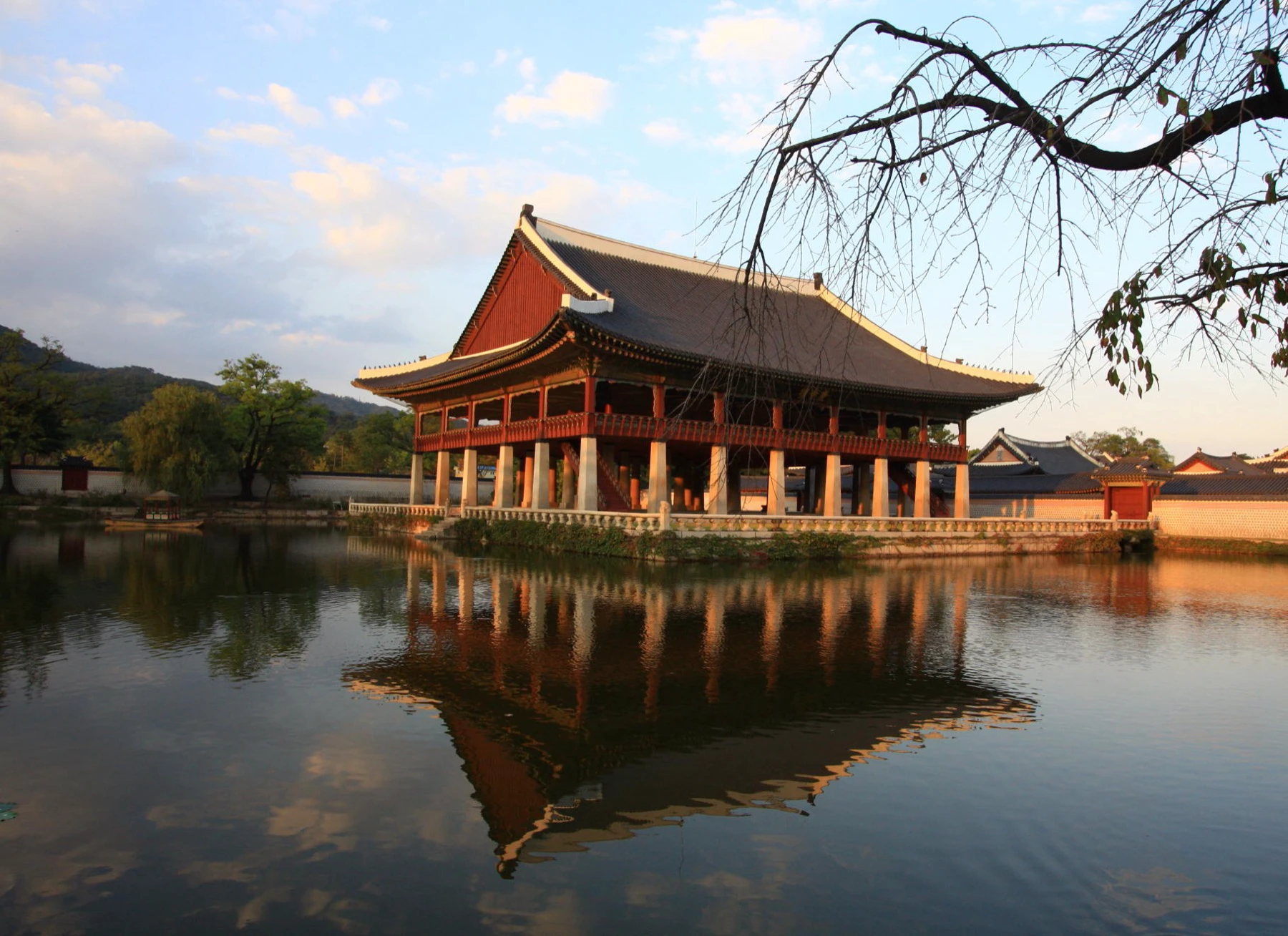
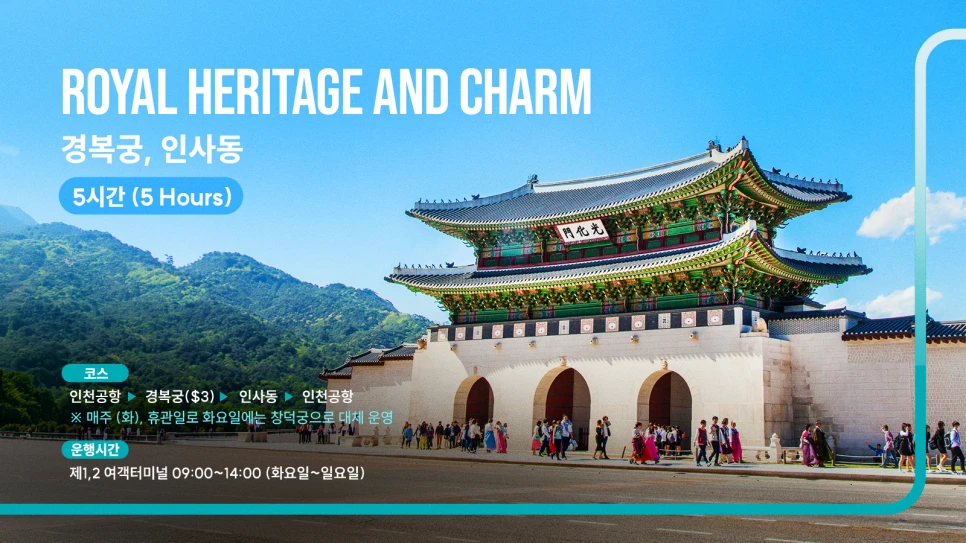
Set a turn-back rule before sightseeing starts. Use the airline's instructions for your flight, then work backward through security, terminal movement, the return rail wait, and the rail journey. If the outbound trip takes longer than planned, shorten the visit instead of borrowing from the return margin.
The transit tour is a real third option
Incheon Airport's official transit-tour guide says participants need a layover of 24 hours or less, a passport, both arrival and departure boarding passes, and arrival at the registration desk at least 30 minutes before departure. Registration is first-come, programs may change, and Korean entry requirements still apply.
Rechecked on August 12, 2026, the live reservation page displayed five-hour central or regional options around 09:00–14:00 and three-hour local options around 15:00–18:00. Those examples show why arrival time matters as much as layover length. They are neither a permanent timetable nor a seat guarantee: check the live page, then ask the desk to confirm that the course, terminal, and return margin suit your connection.
An escorted tour reduces the number of transport decisions you make yourself, but it does not waive immigration rules or make a late aircraft arrive on time. If you miss the desk deadline or staff says the connection is unsuitable, switch to the airport plan.
Use the layover well inside Incheon
The airport's Convenience & Public Facilities finder can be filtered by terminal, lounge/hotel/rest category, transfer amenities, duty-free area, and 24-hour operation. As checked on August 10, 2026, its listings included airside rest zones, shower rooms, transit hotels, and lounges, but the exact location, access, hours, and fees differ. Filter for your terminal and security side instead of following an old blog list across the airport.
For a tired traveler, using the connection to shower, eat, charge devices, and sleep can improve the onward flight more than a rushed city photograph. A KoreaTravel discussion about a 10-hour T1 layover with a senior parent repeatedly returned to comfort, terminal options, and fatigue. Those comments are personal experiences, not facility guarantees, but they capture a factor that transport arithmetic misses.
The practical answer is conditional: go to Seoul for one focused stop when daylight, through baggage, entry permission, punctuality, and energy all line up. Otherwise, take a staff-confirmed transit tour or use the airport well. A good 10-hour layover is the option that still feels sensible when the return trip begins.
Sources and image credits
- Seoul Metropolitan Government airport transport guide — AREX Express travel times from Terminals 1 and 2 to Seoul Station.
- AREX official timetable — Date-specific Express Train departures in both directions.
- Korea Visa Portal — Official Korean visa and entry information.
- K-ETA official website — Official K-ETA eligibility and application information.
- KoreaTravel 10-hour layover report — One favorable trip with through baggage; anecdotal, not a timing guarantee.
- Incheon Airport official transit-tour guide — Eligibility, documents, desk deadline, and first-come registration.
- Incheon Airport live transit-tour reservation page — Time-sensitive tour examples rechecked on August 12, 2026; neither a permanent timetable nor a seat guarantee.
- Incheon Airport facilities finder — Terminal-specific rest listings and the Terminal 1 East NAP Zone cover asset.
- KoreaTravel discussion about a senior parent’s T1 layover — Personal reports about fatigue and airport comfort, not facility guarantees.
- Incheon Airport official Naver Blog — Luggage-cart image and five-hour Gyeongbokgung–Insadong tour graphic, used with written operator permission.
- Bridget Coila via Wikimedia Commons — Original Gyeonghoeru photograph, resized for publication.
- CC BY-SA 2.0 license — Reuse terms for the Gyeonghoeru photograph.
- Delivery Spot featured image file — Resized Terminal 1 East NAP Zone cover.
- Delivery Spot luggage-cart image file — Travelers standing beside checked luggage.
- Delivery Spot Gyeonghoeru image file — Gyeonghoeru Pavilion reflected in its pond.
- Delivery Spot transit-tour graphic file — Five-hour Gyeongbokgung–Insadong tour example.
Last updated


