
How Korean Cafés Work: Ordering, Pagers and Tray Return
Read the Korean café flow from the door: seat order, dine-in or takeaway, kiosks, pickup signals, self-service items and tray return.
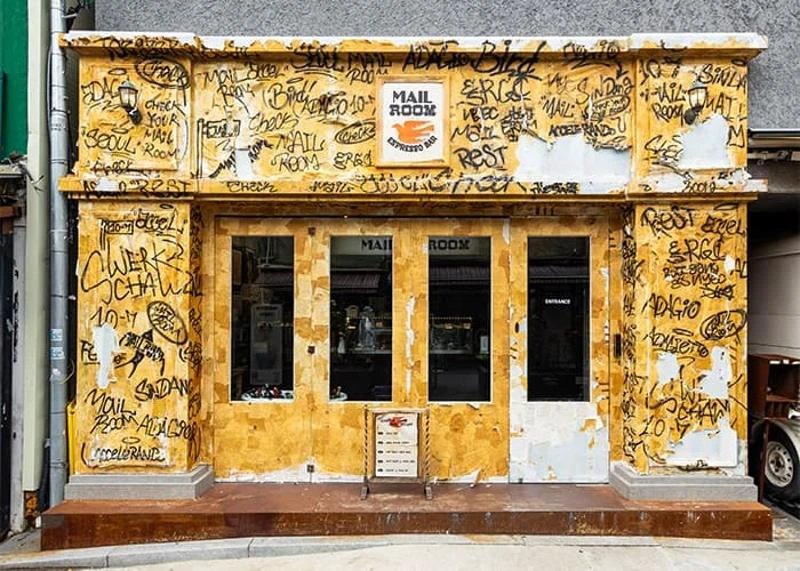
Most Korean cafés use counter service: identify where to order, say whether you are staying, keep the pager or receipt, collect the drinks, then follow the return sign. The details vary by shop, so read four clues instead of assuming every café has the same routine.
The flow in 30 seconds
- Find the staffed counter, kiosk or bakery tray.
- Check whether the shop expects customers to order before taking a seat.
- Choose dine-in or takeaway, then hot or iced.
- Keep the receipt number, vibrating pager or other token.
- Collect the whole order at the pickup point.
- Before leaving, look for a tray-return station.
Small owner-run cafés may call the drink verbally. Chains can have a kiosk and a separate pickup counter. Large bakery cafés may expect you to choose bread with tongs before paying for bread and drinks together. Posted signs and staff instructions always override this sequence.
At the door: seat first or order first?
Pause just inside. If seated customers already have cups, receipts or pagers, ordering first is a sensible default. When people leave a coat or shopping bag at a table and then join the queue, the shop likely accepts seat-first ordering. 주문 먼저 means “order first”; 자리 먼저 잡아 주세요 means “please find a seat first.”
Never leave a passport, wallet or phone to hold a table. In a crowded café, ask 먼저 자리 잡아도 돼요? — “May I get a seat first?”
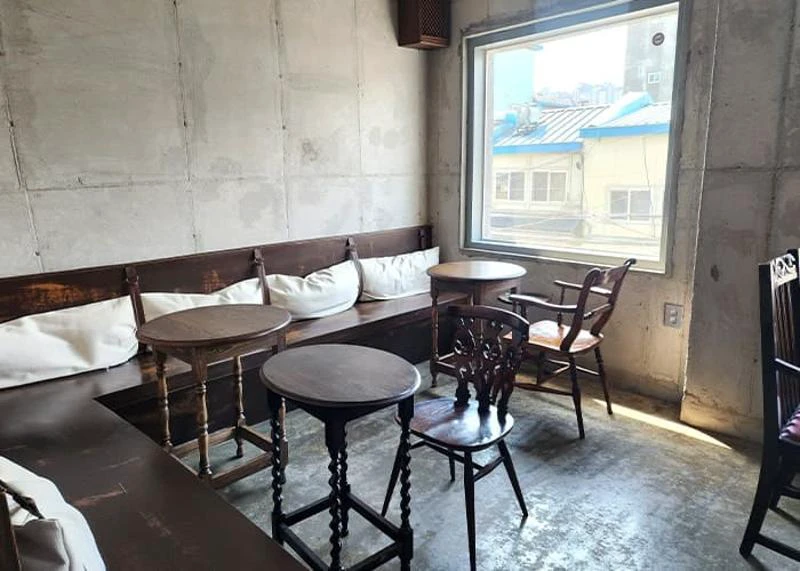
An attractive seating room can suggest table service, yet many cafés still expect you to order and collect at the counter. Watch one customer or locate the menu before settling in.
At the counter or kiosk
The cashier may ask 드시고 가세요? or 매장에서 드세요? Both mean “Will you have it here?” Answer 먹고 갈게요 for dine-in or 포장해 주세요 for takeaway. Then specify 따뜻하게 for hot or 아이스로 for iced. Pointing to the menu is normal.
At a kiosk, look first for an English or globe button. Complete every screen: dine-in/takeaway, item, temperature, size, options, cart and payment. Some machines request a Korean phone number or reject a foreign card. That is a device or payment limitation, not an etiquette mistake. Move to the staffed counter and ask 여기서 주문해도 돼요? — “Can I order here?”
Seoul’s current Digital Inclusion program includes kiosk practice and in-person device support. It is useful context: unfamiliar interfaces challenge residents too, and taking a moment at the screen is not rude.
Keep the pickup signal
After payment, expect a vibrating pager (진동벨), a receipt number, or a verbal call. Take the pager with you. When it buzzes or flashes, return it to the marked basket or staff member and collect everything. For a number, watch the display near pickup and listen for the last digits.
If roughly 10–15 minutes pass and later customers have collected similar drinks, show your receipt or pager and say 주문 확인해 주세요 — “Please check my order.” Do not wait for table service unless the shop explicitly offers it.
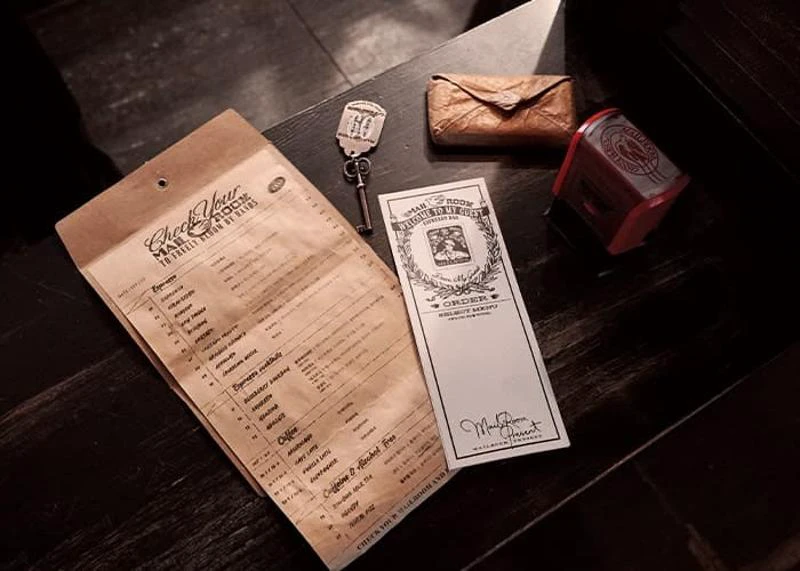
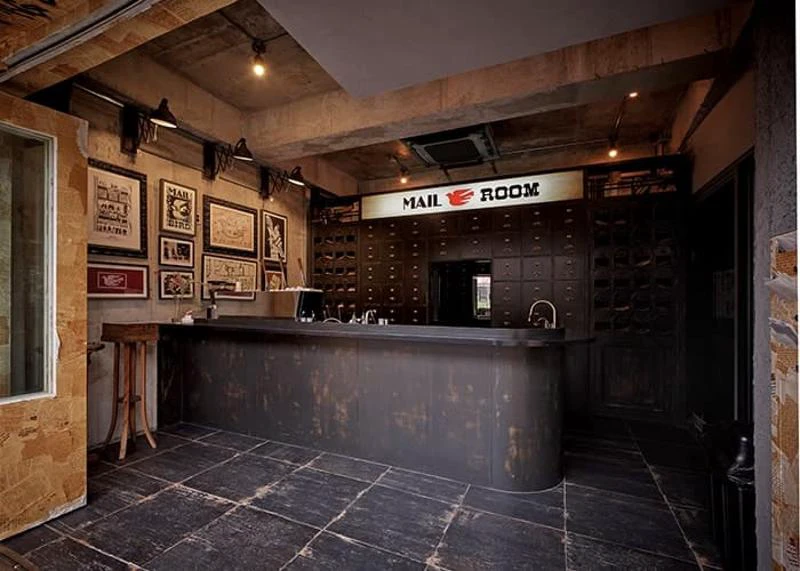
One official example shows why the signal matters more than its shape. The Visit Seoul Mailroom listing, edited May 11, 2026, says guests write an order on paper and receive a numbered mailbox key. When the order is ready, they open the matching pickup box. This is unusual, not a national café rule; the transferable habit is to keep whatever token the shop gives you.
Check the tray before walking away
Pickup zones often have water, napkins, straws, sleeves, lids, sugar or cutlery nearby. Bakery items may arrive separately, and a cake fork may sit at the self-service station. Check the order before taking your seat; if an item is missing, show the receipt and say 이것도 주문했어요 — “I ordered this too.”
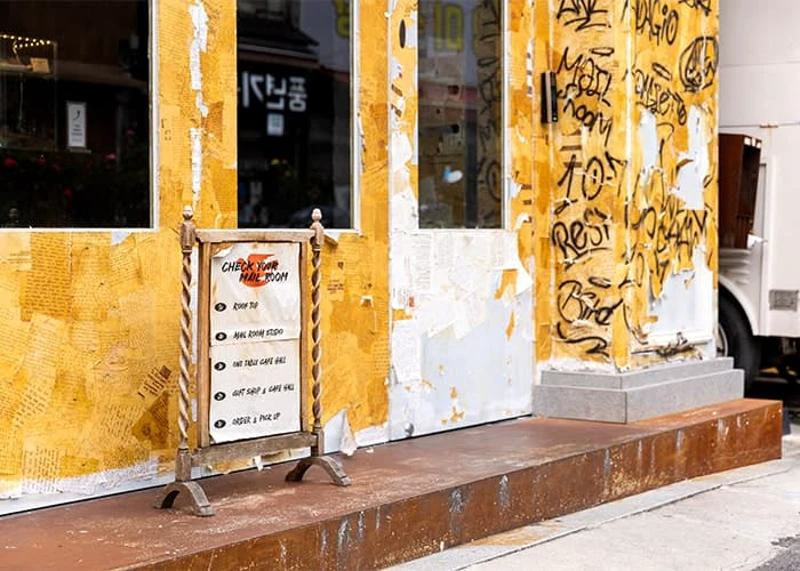
Entrance and wall signs can carry the information that matters most: pickup instructions, one-drink-per-person rules, laptop limits or an earlier closing time for upper-floor seating. Read the sign rather than guessing from another café’s system.
Return the tray only where the shop asks
Look for 반납하는 곳, 퇴식구, 컵 반납 or RETURN. Carry the tray there with cups and dishes on it. Separate liquids, recycling and general waste only when the station’s pictures or labels tell you to.
If there is no return point, keep the table neat and ask 어디에 반납해요? — “Where do I return this?” Some small cafés clear tables themselves, and walking into a staff-only area is not helpful.
Two KoreaTravel threads—one about returning glasses and trays and another about café and fast-food etiquette—describe self-return as a familiar experience. They are individual accounts, not proof of a universal rule. The sign in the café remains the authority.
There is normally no tipping step. VISITKOREA’s national food guidance says tipping is not required or expected in Korea, while noting that published details can change. Pay the displayed total; a card terminal screen is not by itself a request to add a tip.
Seven phrases cover most visits
- 여기서 주문해요? — Do I order here?
- 먹고 갈게요. — For here, please.
- 포장해 주세요. — Takeaway, please.
- 아이스로 주세요. — Iced, please.
- 진동벨 기다리면 돼요? — Should I wait for the pager?
- 어디에서 받아요? — Where do I pick it up?
- 어디에 반납해요? — Where do I return this?
You rarely need all seven. “For here” or “takeaway,” a menu point, and keeping the pickup signal will carry most orders.
When the café has a different rule
Some cafés deliver to the table. Some call a number without a pager. Others require one drink per person, restrict laptops during busy periods, or close some seating before the counter. Unmanned cafés may rely completely on a kiosk and self-service pickup. If a minimum-order sign is the confusing part, see our guide to Korea’s one-menu-per-person rules.
Follow the shop’s posted rule. The reliable skill is spotting the order point, consumption choice, pickup signal and return point. Current official sources were rechecked on August 12, 2026; individual café procedures can change.
Sources and asset credits
- Seoul Digital Inclusion — Current Seoul program page; kiosk practice and digital-device support show that difficulty with unmanned ordering is not limited to visitors.
- Visit Seoul: Mailroom — Official Seoul listing, edited May 11, 2026; confirms Mailroom’s paper order and numbered-key pickup sequence.
- VISITKOREA: About Korean Food — Official national tourism guidance; tipping is not required or expected in Korea. The page notes that details can change.
- Traveler tray-return discussion — Two individual traveler discussions about returning café trays; useful experience, not a rule for every shop.
- Second traveler etiquette discussion — Two individual traveler discussions about returning café trays; useful experience, not a rule for every shop.
- Featured asset — Featured asset retained from the published English master under the operator-confirmed August 9, 2026 reuse scope.
- Body asset 1 — Mailroom seating-area image retained from the locked English master; Visit Seoul source and operator-confirmed reuse record preserved.
- Body asset 2 — Mailroom paper-order and numbered-key image; Visit Seoul source and operator-confirmed reuse record preserved.
- Body asset 3 — Mailroom numbered pickup-box image; Visit Seoul source and operator-confirmed reuse record preserved.
- Body asset 4 — Mailroom entrance-instruction image; Visit Seoul source and operator-confirmed reuse record preserved.
- Korea Tourism Data Lab — 2025 completed-year inbound-market framework used for localization.
Last updated


