
Is Chimaek Real Korean Life—or a K-Drama Export?
Chimaek is a real Korean social ritual, but not an everyday habit for everyone. Its natural settings are delivery nights, baseball games, and Hangang picnics; K-dramas turned that familiar pairing into a global image.
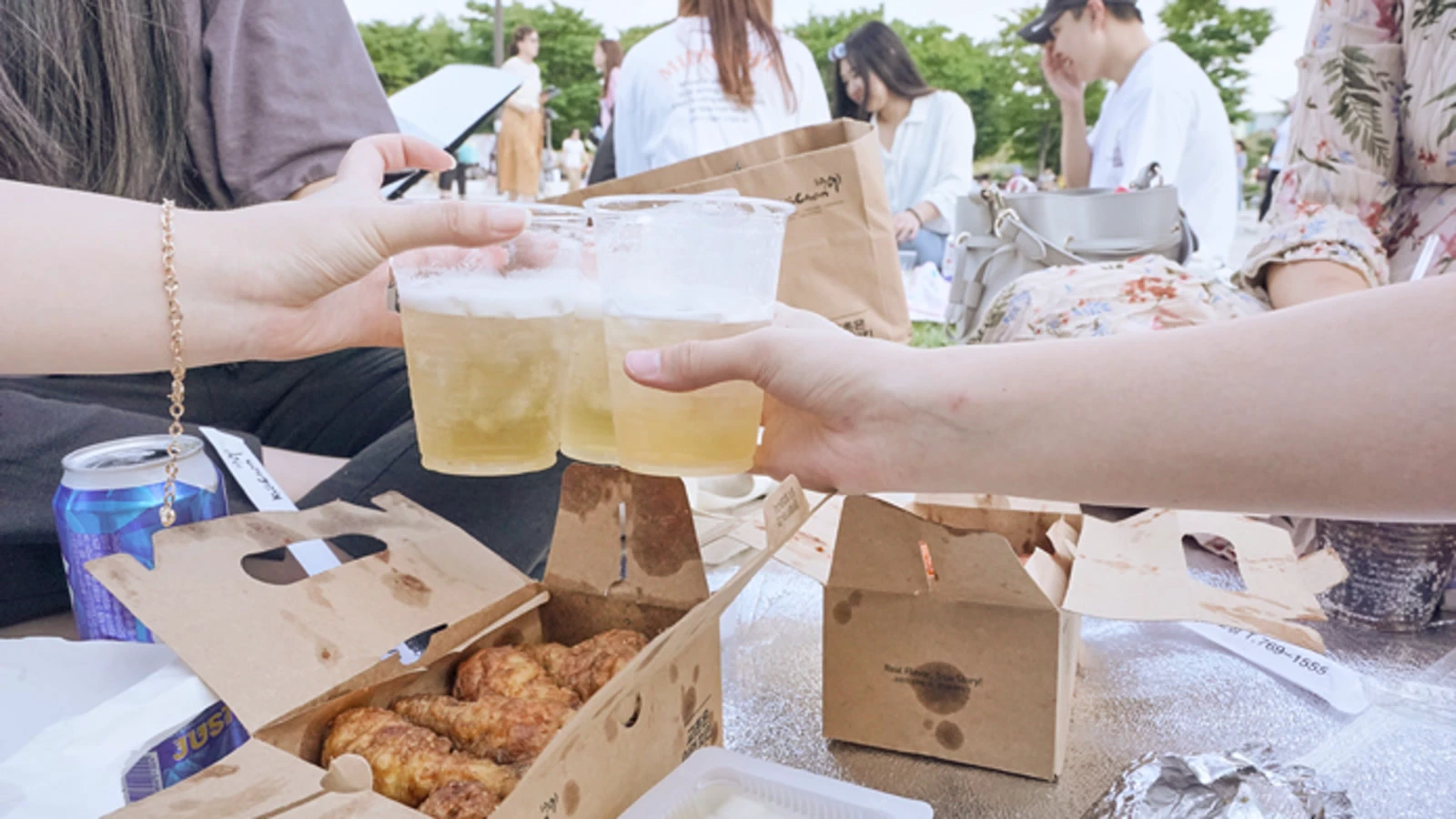
Chimaek is real Korean social life, but it is a setting-specific treat—not a national daily habit. K-dramas did not invent chicken with beer; they turned a familiar delivery, ballpark, and picnic pairing into an exportable image.
The word itself is a compact joke: chi from chicken and maek from maekju (맥주), beer. It describes a combination, not a rule that fried chicken must come with alcohol. Some people order it often, some reserve it for a game or group night, and some do not drink at all. Chicken with soda or an alcohol-free drink preserves the shared meal even when the word is no longer literal for your cup.
The pairing was real before television exported it
The Korean government’s K-Info Hub entry on chimaek places the pairing’s beginnings in the 1970s and says the phenomenon moved into the mainstream during the 2002 Korea–Japan World Cup. It also connects chimaek to three ordinary systems that made it stick: fried-chicken delivery, communal sports viewing, and casual gatherings.
That matters because the most convincing explanation is not simply “Koreans like beer.” Fried chicken travels well enough for a shared delivery order, arrives in portions that a group can divide, and can be eaten over a long conversation or game. Beer is cold, familiar, and easy to share. The pairing solves a social occasion as much as a taste question.
If the menu vocabulary is the confusing part, our first Korean chicken order guide explains fried, yangnyeom, soy, boneless, and half-and-half before you choose a drink.
Three places where chimaek feels natural
At home: delivery makes it an easy group decision
A delivery night is the least theatrical version. Friends, family, colleagues, or housemates can pick one or two flavors, add pickled radish and drinks, and eat while talking or watching something. Korea.net specifically describes fried chicken as a popular delivery food and notes how phone and app ordering made the combination increasingly convenient.
That still does not make it a nightly national meal. A whole chicken order can be large, salty, expensive for one person, and deliberately indulgent. Frequency changes with age, household, health, budget, work pattern, and simple taste. “A common option” is more accurate than “what Koreans eat every day.”
Around baseball: food is part of the cheering
The connection is visible at stadiums, but it extends beyond one box of chicken. The Korea Tourism Organization’s March 2025 guide to Korean baseball food culture presents ballparks as food destinations, with stadium-specific dishes, picnic-style seats, and bars where fans watch together. It uses chimaek as the familiar baseline, then shows how much broader the food culture has become.
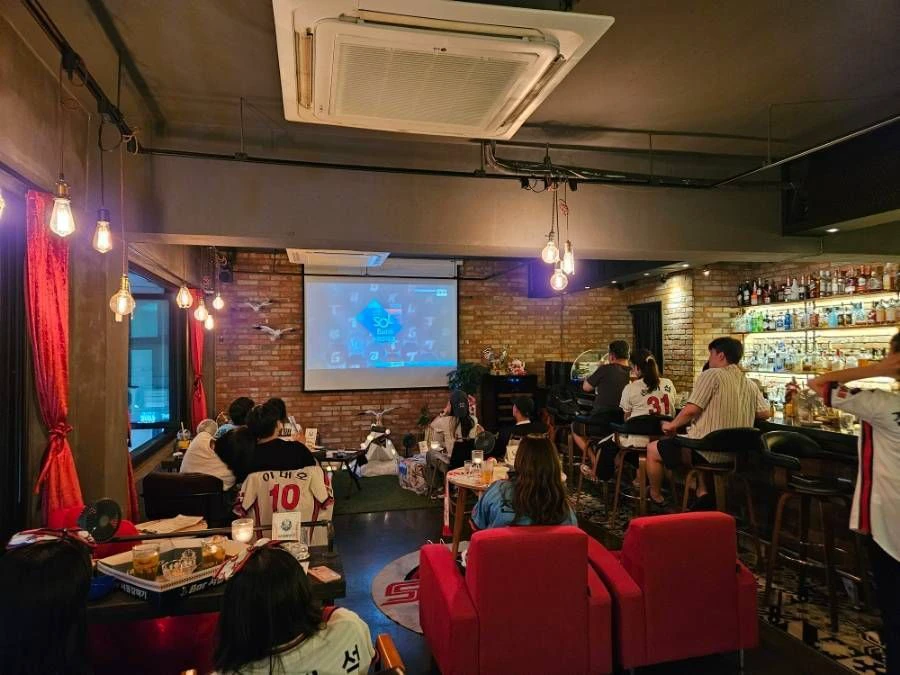
This baseball pocha shows the social logic clearly: fans in team jerseys watch a large screen, eat, and react together even though they are outside the stadium. A ballpark or team pub turns chimaek from a private dinner into part of the crowd rhythm. The venue, food lineup, ticketing, and outside-food policy can change, so the cultural point is stronger than any single “must-buy” recommendation.
At the Hangang: iconic, but not frictionless
A warm-weather picnic beside the river is the version most visitors recognize. The close-up is real—shared chicken boxes, plastic cups, a picnic mat—but delivery riders generally should not be expected to find one blanket among thousands of people. Selected parks use designated pickup areas to keep motorcycles away from pedestrian lawns. Seoul’s official Hangang delivery FAQ explains the pickup-zone model, while the current park facility dashboards are the better place to check what exists at your exact park now.
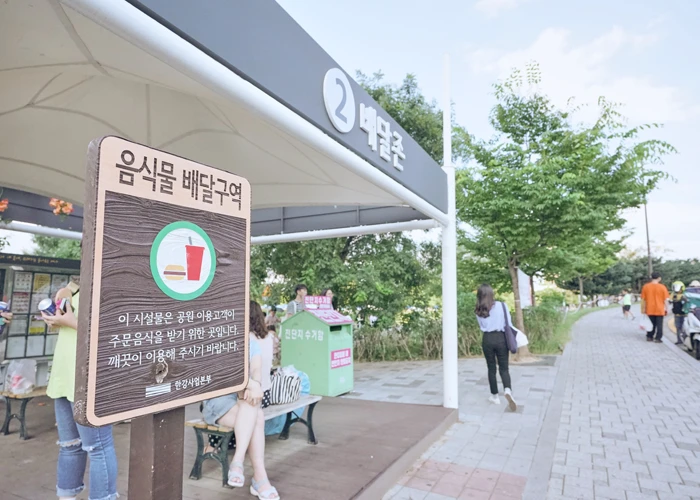
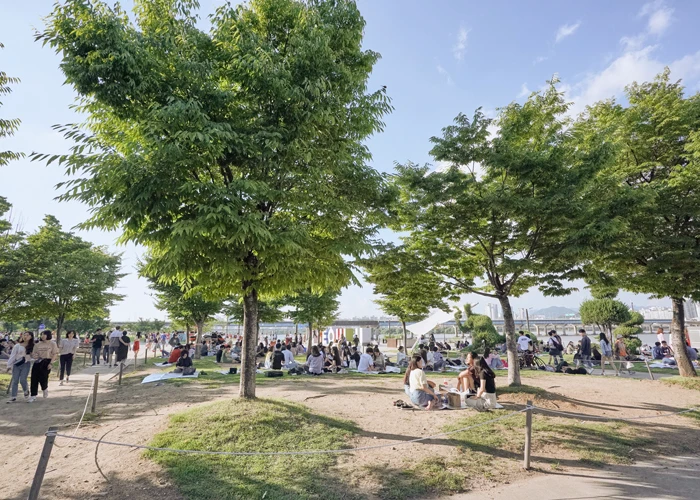
The first photo shows a signed food-delivery area; the second shows the much less precise reality on the lawn. These official Visit Seoul images explain the flow, but they are not a current zone map. Confirm the pickup name in the app, meet the rider there, carry the order to your spot, and take every container and can to the correct waste point afterward.
Do not treat “Hangang Park” as one set of permanent rules. National law allows local governments to designate and sign specific alcohol-free areas, so the posted sign at your exact location and current park notice control. Weather alerts, events, construction, tent zones, and delivery arrangements can also change. A recent Reddit picnic guide is useful mainly because it reveals the recurring visitor questions—where to collect food, what to bring, and where sitting is allowed—not because its hours or vendor details should be treated as official.
What K-drama actually changed
The most famous boost came from the 2013–14 drama My Love from the Star. In a March 2014 Korea.net report, the heroine’s affection for chicken and beer is credited with triggering a major chimaek craze among viewers in China. The show made a pre-existing Korean expression easy to recognize, quote, photograph, and reproduce abroad.
That is different from invention. The drama selected a combination that already read as affordable, informal comfort food and attached it to memorable scenes. A later Korea.net essay on food as a cultural intermediary describes how subsequent dramas and chicken-brand placements kept the image circulating. Screen culture amplified the ritual, while delivery shops, sports crowds, and park picnics continued to give it a life outside the screen.
Try the context, not a performance
If you want to understand chimaek rather than reenact a shot, choose the setting that fits your evening:
- A delivery night is easiest when your accommodation allows food deliveries and you can give a precise handoff point.
- A ballgame or baseball pocha adds the collective cheering that makes food last across several innings.
- A Hangang picnic gives you the famous outdoor scene but requires weather, pickup, park-rule, and cleanup planning.
- A neighborhood chicken shop removes the logistics and preserves the crispness better than a long delivery ride.
Order only the alcohol you actually want. The table stays social when one person drinks beer and another chooses soda, because fried chicken still gives the evening a shareable center.
Chimaek is an authentic, recognizable Korean social pattern, and K-drama turned its most photogenic moments into a cultural export. It becomes a cliché only when that situational pleasure is presented as every Korean’s daily life.
Sources and image credits
- Korea.net K-Info Hub on chimaek — Origins in the 1970s, mainstream growth around the 2002 World Cup, and the delivery-and-gathering context.
- Korea Tourism Organization guide to Korean baseball food culture — March 2025 ballpark-food context and source of the baseball-pocha image credited there to eatjian on Naver Blog.
- Seoul Hangang delivery FAQ — Official explanation of designated delivery pickup zones.
- Seoul Hangang park facility dashboards — Current park-specific facility checks.
- Korean law on designated alcohol-free areas — Legal basis for local designation and posted controls; exact current signs still govern.
- Reddit Banpo picnic discussion — Anecdotal visitor questions about pickup, supplies, and sitting areas, not an official rules source.
- Korea.net report on My Love from the Star — March 2014 account of the drama-linked chimaek craze in China.
- Korea.net essay on food as a cultural intermediary — Later K-drama and chicken-brand-placement context.
- Visit Seoul Hangang chimaek feature — Source of the cover, signed pickup-zone, and picnic-lawn images, used with written operator permission.
- Delivery Spot featured image file — Cropped Hangang chimaek image used as the cover.
Last updated


