
Why Does Korean Fried Chicken Have So Many Choices? Your First Order, Decoded
A Korean chicken menu becomes simple once you separate three choices: flavor, bone or cut, and portion split. Learn what fried, yangnyeom, soy, boneless, and half-and-half mean—and which first combination fits your taste.
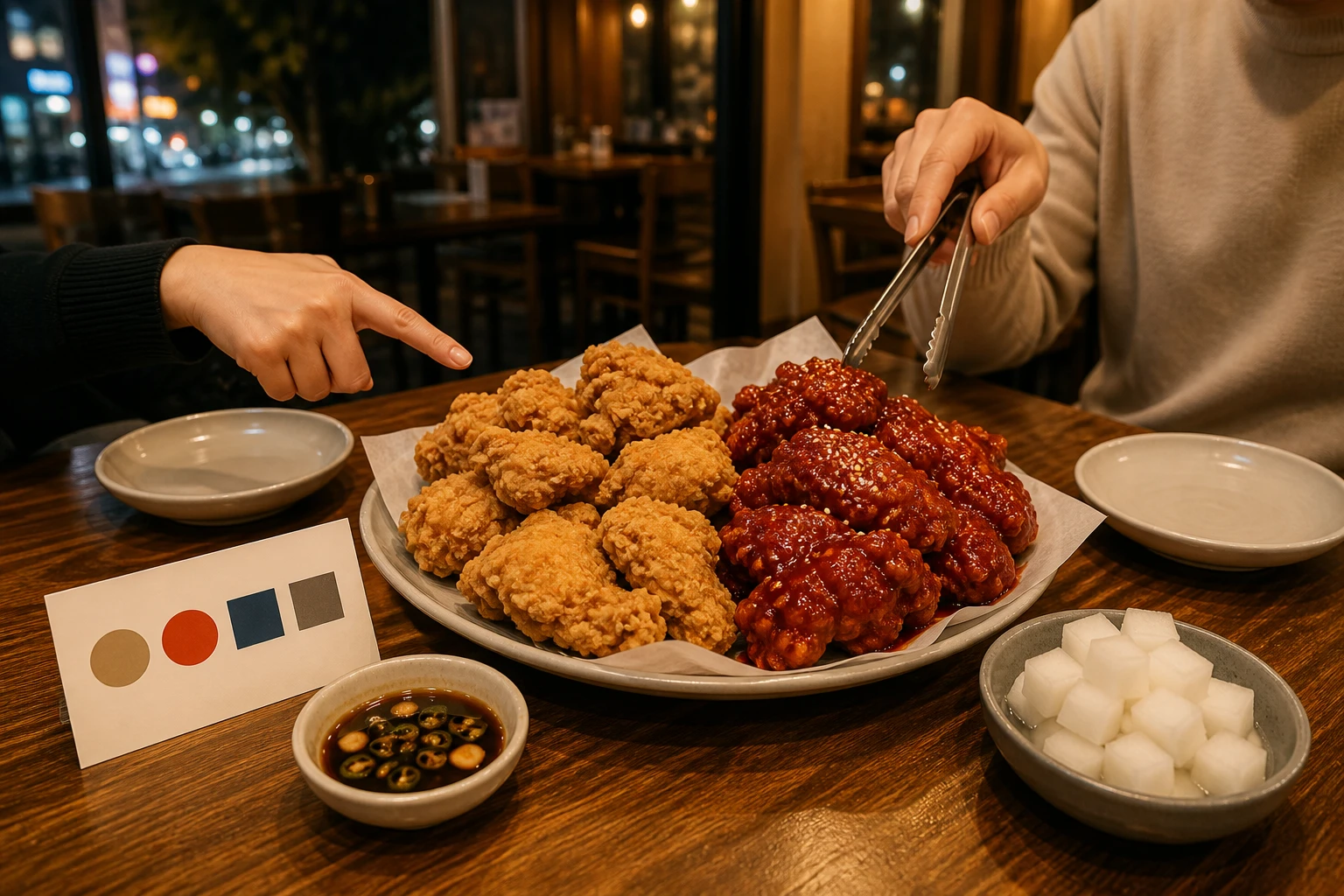
A Korean chicken menu can look like fifty different dishes, but most first orders come down to three separate decisions: choose a flavor, choose bone-in or boneless (or a specific cut), and decide whether to split the order.
If you want the classic answer immediately, order half plain fried and half yangnyeom, bone-in. You will taste the crisp base beside Korea’s glossy sweet-and-spicy sauce, and the unsauced half gives you somewhere to retreat if the sauce is sweeter or hotter than expected. If sticky fingers are a problem, make the same order boneless—but check which meat the shop uses first.
Why did one dish turn into an entire menu?
Korean chicken developed in layers. VisitKorea’s history of fried chicken in Daegu traces a move from whole birds fried in oil in the 1970s to individual fried pieces in 1977, followed by the popularization of seasoned chicken in 1981. Once chicken was sold in pieces, coating and saucing part of an order became much easier.
The coating also creates room for variation. VisitKorea distinguishes thick, craggy “crispy” batter from a thinner whole-chicken style. A sturdier coating can keep some crunch under a liquid glaze, so restaurants can change the sauce, powdered seasoning, garnish, and heat level without inventing a completely new cooking format. The agency notes that this crispy style follows food trends closely, including snack-inspired seasoning and green-onion toppings.
Then sharing turns variety into a feature. The Korean Food Promotion Institute’s cultural essay on chicken describes chicken as a food shared with family and friends and records the familiar order “half yangnyeom, half fried.” A split box lets a table negotiate two preferences at once—and gives brands a reason to keep adding combinations.
First choice: the flavor
Fried (후라이드): the baseline
On a chicken menu, 후라이드 usually means the plain, unsauced fried version. The plain version still carries seasoning: the chicken and coating may already contain salt, pepper, spice, or a house blend. A menu marked 핫후라이드 or hot crispy is deliberately spicy even though it has no wet sauce.
Choose fried if crunch matters most, you dislike sweet glazes, or you want to understand the shop’s base chicken. Salt and a separate dip may be included or sold separately.
Yangnyeom (양념): glossy, sweet, tangy, and sometimes hot
Yangnyeom chicken is fried chicken coated in sauce. The Korean Food Promotion Institute dates its spread to the mid-1980s and describes the early red style as using gochujang and starch syrup. Today, the balance varies enormously: one shop may be tomato-bright and mildly sweet; another may emphasize garlic, chile, fruit, or serious heat.
Red color is a poor spice meter. Standard 양념 is often sweeter and milder than visitors expect, while menus labeled 매운양념 (spicy yangnyeom), 핫, or 불 can be far hotter. If you dislike sweetness, do not assume “spicy” removes the sugar—it may simply add heat to a sweet base.
Soy (간장): savory-sweet, usually garlicky
Ganjang chicken (간장치킨) uses a soy-based glaze, commonly paired with garlic. It is often darker, thinner-looking, and less fruity than red yangnyeom. It is a useful second flavor for someone who wants sauce without the classic red profile.
A soy glaze can still be spicy or sweet, and it may include wheat-containing soy sauce or other non-vegetarian ingredients. The exact menu description matters more than the word 간장 alone.
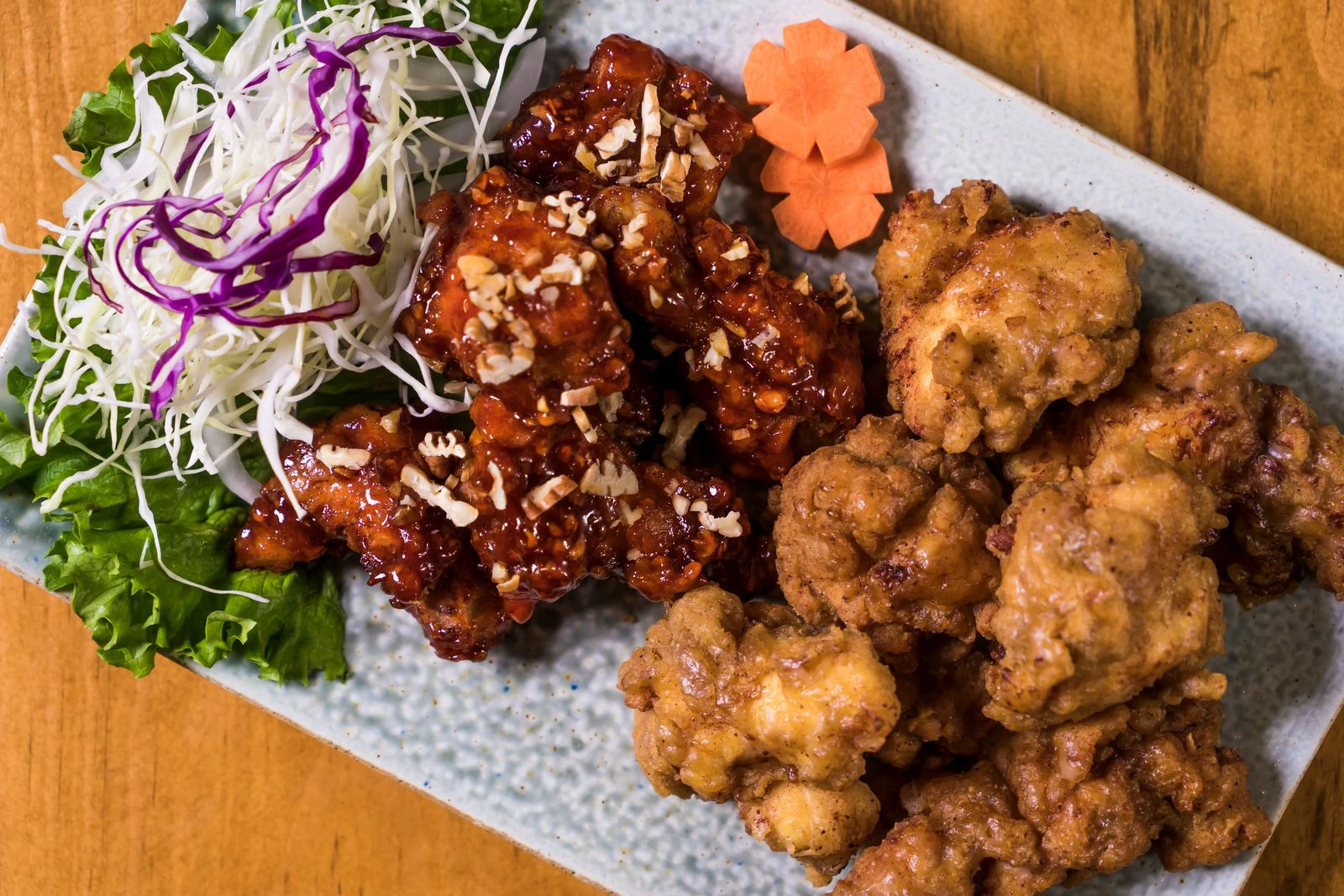
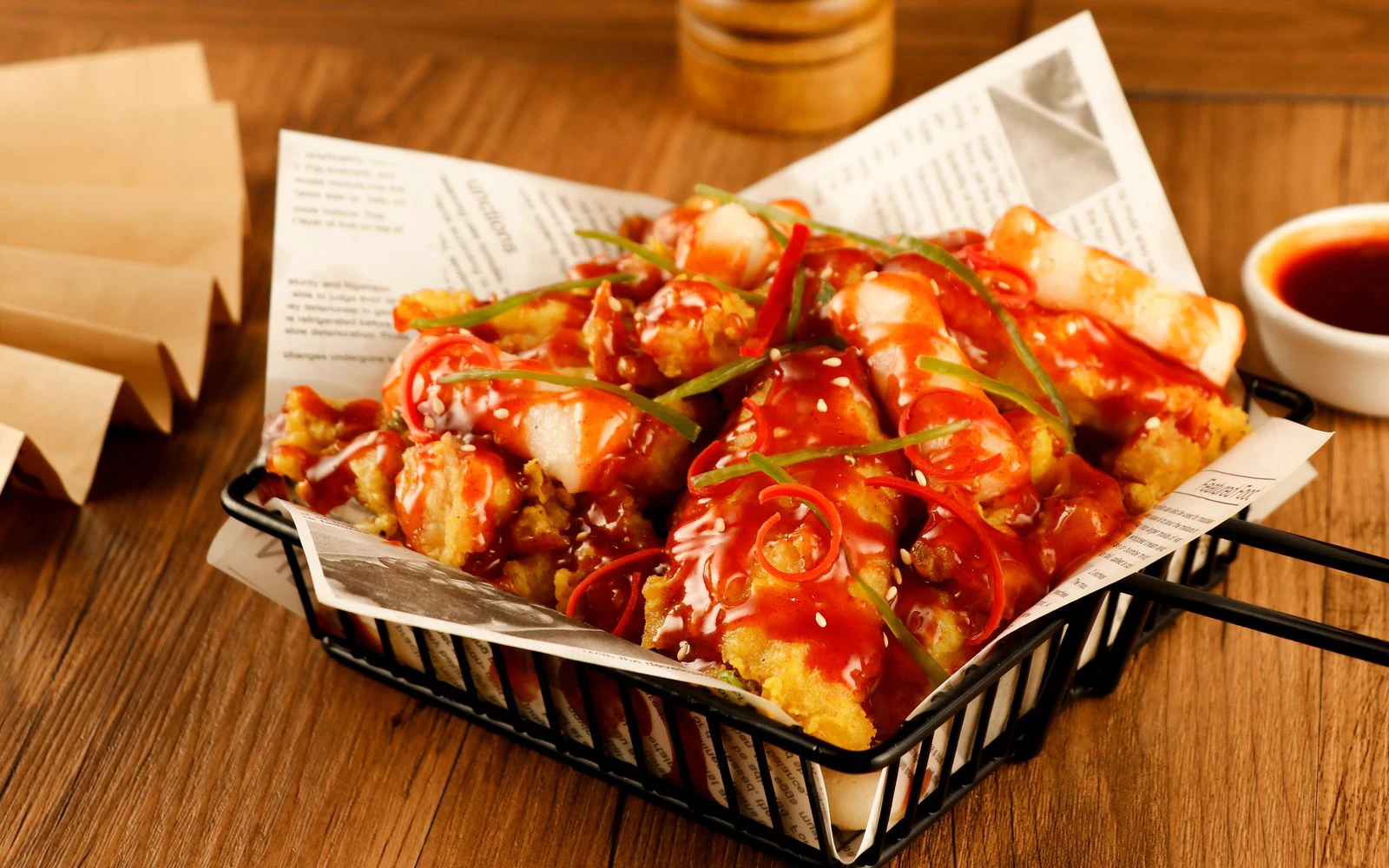
The first slide shows why half-and-half is easy to understand at a glance: two treatments share one platter. The second shows how thoroughly a sauce can coat the crust. These are illustrative food photos, not a promise about a particular chain’s recipe or portion.
Second choice: bones and cuts
Bone-in (뼈)
A whole-chicken order generally contains mixed pieces rather than an equal stack of drumsticks. You may see breast, thigh, wing, and drumstick portions in the same box. Bone-in is the most direct way to compare the traditional fried and sauced versions, but it is slower and messier to eat.
Boneless (순살)
Sunsal (순살) simply means boneless. The cut varies by brand and product: thigh, breast, tenderloin, or a mix are all possible. Even one chain’s current official menu describes a fried-and-yangnyeom boneless split as a mixed cut, while its soy boneless item lists a different composition and weight.
That difference affects texture more than the word “boneless” suggests. Look for 닭다리살 (thigh), 가슴살 (breast), 안심 (tenderloin), or a cut icon in the app. If the menu does not say, ask rather than assuming every brand uses thigh meat. Boneless may also cost extra.
Wings, drumsticks, and combo (윙·봉·다리·콤보)
Many shops let you choose wings, drumettes, drumsticks, or a combo instead of a mixed whole bird. This can be a better solo order when the shop sells a smaller set, and it avoids competing for one favorite piece. It can also cost more than the standard whole-chicken configuration, so compare the piece count or listed raw weight where available.
Third choice: the split
Banban (반반) literally means half-and-half. On the classic menu it usually means half fried and half yangnyeom, but some shops allow two other flavors. Others sell only fixed pairs, exclude premium flavors, require the same bone/cut choice on both sides, or add a surcharge.
Half-and-half normally divides one order between two treatments; it is not two full orders. Portion systems still differ: one shop may list a whole bird, another a raw weight, another a piece count, and another a small or single set. Check the actual listing rather than using “one chicken” as a universal serving size.
A recent r/koreatravel discussion about sampling several flavors quickly converged on half-and-half as the common solution. That is traveler experience, not a guarantee that every branch offers any pair you want, but it identifies the right Korean menu word to search: 반반.
Four first orders that actually make sense
1. The reference order: fried + yangnyeom, bone-in
Choose this if you want the clearest introduction. Taste the fried side first while it is hottest and crispiest, then move to the sauce. Use the pickled radish between bites rather than treating it as decoration.
Say: 후라이드 반, 양념 반으로 주세요. 뼈로 주세요.
“Half fried and half yangnyeom, please. Bone-in, please.”
2. The less-sweet route: fried + soy
Choose this if red sauce sounds too sweet, but remember that soy glaze is often sweet too. If the shop permits it, ask for a sauce cup on the side so you control both coating and crunch.
Say: 후라이드 반, 간장 반 가능해요?
“Can I get half fried and half soy?”
3. The easy-to-share route: half-and-half boneless
Choose this for a hotel room, picnic table, or group that does not want to handle bones. Confirm the meat, the two allowed flavors, and whether an extra charge appears before checkout.
Say: 반반 순살로 가능해요? 순살은 어느 부위예요?
“Can I get the half-and-half boneless? Which cut is the boneless chicken?”
4. The crunch-first delivery order: fried with sauce separately
Steam and travel time soften any crust, especially under a wet glaze. One traveler in a 2026 r/koreatravel thread described ordering plain chicken with a separate sauce cup to preserve crunch. That is an anecdotal tactic, and a shop may decline, but it is worth asking when delivery will take a while.
Say: 소스 따로 가능해요?
“Can the sauce come separately?”
Do not forget the sides and the app options
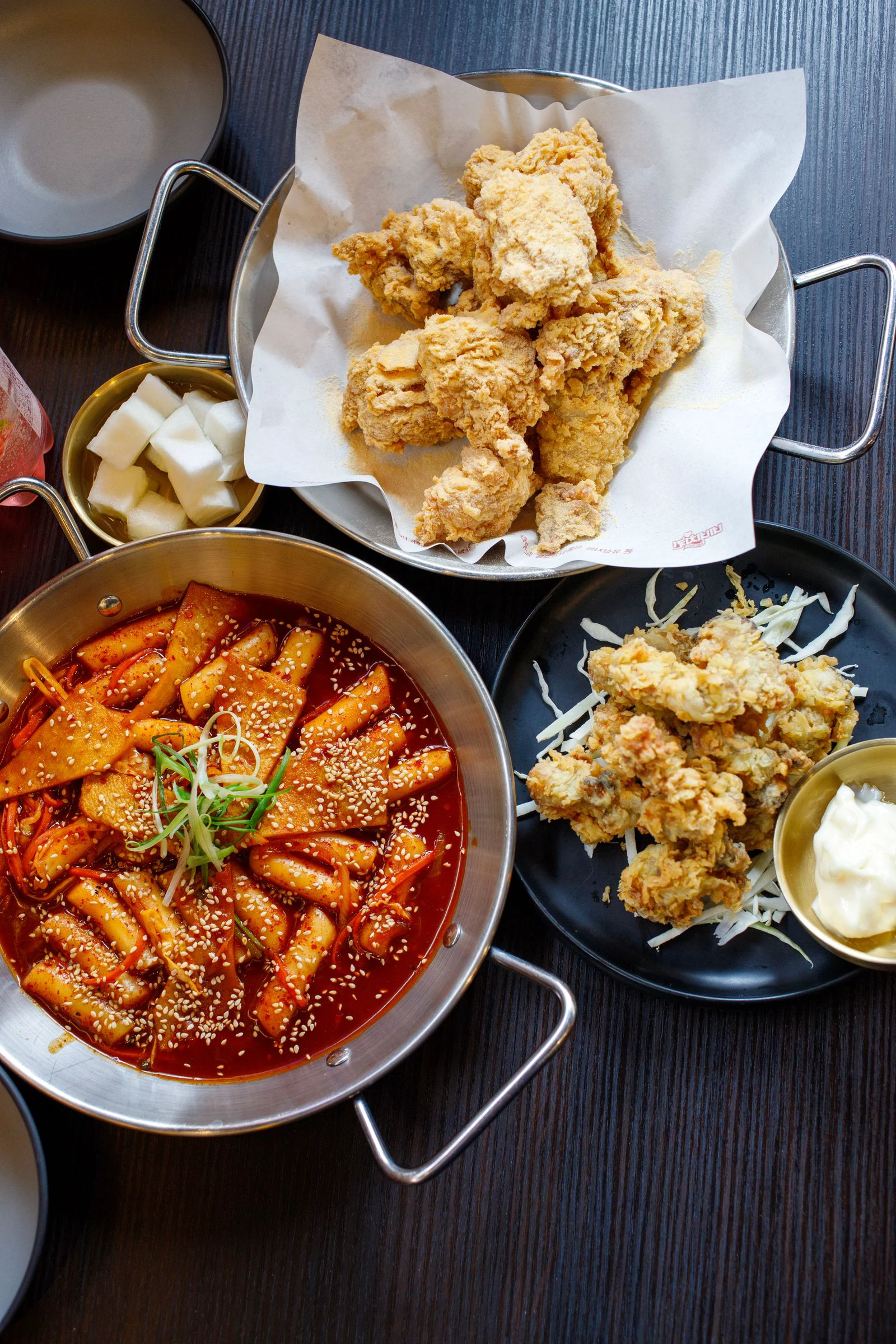
Cubed pickled radish is chicken-mu (치킨무), the sharp, cool counterpoint to fried food. It is commonly included, but extra tubs, dip, and drinks may be paid options. This spread also includes tteokbokki; it is a separate side, not something every chicken order includes.
Before tapping payment, read the option layers in this order:
- Flavor: 후라이드, 양념, 간장, or a named specialty
- Format: 뼈, 순살, 윙, 봉, 다리, or 콤보
- Split: 한마리, 반마리, 반반, or a fixed set
- Heat: look for 매운, 핫, 불, 청양, or chile icons
- Extras: sauce, chicken-mu, drinks, cheese balls, fries, or tteokbokki
- Total: confirm surcharges, delivery fee, minimum order, and the exact branch
If food allergies matter, check the product-level allergen list and contact the shop. Chicken coatings and sauces can contain wheat, soy, egg, milk, peanuts, shellfish, or other ingredients depending on the product, and shared fryers create cross-contact risk. “Plain,” “soy,” and “boneless” are not allergy claims.
The menu looks enormous because Korean chicken shops combine a small number of structural choices with fast-changing sauces and seasonings. For a first order, ignore the novelty names and make the three decisions in order: flavor, bone or cut, then split. Fried-and-yangnyeom half-and-half is the classic learning set; after that, you will know exactly which axis to change next time.
Sources and image credits
- VisitKorea history of fried chicken in Daegu — Timeline from whole fried birds to pieces, seasoned chicken, and trend-responsive crispy coatings.
- Korean Food Promotion Institute cultural essay on chicken — Historical context for yangnyeom chicken and the shared half-yangnyeom, half-fried order.
- Kyochon fried-and-yangnyeom boneless split — Current brand example showing that boneless can use a mixed cut.
- Kyochon soy boneless item — Current brand example with a different cut composition and listed weight.
- r/koreatravel discussion about sampling several flavors — Anecdotal support for half-and-half as a common sampling strategy; not a branch guarantee.
- 2026 r/koreatravel delivery discussion — One traveler's separate-sauce tactic for preserving crunch; individual experience only.
- Luis Becerra Fotógrafo via Pexels — Original page for the half-and-half platter image.
- jianwei zhu via Pexels — Original page for the sauced chicken image.
- Jeremy Li via Pexels — Original page for the chicken, pickled-radish, and tteokbokki image.
- Pexels license — Reuse terms for the three Pexels body images.
- Delivery Spot featured image file — Original LID / OpenAI ImageGen illustration of two diners comparing fried and sauced chicken.
Last updated


