
Why the Same-Size Apartment Costs So Much More in Gangnam
The floor area may match, but the apartment does not: Gangnam prices bundle access to a huge job center, dense education services, fast transport, scarce land, and sometimes a redevelopment option.
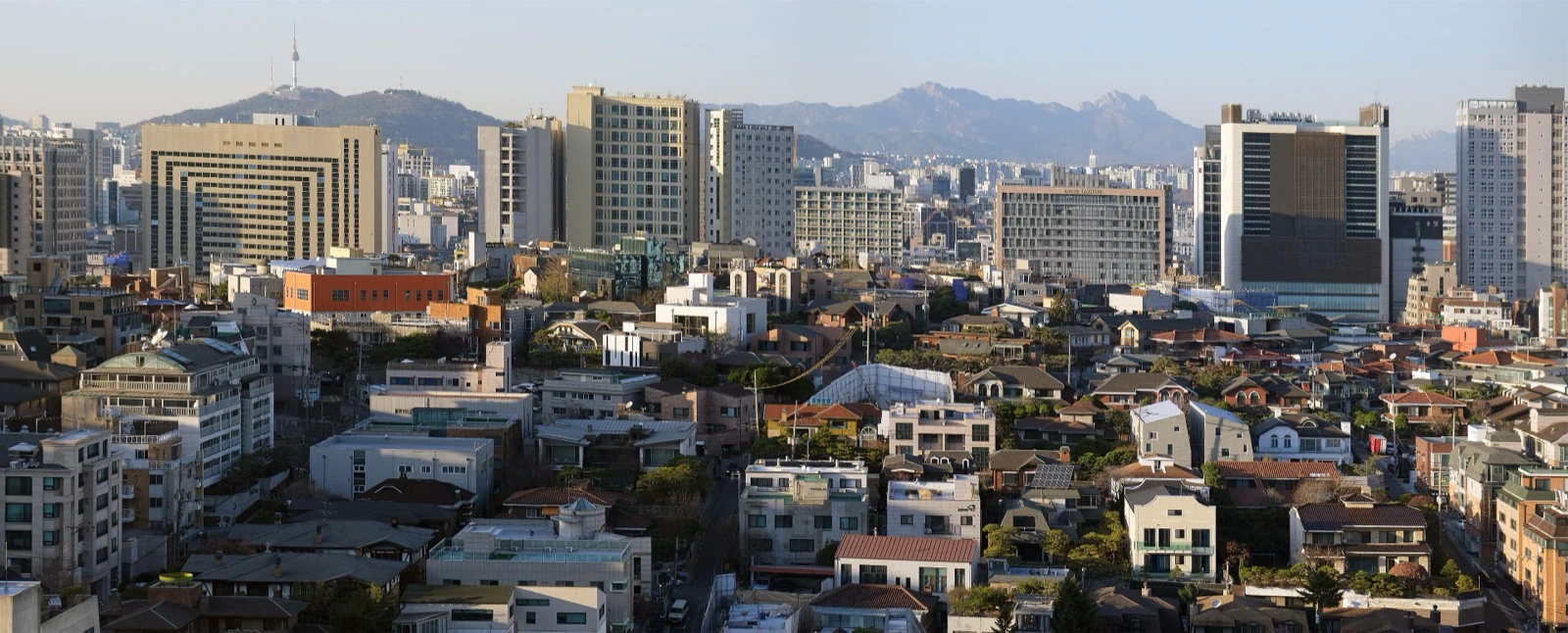
A Gangnam apartment can cost far more than a similar-size home elsewhere because buyers are not purchasing square meters alone. They are competing for a bundle: shorter access to a major job center, a dense education market, valuable transport connections, scarce land, and—at some older complexes—the possibility of a future rebuild.
That does not mean every Gangnam apartment deserves any price, or that the premium must keep rising. It means exclusive floor area is only one line in the comparison.
The same 84 square meters are not the same asset
Korean listings usually foreground 전용면적, the exclusive indoor area. That number is useful for comparing how much space a household controls, but it says little about what surrounds the unit. Two 84 m² apartments can sit on land with very different demand, connect to different schools and stations, have different site layouts, and carry different future building rights.
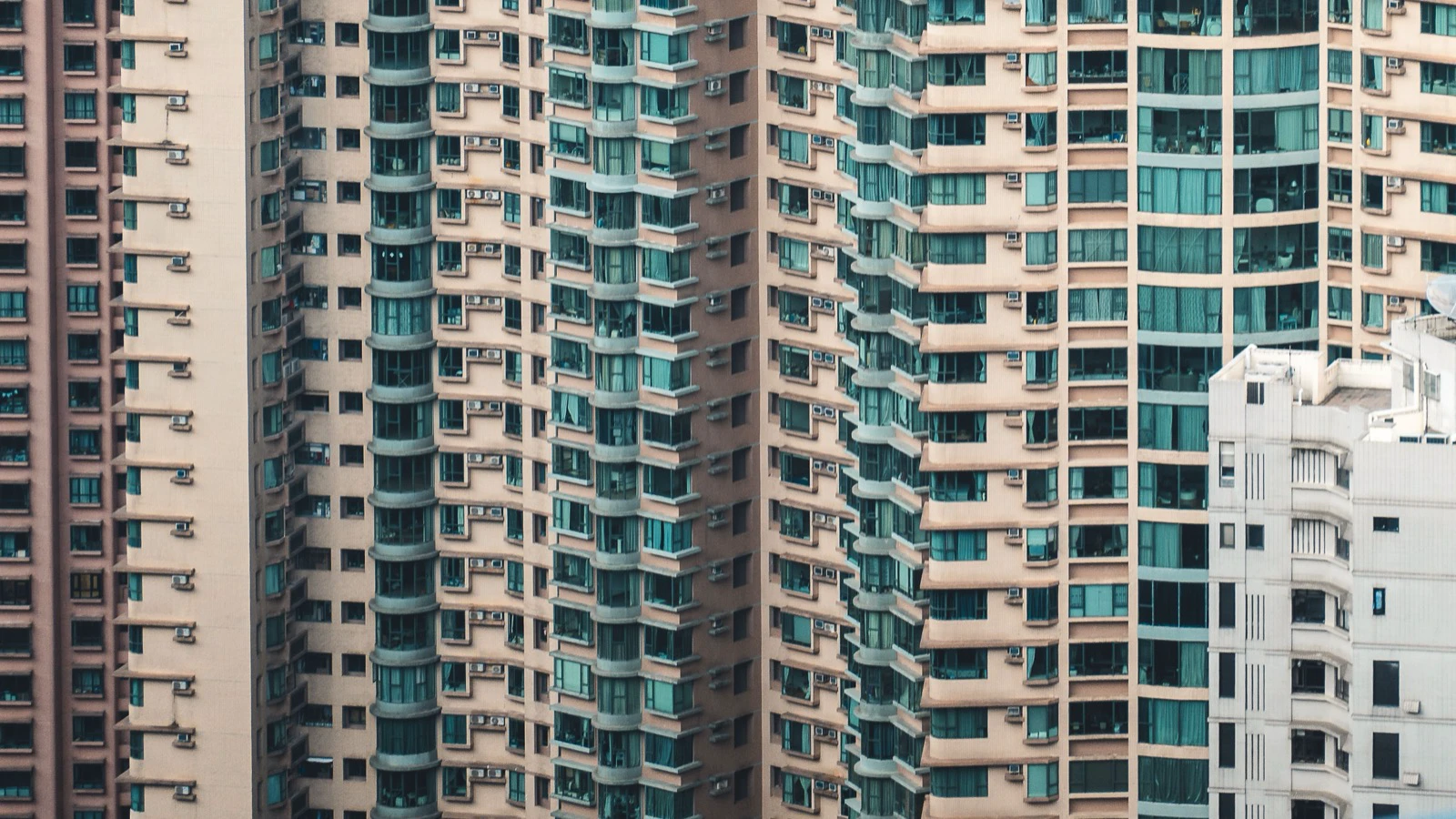
These Hong Kong facades are an illustration, not a Korean complex: repeated windows can make units look interchangeable while the land and daily network remain completely different.
Start with actual contracts, not the most dramatic listing price. The Seoul Real Estate Information Plaza apartment search lets you compare contract date, complex, exclusive area, floor, transaction amount, cancellation status, and registration information. Match the month and unit size first; otherwise a comparison can quietly mix different market conditions.
Jobs turn location into saved time
Gangnam is not only a wealthy residential label. It is one of Seoul's largest concentrations of workplaces. Gangnam-gu's 2024 business census operation covered 104,551 registered establishments, the largest survey frame among Seoul's 25 districts. The district's completed 2022 census summary reported 802,908 workers.
Those figures do not prove the price of one apartment. They explain why many households bid for a shorter, more reliable commute into Teheran-ro, Samseong, Yeoksam, and nearby southern business districts. A home that saves two adults 30 minutes each way can return hundreds of hours a year. Buyers price some of that time into the address.
The effect is uneven even inside Gangnam-gu. A complex beside a useful station, a direct bus corridor, or a workplace cluster can command a different premium from one that requires a long feeder trip. “Gangnam” is the beginning of the location check, not the end.
Education demand is an ecosystem, not one famous school
The education premium is often simplified into “good schools,” but Daechi's advantage is also the surrounding private-education market. In December 2025, Gangnam-gu described roughly 1,400 academies concentrated along Samseong-ro, Dogok-ro, and Yeongdong-daero. The district's concern was evening pickup congestion—practical evidence of how intensely families use the cluster.
Proximity can reduce the time a child spends crossing the city between school, an academy, and home. It can also make changing classes easier because many providers are close together. That convenience attracts families, and family demand feeds back into resale and jeonse demand.
But an address does not guarantee an academic result. School assignments can change, academy quality varies, and a famous district may add stress, traffic, and cost. Before paying for a “school-zone” story, confirm the current assignment with the school or education office and test the real after-school route at the hour your family would use it.
Transport makes the whole bundle easier to reach
A subway line is valuable because of the destinations and transfers it connects, not because a station icon appears on a map. Seoul's official 2024 Metro data says Line 2 carried an average 1.96 million passengers a day, more than the combined daily total of the five other metropolitan subway systems cited by the city. Gangnam Station remained one of the system's busiest reference points.
For a buyer, the useful questions are more specific: How many minutes from the front door to the platform? Is the route direct to work? Is there a difficult transfer? Does the last kilometer depend on a crowded bus? A cheaper apartment can be the better home if its door-to-desk trip is more reliable.
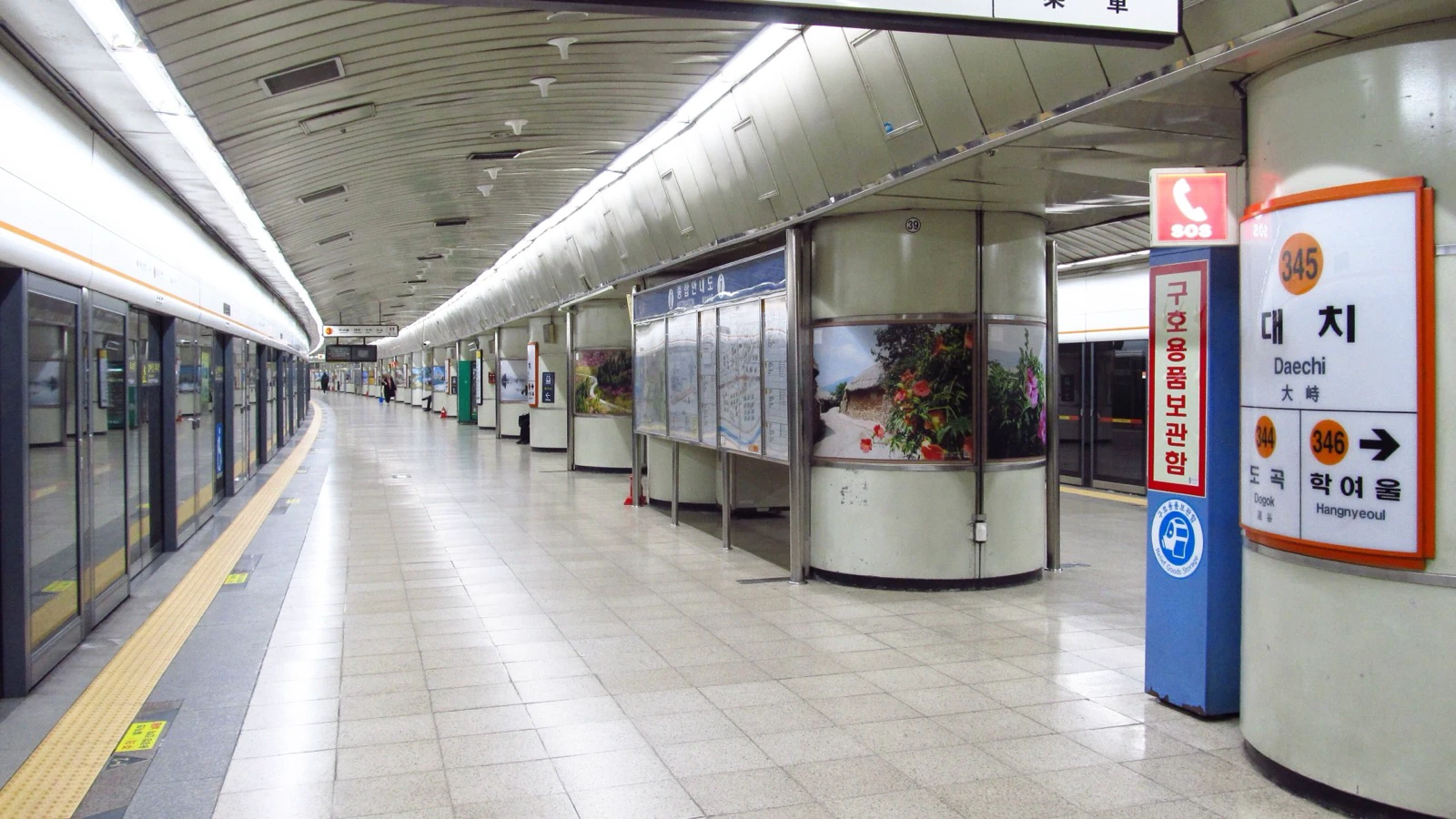
Daechi Station on Line 3 illustrates the point: transit is valuable when it connects a residential complex to the places a household repeatedly uses. A station that is excellent for one commute can be awkward for another.
An old building can contain a valuable future option
Newer construction usually brings better parking, insulation, elevators, amenities, and fewer immediate repairs. Yet some of Gangnam's most discussed complexes are old because the market is also pricing the land and a possible redevelopment path.
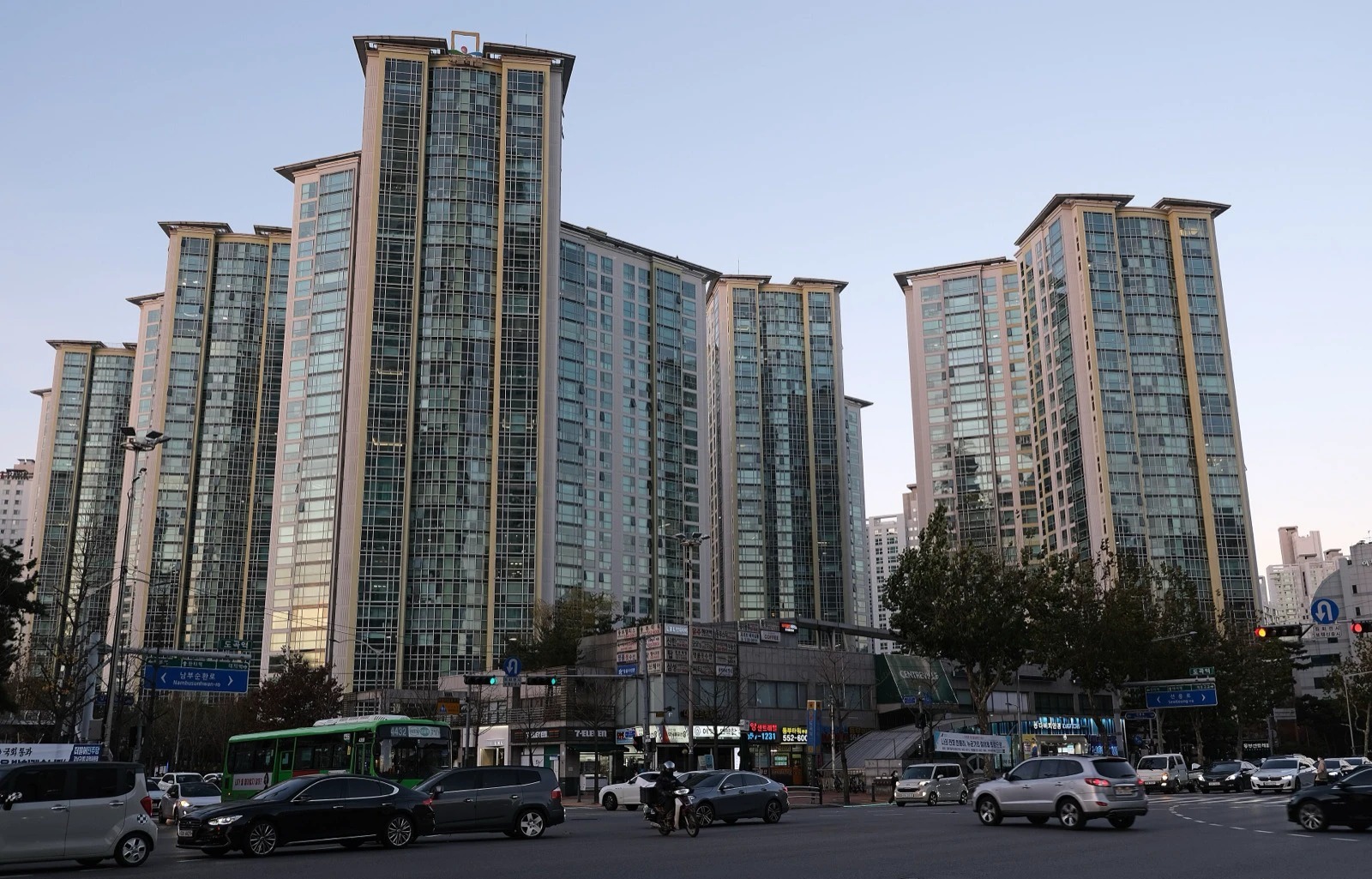
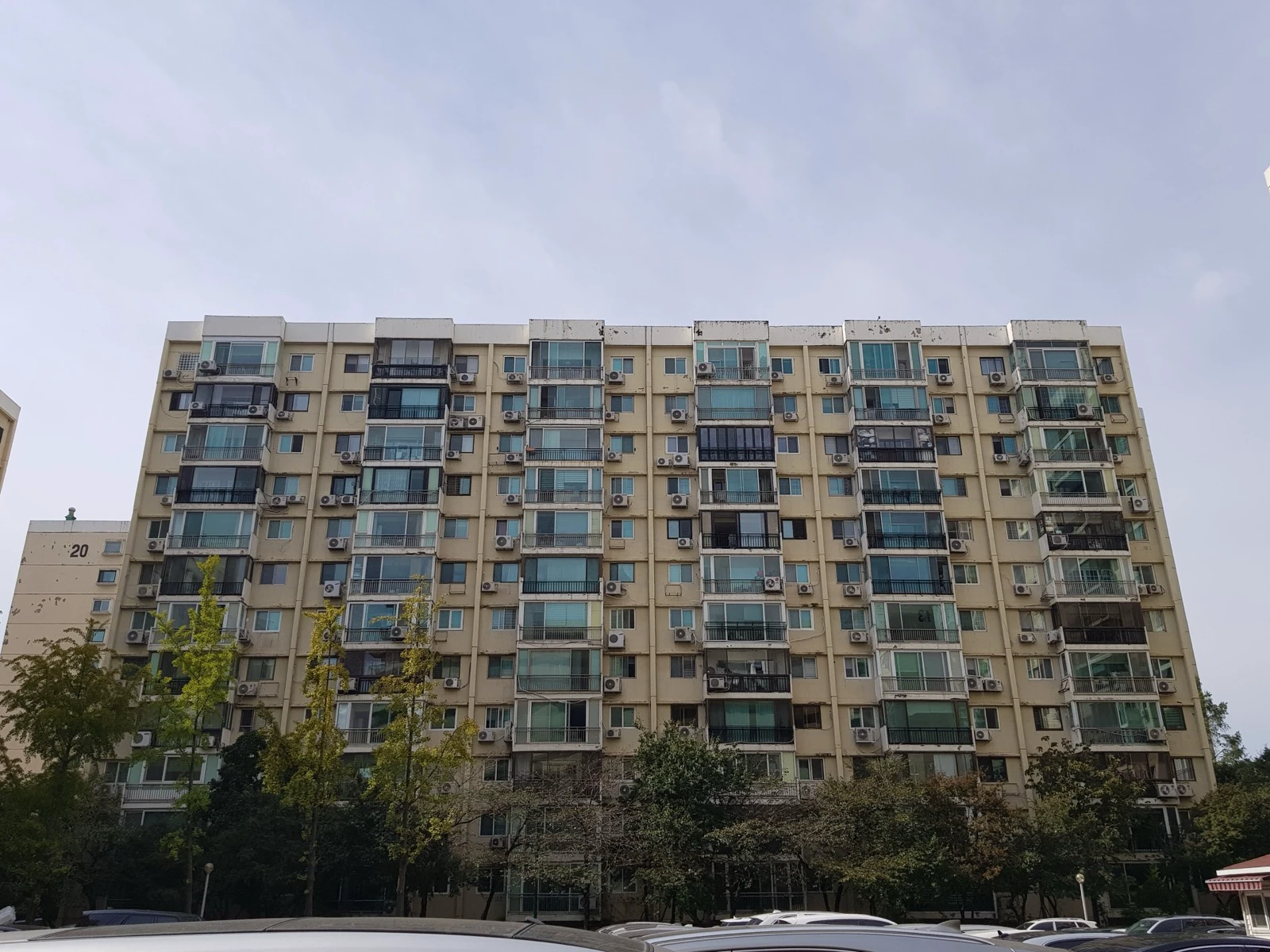
The first image shows a newer-looking Daechi complex; the second is a 1976 Apgujeong Hyundai building. The contrast is a reminder that exterior age and market value can move in different directions when location and future development rights differ.
In July 2026, Seoul announced that the Eunma Apartment redevelopment had received project implementation plan approval. The approved plan calls for up to 49 floors and 5,850 homes, and the city said the remaining steps include management-disposition approval, relocation, and demolition, with construction targeted for 2028. Those are planned milestones, not guaranteed completion dates.
Owners may face contributions, design changes, relocation, construction delays, policy changes, and years of uncertainty. A broker's “it will definitely be rebuilt” claim should never substitute for the current official plan, association documents, financing estimate, and legal review. The premium is partly the price of an option—and options can disappoint.
Why the premiums compound
The four forces reinforce one another rather than adding neatly:
- A large job center creates daily housing demand.
- Transport expands the number of jobs reachable without a punishing commute.
- Schools and academies create another reason for families to stay near the same land.
- Redevelopment expectations can make an old unit attractive to buyers who care about the future site, not today's interior.
Scarcity sits underneath all four. Established neighborhoods cannot easily create another equivalent station-adjacent site with the same job access and education network. When many households prefer a narrow set of complexes, the price of the location bundle can overwhelm differences in wallpaper, view, or even building age.
A 2025 r/Living_in_Korea discussion about why some Seoul districts cost more contains the blunt resident version: demand and convenience can make a lower-quality home in a popular area cost more than a better home elsewhere. Other commenters emphasized hills, isolation, and transport links. These are anecdotes, not market data, but they capture why “same size” feels like the wrong comparison once daily life enters the equation.
A better way to compare two apartments
Use this order before deciding that one home is inexplicably expensive:
- Match the contract evidence. Compare registered sales from the same period, the same exclusive area, similar floors, and similar unit orientation. Check whether a transaction was later cancelled.
- Time the repeat journeys. Measure door-to-desk, school, academy, and family trips during the actual rush hour—not a quiet Sunday.
- Verify the school claim. Confirm current assignment rules and whether the academy route is genuinely walkable.
- Separate today's building from tomorrow's story. Inspect parking, management, noise, leaks, and repair history, then verify redevelopment status from official documents.
- Price your own trade-off. A smaller premium may be worth paying for time and stability; a larger home elsewhere may be worth the commute. That is a household decision, not a universal ranking.
The clearest answer is therefore simple: Gangnam's price is mostly the price of access and scarce land, with the apartment floor area sitting on top. Compare the whole bundle, and the gap becomes easier to understand—even when you decide it is not worth paying.
Photo credits
- High-density Hong Kong apartment windows: Willian Justen de Vasconcellos via Pexels, Pexels License.
- Featured Gangnam cityscape from Yeoksam: Kallerna via Wikimedia Commons, CC BY-SA 4.0.
- Daechi Dongbo Centreville apartment complex: Kallerna via Wikimedia Commons, CC BY-SA 4.0.
- 1976 Apgujeong Hyundai Apartments building: ZbnKhl via Wikimedia Commons, CC BY-SA 4.0.
- Daechi Station platform: LERK via Wikimedia Commons, CC BY-SA 4.0.
Sources and image credits
- Seoul Real Estate Information Plaza apartment search — Checked for guide details or image attribution.
- 2024 business census operation — Checked for guide details or image attribution.
- 2022 census summary — Checked for guide details or image attribution.
- 1,400 academies concentrated along Samseong-ro, Dogok-ro, and Yeongdong-daero — Checked for guide details or image attribution.
- 2024 Metro data — Checked for guide details or image attribution.
- Eunma Apartment redevelopment project approval — July 2026 approval, approved building scale, and 2028 construction target.
- Kallerna via Wikimedia Commons — Checked for guide details or image attribution.
- Kallerna via Wikimedia Commons — Checked for guide details or image attribution.
- ZbnKhl via Wikimedia Commons — Checked for guide details or image attribution.
- LERK via Wikimedia Commons — Checked for guide details or image attribution.
Last updated


