
Why School Violence, Regression, and Hunter Stories Keep Returning in Korean Webtoons
School-bullying revenge, regression, and hunter-system stories recur in Korean webtoons because each offers a fast, legible answer to a different anxiety: powerless institutions, irreversible failure, and opaque competition. Their popularity also reflects the web-novel adaptation pipeline and the demands of serialized platforms—not a literal portrait of daily life in Korea.
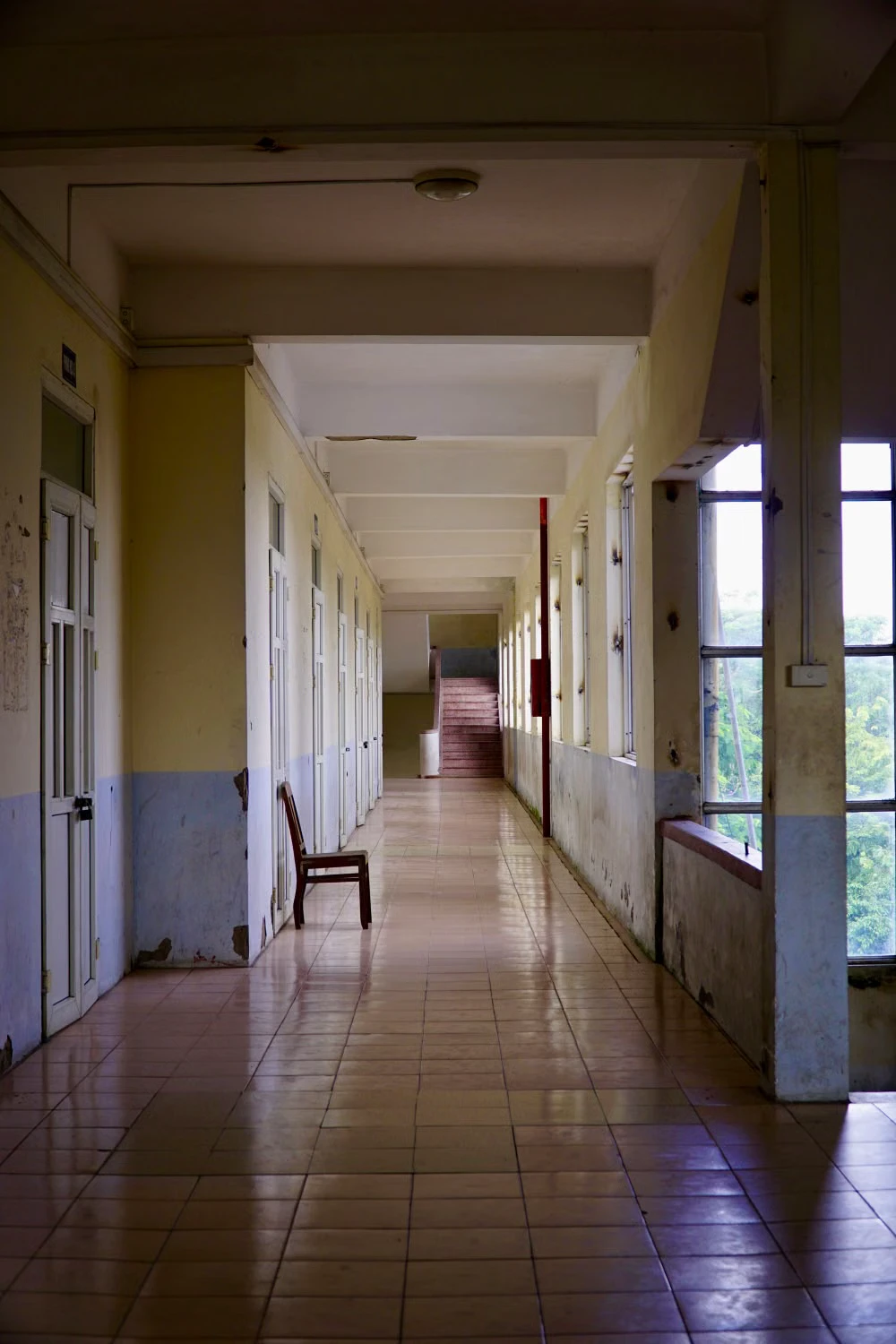
Open a Korean action-webtoon catalog and several ingredients quickly repeat: a school ruled by bullies, a protagonist sent back before everything went wrong, a gate full of monsters, an ability rank, or a floating status window. These elements are often combined. A bullied student may receive a quest system; a failed hunter may regress; a returner may use future knowledge to defeat both monsters and human hierarchies.
The easy explanation is that creators ran out of ideas. The more useful answer is that these are modular story engines. Each establishes a conflict, a power scale, and a promise of payoff within a few episodes. They also translate broad frustrations—helplessness, regret, unfair evaluation, insecure work—into rules that can be seen and defeated. That does not make them direct reports about Korean society, and it does not mean every reader wants the same fantasy.
First, “-mul” labels are ingredients as much as genres
Korean readers attach -mul (물, roughly “type of story” or “story about”) to settings and devices: hakwonmul for school stories, hoegwimul for regression stories, and heonteomul for hunter stories. A work can carry several labels at once. “School,” “revenge,” “system,” and “regression” describe compatible components rather than mutually exclusive shelves.
A Korea Manhwa Contents Agency column on the mutation of webtoon subjects notes how this fine-grained naming grew first in web novels and became common in webtoons as adaptations of serialized novels expanded, especially after 2017. On a platform crowded with thousands of titles, a compact label tells readers what kind of pleasure to expect. For creators and publishers, familiar components can also be recombined without rebuilding every rule from zero.
Why school violence is such an efficient conflict
A school is instantly readable. It is a closed institution with fixed schedules, repeated encounters, status groups, uniforms, classrooms, and adults who may be absent or ineffective at the crucial moment. Most readers have attended school, so the setting needs little explanation. A bully-victim relationship also creates an immediate moral imbalance: the audience understands who lacks power and why a reversal would feel satisfying.
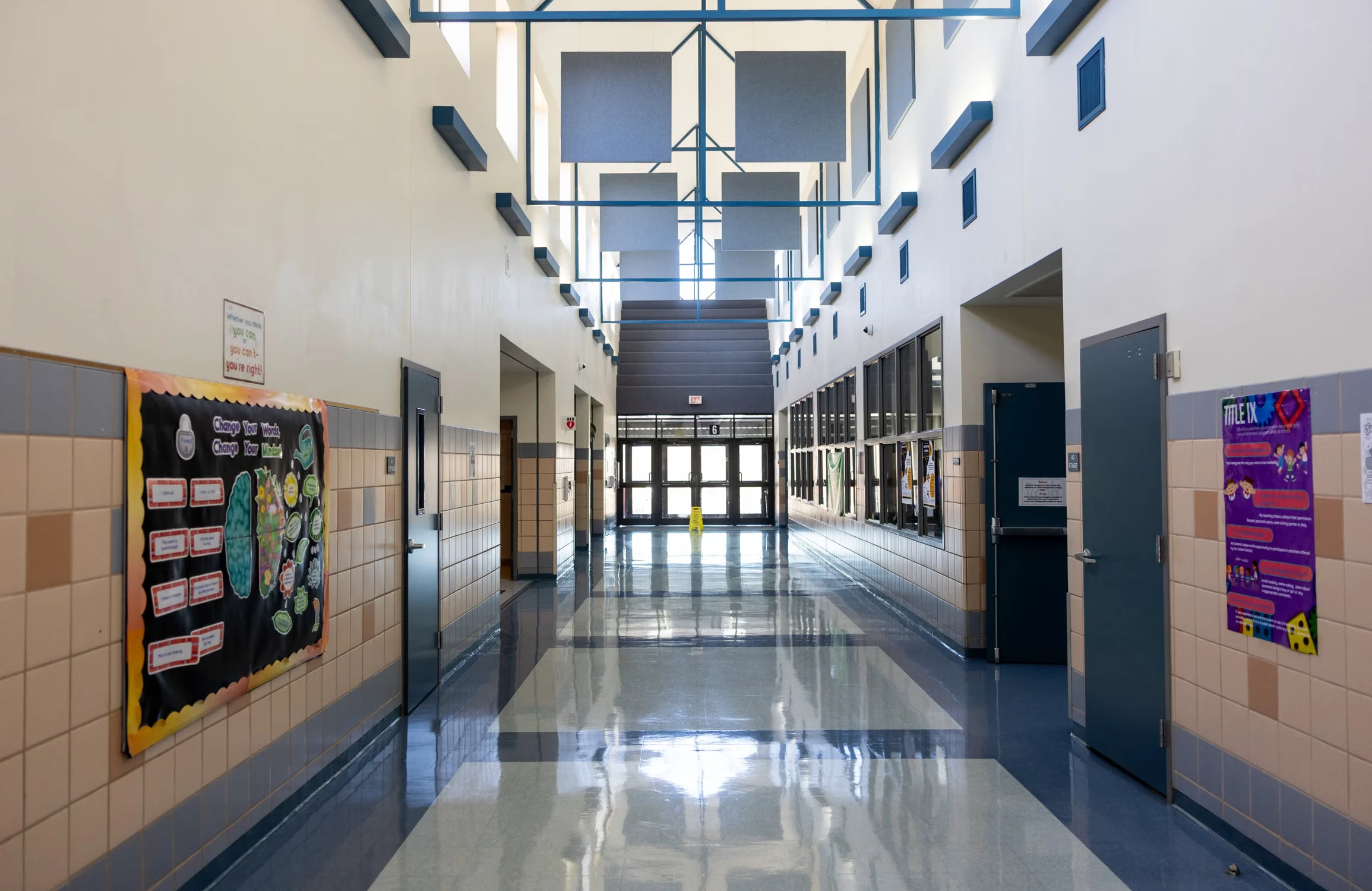

These stock photos are visual metaphors for the closed, recurring spaces that make school stories easy to stage. They are not photographs of Korean schools and do not document school violence.
The most commercially direct version turns humiliation into an action or revenge ladder. Each opponent leads to a stronger opponent, hidden networks widen the world, and the protagonist's changing body or skill becomes visible proof that the old hierarchy can be overturned. Because the aggressor is established early, a violent counterattack can be framed as justice even when it would be criminal or catastrophic in real life.
That framing deserves scrutiny. A 2020 content analysis of ten school-life webtoons on Naver found frequent physical violence and reported that punishment or compensation was absent or unclear in 79.9% of the coded violent incidents. The study examined a limited sample and does not describe every school webtoon, but it shows how the genre can normalize violence through repetition, humor, attractive aggressors, or missing consequences.
School violence is also a real public concern, which gives the fiction emotional charge. The Korean Ministry of Education's 2025 first school-violence survey reported a 2.5% victim-response rate, with verbal and physical violence decreasing but group exclusion and cyberviolence increasing. That is serious; it is not evidence that Korean schools resemble webtoon battle arenas. Stylized gangs, unchecked assaults, and adult disappearance are narrative exaggerations that compress systemic frustration into a fight the hero can win.
Regression turns regret into usable knowledge
Regression begins after loss. The protagonist has failed, been betrayed, died, or watched relationships and status collapse. Returning to an earlier self preserves one asset: knowledge. That instantly removes the long period in which an ordinary hero would have to discover the world. The reader and protagonist can move directly to prevention, revenge, investment, training, or rescue.

A clock cannot move a life backward, but it captures regression's central promise: the past becomes actionable instead of permanent.
A 2018 study of regression motifs in Korean web novels describes common narratives that begin with lost relationships or power, then use future knowledge to recover a life. The author connects the motif to desires for recovery and to internalized self-improvement discourse. The paper focuses mainly on romance fantasy, so its conclusions should not be treated as a survey of every action webtoon. Its basic mechanism nevertheless travels easily: “If I knew then what I know now” works in romance, business, martial arts, school revenge, and hunter fantasy.
Regression is comforting because failure becomes information rather than a final verdict. It also flatters competence. The protagonist is not merely lucky; they recognize patterns others cannot see. In a world where real setbacks may depend on family wealth, health, timing, or institutions, regression creates a private second chance with unusually clear cause and effect. The tension shifts from “Can this powerless person understand what is happening?” to “How far can they exploit what they know, and what will still surprise them?”
Hunter and system stories make competition visible
Hunter stories usually place gates, dungeons, monsters, or awakened abilities inside a recognizable modern society. Governments, companies, guilds, media, and markets remain, but supernatural danger creates a new labor hierarchy. Ranks identify who is valuable. Quests specify work. Items and experience points display rewards. A weak character can measure progress instead of waiting for an employer, teacher, or elite group to acknowledge it.

The gaming setup illustrates the visual grammar behind many system stories: levels, missions, resources, parties, and repeatable challenges turn an uncertain world into an interface. The image is not from a webtoon and does not depict a particular title.
This grammar is exceptionally friendly to serialization. An episode can announce a mission, reveal a skill, stage a battle, and end with a rank-up or new threat. Readers always know the next reachable goal. The system can also produce endless expansion: a higher floor, rarer class, stronger guild, or larger disaster waits beyond the current arc.
The attraction is not only “becoming overpowered.” A 2022 study of *Omniscient Reader's Viewpoint* argues that its role-playing structure gives the protagonist a double position—immersed in missions while calculating later levels, gains, and losses like a player. It also notes that play can answer pressures produced by fierce everyday life. That analysis concerns one unusually self-aware work, not the entire hunter genre, but it explains why game rules can feel meaningful: they expose the terms of competition that ordinary life often hides.
Hunter fiction can therefore both reproduce and question meritocratic fantasy. A rank may look objective, yet characters are born with different abilities. A system may reward effort, yet it can be controlled by an unknown authority. Some stories celebrate individual ascent; others reveal that the supposedly fair interface is another exploitative institution.
Why the three devices combine so easily
Put the mechanisms together and the efficiency is obvious:
- School violence supplies an intimate injustice. The reader quickly understands the victim's anger and the social ladder.
- Regression supplies privileged information. The hero can avoid old mistakes and target the people or events that caused the loss.
- A hunter or quest system supplies measurable progress. Training, fights, and rewards can be broken into episode-sized goals.
The web-novel-to-webtoon pipeline strengthens the pattern. A successful serialized novel arrives with a tested premise, existing readership, and abundant plot. Webtoon art can then make status windows, combat effects, uniforms, gates, and transformations immediately legible. Keyword-based discovery and thumbnail competition reward premises that can be explained in a sentence. Weekly releases reward a steady supply of reversals and cliffhangers. None of this mechanically dictates quality, but it lowers the commercial risk of familiar combinations.
Social mood matters, too, but not as a single cause. These stories can channel anxiety about unstable work, unequal starting points, opaque evaluation, institutional failure, and the fear that one bad decision closes a future. They answer with fantasy corrections: expose the hierarchy, restart the timeline, quantify ability, defeat the gatekeeper. At the same time, readers may simply enjoy fights, puzzles, romance, comedy, or spectacular art. A genre is both cultural expression and entertainment craft.
Repetition creates fatigue as well as comfort
Familiarity makes entry easy, but it can flatten stories. An invincible regressor removes uncertainty. A status window can replace characterization with numbers. A school-revenge plot can turn suffering into a license for ever larger fights while ignoring recovery, community, or consequences. Hunter worlds can present inequality as natural because everyone appears to have a fixed rank.
Readers openly complain when the modules feel interchangeable. In a 2026 Reddit thread asking for alternatives to overpowered regression and system series, commenters recommended works with consequences, unusual leads, or different genre structures. Another Reddit discussion about the number of school-bullying manhwa included a useful corrective: abundant dungeon stories do not prove that gates open in Korea, and abundant school-fight stories should not be read literally either. These are anecdotal conversations, but they show both trope fatigue and the risk of mistaking fiction for ethnography.
Read the variation, not only the label
When two titles share “regressor,” “hunter,” or “school revenge,” ask what each does with the promise. Does future knowledge isolate the hero or make them responsible for others? Is the system fair, manipulable, or hostile? Does revenge restore dignity, reproduce violence, or expose adult institutions? Are side characters people, or only rungs on the protagonist's ladder?
The repeated shell is not the whole work. Sometimes it is a shortcut to a shallow power fantasy. Sometimes a creator uses the audience's familiarity to reverse the rules. The enduring appeal comes from the same tension: real life often hides its rules and refuses a restart, while these webtoons make the hierarchy visible, give failure another attempt, and promise that progress can finally be counted.
Photo credits
- Featured school corridor: Hoàng Tiến Anh on Pexels.
- Bright school hallway: Caleb Oquendo on Pexels.
- Empty classroom: Shawn on Pexels.
- Digital watch: Brett Sayles on Pexels.
- Gaming setup: Matheus Bertelli on Pexels.
Sources and image credits
- Korea Manhwa Contents Agency column on the mutation of webtoon subjects — Checked for guide details or image attribution.
- 2020 content analysis of ten school-life webtoons on Naver — Checked for guide details or image attribution.
- Korean Ministry of Education's 2025 first school-violence survey — Checked for guide details or image attribution.
- 2018 study of regression motifs in Korean web novels — Checked for guide details or image attribution.
- 2022 study of Omniscient Reader's Viewpoint — Checked for guide details or image attribution.
- 2026 Reddit thread asking for alternatives to overpowered regression and system series — Checked for guide details or image attribution.
- Reddit discussion about the number of school-bullying manhwa — Checked for guide details or image attribution.
- Hoàng Tiến Anh on Pexels — Checked for guide details or image attribution.
- Caleb Oquendo on Pexels — Checked for guide details or image attribution.
- Shawn on Pexels — Checked for guide details or image attribution.
Last updated


