
Why Korean PC Bang Food Feels Like a Small Restaurant
Korean PC bangs turned food into part of the gaming session: order from the computer, keep playing, and receive ramyeon, rice bowls, snacks, or drinks at your seat.
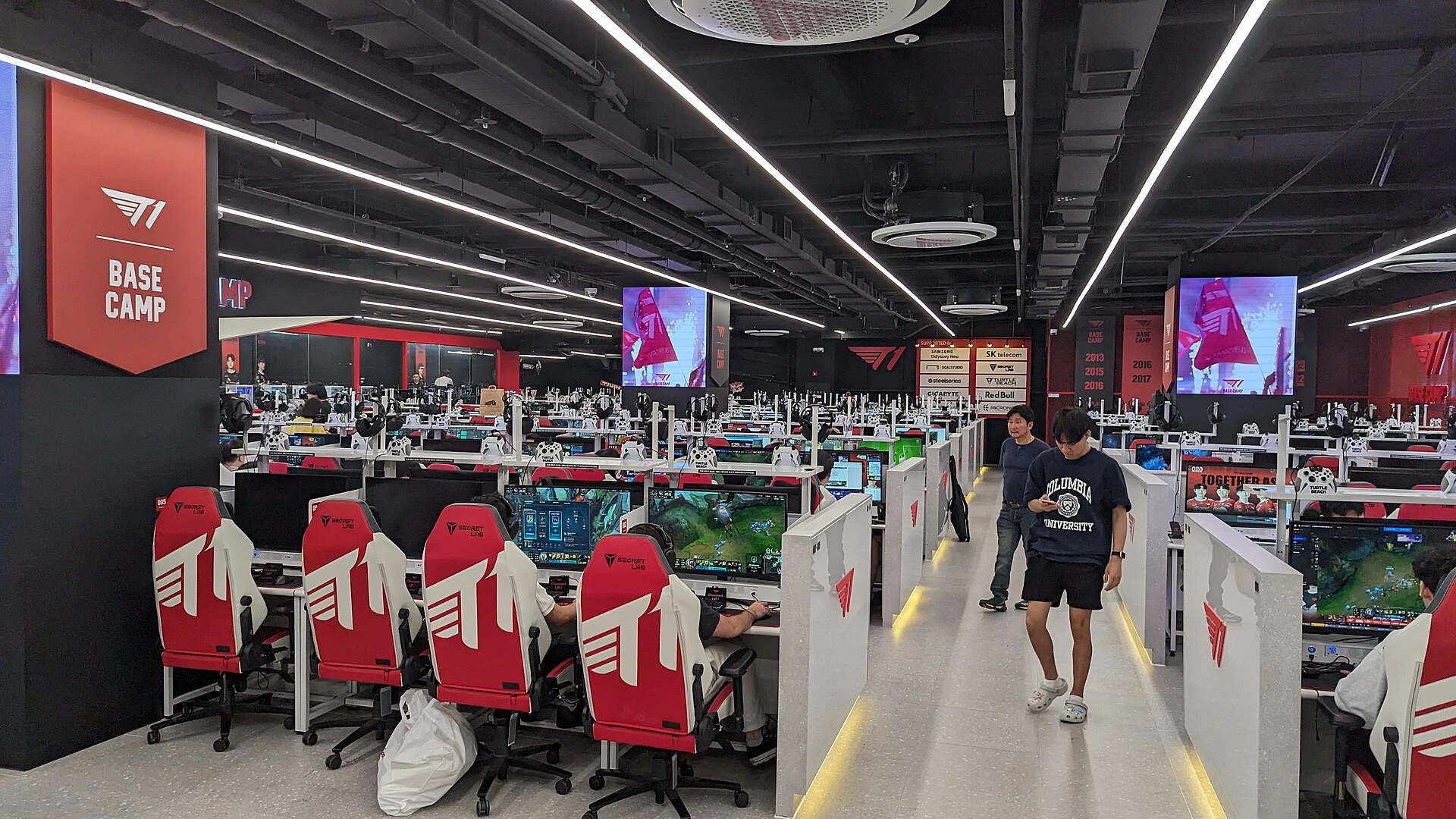
A Korean PC bang is not simply an internet café with instant noodles behind the counter. In many branches, food is built into the same system as the gaming time: sit down, log in, open the on-screen menu, choose a dish, and keep playing until a staff member brings it to your station. That quiet handoff is why a first visit can feel less like renting a computer and more like entering a small restaurant whose tables happen to have gaming PCs.
The menu is part of the experience, but there is no single national PC bang menu or ordering system. A premium esports venue in Seoul, a neighborhood branch, and a small late-night room may have very different kitchens, prices, payment methods, languages, and food hours. Treat the steps below as a pattern to recognize, then follow the interface and staff instructions in the branch you actually visit.
The basic loop: seat, screen, kitchen, seat
Most first-time visitors begin by buying time as a member or non-member, receiving or creating a login, and choosing an open station. Once the session is running, look for a food, snack, shop, or order button in the PC bang's launcher or top menu. The label may be only in Korean, and the menu can open in a separate window over the game.
A typical order flow looks like this:
- Open the food or shop menu on the computer.
- Choose a category such as noodles, rice, fried snacks, toast, coffee, or cold drinks.
- Check the item, quantity, spice level, and any add-ons shown on screen.
- Confirm the seat number and payment method.
- Submit once, then wait at your station for the order.
Payment varies. Some places collect it through the account or kiosk, some take a card at the seat or counter, and some may have other local payment options. Do not keep pressing the order button if the screen is slow. Check for an order history or ask staff before creating duplicates. Tipping is not expected.
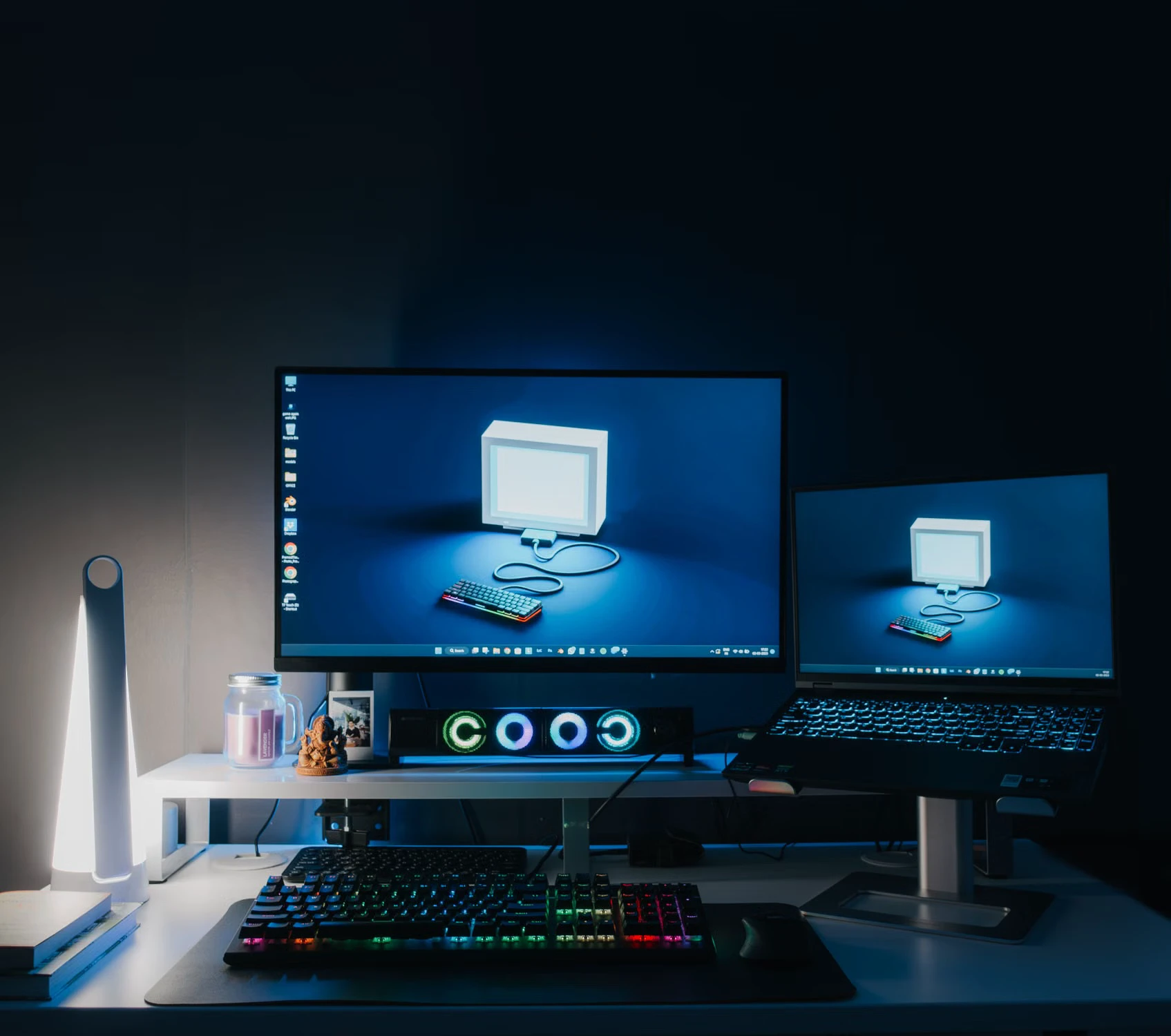
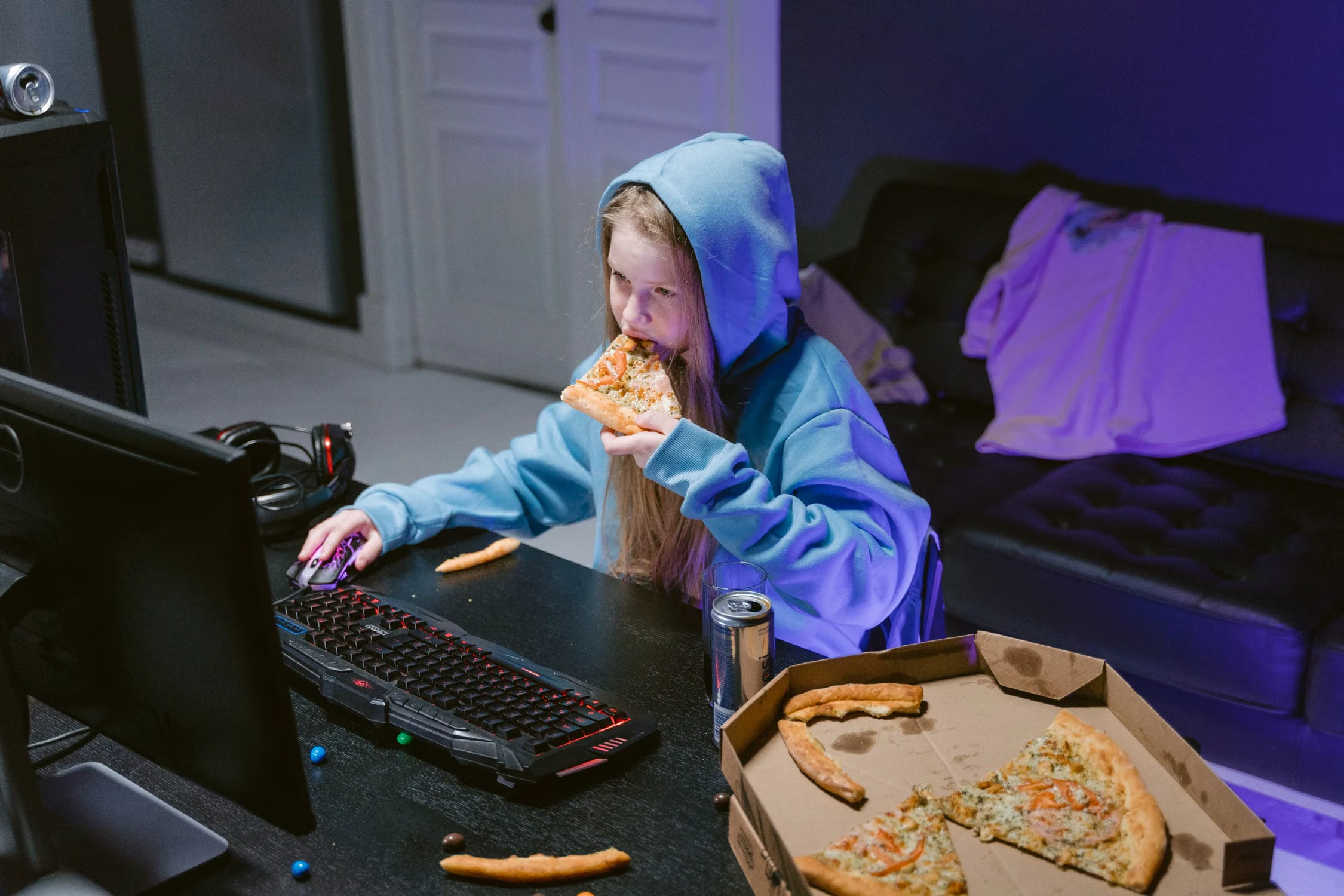
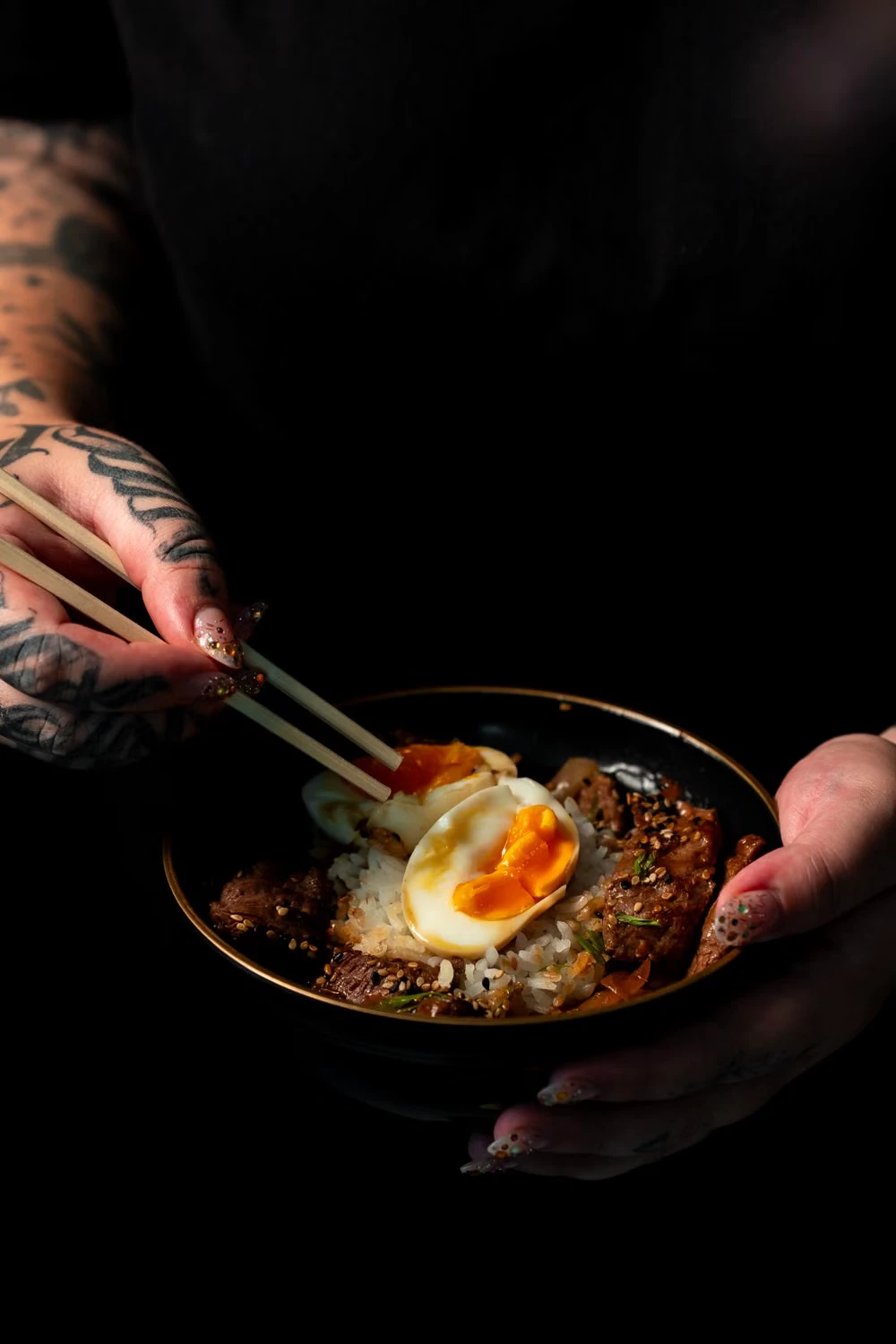
The images show the three pieces of the model: a computer-first workspace, food eaten without leaving the screen, and a full bowl meal rather than a packaged snack. They are illustrative stock scenes; the actual hardware, portion, plating, and menu depend on the PC bang.
Why did the food become so substantial?
The strongest explanation is the design of the visit itself. PC bang customers often stay for hours, play in groups, and do not want to interrupt a match to find dinner. An on-screen order removes the walk to a counter, while seat delivery removes the need to give up a station. Food therefore fits naturally into the service rather than sitting beside it as an unrelated extra.
Competition likely pushed the idea further. This is an inference from the current format, not a universal rule about every operator: when nearby venues can offer similar computers and hourly access, better chairs, cleaner rooms, themed spaces, and more appealing menus become ways to stand out. VISITKOREA's 2025 gaming guide now describes PC bang food as ranging from basic drinks and snacks to Korean fried chicken and even samgyeopsal at some venues. Its guide to T1 Base Camp highlights named smoothies, ramyeon, and a chicken-mayonnaise rice dish as part of the esports venue itself.
The screen also acts like a compact table-order terminal. Photos, categories, add-ons, and a seat number connect the customer directly to a small kitchen workflow. Staff do not need to take every order verbally, and the player does not need to leave the game area. Together, long visits, software ordering, and seat delivery make a broader menu operationally useful.
What is actually popular?
Ramyeon remains the clearest symbol because it is fast, aromatic, and easy to eat between games. Depending on the branch, it may come with egg, cheese, dumplings, rice cake, or another topping. But modern menus frequently go beyond noodles. You may see fried rice, rice bowls, tteokbokki, dumplings, fried chicken bites, French fries, sausages, toast, hot dogs, coffee, ades, smoothies, and desserts.
Order for the branch, not for a viral checklist. A place with a small kitchen may do one noodle dish well and rely on frozen fried snacks; a flagship venue may offer themed drinks and plated meals. Menu photos are a guide, not a guarantee that the finished dish will look identical. Prices and availability can change, and a 24-hour PC bang does not necessarily run its full kitchen all night.
For a first order, choose one item that is easy to handle around a keyboard. Ramyeon is iconic but brings hot broth close to electronics. A rice bowl can be filling but may need two hands. Fries, dumplings, or toast are easier to share, although oily fingers and gaming gear are not a good combination. Keep napkins nearby and move drinks away from the mouse.
Food is tied to Korean gaming culture
Korea's PC bangs helped turn online gaming into a shared local activity rather than something done only at home. Korea.net's current overview of gaming culture notes that early esports competitions grew from PC bangs into professional leagues and broadcasts. The Korea Tourism Organization presents today's PC bangs alongside arcades, esports arenas, and team-branded venues, which shows how the room now sits between neighborhood utility, social space, and spectator culture.
Food supports that social role. Friends can queue together, eat without breaking the session, compare menu choices, and stay through several matches. At a branded venue, a player's recommended drink or a game-themed dish can work almost like a collaboration café menu. At an ordinary neighborhood branch, the same idea is quieter: ramyeon, a rice bowl, and an iced drink simply make a long evening self-contained.
Recent traveler reports in 2026 consistently describe the food-order button and delivery to the desk as one of the memorable parts of a first visit. Those reports are useful for understanding the experience, but details such as hourly price, cash acceptance, English support, and exact food choices are branch-specific and can change.
A careful first order for visitors
Use translation on your phone before confirming anything you do not understand. Check whether an option is a topping, a size change, a cooking style, or a separate product. If you have food allergies or dietary restrictions, do not rely on a menu photo or automatic translation alone. Shared fryers, sauces, broths, and preparation areas may not be explained on screen; ask staff, and choose another meal if the answer is unclear.
Also protect your accounts on a shared computer. Use two-factor authentication where practical, never save a password or card, sign out of game launchers and browsers, and check that your session has ended before leaving. Do not install workarounds or disable the PC bang's management software.
Basic courtesy keeps the system working:
- keep soup and open drinks clear of the keyboard and cables
- use headphones and keep your voice appropriate for the room
- do not bring outside food unless the venue allows it
- place trays and waste where the staff or signs direct
- tell staff promptly if something spills or the order is wrong
So, is it really a restaurant?
Legally and operationally, every venue is different, so the useful answer is cultural rather than categorical. A Korean PC bang still sells computer time first. Yet the combination of long sessions, social gaming, on-screen ordering, a working kitchen, and delivery to a numbered seat gives food the role that table service would have in a small casual restaurant.
That is why the menu is worth trying even if you already ate elsewhere. Order one manageable dish or drink, watch how the software hands the request to the kitchen, and notice how little the game session has to pause. The food is not an accessory to the PC bang anymore; in many places, it is one of the features that makes the room feel complete.
Sources and further reading
- Korea for gaming enthusiasts: from arcades to esports arenas — VISITKOREA
- Korea, the origin and center of esports — VISITKOREA
- Playable Hallyu and the growth of Korean esports — Korea.net
- Recent community guide for PC bang visitors
- Recent traveler discussion of PC bang food and screen ordering
- Traveler tips for using a PC bang and ordering food
Sources and image credits
- Korea for gaming enthusiasts: from arcades to esports arenas — VISITKOREA — Checked for guide details or image attribution.
- Korea, the origin and center of esports — VISITKOREA — Checked for guide details or image attribution.
- Playable Hallyu and the growth of Korean esports — Korea.net — Checked for guide details or image attribution.
- Recent community guide for PC bang visitors — Checked for guide details or image attribution.
- Recent traveler discussion of PC bang food and screen ordering — Checked for guide details or image attribution.
- Traveler tips for using a PC bang and ordering food — Checked for guide details or image attribution.
Last updated


