
Why Do Koreans Rebuild 30-Year-Old Apartments?
Thirty years is a legal aging threshold for many Seoul apartment buildings, not an engineering expiration date. Reconstruction still depends on a broad diagnosis, planning approval, owner agreement, allowable floor area, construction costs, and the appeal of a new complex.
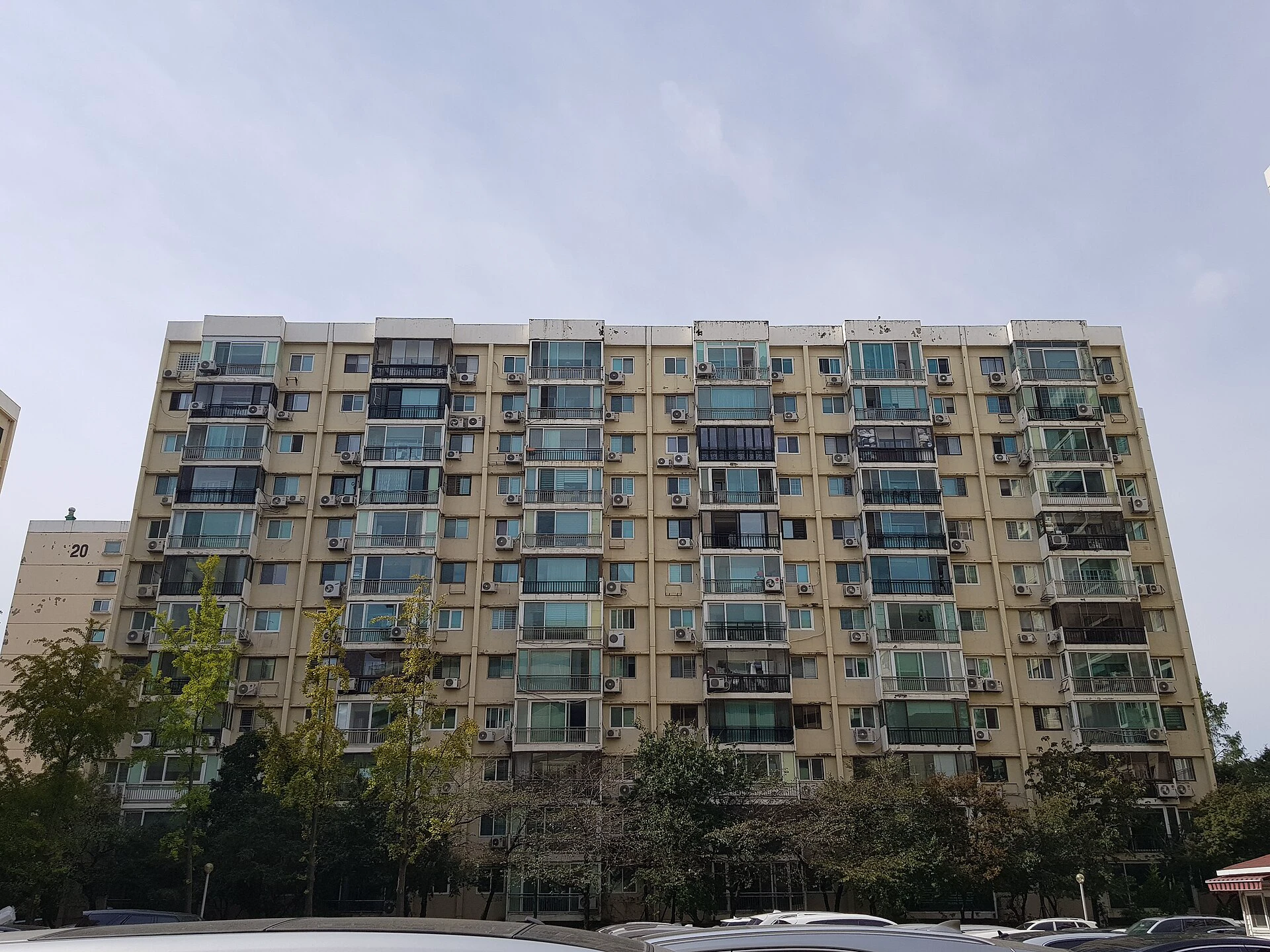
A 30-year-old Korean apartment can be described as “old” and a reconstruction candidate even while thousands of people live in it normally. The missing distinction is that 30 years is a legal aging threshold, not a structural expiration date or permission to demolish tomorrow. Rebuilding happens only when that threshold meets a favorable diagnosis, an approvable plan, workable owner costs and enough demand for the new complex.
Reconstruction, or jaegeonchuk (재건축), therefore combines several separate questions: Does the complex meet the legal definition of old or defective? What does its diagnosis say? Can the city approve a denser or otherwise workable plan? Will owners agree to the costs? And will a new apartment be valuable enough to justify years of disruption?
What the 30-year mark actually does
Korea's national enforcement decree lets each province or major city set an age within a 20-to-30-year range for one category of “old or defective building.” Seoul's current ordinance uses 30 years for reinforced-concrete, steel-concrete, steel-frame and steel apartment buildings. In plain English, reaching that age can satisfy one threshold needed to enter the reconstruction system.
It does not mean the building has been declared unsafe. The legal definition also covers circumstances involving equipment or exterior deterioration, seismic shortcomings, or a case where rebuilding is expected to improve the building's usefulness relative to continued repair. Age is one route into that definition, not a countdown clock attached to every apartment.
The process also changed in June 2025. Owners no longer always have to finish the diagnosis before early planning can begin. The Ministry of Land, Infrastructure and Transport explained the reform as allowing apartments of 30 years or more to start the process without first passing the former safety diagnosis. But the current Urban and Residential Environment Improvement Act still requires a reconstruction diagnosis between the planning stage and approval of the project implementation plan. Starting is not the same as clearing the project.
The diagnosis is broader than structural safety
The current law deliberately calls it a reconstruction diagnosis rather than only a safety diagnosis. It evaluates four broad areas: suitability of the living environment, structural safety, building finishes, and the age or condition of equipment. The national diagnosis criteria effective from June 4, 2025 implement that wider approach.
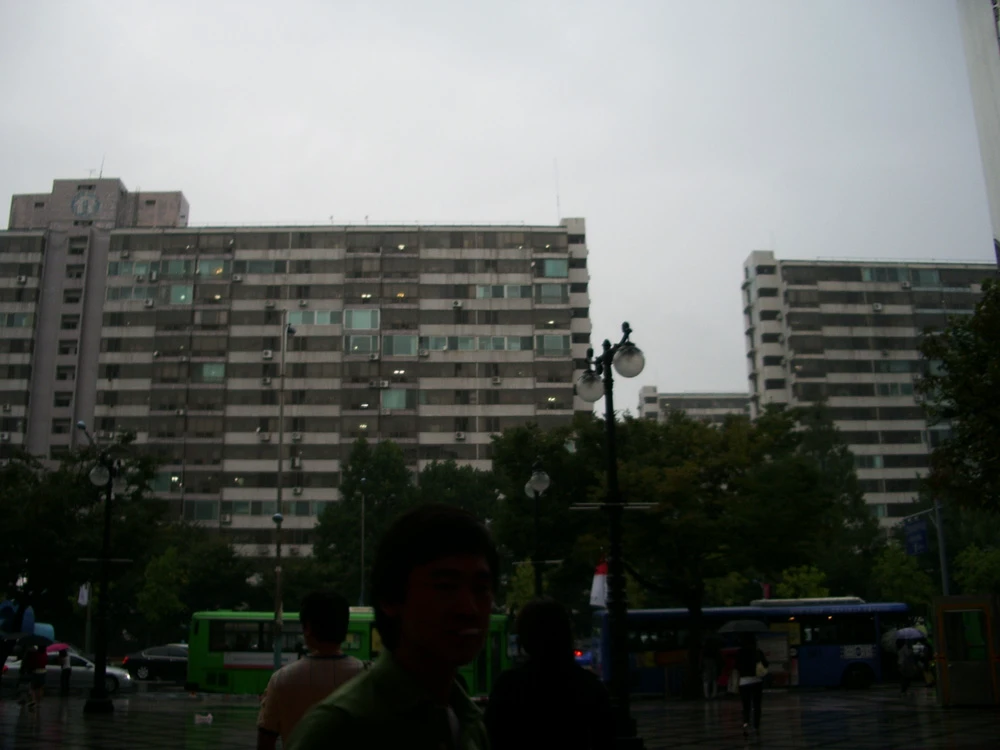
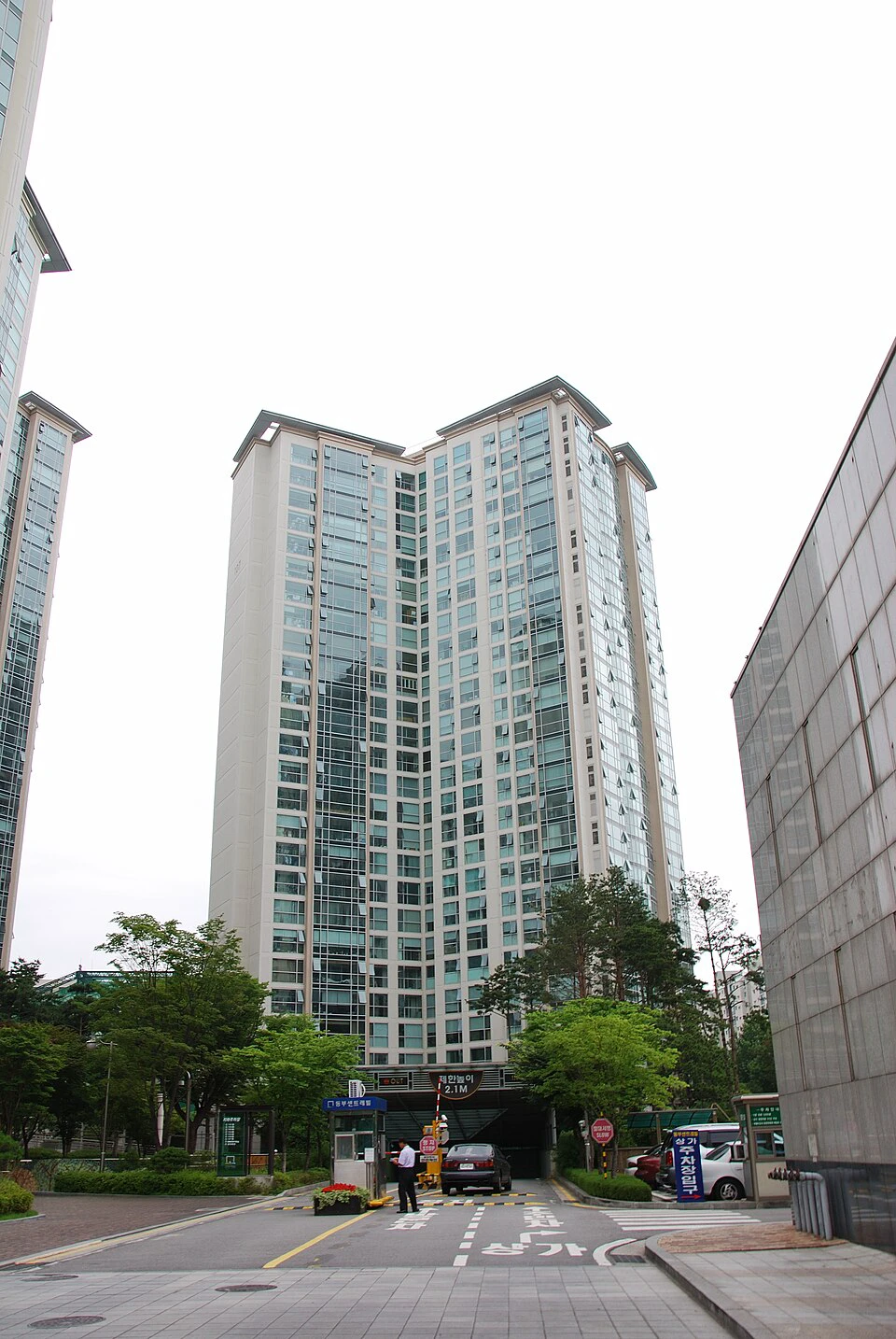
These two Seoul complexes illustrate the difference the market sees. The first is Jamsil Phase 5, a mid-1970s complex that was modern for its era. The second shows a controlled vehicle entrance below a newer Daechi-dong tower. Neither photo proves that one building is unsafe or the other problem-free. They show how parking access, circulation, exterior systems and the arrival experience can change across apartment generations.
An older building may be structurally serviceable yet still have narrow parking spaces, cars crowding surface roads, aging pipes, limited accessibility, small elevators, inefficient windows, or layouts that are expensive to improve one household at a time. Repairs can address many defects. Reconstruction becomes attractive when owners believe replacing the whole complex can solve shared-site problems that piecemeal renovation cannot.
Land and floor-area ratio shape the business case
The key economic idea is the floor-area ratio, usually abbreviated FAR: the total floor area of the buildings compared with the land area. A low-rise or low-density complex on valuable urban land may be able to add homes if the city's plan and legal limits allow it. Selling some new units to non-owner buyers can help pay for rebuilding.
That is why two equally old complexes can have very different prospects. A site with room to add approved floor area, a simple ownership structure and strong demand may look feasible. A site that is already dense, faces height or infrastructure limits, or requires costly public facilities may not. The national act requires a redevelopment plan to address FAR, height, facilities and the estimated amount owners will have to contribute.
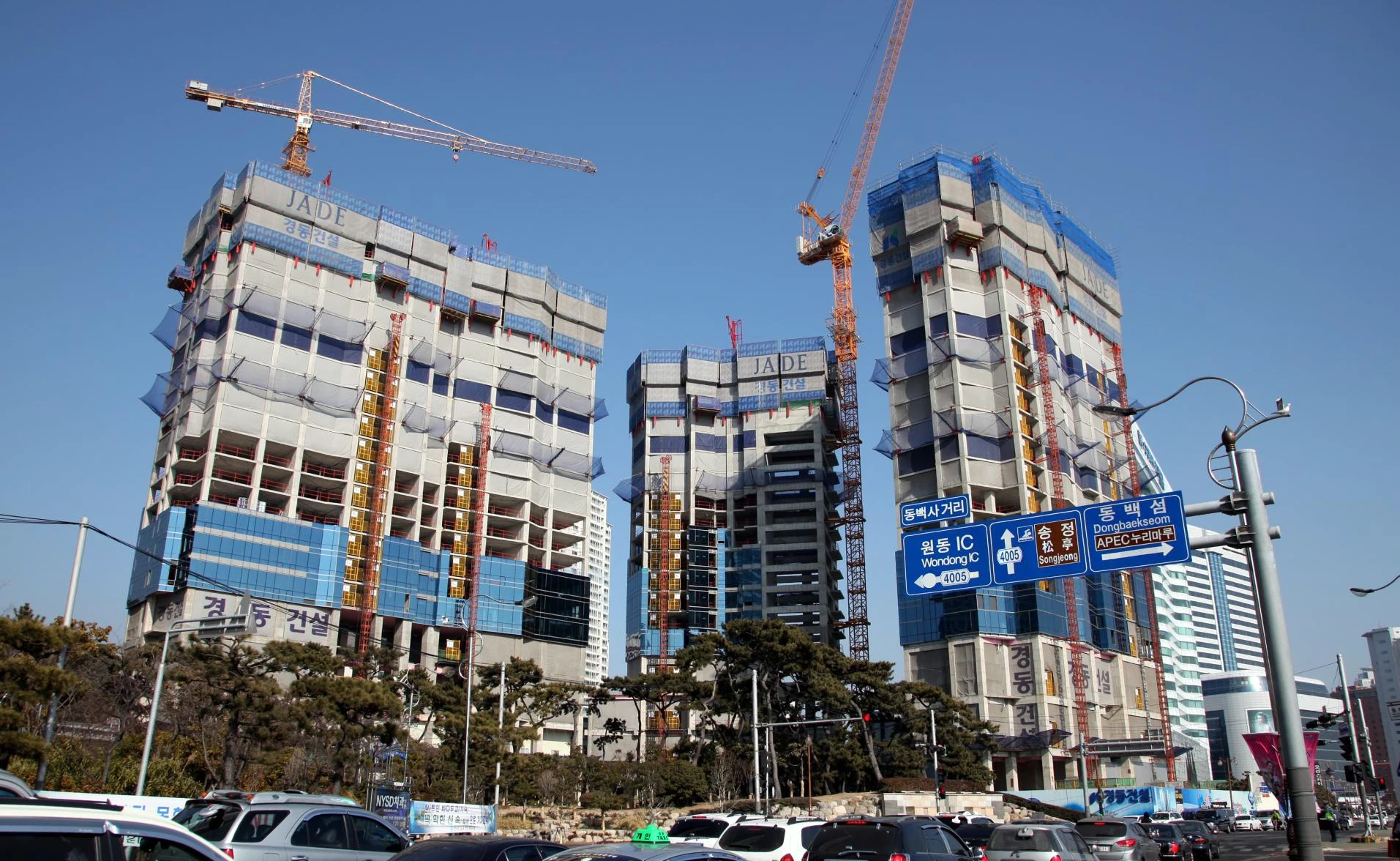
More floors are not free money. Design, demolition, temporary relocation, financing, public contributions, infrastructure and construction all cost money. If costs rise or expected sales revenue falls, each owner's additional contribution can increase. Owners may then disagree about unit sizes, the builder, schedule or whether to continue. A building can be legally old enough and still remain unchanged for years because the numbers or owner consent do not work.
Why “new apartment” has its own premium
A rebuilt complex can offer features buyers and residents associate with current Korean apartment living: more underground parking, separation of cars and pedestrians, step-free access, newer insulation and windows, parcel rooms, security systems, landscaped common space, gyms, lounges or children's facilities. The exact package varies by project, and more amenities also mean more space to maintain and potentially higher fees.
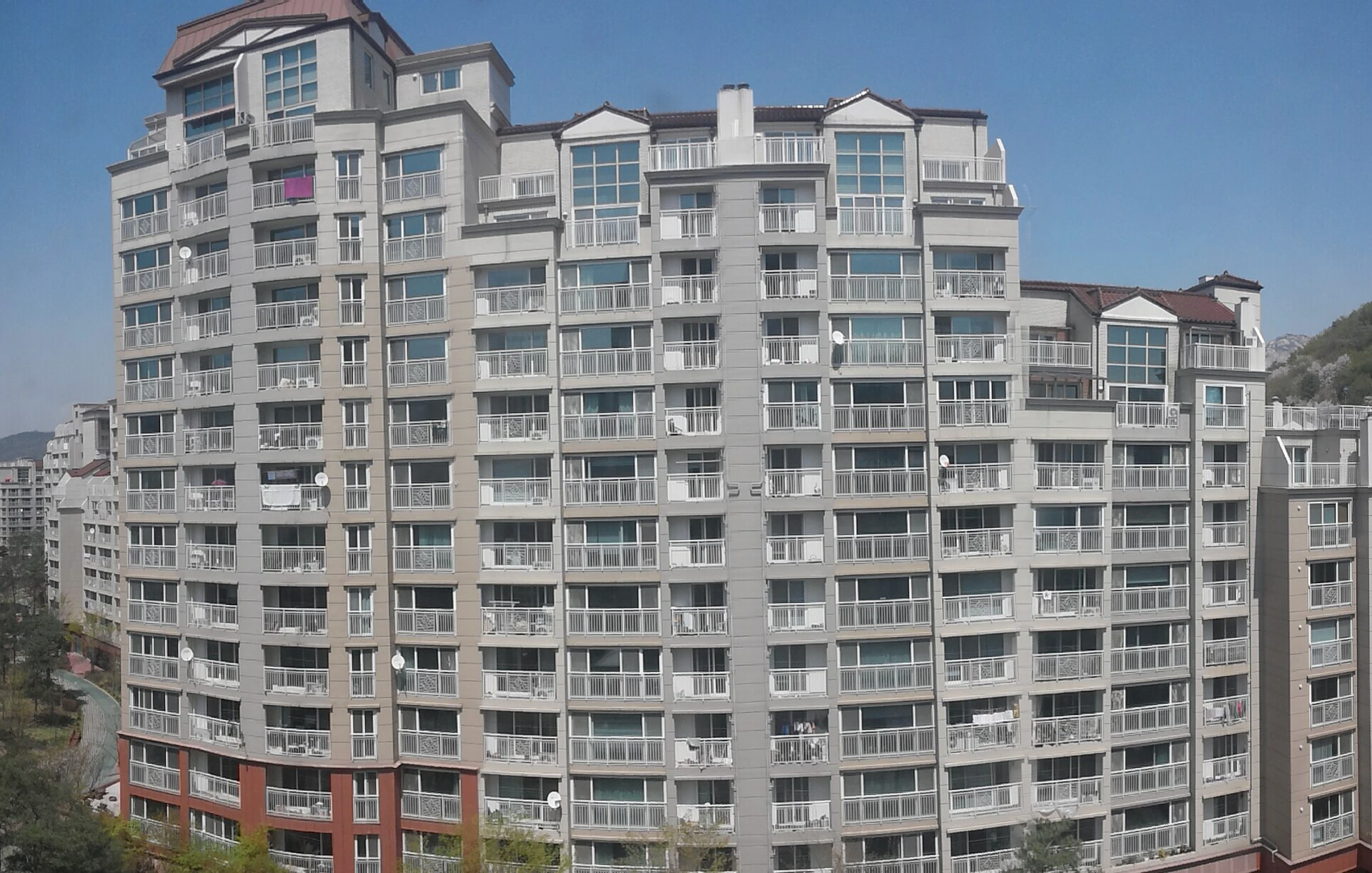
The preference is therefore partly practical and partly a market signal. A new apartment offers a fresh warranty period, current layouts and a complex-wide design that is easier to understand than decades of individual repairs. Brand, school district, transit and neighborhood expectations can add to the price. None of this proves that the old apartment was uninhabitable. It explains why owners may compare the value of maintaining an aging block with the value of receiving a new unit after a long, risky project.
Why a 30-year candidate can wait for years
A reconstruction headline often reports the most exciting milestone and skips the queue behind it. A typical project still has to move through planning and district designation, owner organization, association authorization, project implementation approval, the plan that allocates new units and costs, relocation, demolition, construction and completion. Some stages can now overlap, but they do not disappear.
For Seoul projects, the city's official Cleanup information service is a better starting point than a sales listing for the recorded stage and disclosed documents. Project-specific notices from the district office and association matter more than a phrase such as “reconstruction expected.” Rules can also change while a project is underway.
What to check before renting or buying
If a listing emphasizes reconstruction, separate the present home from the future project. Ask for evidence of the exact stage rather than accepting the building's age as proof.
- Has a formal reconstruction diagnosis been completed, and what did the authority decide?
- Is there an approved redevelopment plan and designated district, or only an owner proposal?
- Has an association been authorized, and are current documents publicly available?
- What is the latest estimated owner contribution, what assumptions produced it, and what is excluded?
- If you will rent, is relocation actually scheduled within your lease term, or merely discussed?
- Would the apartment still suit your budget and daily life if reconstruction is delayed for years?
Treat future value, timing and owner contributions as uncertain. A 30-year mark can open a door, but diagnosis, urban planning, land economics, financing and owner agreement decide whether the complex walks through it. That is the real reason Korea can talk about rebuilding a relatively young apartment without claiming that concrete lasts only three decades.
Photo credits
- Feature, 1976 Hyundai Apartments in Apgujeong: ZbnKhl via Wikimedia Commons, CC BY-SA 4.0.
- Jamsil Phase 5: InSapphoWeTrust via Wikimedia Commons, CC BY-SA 2.0.
- Daechi-dong apartment entrance: Gapo via Wikimedia Commons, public domain.
- Eunpyeong New Town apartment: Xjoony via Wikimedia Commons, CC BY-SA 3.0.
- Haeundae construction: Jinho Jung; edit by Radiant Urbanism via Wikimedia Commons, CC BY-SA 2.0.
Sources and image credits
- national enforcement decree — Checked for guide details or image attribution.
- Seoul's current ordinance — Checked for guide details or image attribution.
- Ministry of Land, Infrastructure and Transport explained the reform — Checked for guide details or image attribution.
- current Urban and Residential Environment Improvement Act — Checked for guide details or image attribution.
- official Cleanup information service — Checked for guide details or image attribution.
- ZbnKhl via Wikimedia Commons — Checked for guide details or image attribution.
- InSapphoWeTrust via Wikimedia Commons — Checked for guide details or image attribution.
- Gapo via Wikimedia Commons — Checked for guide details or image attribution.
- Xjoony via Wikimedia Commons — Checked for guide details or image attribution.
- Jinho Jung; edit by Radiant Urbanism via Wikimedia Commons — Checked for guide details or image attribution.
Last updated


