
Why K-Dramas Use So Many Hospital Scenes
Hospitals give K-dramas instant stakes, forced family encounters, visible acts of care, and role reversals. Learn to separate those story functions from everyday Korean healthcare.
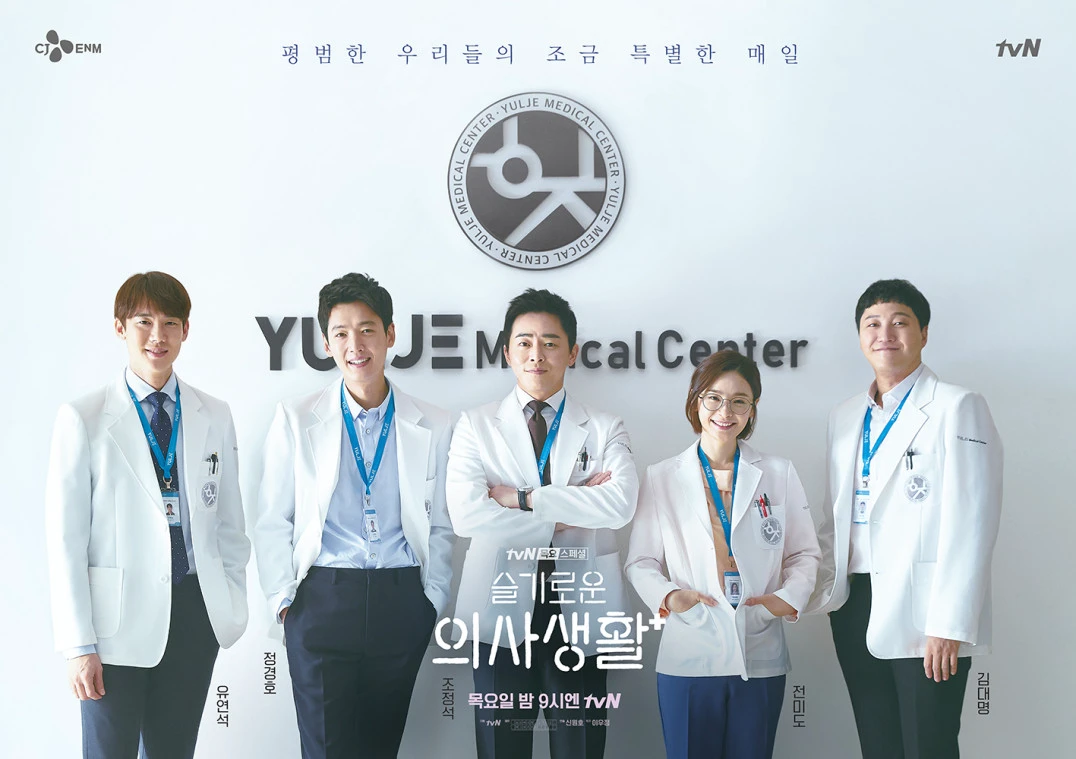
A collapse, a hard cut to white corridor lights, and a family staring at operating-room doors: K-dramas can turn almost any genre into a hospital story for half an episode.
The setting appears so often because it does several jobs at once. It creates stakes immediately, gathers people who have been avoiding one another, makes care visible, and suspends the usual power hierarchy. Real healthcare use in Korea helps the setting feel familiar, but the dramatic version is not a census of everyday medical life.
The answer in 30 seconds
- Danger needs little explanation. Viewers understand an ambulance, monitor, or surgery light before anyone describes the diagnosis.
- The waiting room assembles the cast. Relatives, ex-partners, rivals, and coworkers can plausibly arrive at the same place.
- Care becomes an action. Who comes, stays, calls the family, brings food, or signs a form can reveal a relationship faster than dialogue.
- Status temporarily stops protecting people. An executive, parent, or senior colleague must wait and accept help.
- The edit can hide information. A closed door, an unconscious witness, or a doctor’s pause can carry a cliffhanger.
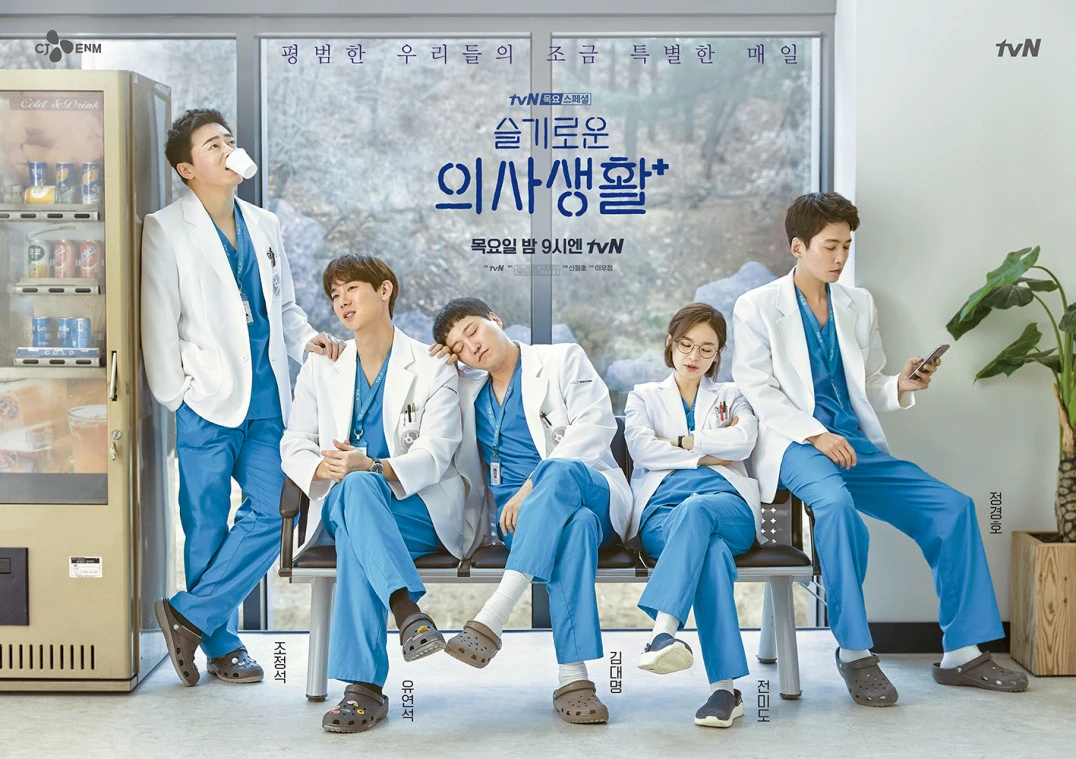
These are narrative functions, not a claim that every Korean series uses hospitals in the same way. A family drama may use an admission to reunite three generations; a romance may use a minor injury to expose affection; a thriller may use an unconscious witness to delay a revelation.
The hospital gives unsaid feelings a visible form
Many K-drama conflicts depend on what characters cannot say directly. A hospital changes what they are allowed to do. An estranged child has a socially acceptable reason to return. A proud parent cannot completely conceal vulnerability. A restrained romantic lead can show devotion through an overnight vigil before naming the feeling.
The emotional question is often not “Which treatment will work?” but “Who came, who stayed, and who was called first?” That is why food, a blanket, a paid bill, or a seat beside the bed can matter more to the scene than a medical explanation.
The waiting room also produces forced stillness. At work or at home, a character can leave an uncomfortable conversation. While waiting for a result, the group has nowhere useful to go. The pause creates room for an apology, an overheard secret, or a new definition of family.
Illness rearranges rank
K-dramas frequently build tension around hierarchy: rich and poor, parent and child, senior and junior, employer and employee. Illness does not erase those differences, but it can make them temporarily useless. A chairperson still waits for a result. A usually obedient child may have to make a decision. A competent boss may need help walking.
That reversal exposes character quickly. Money and connections may affect the plot, yet they cannot guarantee a diagnosis or outcome. The setting can also force morally charged choices—whether to tell the truth, consent, donate, forgive, or keep vigil—that alter several relationships at once.

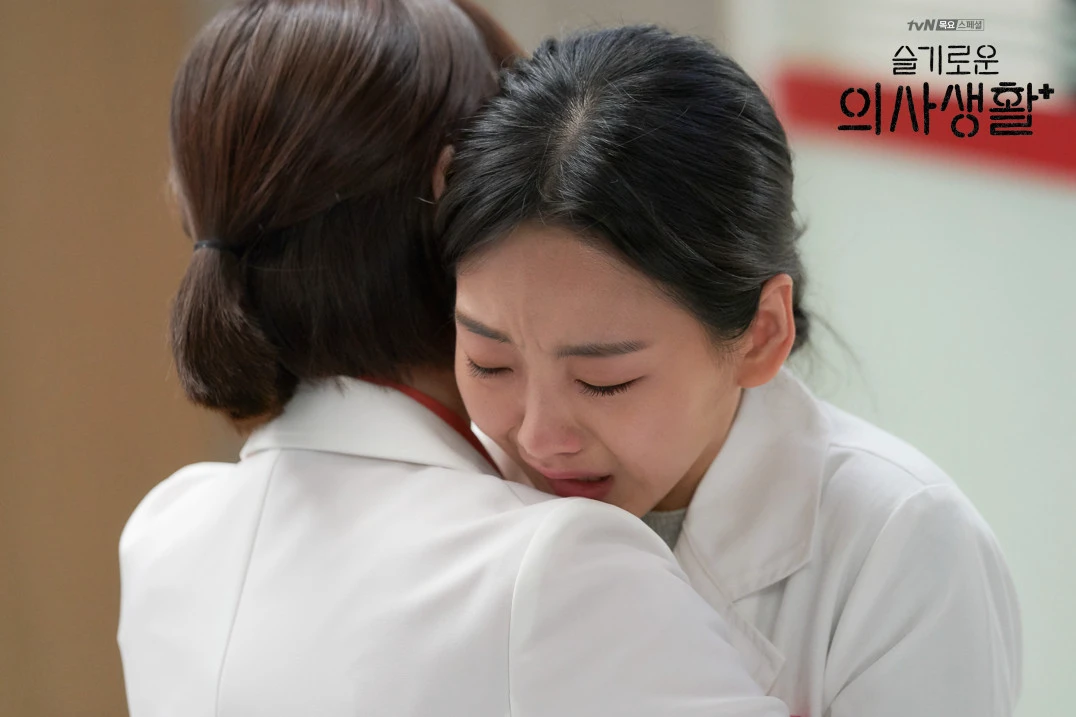
Why television makes the trope feel universal
Television selects change, not an average day. A routine consultation followed by an uneventful prescription may be common and still offer no reason to occupy ten minutes of a drama. A collapse, uncertain diagnosis, or operation can redirect an entire story, so those cases are overrepresented.
Editing increases the distortion. One sequence may jump from a neighborhood visit to a scan, specialist, and inpatient room while omitting the referral, queue, paperwork, cost discussion, and ordinary recovery between them. White coats, alarms, monitors, and double doors communicate urgency even when viewers know little about the specialty involved.
Watch the scene as a screenwriter’s compression rather than a healthcare itinerary. “A character went to the hospital” does not tell you whether the story has shown a clinic consultation, emergency assessment, observation, procedure, or long admission.
Reality check: frequent consultations are not frequent crises
There is a real statistic behind the familiarity of seeing a doctor in Korea. The OECD’s *Health at a Glance 2025* consultation chapter reports 18 in-person doctor consultations per person in Korea in 2023, versus an OECD average of 6.5. It also says the measure includes contacts in doctors’ clinics, community health centers, and hospital outpatient departments, and notes that same-day primary care without an appointment is common.
That figure does not mean 18 emergency visits or admissions. It combines different kinds of face-to-face physician contact, and the OECD warns that coverage varies between countries. Use it to understand why medical visits can feel ordinary in Korean life, not to validate the frequency of dramatic surgery and bedside vigils.
Cost is also more layered than a subtitle may suggest. The National Health Insurance Service’s current benefits page distinguishes inpatient and outpatient cost sharing and sets different outpatient shares by institution level. Its current table lists 20% for covered inpatient treatment in the general case, while outpatient shares range from 30% at clinics to 60% at tertiary hospitals, with important condition-, patient-, and service-specific exceptions. Non-covered services can remain outside those percentages.
The practical point is simple: National Health Insurance covers a wide range of care, but “covered” does not mean every visit is free or that every facility has the same patient cost.
“병원” may be smaller than the English subtitle sounds
The official Basic Korean Dictionary gives *병원 (byeongwon) the English senses “hospital; clinic.” In ordinary conversation, someone may say 병원에 가다*—literally “go to the 병원”—for a neighborhood medical visit. A subtitle that chooses “hospital” can make the destination sound larger or more serious than the scene’s actual facility.
Use what appears on screen:
- A small neighborhood practice may handle a cold, rash, fever, or minor pain.
- An outpatient department can be inside a larger hospital without the character being admitted.
- An emergency department evaluates urgent problems; arrival there does not guarantee surgery or a long stay.
- A tertiary hospital is a higher-level institution, not the automatic setting for every routine complaint.
Facility labels, referral rules, coverage, and cost sharing are technical and can change. Do not use a drama scene—or this culture guide—to decide where to seek care.
Medical dramas changed, but the hospital stayed useful
The Korea Herald’s overview of Korean medical dramas describes a shift from surgery-centered spectacle toward stories about teamwork and everyday lives. It is media reporting rather than healthcare guidance, but it helps explain why a modern hospital series may feel less like a procedural and more like an ensemble drama.
The official tvN introduction to *Hospital Playlist* states that the series is a story of ordinary lives in a place where birth, aging, illness, and death meet. Its five doctors are presented as ordinary people trying to do the work in front of them. That premise makes the hospital a crossroads for patients, families, friendship, fatigue, and small acts of care—not merely a backdrop for spectacular operations.
This does not make Hospital Playlist a documentary. It makes it a clear example of the trope’s emotional logic: medicine supplies the pressure, while relationships supply the story.
Decode the next hospital scene with five questions
- What facility has the drama actually shown? A clinic room, outpatient department, emergency room, and inpatient ward are not interchangeable.
- Is the character admitted? A consultation, several hours of observation, and a multi-day stay carry different implications.
- What relationship becomes visible? Notice who arrives, stays, pays, decides, or is excluded.
- What changed in the hierarchy? Ask who has lost control and who has gained responsibility.
- What did the edit skip? Referral steps, routine results, costs, recovery, and follow-up may exist outside the frame.
If the medical details are thin but every conflicted relative is in one room, the scene is probably using the hospital as a family-pressure chamber. If the camera follows handovers, fatigue, and small decisions across many patients, the drama may be using the institution as a workplace and a miniature society.
Keep the screen and the real trip separate
This guide explains a storytelling convention; it is not medical or insurance advice. Healthcare access, referral requirements, coverage, and patient costs depend on the situation and may change. For real care, use current official information and qualified local help rather than copying a character’s route through a fictional hospital.
If luggage gets in the way of a clinic visit or a day of filming-location sightseeing, arrange a nearby handoff through Delivery Spot only after your actual care and travel plan is settled.
Healthcare figures and official program information were rechecked on August 12, 2026.
Sources and image credits
- Delivery Spot waiting-area still — Web-ready editorial still from Hospital Playlist; program and imagery © CJ ENM/tvN.
- Delivery Spot corridor-embrace still — Web-ready editorial still from Hospital Playlist; program and imagery © CJ ENM/tvN.
- Delivery Spot comfort scene still — Web-ready editorial still from Hospital Playlist; program and imagery © CJ ENM/tvN.
- OECD — Consultations with doctors, *Health at a Glance 2025* — 2023 consultation count, OECD comparison, included settings, and same-day primary-care context; rechecked August 12, 2026.
- National Health Insurance Service — Insurance Benefits — Current coverage categories, institution-level cost-sharing table, exceptions, and 2026 ceiling information; rechecked August 12, 2026.
- The Korea Herald — Evolution of Korean medical dramas — Media-history context, not healthcare guidance.
- tvN — *Hospital Playlist* program introduction — Official premise and description of the five doctors; rechecked August 12, 2026.
- National Institute of Korean Language — 병원 — Official Basic Korean Dictionary entry giving “hospital; clinic.”
- tvN — *Hospital Playlist* official photo gallery — Official program stills and promotional imagery; image-rights credit for the cover and body stills.
- Delivery Spot cover image — Web-ready Hospital Playlist promotional still; program and imagery © CJ ENM/tvN.
Last updated


