
Where to Stay in Seoul for Easy Transport: Myeongdong, Hongdae, Jongno or Gangnam?
Jongno 3-ga is the most balanced first-trip base; choose Hongdae for airport rail, Myeongdong for central shopping, or Gangnam for south-side plans.
For a first Seoul trip built around palaces, markets, and neighborhoods north of the Han River, a hotel near Jongno 3-ga is usually the easiest all-round base. Choose Hongdae when airport rail and west-side evenings matter most, Myeongdong for central shopping with simple north–south travel, and Gangnam only when much of your itinerary is already south or southeast.
The neighborhood name is only a starting point. Compare the exact hotel entrance, the station entrance you will use, the lines there, and the transfers on your three busiest mornings before you book.
The four station anchors at a glance
The markers below are station anchors, not neighborhood boundaries. The connecting line is only a geographic comparison; it is not a recommended walking route or a transit itinerary. Use the map link as a handoff, then check live public-transport directions in NAVER Map or KakaoMap. If this is your first visit, read why Google Maps alone is not enough in Korea.
- 1Myeongdong Station
- 2Hongik University Station
- 3Jongno 3-ga Station
- 4Gangnam Station
- Myeongdong — choose it when: You want central shopping, food, Namsan, and an easy Line 4 link to Seoul Station. Main caution: “Myeongdong” hotels may actually use different nearby stations.
- Hongdae — choose it when: Airport rail, nightlife, and western Seoul have the most weight. Main caution: The station is large; the wrong exit can add a long luggage walk.
- Jongno 3-ga — choose it when: Palaces, markets, Insadong, Ikseondong, and central transfers dominate. Main caution: Street character and hotel access vary block by block.
- Gangnam — choose it when: At least half your important days or a fixed appointment are south of the river. Main caution: Palace-heavy plans create repeated cross-city journeys.
The Seoul TOPIS subway overview was rechecked on August 12, 2026. It identifies Line 2 as the loop connecting Hongik University, the center, Gangnam, and Jamsil; Line 4 as the north–south line through Myeongdong and Seoul Station; and Lines 1, 3, and 5 through the central Jongno corridor. Live times, service changes, and station access still need a same-day map check.
Myeongdong: central and easy to understand
Myeongdong Station is on Line 4. The official Seoul TOPIS subway guide places Myeongdong, Namdaemun Market, Dongdaemun, and Seoul Station on the same north–south line. That makes the area practical for a trip split among shopping, Namsan, Seoul Station, and the historic center.
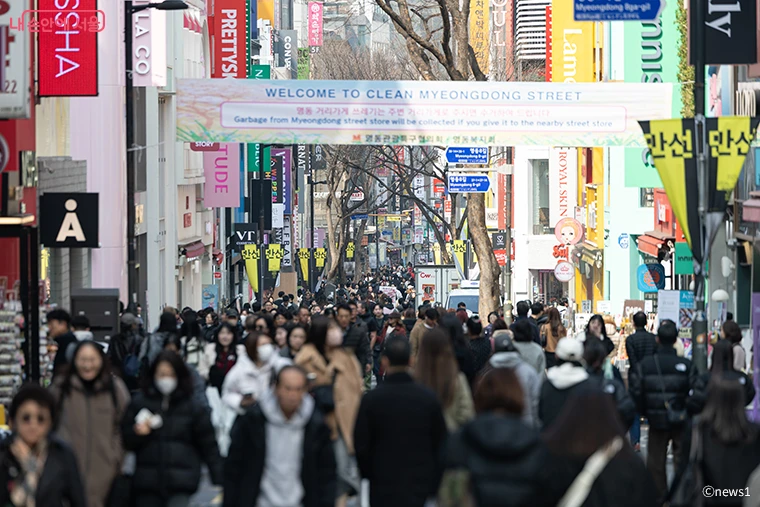
The booking trap is that “Myeongdong” covers several daily gateways. One hotel may be closest to Myeongdong Station on Line 4, another to Euljiro 1-ga on Line 2, and another to Euljiro 3-ga or Chungmuro. Check the real walk from the lobby to the correct entrance, including stairs and crossings. A hotel on the Euljiro side can give more route choices than one deep inside the shopping streets.
Choose Myeongdong when you want a central, familiar base and will use Seoul Station more than once. It is less compelling if most evenings finish in Hongdae or most mornings begin south of the river.
Hongdae: strongest for airport rail and late evenings
Hongik University Station combines Line 2, the Airport Railroad all-stop service, and the Gyeongui-Jungang Line. TOPIS confirms that Line 2 connects Hongik University with City Hall, Euljiro, Gangnam, and Jamsil; the official AREX site is the place to recheck current airport-rail service notices. The combination makes Hongdae the strongest of these four for a direct rail handoff from Incheon or Gimpo and for evenings in western Seoul.
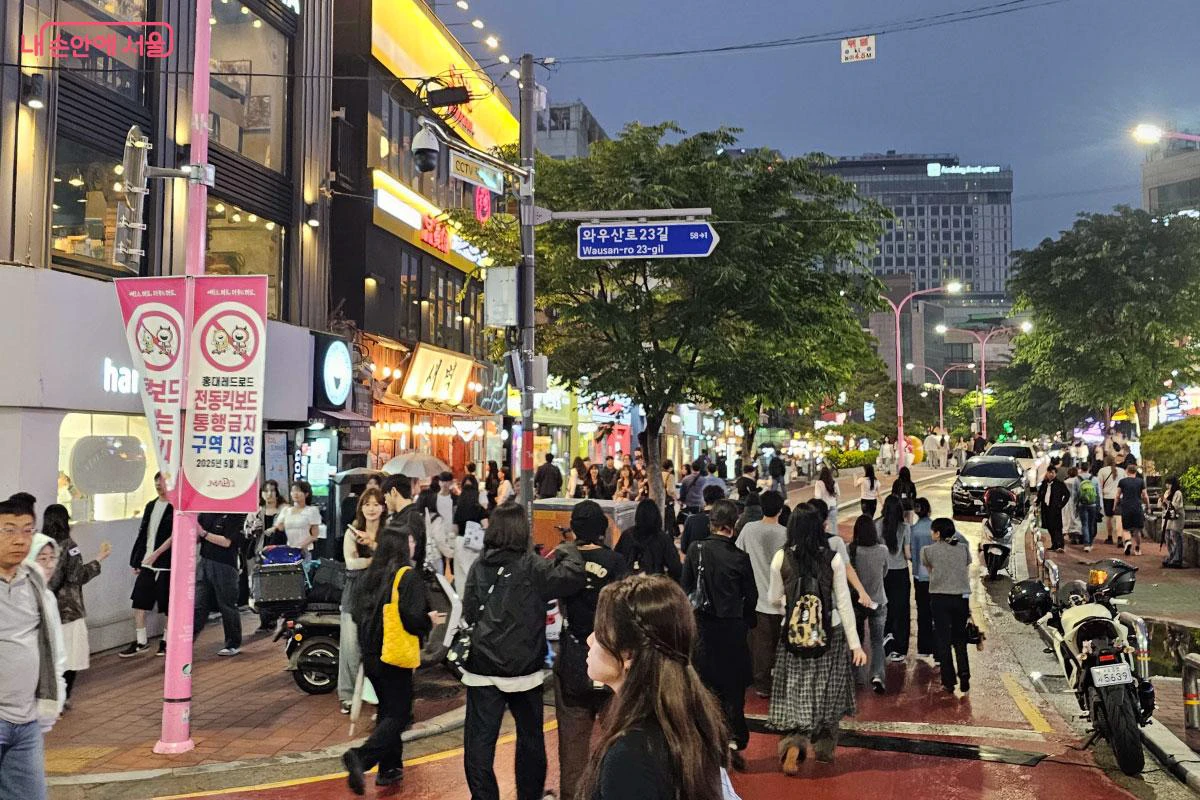
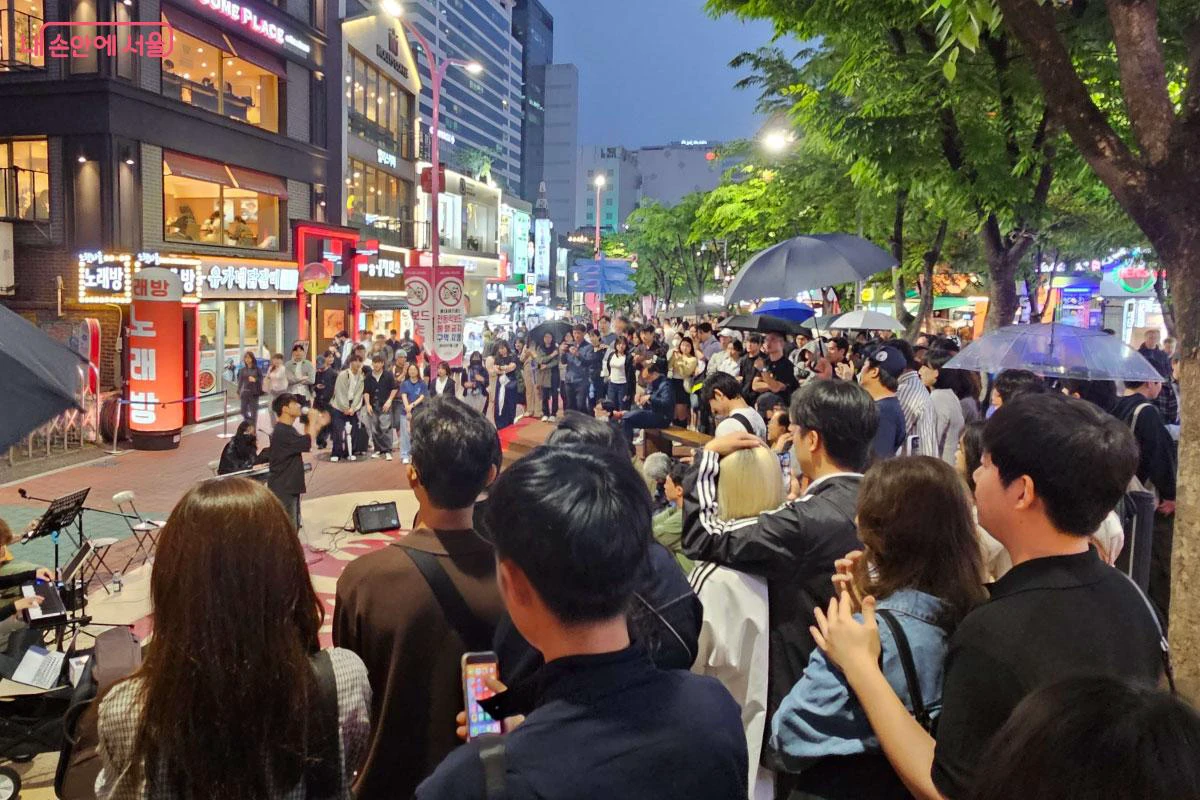
The station complex is large, and a hotel described as “near Hongdae” may still be inconvenient from the platform you use. Check the exact exit, lift path, final street crossing, and luggage walk. A longer walk from the wrong side of the complex can erase much of the airport-access advantage.
Choose Hongdae when arrival and departure simplicity, nightlife, and western neighborhoods matter more than repeated palace-area mornings. It becomes less efficient when most days keep running east or southeast across the city.
Jongno 3-ga: the best all-round historic-center base
Jongno is broad, so use Jongno 3-ga Station as the comparison point. Lines 1, 3, and 5 meet there. TOPIS describes Line 1 through Seoul Station, City Hall, and Jongno; Line 3 through Anguk and Jongno 3-ga; and Line 5 as the east–west line connecting Gimpo Airport with central Seoul and transferring to Lines 1 and 3 at Jongno 3-ga.
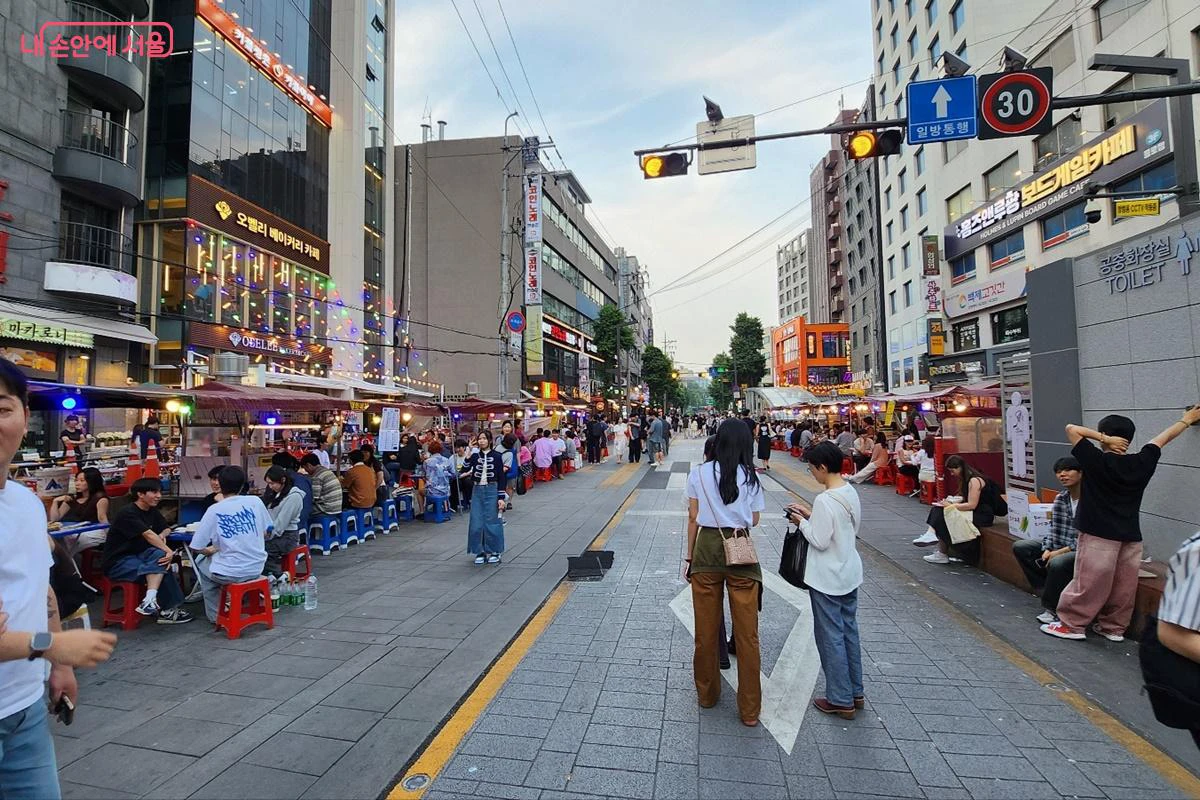
This makes Jongno 3-ga a strong compromise for palaces, Insadong, Ikseondong, markets, Euljiro, and occasional trips farther out. Some days can combine one short ride with walking instead of adding another transfer.
It is not automatically quiet or polished. Street atmosphere changes by block, and a hotel using “Jongno” in its name may rely on a different station. Check the pin, street view, station entrance, and late-evening approach. If a hotel near Euljiro 3-ga offers a shorter walk and equally useful lines, treat it as the same central-base decision rather than insisting on one district label.
Gangnam: convenient when the itinerary is also south
Gangnam Station connects Line 2 and the Shinbundang Line. It is a sensible base for days concentrated around Gangnam, Sinsa, COEX, Jamsil, or appointments elsewhere south and southeast of the river. Restaurants and nightlife around the station also reduce the need for another evening journey.
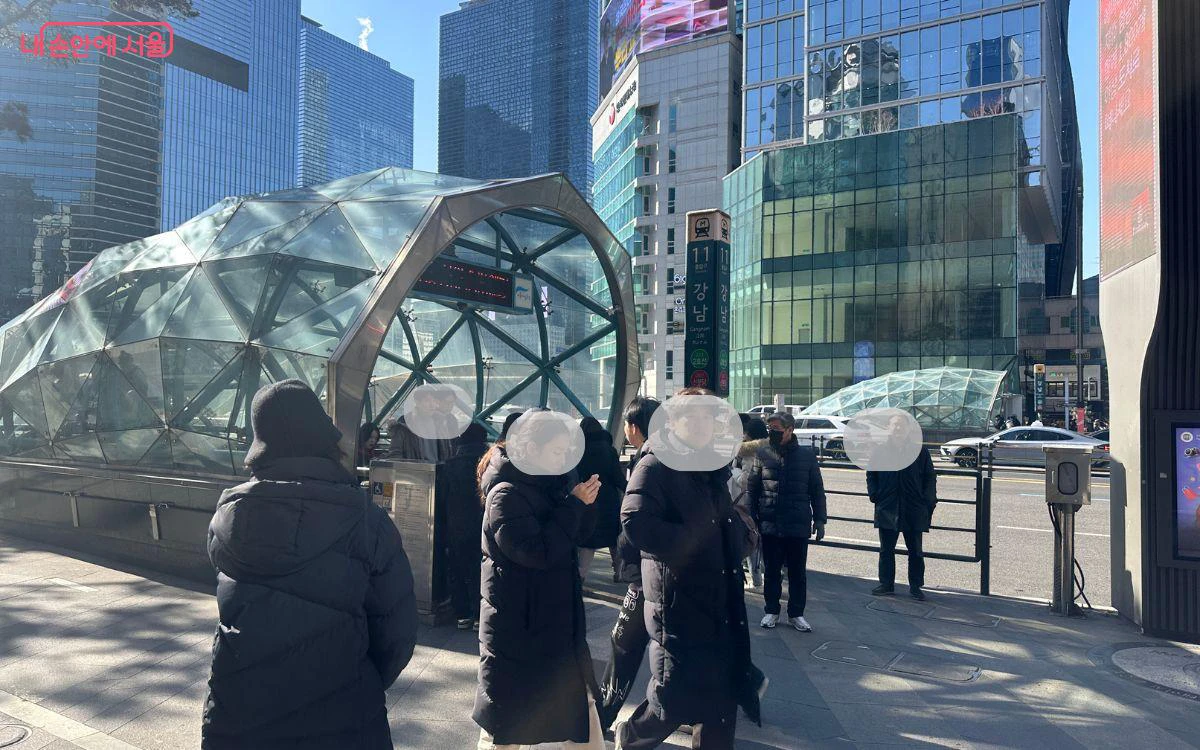
For a palace-heavy first visit, the same location creates repeated long crossings. Line 2 reaches central stations, but the loop is large; places off it add a transfer and another final walk. Gangnam is not poorly connected—the problem is choosing a well-connected station for the wrong cluster of plans.
Choose Gangnam when at least half your important full days are south of the Han, or a fixed event, clinic, office, or early start makes the location valuable. Do not choose it only because the name is familiar.
Test a hotel in five minutes
- Write down the three or four places anchoring each full day—not every saved attraction.
- Open the exact hotel entrance in NAVER Map or KakaoMap.
- Test the morning route to each day's first anchor at the weekday and time you expect to leave.
- Count line changes, station walking, and the final street walk as well as the displayed minutes.
- Test the arrival and departure route with luggage separately from ordinary sightseeing.
A hotel that creates two transfers on several important mornings is a warning unless it solves a bigger problem, such as a fixed event or an early departure. When two options are close, use the station entrance, lift path, night walk, and luggage-day route as tiebreakers. After choosing the area, compare fare media in the T-money, Climate Card, and WOWPASS guide.
Traveler opinions differ because itineraries differ. In this r/koreatravel discussion comparing Myeongdong, Hongdae, and Gangnam, recommendations change with nightlife, airport access, and the daily sightseeing cluster. Use it as a record of tradeoffs, not a universal ranking.
Sources and image credits
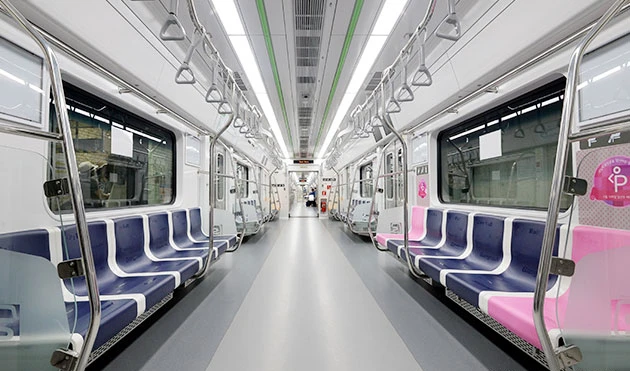
- Delivery Spot cover image — Published web cover showing an empty Seoul subway car.
- Seoul TOPIS subway guide — Official line descriptions and interchange context used in this comparison; rechecked August 12, 2026.
- Airport Railroad Co., Ltd. (AREX) — Official current notices for the airport rail serving Hongik University Station; rechecked August 12, 2026.
- Seoul subway interior — Seoul Metropolitan Government source for the cover image.
- Myeongdong street — News1 via Seoul Metropolitan Government; original source for the Myeongdong image.
- Hongdae street and busking — Hong Hye-su via Seoul Metropolitan Government; original source for both Hongdae slider images.
- Jongno 3-ga street — Park Eun-young via Seoul Metropolitan Government; original source for the Jongno image.
- Gangnam Station — Kim Jae-hyung via Seoul Metropolitan Government; original source for the Gangnam image.
- Delivery Spot Myeongdong image — Published web asset derived from the credited Myeongdong source.
- Delivery Spot Hongdae dusk image — Published web asset derived from the credited Hongdae source.
- Delivery Spot Hongdae busking image — Published web asset derived from the credited Hongdae source.
- Delivery Spot Jongno image — Published web asset derived from the credited Jongno source.
- Delivery Spot Gangnam image — Published web asset derived from the credited Gangnam source.
- Traveler area-comparison discussion — Used only as evidence that recommendations vary with itinerary, not as official transit guidance.
Last updated


