
Toner vs Essence vs Serum vs Ampoule: What Differs?
These labels overlap. Compare purpose, formula, texture, directions and safety to choose one useful leave-on instead of completing a four-step ladder.
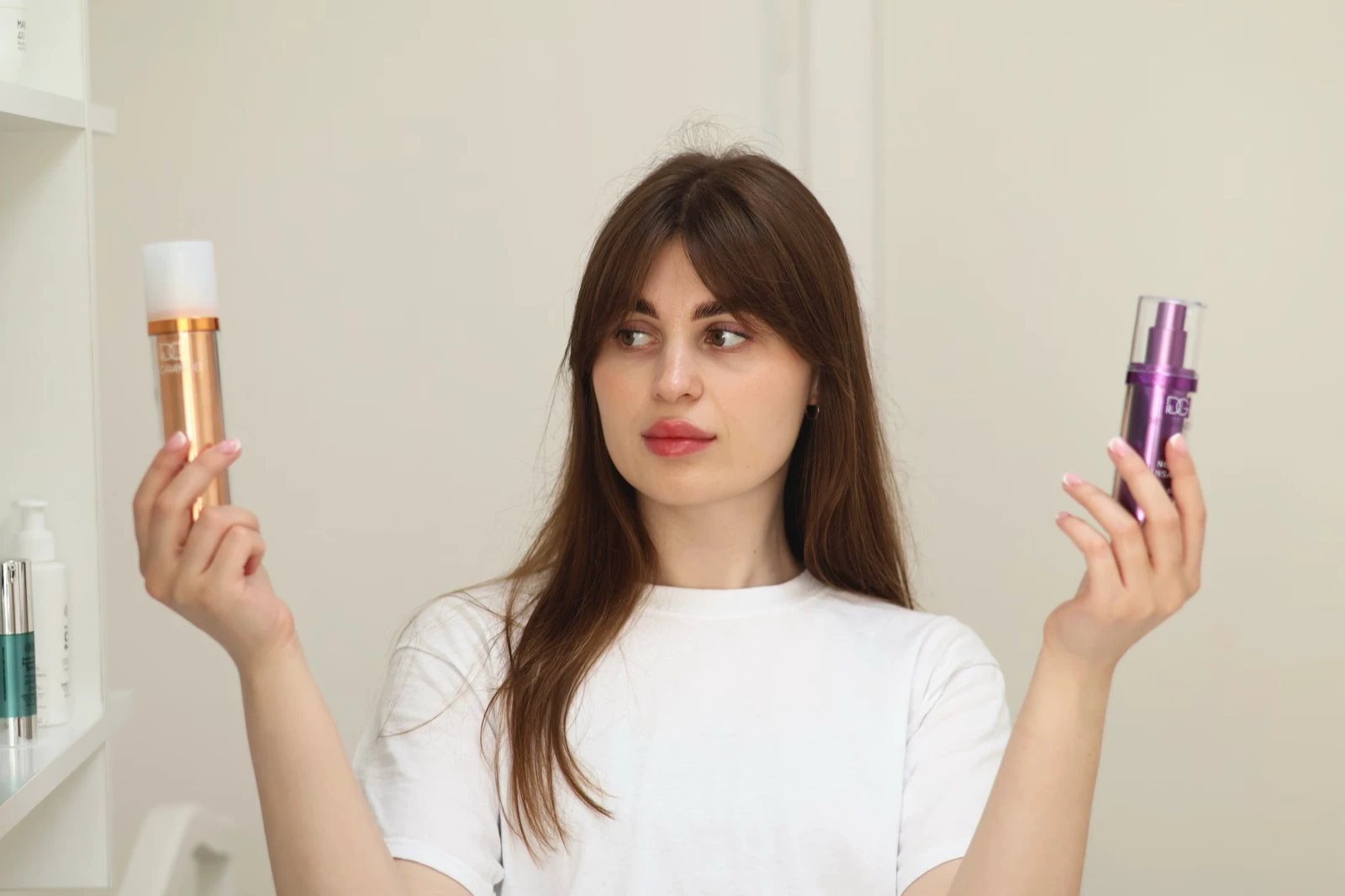
Toner, essence, serum and ampoule are not four universally standardized strength levels, and a complete routine does not require all four. The useful questions are: What job does the formula do? What does its label direct? What texture works with the rest of your routine? What ingredients or warnings matter for your skin?
The four names are tendencies, not grades
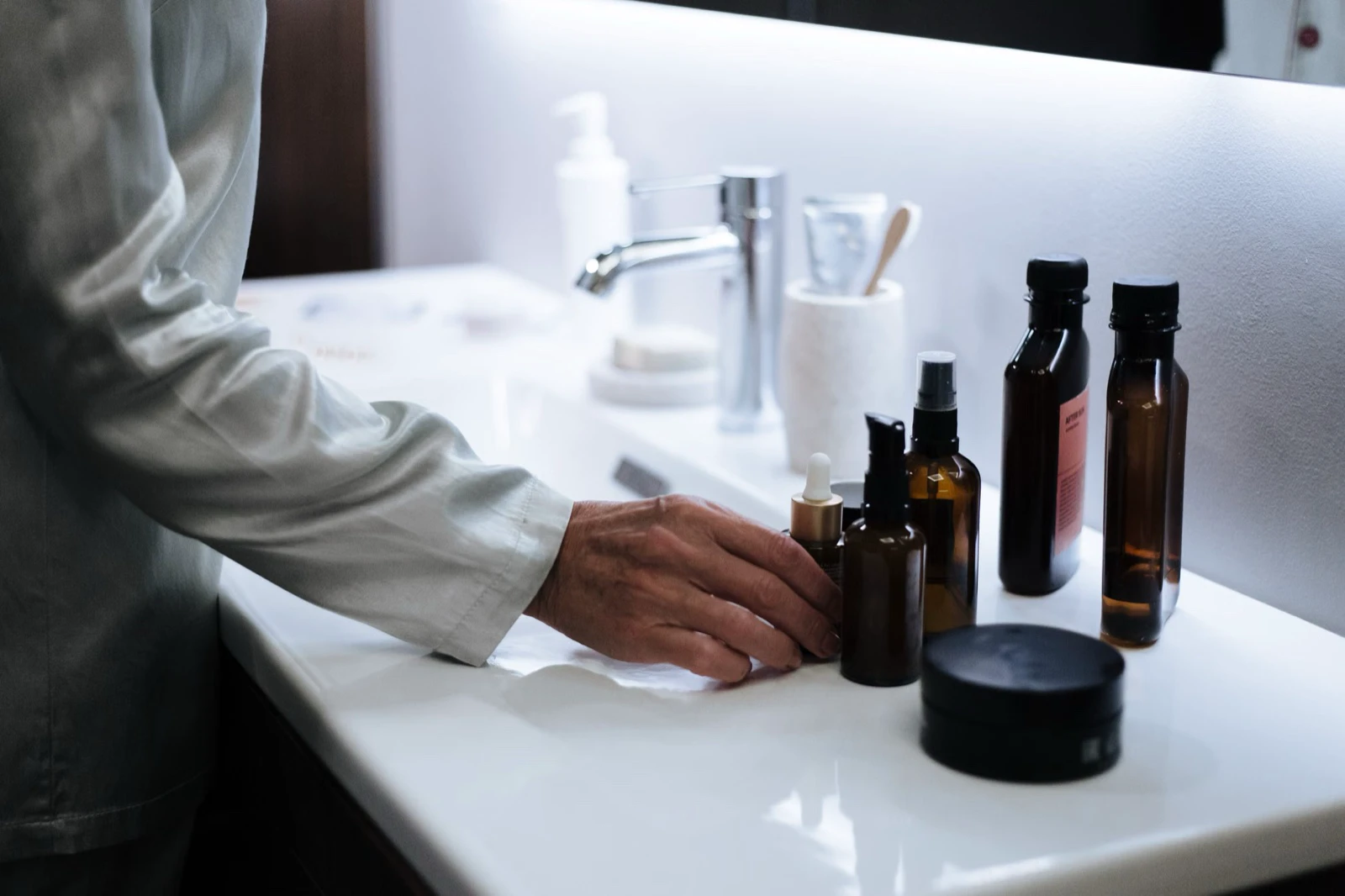
- Toner: often a watery leave-on used after cleansing for hydration, soothing or exfoliation. It is optional. An acid toner is an active product, not harmless water.
- Essence: often a light hydrating or featured-ingredient step. A “first essence” usually signals early use, but an essence can be thicker than a serum.
- Serum: often a smaller targeted leave-on for hydration, antioxidant care, uneven tone or another defined goal. A dropper, viscosity or front-label percentage does not by itself prove performance.
- Ampoule: often marketed as concentrated or intensive, yet many K-beauty ampoules are full-size daily products that behave like serums. The word alone does not prove greater strength.
Korean brands may also call a watery toner skin, combine terms as essence toner, or place a first essence before another liquid. The back label and official directions settle how that bottle is intended to be used.
Why the label cannot certify a strength ladder
Start with the AAD's basic order: cleanse, apply medication or treatment, then moisturizer and/or sunscreen, followed by makeup if desired. The page also warns that too many products—especially multiple anti-aging products—can irritate skin. It does not prescribe a mandatory toner → essence → serum → ampoule chain.
The FDA cosmetic-versus-drug explanation and FDA labeling overview classify U.S. products by intended use, claims and labeling. A product intended to treat disease or affect body structure or function can also be a drug; retail cosmetics require ingredient declarations. From that system, it is reasonable to infer that “ampoule” is not a U.S. regulatory potency grade. This does not mean every jurisdiction regulates claims identically.
A Reddit discussion about ampoule terminology shows why shoppers encounter conflicting definitions. It identifies a recurring question, not a medical or legal answer.
Put your actual bottles in order
Use this decision order:
- Follow clinician and product directions first. Prescription placement, rinse-off instructions, frequency and “apply to dry/damp skin” rules outrank a beauty diagram. Ask the prescriber where optional cosmetics fit.
- Cleanse gently. Pat away dripping water unless the next product directs damp-skin use.
- Apply directed medication or treatment. The AAD places this immediately after cleansing in its basic sequence; follow the exact prescription instead of moving it to satisfy a toner rule.
- Layer optional leave-ons for usability. When labels give no special direction, light/watery before rich/viscous is a practical starting point. If the essence is thicker than the serum, reverse them.
- Moisturize. A moisturizer that already meets your hydration needs may make several liquid layers redundant.
- In the morning, finish with sunscreen. AAD guidance calls for broad-spectrum, water-resistant SPF 30 or higher and reapplication about every two hours outdoors, plus after swimming or sweating.
“Thinnest to thickest” helps products spread and reduces pilling. It does not prove ingredients penetrate in a ranked four-stage pathway. No universal stopwatch is needed between ordinary cosmetic layers; continue when the previous layer is no longer dripping or sliding. If products pill, use less, remove one layer or follow the brand's compatibility instructions.
Buy by job, not category
For hydration: choose one toner, essence, serum or ampoule whose finish fits beneath moisturizer. A large watery bottle can suit generous hand-applied layers; a small serum can suit two or three drops. Category does not decide which hydrates better.
For a targeted ingredient: compare the full ingredient list, disclosed concentration when available, packaging, directions and irritation risk. A vitamin C serum is not automatically more suitable than an essence with a different derivative. The K-beauty ingredient-list guide explains why ingredients at 1% or less may not appear in strict concentration order under some labeling systems and why a list cannot predict results by itself.
For sensitive or new routines: add one leave-on at a time. Several “soothing” bottles may repeat fragrance, acids or other ingredients and make a reaction hard to trace. Keep cleanser, moisturizer and sunscreen stable while judging the new product.
For prescriptions or an active skin condition: ask the treating clinician. Cosmetics should not displace treatment or be used to self-treat persistent burning, swelling, blistering or a worsening rash.
A practical small-area test
The AAD's current anti-aging guidance recommends testing a new product on the inner forearm twice daily for four to five days before broader use. That is a screening step, not a guarantee against every delayed reaction. The site's advice also says to stop an ordinary cosmetic that stings, burns or tingles; if a prescribed product causes those effects, ask the prescriber before stopping because some prescriptions have expected effects.
Follow the product directions and the more detailed patch-test guide. Do not test near the eyes or on broken skin unless instructed. Seek medical help for severe or rapidly spreading symptoms or breathing difficulty.
Korea's MFDS notice says designated fragrance allergens may not be hidden only under a general “fragrance” term on cosmetic packaging from January 1, 2020. That helps label reading, but “fragrance-free,” “hypoallergenic,” “dermatologist tested,” “clean” and similar marketing terms still do not guarantee that your skin will tolerate a product.
Four questions before buying
- What exact job does this add or replace? Hydration, exfoliation and uneven-tone care are different jobs; “glow” is vague.
- Do I already use the same active? Duplicate exfoliants or several anti-aging products can increase irritation.
- Will I tolerate the texture and finish? Watery, gel, oily, sticky and fast-drying products can appear under any of these names.
- What are the frequency, amount and warnings? Directions are more actionable than the category printed on the front.
If you cannot identify a new job, do not buy a fourth middle step just to complete a sequence. For many people, a realistic routine is cleanser → one defined leave-on if useful → moisturizer → sunscreen in the morning. More labels do not automatically mean better results.
When K-beauty shopping becomes part of a travel day, avoid carrying a heavy haul through every store. A nearby Delivery Spot can handle luggage while you compare labels; keep newly purchased skincare sealed until you can introduce products one at a time.
Information rechecked August 12, 2026. This is general cosmetic-use guidance, not a diagnosis or a substitute for individualized clinician or product directions.
Sources and asset credits
- Pexels license — License retained for the credited stock-photo set.
- Anna Keibalo — Featured-image owner page retained from the published guide.
- Ron Lach — Sink-arrangement image owner page retained from the published guide.
- Alena Darmel — Toner-and-cotton-pad image owner page retained from the published guide.
- SHVETS production — Dropper-bottle image owner page retained from the published guide.
- Featured asset — Pexels / Anna Keibalo; locked featured asset retained.
- Body asset 1 — Pexels / Ron Lach; locked order retained.
- Body asset 2 — Pexels / Alena Darmel; locked order retained.
- Body asset 3 — Pexels / SHVETS production; locked order retained.
- Official source — American Academy of Dermatology, basic product order and irritation caution.
- Official source — U.S. FDA, cosmetic-versus-drug classification by intended use and claims.
- Official source — U.S. FDA, cosmetic labeling and ingredient-declaration overview.
- Official source — American Academy of Dermatology, one-product introduction and small-area test guidance.
- Official source — American Academy of Dermatology, broad-spectrum SPF 30+, water resistance and reapplication guidance.
- Official source — Korea MFDS, fragrance-allergen labeling notice effective January 1, 2020.
- Community context only — Recurring terminology confusion, not medical or regulatory evidence.
Last updated


