
How Conscientious Objectors Serve in South Korea
South Korea does not treat recognized conscientious objection as an automatic exemption. Approved applicants complete 36 months of residential alternative service in correctional institutions, a system that remains legally upheld and publicly contested.
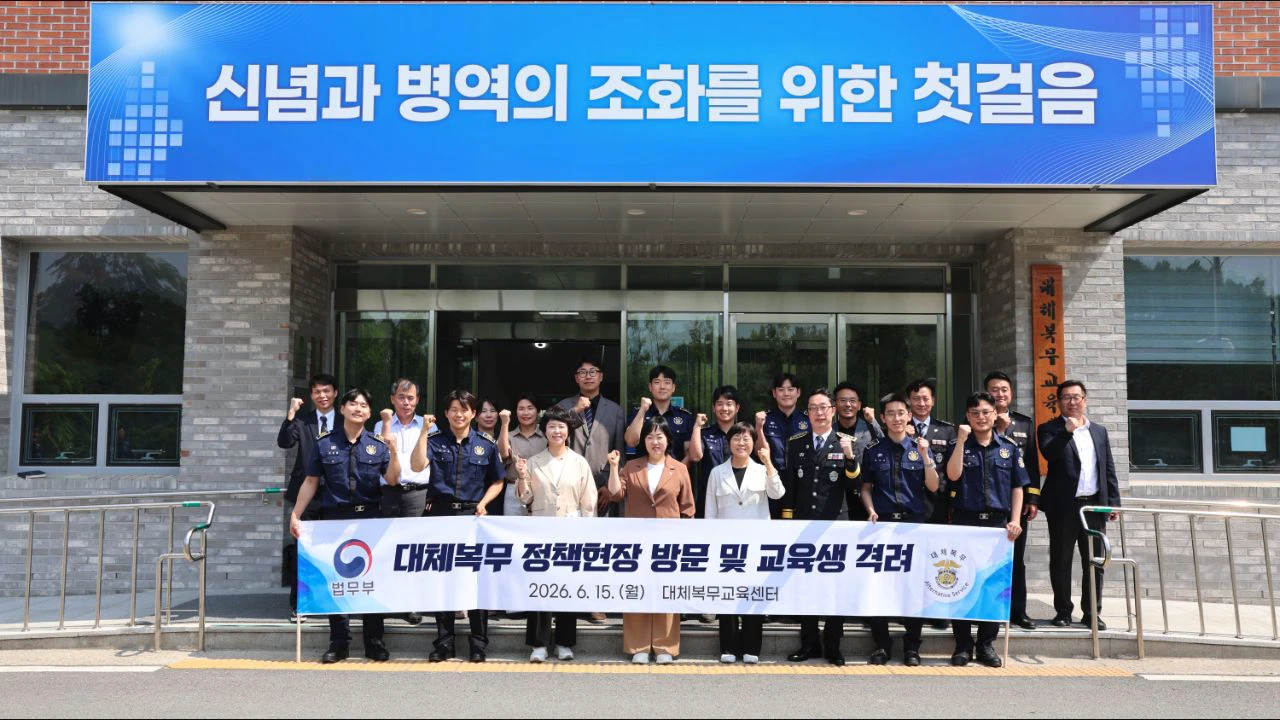
Recognized conscientious objectors in South Korea do not simply opt out of conscription. They apply to the Military Manpower Administration’s Alternative Service Review Committee and, if approved, complete 36 months of residential service in correctional institutions doing non-military public-interest work.
That answer is simple; the system behind it is not. Alternative service replaced a long history of criminal punishment for people who refused military duty on grounds of conscience, but its length and prison-based setting still sit at the center of a fairness argument. This guide reflects official information checked on August 11, 2026.
Approval is not self-declared
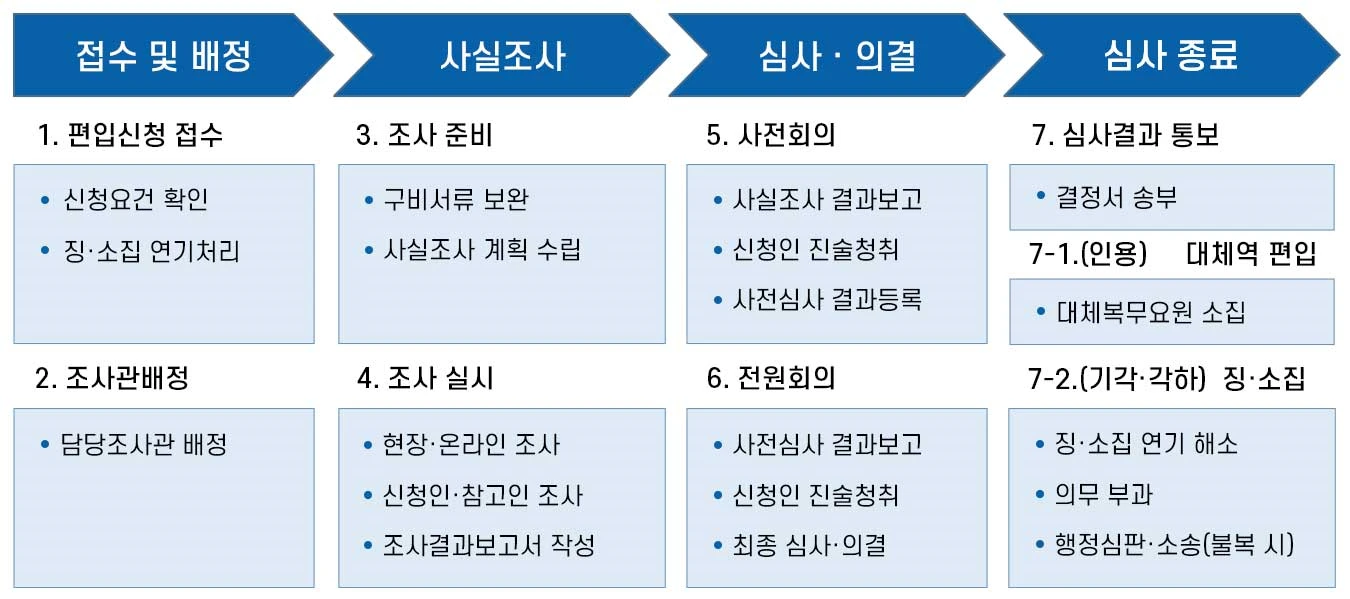
A person cannot choose alternative service by checking a box at enlistment. The applicant must ask the Alternative Service Review Committee for recognition and submit material explaining the religious, moral, ethical, philosophical, or similar conviction behind the refusal to perform military service.
The committee assigns an investigator, reviews documents and statements, and may conduct an in-person or online investigation. The official procedure ends in approval, rejection, or dismissal. The committee’s published standard is a decision within 90 days of receiving an application, with a possible extension of up to 60 days when more time is needed. An applicant who disagrees with the outcome can use the objection and administrative appeal routes described by the committee.
This distinction matters because a recurring question in Korean and English-language discussions is whether membership in a particular religion is enough. It is not an automatic pass. The legal question is whether the individual’s objection is genuine and consistent, and the committee examines the applicant rather than treating a religious label as the decision.
What the 36 months actually look like
An approved applicant is assigned to an alternative-service institution run through the correctional system: a prison, detention center, or branch facility. The service is residential for 36 months. It takes place inside the correctional estate, but it is alternative military service, not a criminal sentence and not incarceration as a prisoner.
The Ministry of Justice supervises the work, while the Military Manpower Administration can conduct joint inspections. According to the MMA’s current duty list, assignments can include:
- preparing ingredients, assisting with meals, and cleaning dining areas;
- sorting and distributing supplies or laundry;
- helping with books, newspapers, and other correctional-education materials;
- assisting patients or disabled people and supporting disinfection and hygiene work;
- maintaining facilities and the surrounding environment.
Using or managing weapons and sharp weapons is excluded. So are activities involving killing or destruction, training designed to build that capacity, and similar duties. That line is the practical point of the system: the state still requires a substantial period of public service without ordering the person to handle arms or train for combat.
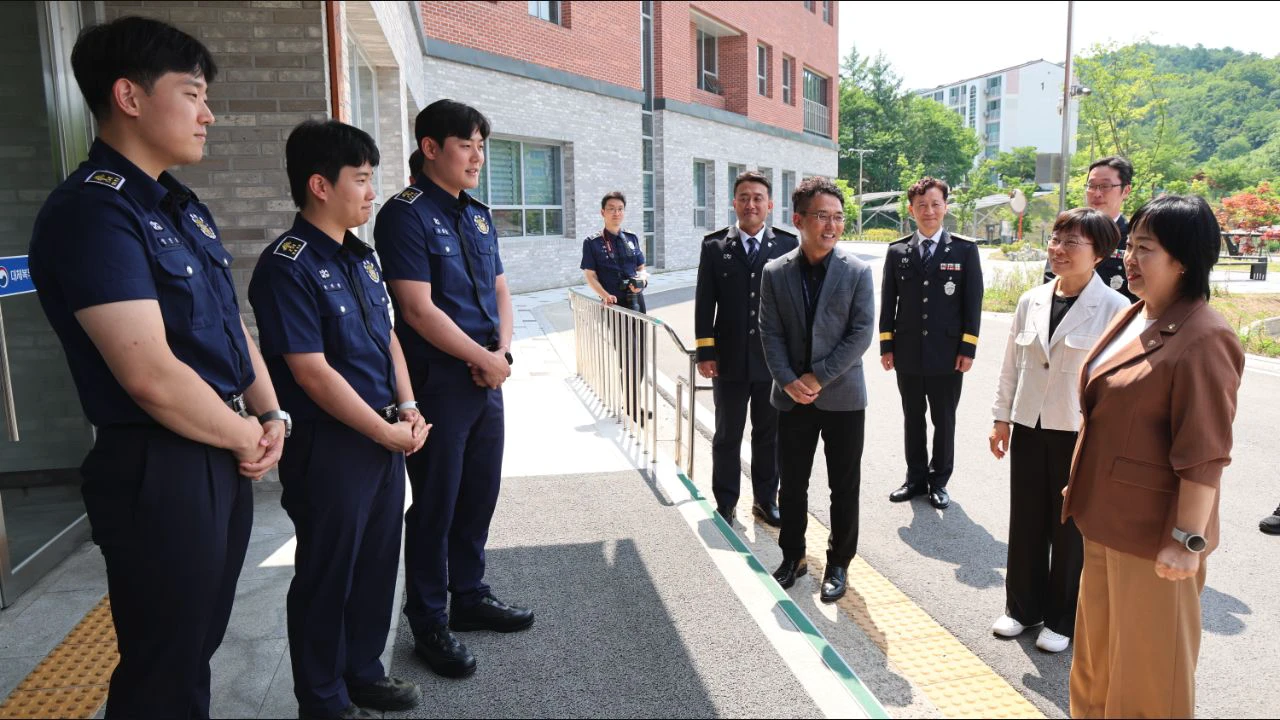
The navy-blue uniforms in this June 2026 MMA photo belong to alternative-service personnel meeting officials at the Alternative Service Training Center in Yeongwol. The setting may look institutional because it is, but the people pictured are serving under the alternative-service law, not appearing as inmates.
How Korea got here
For decades, refusing military service commonly led to prosecution and imprisonment. The legal turning point came on June 28, 2018, when the Constitutional Court found the absence of an alternative system incompatible with the Constitution. The ruling did not abolish conscription. It required the state to create another way for a genuine conscientious objector to meet the duty of national defense.
The government announced a plan later that year, the National Assembly passed the alternative-service legislation in December 2019, and the law took effect on January 1, 2020. Applications opened after the supporting regulations and committee structure were put in place in June 2020.
The Constitutional Court revisited the design in a decision dated May 30, 2024. Petitioners challenged the 36-month term, compulsory residential living, and the rule limiting service to correctional institutions. The court rejected the petitions. Its published explanation says the arrangement was not designed as punishment and could be justified as a way to balance the burden borne by active-duty personnel with the need to prevent alternative service from becoming an easier option.
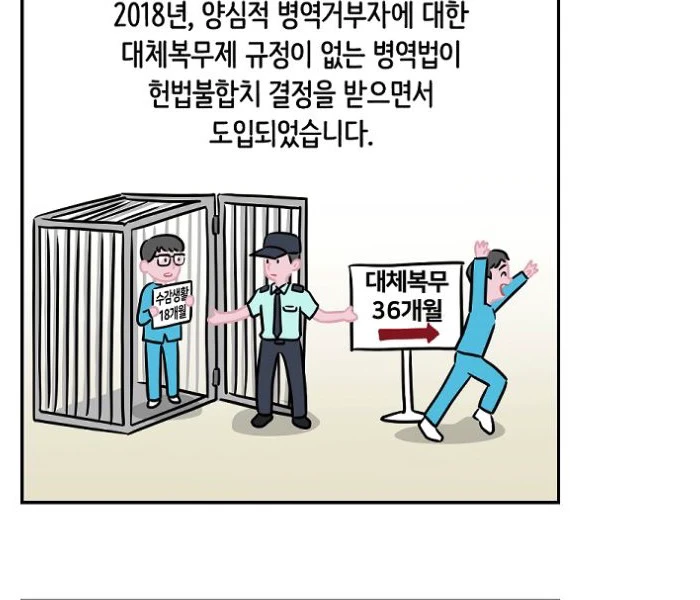
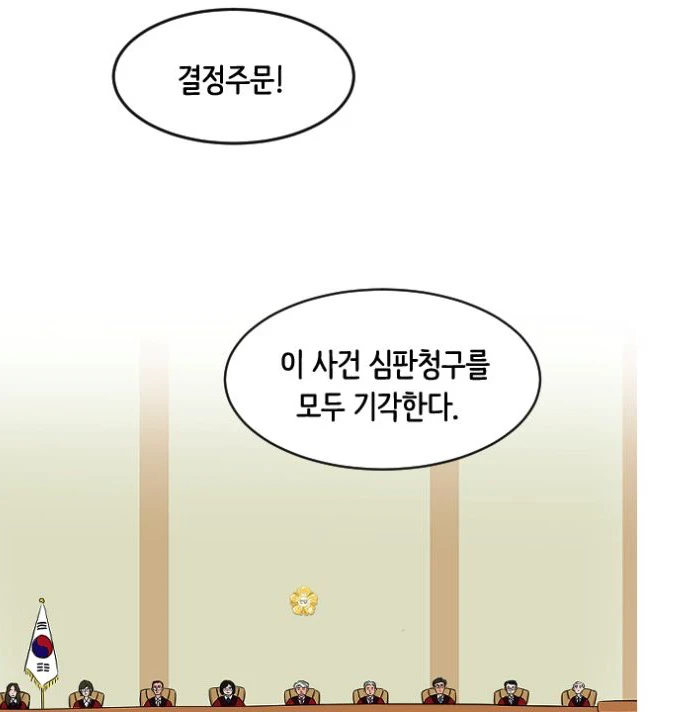
These two panels come from the Constitutional Court’s own illustrated explanation. The first summarizes the 2018 decision that forced the creation of an alternative; the second shows the court rejecting the later challenge to the system’s current structure.
Why the fairness debate did not end with the court ruling
Legal validity and policy agreement are different things. The 2024 decision kept the present system in place, but it did not make the competing concerns disappear.
Supporters of the current design emphasize equal sacrifice. Military service is compulsory, interrupts education and work, and can involve risk and severe restrictions. From that view, alternative service must be demanding enough that it does not create a strong incentive to make an insincere claim. The Constitutional Court accepted that burden-balancing rationale.
The National Human Rights Commission of Korea has taken a different policy position. In recommendations discussed in 2023, it called for shortening the 36-month residential term within the law’s adjustment range and expanding service beyond correctional institutions. When the Ministry of National Defense declined to shorten the period, citing fairness with active and supplementary service, the commission reiterated its view that an alternative term exceeding 1.5 times active service can become punitive. The Ministry of Justice, meanwhile, accepted parts of the recommendation concerning better work allocation and exploring a broader range of duties.
Those are not interchangeable claims. One asks whether conscientious objectors are contributing enough compared with conscripts; the other asks whether the state has made the alternative unnecessarily harsh. Both concerns appear repeatedly in Korean policy debate, and neither can be reduced to a simple split between people who support or oppose the military.
Three distinctions worth keeping straight
It is not an exemption. An approved objector still performs a state-assigned, residential service for three years and later has alternative reserve obligations under the system.
It is not the same as social service. South Korea’s social service personnel follow a separate legal and administrative track. Conscientious-objector alternative service has its own review committee, institutions, duties, and term.
A correctional institution is the workplace, not the person’s criminal status. The location is controversial precisely because it resembles the environment in which earlier objectors were imprisoned, but an approved alternative-service member is not serving a conviction.
For someone considering an application, the MMA’s Alternative Service Review Committee is the authoritative starting point; individual eligibility can turn on evidence and personal history. For everyone else, the clearest summary is this: South Korea now recognizes conscientious objection, but it still requires a long, residential alternative—and the argument over whether that design is fair remains active.
Sources and image credits
- Military Manpower Administration: Overview of the Alternative Service System — legal timeline, 36-month term, and reserve-service framework.
- Alternative Service Review Committee: Screening Procedure — investigation, decision types, processing period, and appeal routes.
- Military Manpower Administration: Alternative-Service Duties — institutions, residential service, assigned work, and prohibited weapon-related duties.
- Constitutional Court of Korea: 2021Hun-Ma117 — May 30, 2024 decision and illustrated explanation; panels credited to the Constitutional Court of Korea.
- National Human Rights Commission of Korea — 2023 response on service length, residential conditions, institutions, and work allocation.
- MMA Photo News: Alternative-Service Policy Site Visit — feature and field photographs taken at Yeongwol Prison and the Alternative Service Training Center on June 15, 2026; credit: Military Manpower Administration.
- Reddit discussion: Conscientious objection in Korea — used to identify recurring reader questions and contrasting views, not as a factual authority.
- Cover delivery asset — MMA photograph in the Delivery Spot publication copy.
Last updated


