
20 Easy Foods to Eat Alone in Seoul: A Honbap Guide
Choose foods sold as one bowl, one plate, or one packed portion and solo dining in Seoul becomes simple. This guide organizes 20 low-friction options by order unit, seating cues, and the times when a quiet meal is easiest.
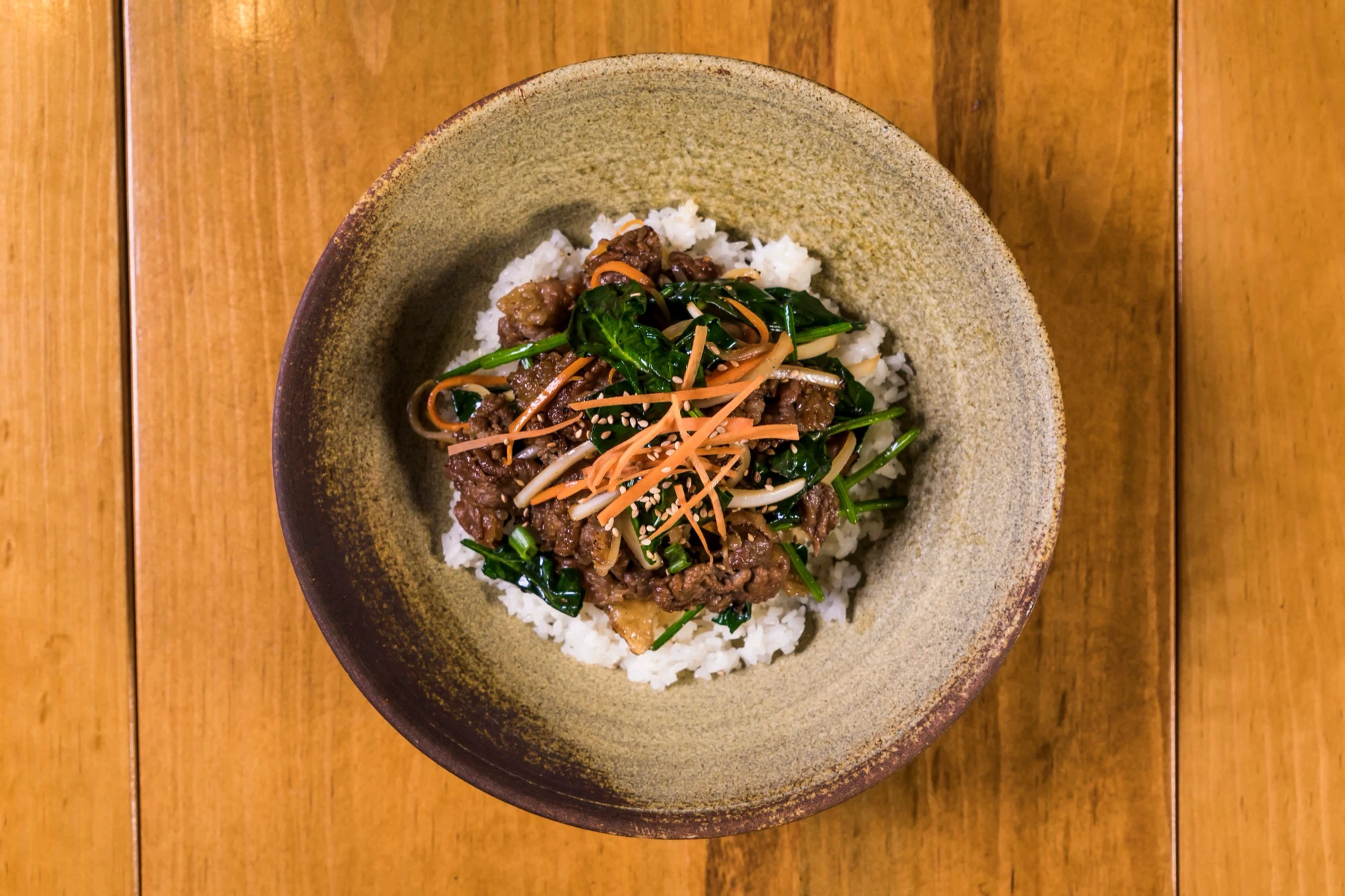
The easiest meals to eat alone in Seoul are usually sold as one bowl, one plate, or one clearly packed portion. Start with gimbap, rice bowls, soup-and-rice sets, cutlets, or noodles; treat shared grills and large hot pots as ‘check the minimum order first.’
Koreans commonly call eating alone honbap (혼밥). An official Korea.net feature on honbap shows that single seats and individual cooking setups are established dining formats, but the useful travel lesson is simpler: read the menu's order unit before judging the room.
The three signals that make a meal easy alone
- One item equals one meal. A bowl of rice, soup, or noodles is safer than a menu built around ‘two portions minimum.’
- The seat matches the order. Counter, window, wall, and kiosk-led layouts let you enter, order, and leave without negotiating a large table.
- The timing is calm. Go just after opening, in mid-afternoon when the restaurant stays open, or before the main dinner rush. Check same-day hours and break time first; there is no universal quiet hour.
Recent solo diners describe the same practical cues in a Naver account of Seoul honbap restaurants and a Reddit discussion among Seoul visitors. These are useful experience reports, not guarantees for every branch.
1–5: rice and plate meals with the least friction
- Gimbap (김밥) — One roll is already a natural one-person order, often with takeaway available. A VISITKOREA food feature uses the familiar English spelling ‘gimbap’; point to a visible roll or menu photo if the fillings are hard to parse.
- Bibimbap (비빔밥) — Rice, vegetables, and toppings arrive in one bowl. You mix it yourself, so there is no shared cooking step.
- Deopbap (덮밥) — This is the broad rice-bowl category: a topping over rice, usually ordered as one complete plate. The topping name changes, but the portion logic stays easy.
- Donkatsu (돈가스) — A cutlet plate usually comes as one set with rice, cabbage, and sauce. It is a useful choice when you want a familiar ordering format.
- Korean curry rice (카레라이스) — Curry over rice is normally priced and plated for one. Kiosks and food courts often make the options especially easy to compare.
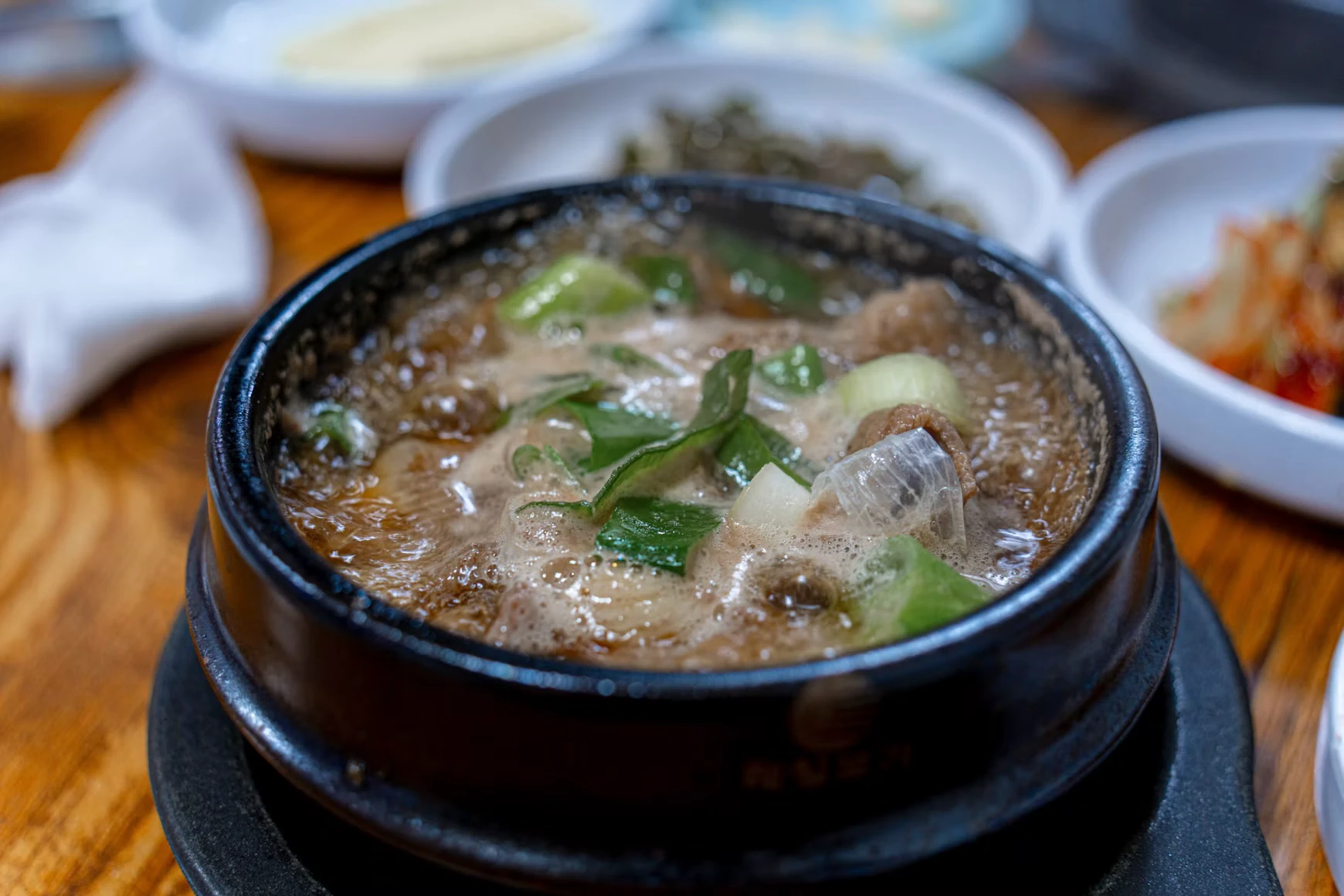
6–11: hot soups that arrive as one set
- Gukbap (국밥) — Soup with rice, or rice served beside the soup, is one of the clearest solo formats. The broth and meat vary by region and shop.
- Seolleongtang or gomtang (설렁탕·곰탕) — Mild beef soups are generally ordered by the bowl. Season at the table gradually because salt and kimchi can change the taste quickly.
- Samgyetang (삼계탕) — A small whole chicken in broth is commonly presented as one pot per diner. The portion can be large even though the order unit is one.
- Sundubu-jjigae (순두부찌개) — Soft-tofu stew often comes in an individual earthenware pot with rice. Confirm that the menu lists one serving, because ‘jjigae’ can also describe a shared stew elsewhere.
- Manduguk (만둣국) — Dumpling soup is naturally sold by the bowl and needs no shared side order. It is especially simple when the menu shows the dumpling count or a photo.
- Juk (죽) — Korean rice porridge is quiet, filling, and normally portioned for one. It is also easy to take away when a dining room feels busy.
The earthenware bowl is a useful visual clue, not a promise: scan the menu for 1인분 (one serving) or ask ‘Il-inbun ganeunghaeyo?’ (1인분 가능해요? — ‘Is one serving possible?’).
12–18: seven noodle bowls that usually work for one
- Kalguksu (칼국수) — Knife-cut noodles in broth are typically sold by the bowl. If you add dumplings, check whether the extra plate is meant to share; the noodles themselves need no companion order.
- Naengmyeon (냉면) — Cold noodles arrive as one bowl, either in chilled broth or mixed with spicy sauce. Check the photo or the words mul (물, broth) and bibim (비빔, mixed/spicy).
- Ramyeon (라면) — Korean instant-style noodles at a bunsik shop or convenience store are built for a single diner. Add-ons are optional rather than a second-person requirement.
- Jajangmyeon (짜장면) — Korean-Chinese black-bean noodles are a one-bowl order and a classic delivery or quick-restaurant choice. You do not need to add shared dishes.
- Jjamppong (짬뽕) — Spicy seafood noodle soup is also sold by the bowl. It can be hot and messy, but the order unit is straightforward.
- Udon (우동) — A mild noodle soup that is easy to identify on photo menus and common at snack shops, food courts, and Japanese-style counters.
- Japanese-style ramen (라멘) — Counter seating and ticket or kiosk ordering make many ramen shops structurally solo-friendly. This is a Seoul option rather than a claim that the dish is Korean.
19–20: point, pay, and keep moving
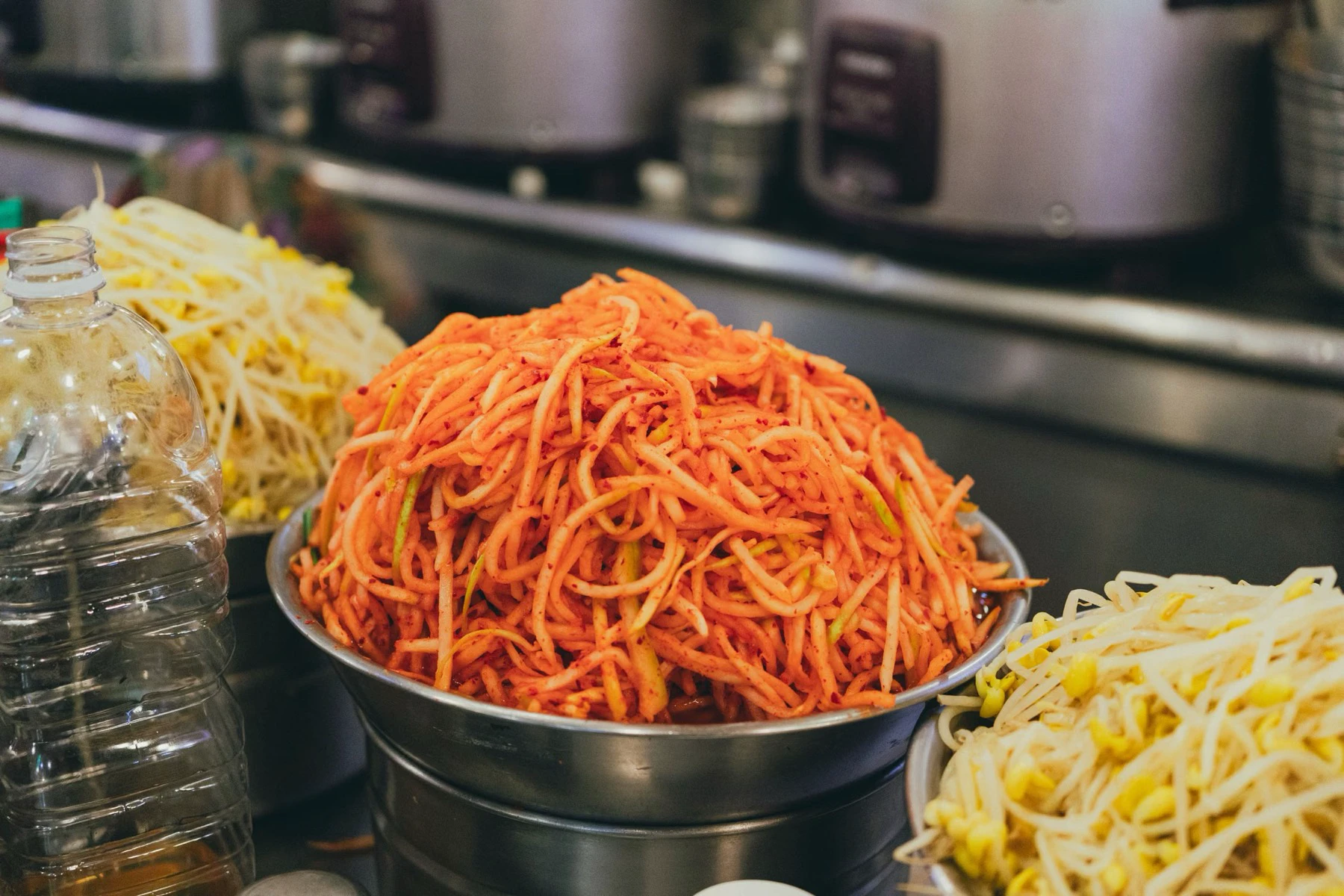
- Tteokbokki with fried snacks (떡볶이·튀김) — At a bunsik counter or market stall, choose a small tteokbokki portion and only the fried pieces you want. Ask about portion size when the tray looks designed for sharing.
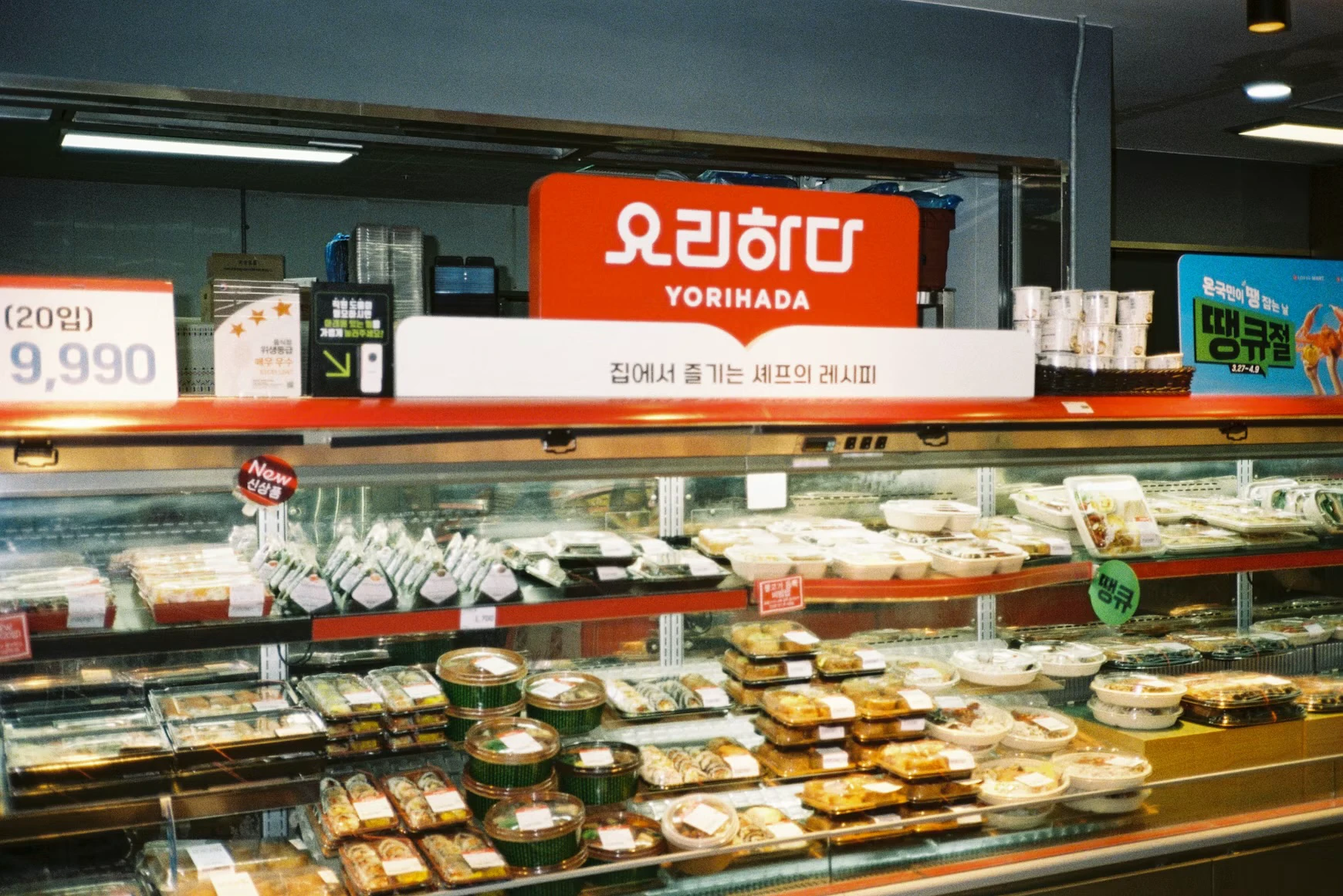
- Convenience-store or supermarket dosirak (도시락) — A packaged lunch box is the zero-negotiation fallback: the portion, contents, and price are visible before checkout. Use the store's seating only where it is clearly provided, and follow signs about heating and waste sorting.
Visible food is powerful when Korean menu vocabulary runs out. Point to the portion, hold up one finger, and confirm ‘Hana juseyo’ (하나 주세요 — ‘One, please’).
Foods to check before sitting down
Korean barbecue, dakgalbi, large jeongol hot pots, bossam, and big sashimi sets can be excellent alone only when the current menu explicitly says 1인, 1인분, or shows a single-person set. Do not assume an empty table removes a two-portion minimum.
If the entrance is crowded, scan for these clues before committing:
- 1인분 — one serving
- 1인 메뉴 — one-person menu
- 혼밥 — eating alone / solo-dining friendly
- 바 자리 — counter seat
- 키오스크 — self-order kiosk
The simplest sequence is: choose a one-bowl dish, look for a counter or kiosk, confirm one serving, and avoid the peak queue. That turns solo dining in Seoul from a social question into an ordinary order.
Photo credits
- Bulgogi rice-bowl photo by Luis Becerra Fotógrafo on Pexels
- Korean soup photo by Lee Seunghyub on Unsplash
- Prepared market food photo by Theodore Nguyen on Pexels
- Korean prepared-food counter photo by Cecelia Chang on Unsplash
Sources and image credits
- Korea.net feature on honbap — Checked for guide details or image attribution.
- Naver account of Seoul honbap restaurants — Checked for guide details or image attribution.
- Reddit discussion among Seoul visitors — Checked for guide details or image attribution.
- VISITKOREA food feature — Checked for guide details or image attribution.
- Bulgogi rice-bowl photo by Luis Becerra Fotógrafo on Pexels — Checked for guide details or image attribution.
- Korean soup photo by Lee Seunghyub on Unsplash — Checked for guide details or image attribution.
- Prepared market food photo by Theodore Nguyen on Pexels — Checked for guide details or image attribution.
- Korean prepared-food counter photo by Cecelia Chang on Unsplash — Checked for guide details or image attribution.
Last updated


