
How Cold Is Seoul in Winter—and What Should You Wear?
Seoul winter dressing works best as a removable three-layer system: a base, an insulating middle, and a wind-resistant coat. Check apparent temperature, wind, and precipitation before choosing accessories and shoes.
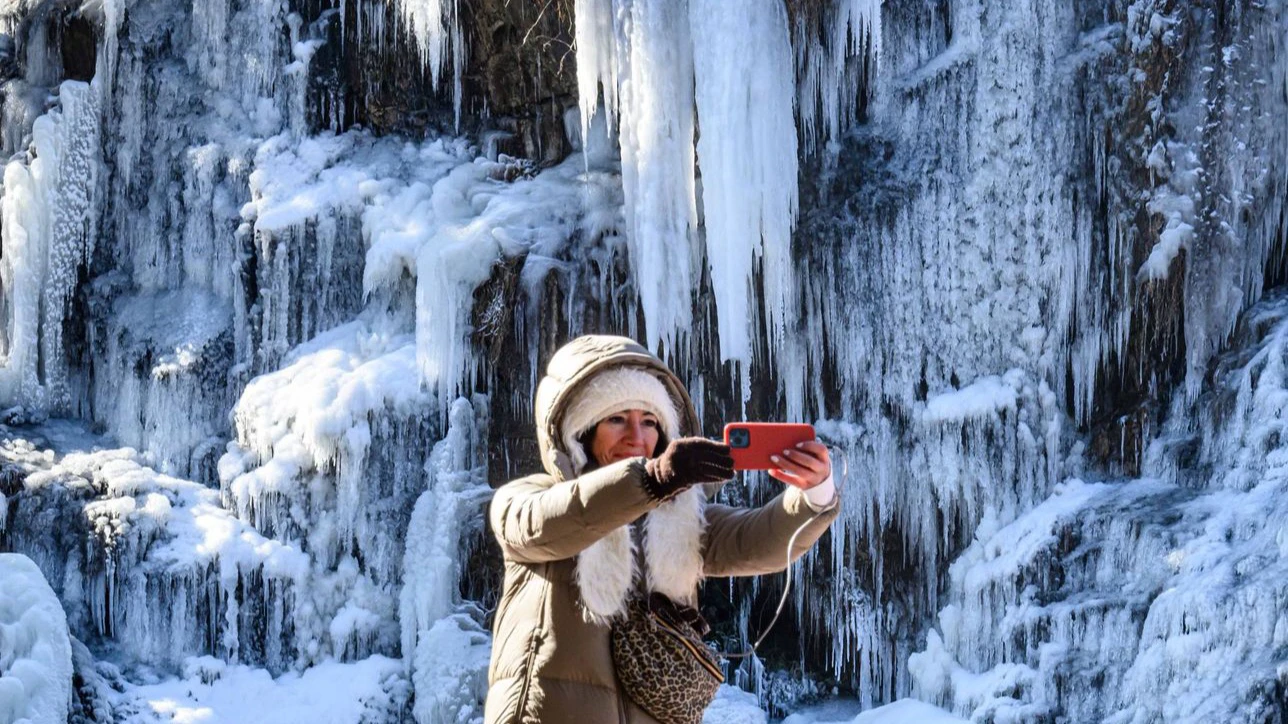
Seoul winter is cold enough for sub-zero mornings, and a cold snap can push the city well below -10°C; wind can make exposed skin feel harsher than the thermometer suggests. Pack removable layers under a wind-resistant insulated coat, plus gloves, a scarf, warm socks, and closed shoes with dependable traction when snow or ice is forecast.
This guide was fact-checked on August 10, 2026. It is designed for a normal city day—walking between stations and sights, standing outside occasionally, then entering heated trains, shops, cafés, or accommodation—not for winter hiking or another long exposure where specialist gear is appropriate.
How cold does Seoul winter actually feel?
There is no single “Seoul winter temperature.” December, January, and February include relatively mild afternoons, freezing nights, dry windy days, snow, thawing slush, and occasional sharp cold waves. Monthly climate normals help with broad planning, but they cannot choose tomorrow's clothes; use the KMA Climate Data Portal for long-term context and the current forecast for the day you will be outside.
The most useful number is not always the daily high. Check the temperature when you leave, the low around your latest return, and the apparent temperature during the longest outdoor block. In winter, Korea's official forecast calculates apparent temperature using wind. A calm -2°C commute and a windy -2°C hour beside an open river are not the same clothing problem.
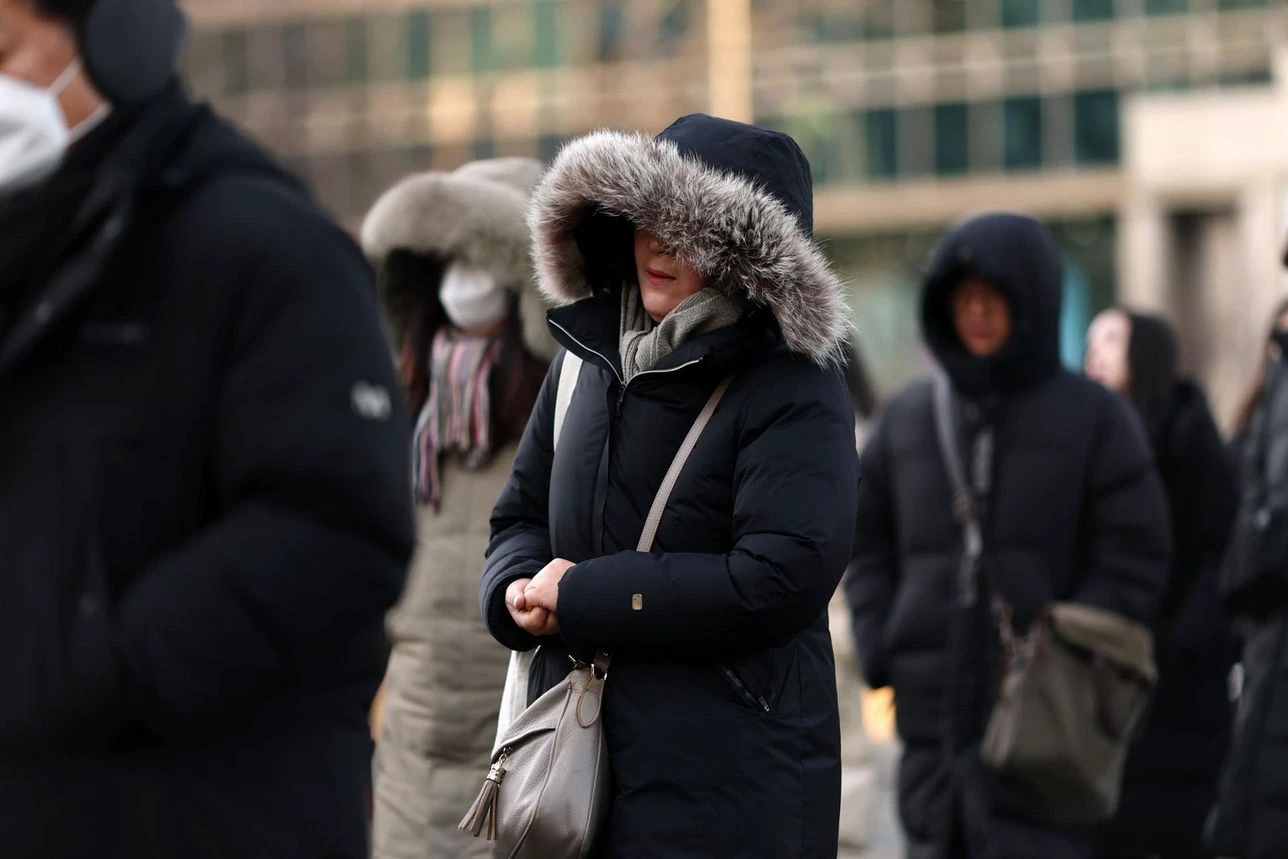
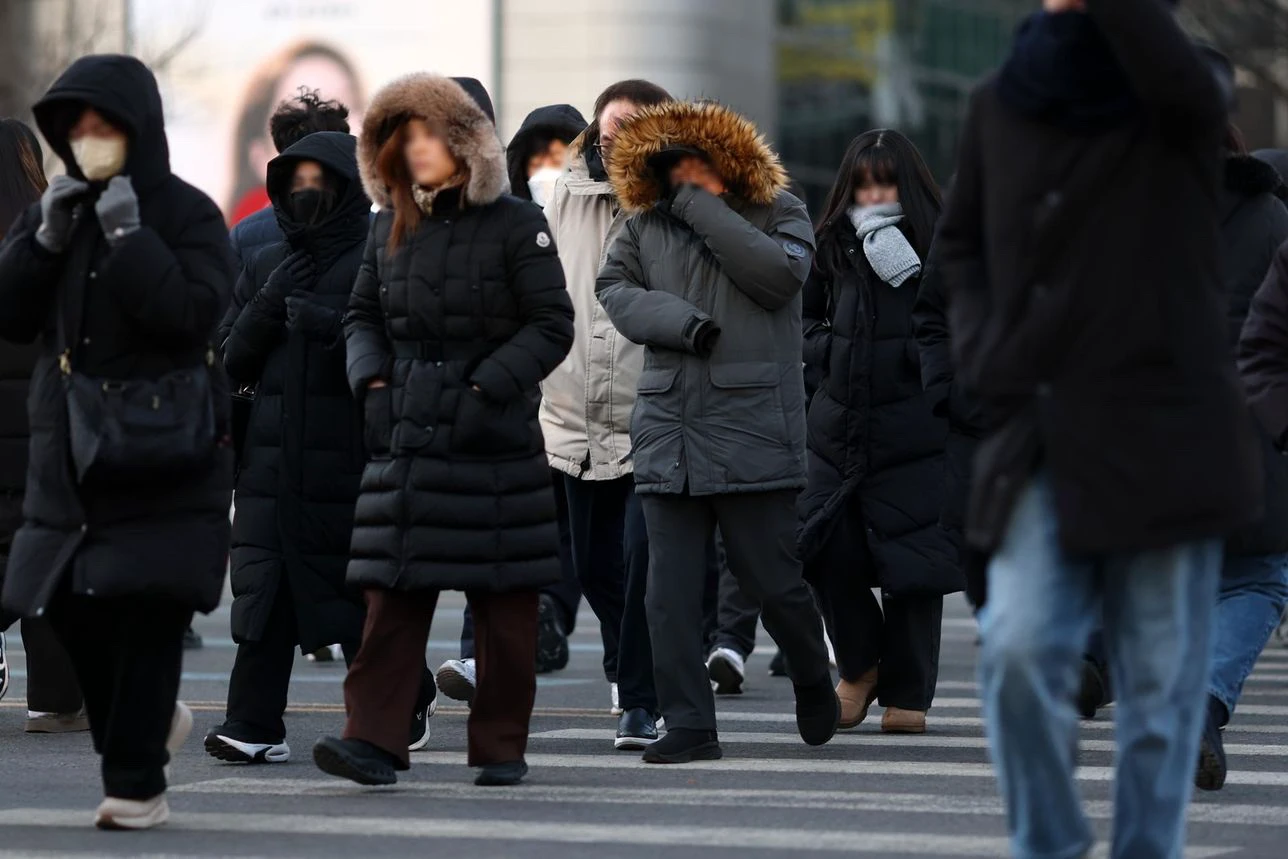
These two photos show commuters in central Seoul during a January 20, 2026 cold spell. Hoods, high collars, scarves, gloves, and long padded coats reduce exposed areas; the photos are useful evidence of cold-snap coverage, not a rule that everyone needs the same coat every winter day.
Read five parts of the forecast
Open the Korea Meteorological Administration's short-term forecast, select Seoul, and check these together:
- Temperature: read the hour you will start and the hour you will finish, not only the daytime maximum.
- Apparent temperature: use this as the first clothing check when it is shown.
- Wind: open riverbanks, bridges, palace courtyards, and exposed viewpoints can feel tougher than sheltered streets.
- Precipitation: snow or rain changes the shoe decision even when the temperature looks manageable.
- Warnings: check the KMA severe-weather page before a long outdoor day and change the plan when a cold-wave or heavy-snow warning affects Seoul.
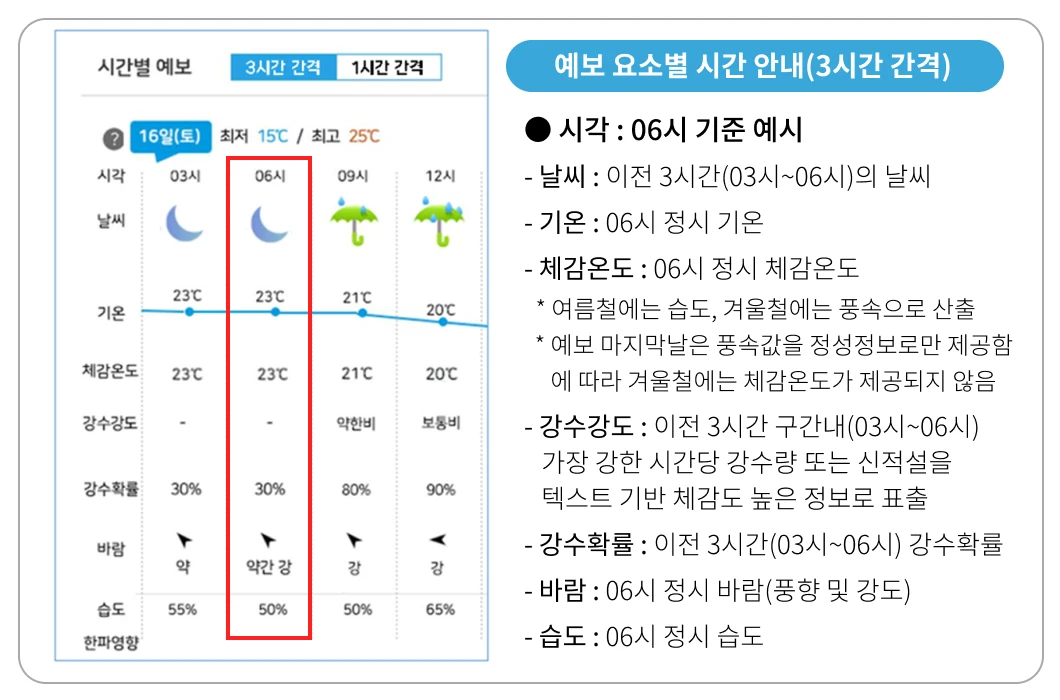
This KMA guide explains how to read hourly weather, temperature, apparent temperature, precipitation, wind, and humidity. Its sample values are illustrative, not a live Seoul forecast. The note on the graphic says humidity is used for summer apparent temperature and wind speed for winter apparent temperature.
Temperature and air quality are separate checks. If you expect prolonged outdoor time, use our fine-dust and yellow-dust guide for a separate AirKorea and KMA routine.
Use one outfit system, then adjust the insulation
The practical Seoul formula is a base layer, a removable mid-layer, and an outer layer that blocks wind. Change the thickness according to the forecast and how long you will stay outside.
- Mostly subway, shops, museums, and short walks: regular indoor clothes, a removable knit or fleece, an insulated coat, and packable gloves.
- Several hours of street walking or waiting outside: a warm base layer, insulating mid-layer, wind-resistant coat, scarf, gloves, and a hat or hood.
- Forecasted cold snap or long exposed stop: add thermal bottoms or lined trousers, warmer socks, full neck and head coverage, and shorter indoor breaks between outdoor blocks.
- Snow, sleet, or thawing slush: keep the layered clothing, but prioritize a water-resistant shoe upper and a grippy sole over adding another fashionable top layer.
A thermal top can be useful, but wearing the warmest version under a heavy sweater and a long padded coat can become uncomfortable on a subway or inside a department store. That indoor-outdoor swing is a recurring theme in traveler discussions about Korean winter clothing and resident discussions about indoor heating. These are personal reports, not temperature standards, but they support one practical choice: make the middle layer easy to remove without taking apart the whole outfit.
Do not assume every interior will be hot. Heating settings, drafts, floor heating, and your room controls differ by building. In accommodation, ask how the thermostat or floor-heating control works rather than leaving doors or windows open to compensate for overheating.
Protect the small exposed areas first
For many city days, the missing item is not a thicker coat but coverage at the neck, hands, ears, and ankles. A scarf or high collar stops wind entering at the neckline. Gloves matter when you are holding a phone for navigation. A hood or close-fitting hat is easier to keep in a day bag than a second coat, and warm socks help without turning every indoor stop into a changing session.
If your lower body becomes cold easily or you plan a long outdoor photo session, add thermal leggings or lined trousers. For a short commute-heavy day, ordinary trousers may be enough with a good coat. Your own cold tolerance and activity level matter: someone walking continuously generates more heat than someone waiting for a bus or standing at a viewpoint.
Choose shoes for the surface, not for the month
You do not need snow boots for every Seoul winter day. You do need closed shoes that fit with warm socks and have a sole that is not smooth. Water resistance becomes useful when fresh snow turns to slush; insulation matters more when you will stand still outdoors for a long time.
After snow, a sunny pavement can look clear while shaded sections remain icy or meltwater refreezes. No ordinary shoe makes ice risk-free. Slow down, use handrails, keep both hands available on stairs, and consider removable traction aids only when conditions warrant them and the product is suitable for the surface. Take traction aids off indoors unless their instructions say otherwise.
Treat a cold-wave day as a different itinerary
Korea's Disease Control and Prevention Agency advises checking the apparent temperature before going out, limiting outdoor activity in severe cold, and wearing warm accessories such as gloves, a scarf, and a hat. Its December 31, 2025 cold-illness guidance also says to move to a warm place, remove wet clothes, warm the body, and seek medical attention promptly when cold-illness symptoms appear.
On a warning day, shorten long outdoor stretches instead of trying to solve everything with clothing. Move a river walk or rooftop viewpoint to a milder window, add warm indoor stops, and keep a charged phone and accommodation address available. If cold-illness symptoms appear, follow the KDCA actions above and seek medical help promptly; in Korea, the government's emergency-services guide says to call 119 for an ambulance.
The simplest packing decision is this: dress for the coldest exposed hour, but make at least one layer easy to remove indoors. Check apparent temperature, wind, and precipitation on KMA each morning; then decide whether today's extra item should be thermal bottoms, better neck and hand coverage, or shoes that can handle wet and slippery ground.
Photo credits
- Frozen Hongjecheon Artificial Waterfall in Seoul: Shim Hyun-chul / The Korea Times; used with written operator permission.
- Central Seoul commuters in winter coats: Yonhap via The Korea Times; used with written operator permission.
- Forecast-reading guide: Korea Meteorological Administration Weather Nuri; used with written operator permission.
Sources and image credits
- KMA Climate Data Portal — Checked for guide details or image attribution.
- short-term forecast — Checked for guide details or image attribution.
- KMA severe-weather page — Checked for guide details or image attribution.
- traveler discussions about Korean winter clothing — Checked for guide details or image attribution.
- resident discussions about indoor heating — Checked for guide details or image attribution.
- December 31, 2025 cold-illness guidance — Checked for guide details or image attribution.
- emergency-services guide — Checked for guide details or image attribution.
- The Korea Times — Checked for guide details or image attribution.
Last updated


