
Cherry Blossoms Are Gone—What Still Blooms in Seoul?
Once Seoul's cherry blossoms finish, distinguish early forsythia and jindallae from later tulips and cheoljjuk, then verify Yongbi or Bulamsan with current photos.
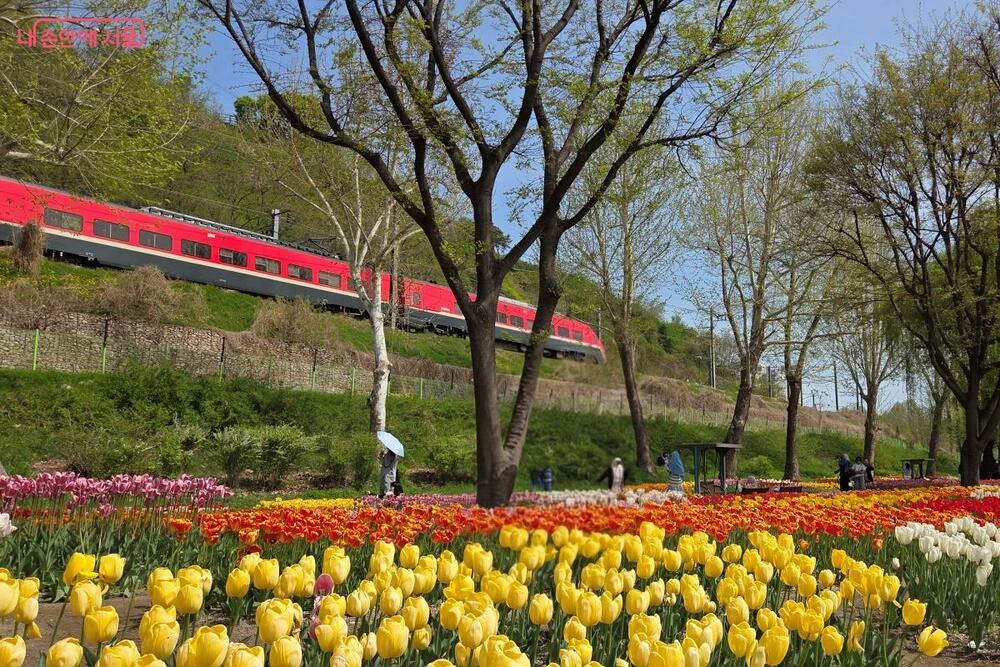
Once Seoul’s cherry trees are green, do not automatically chase forsythia or Korean azalea. Both often peak before or around cherry-blossom week. In late April, planted tulips and cheoljjuk—usually rendered in English as royal azalea—are the more plausible rescue plan, but only after you verify the exact garden with dated, current-year photos.
Spring flowers do not bloom as a tidy relay. Warm weather can compress several seasons into the same week, while hard rain and wind can strip more than one display in a few days.
Read the flower names before reading the calendar
- *Forsythia, gaenari (개나리):* an early-spring flower. Eungbongsan is Seoul’s familiar yellow hillside, but it is usually a companion to cherry blossoms, not a dependable next act.
- *Korean azalea, jindallae (진달래):* also early. The Korea Forest Service’s 2026 national-average forecast projected its peak around April 3, ahead of cherry species around April 7. Those were nationwide estimates for the 2026 season, not guarantees for every Seoul slope.
- Tulips: planted beds depend on that garden’s annual design and weather. A Seoul field report dated April 28, 2026 found the Yongbi Rest Area Garden beds in full bloom after nearby forsythia and cherry blossoms had finished.
- *Royal azalea, cheoljjuk (철쭉):* the later pink option. A dated Seoul MediaHub report found Bulamsan Royal Azalea Hill close to peak on April 18, 2026.
The usable rule is: once cherry petals have fallen, *check tulips and cheoljjuk first. Consider forsythia or jindallae* only when a same-day image shows that a cooler or higher location still has color. Our guide to why Korea’s cherry-blossom forecast can be wrong explains why even a careful forecast can shift.
Two checks, not one cross-city flower chase
- 1Yongbi Rest Area Garden
- 2Bulamsan Royal Azalea Hill
The pins are alternatives in different parts of Seoul, not a recommended same-day itinerary. The line provides geographic context only. Open the live route for current transport, then search the Korean place name in Naver Map for the final approach.
Yongbi Rest Area Garden: check the tulips first
Yongbi Rest Area Garden lies below Yongbigyo Bridge beside the riverside cycling path in Seongdong-gu. Search 용비쉼터, not the broad phrase “Seoul Forest tulips.” Eungbong Station on the Gyeongui–Jungang Line is a practical starting point, followed by a riverside walk. Pin the garden before leaving the station because the beds do not have a conventional street-front entrance.
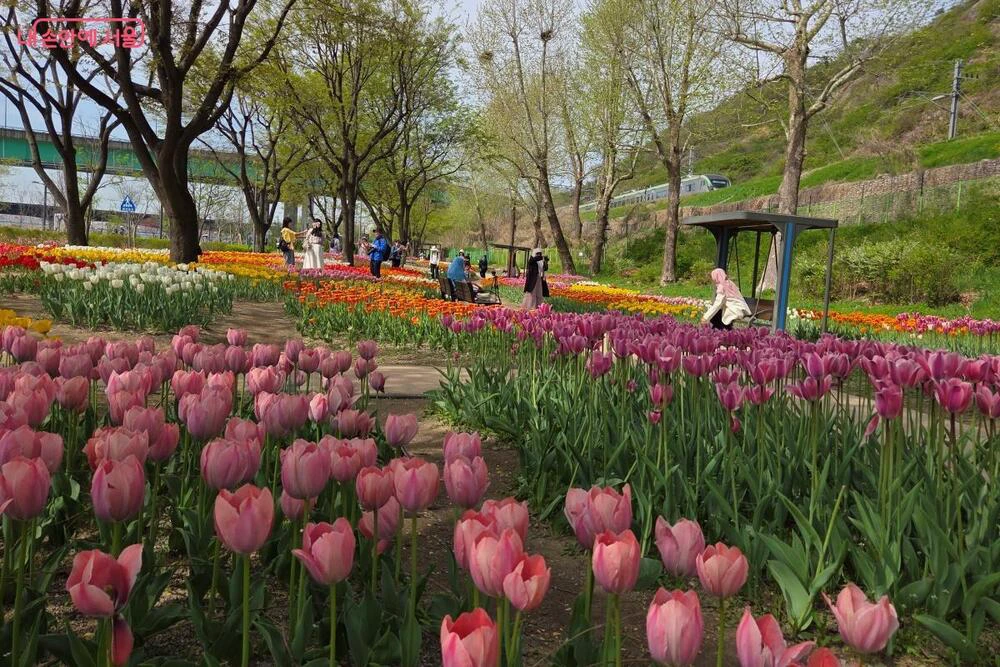
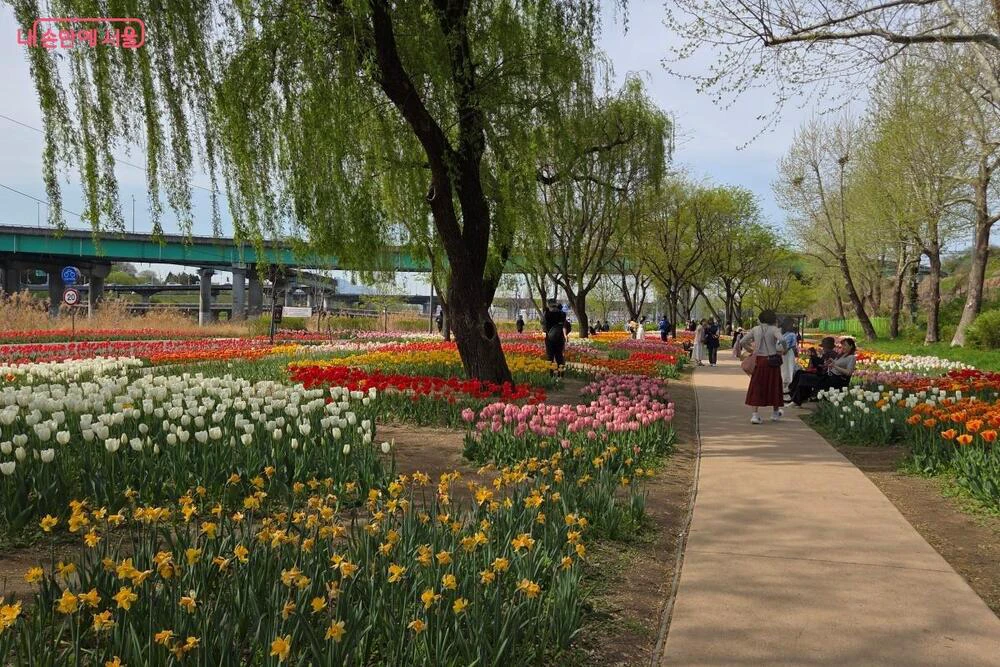
This is the stronger late-April check when you want a large planted display. Passing Gyeongui–Jungang and ITX trains make the garden easy to identify in recent photos. Seoul’s field report dated April 28, 2026 recorded full bloom and described the walk through the Jungnangcheon parks.
Do not substitute an old Seoul Forest photo. The same 2026 report said the large tulip beds seen there in previous years were absent during preparations for that year’s Seoul International Garden Show, with only smaller blooms near the Butterfly Garden. Planting can change again. An exact-place, current-year image is more useful than a timeless “best tulip spots” list.
- Maps: Google Maps · Naver Map
Bulamsan Royal Azalea Hill: the later pink option
Bulamsan Royal Azalea Hill suits the traveler imagining a pink hillside rather than orderly beds. Search 불암산 철쭉동산, not simply “azalea Seoul.” English search results often blur jindallae and cheoljjuk, even though their timing differs.
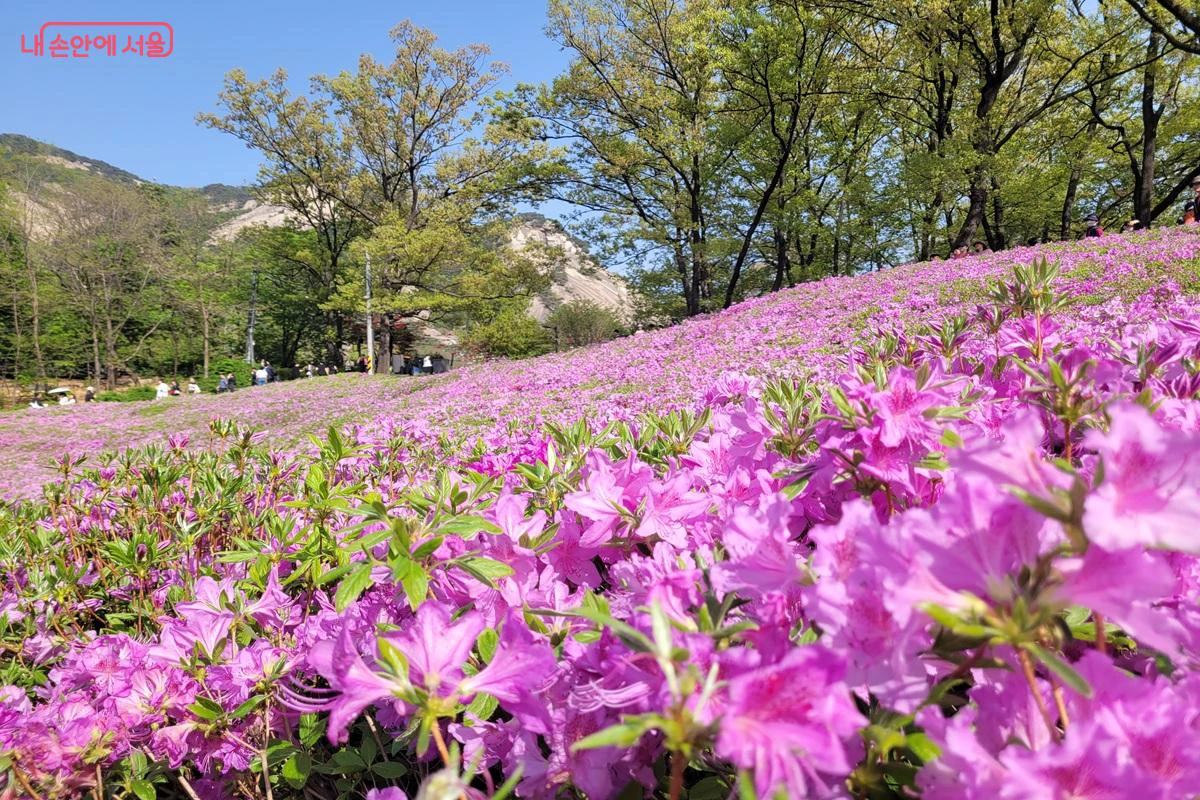
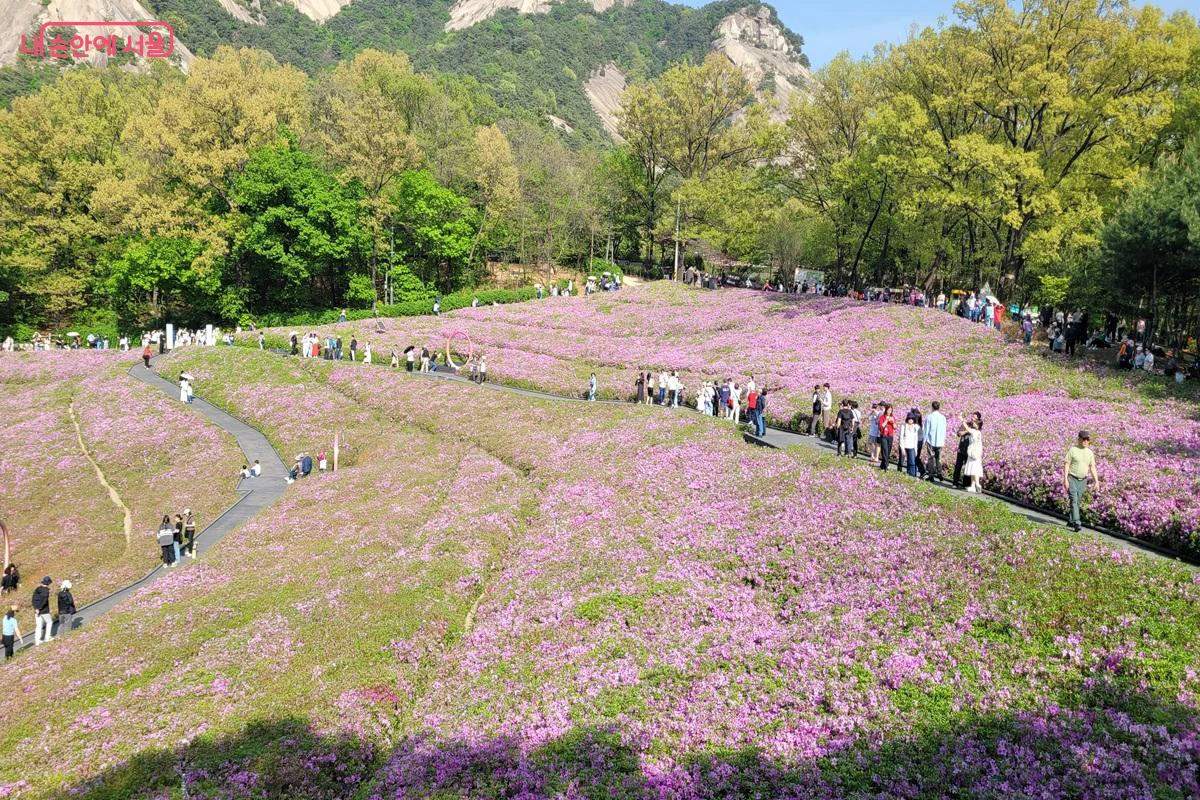
The Seoul MediaHub report published April 22, 2026 recorded the hill close to peak on April 18 and listed the 2026 festival for April 16–26. These dates demonstrate a later window; they are not next year’s schedule. The report places the garden in Bulamsan Healing Town near San 42-3, Junggye-dong, about 15–20 minutes on foot from Sanggye Station on Line 4, or a short bus ride away.
Expect crowds on festival weekends. Even when current photos show a patchier display, the planted slopes below Bulamsan’s granite face can still make a pleasant wide view. Do not cross Seoul expecting the dense carpet shown in peak-week images without checking first.
- Maps: Google Maps · Naver Map
Verify the bloom before committing the travel time
Traveler threads appear quickly after warm rain or strong wind. Replies suggest tulips or azaleas, but a spring 2026 discussion also shows why a citywide answer is unreliable: people compare different dates and neighborhoods. Use community posts as leads, not proof of today’s conditions.
Check no more than 24–48 hours before visiting:
- Search the exact Korean name—용비쉼터 or 불암산 철쭉동산—in Naver Images or Naver Map.
- Open posts with a visible visit date, not merely a recent upload date. Reject galleries recycling a previous year’s peak.
- Compare at least two angles. Close-ups hide bare patches; a wide view shows whether the journey is worthwhile.
- Review the weather since the photo. Warm afternoons advance blooms; hard rain and wind shorten a peak.
- Recheck the official city or event page for access changes. Festival dates and planting layouts are annual decisions.
If both displays are past peak, stop trying to rescue a cherry-blossom itinerary with another April list. May garden displays and roses are the next category, but they require the same exact-place verification.
Need a secure place for shopping deliveries while you follow the flowers? Find a nearby delivery spot.
Sources and asset credits
- Korea Forest Service 2026 spring-flower forecast — National-average, season-specific timing; not a perpetual Seoul calendar.
- Google Maps route between the two checks — Geographic context only, not a recommended same-day route.
- Hosted Yongbi tulip image 1 — Kim Mi-seon via Seoul Metropolitan Government.
- Hosted Yongbi tulip image 2 — Kim Mi-seon via Seoul Metropolitan Government.
- Seoul Metropolitan Government: Yongbi tulips, April 28, 2026 — Dated field condition, route context, and source for the Yongbi assets.
- Google Maps: Yongbi Rest Area Garden — Location reference.
- Naver Map: Yongbi Rest Area Garden — Korean-name search for the live approach.
- Hosted Bulamsan royal-azalea image 1 — Jo Yeon via Seoul MediaHub.
- Hosted Bulamsan royal-azalea image 2 — Jo Yeon via Seoul MediaHub.
- Seoul MediaHub: Bulamsan report, April 22, 2026 — Dated bloom and 2026 festival context; source for the Bulamsan assets.
- Google Maps: Bulamsan Royal Azalea Hill — Location reference.
- Naver Map: Bulamsan Royal Azalea Hill — Korean-name search for current local information.
- Traveler discussion from spring 2026 — Preference and timing context only, not evidence of current bloom.
- Hosted cover image — Cover crop from Kim Mi-seon’s Yongbi tulip photography via Seoul Metropolitan Government.
Last updated


