
Can You Plan Snowy Palace Photos in Seoul?
You cannot guarantee snowy palace photos for a fixed Seoul date, but you can improve the odds by combining the KMA forecast, morning radar and observations, current palace notices, and an early start at one carefully chosen gate.
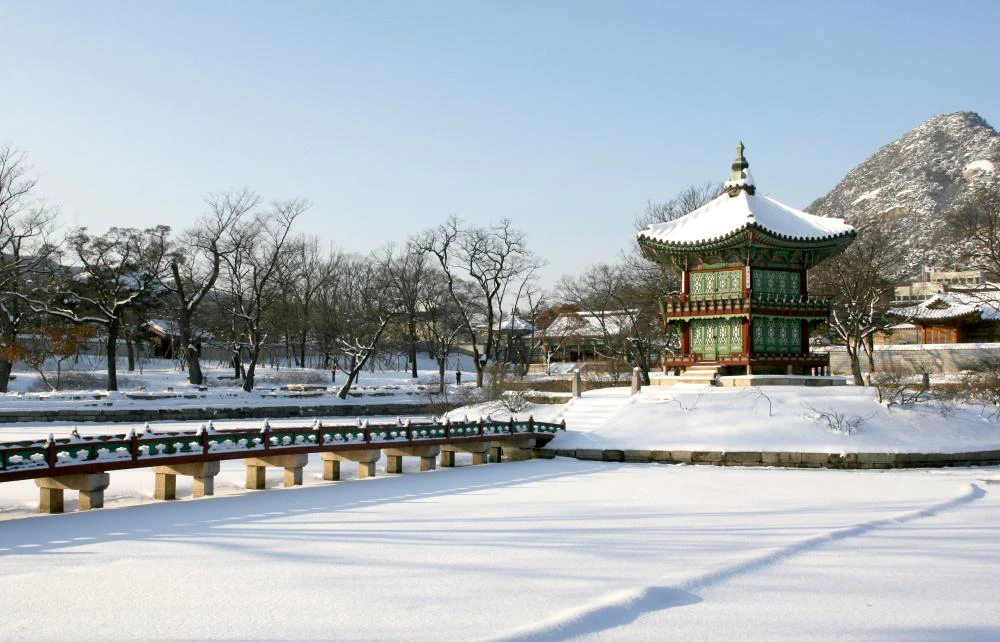
You can plan a fast response for snowy palace photos in Seoul, but you cannot reserve the result for a specific date months—or even several days—ahead. Treat the forecast as a signal, switch to radar and observations on the morning, and reach one open palace near opening time before roof snow thins and clean courtyards collect footprints.
The practical target is not simply “a day when snow is forecast.” It is a short window when snow has actually settled in central Seoul, the palace is open, travel is safe, and enough white remains on roofs, trees, ponds, and unwalked ground to make the photograph you want.
Why a snow icon cannot promise a palace photo
Several conditions have to line up. Snow may fall but melt on contact, change to rain, stay north or south of central Seoul, or stop before enough accumulates. Even after a successful overnight snowfall, sun, rising temperature, wind, maintenance, and visitors change the scene quickly. A citywide forecast also cannot tell you exactly how much snow remains on a particular palace roof.
This is why a long-range forecast is useful for keeping time flexible, not for booking a non-refundable photo session. Korea Meteorological Administration (KMA) short-term information becomes more useful as the event approaches, but the final decision still needs current evidence.
Use a three-stage decision clock
Three to five days before: protect a flexible morning
Check the KMA short-term forecast for Seoul. Note the expected precipitation type, timing, temperature around the snowfall, and whether the event is described as light and brief or potentially disruptive. At this stage, hold one or two mornings open if you can, but do not choose a palace or buy transport around a single snow symbol.
If the forecast changes between runs, that is not a reason to search for a more confident weather app. It is evidence that the photo outcome is still uncertain.
The evening before: decide whether an early start is plausible
Read the updated hourly forecast rather than the daily icon. Look for snow during the night or around dawn, temperature near the event, expected accumulation language in the official forecast, and any heavy-snow warning affecting Seoul. Then check the palace's official notice and closure day.
For Gyeongbokgung, the official VisitKorea listing gives November–February hours as 09:00–17:00, with last admission at 16:00, and lists Tuesday as the regular closure day. Holiday substitutions, temporary restrictions, and seasonal operations can change, so verify the current notice rather than treating those details as a permanent promise.
Pack the night before: charged phone or camera, spare battery kept warm, lens cloth, gloves you can operate controls in, and shoes with traction. Do not plan a dawn arrival outside the gate when the palace will not open until later.
The morning of: verify snow, then move
Use KMA's radar and ultra-short precipitation map to see where precipitation is moving. KMA describes its ultra-short window as extending to about six hours, but its own short-term forecast help notes that snowfall amount is not provided for the ultra-short period. Radar can help answer “is precipitation approaching or ending?”; it cannot certify that a palace courtyard is white.
Pair it with KMA's city observations, which include current weather and snow-depth fields when observed. Then look for a same-morning image from an official Seoul or palace account, a reputable live report, or a contact already in central Seoul. If roads are hazardous or a warning makes the trip unsafe, the photograph is not worth forcing.
Community posts show how narrow this window can feel. Travelers have shared palace photos during an active snowfall and the morning after overnight snow. Korean photo logs likewise describe leaving early because snow and untouched ground disappear quickly. These are observations, not forecast rules, but they support the same decision: wait for evidence, then go early.
What changes first after snow
Fresh snow does not disappear evenly. Exposed dark roofs warm differently from shaded ground; main paths are cleared or walked; open courtyards gain tracks; and thin snow on railings or branches can fall with wind. Ponds, shaded garden edges, walls, and broad roof planes may still photograph well after the most fragile surface snow has changed.
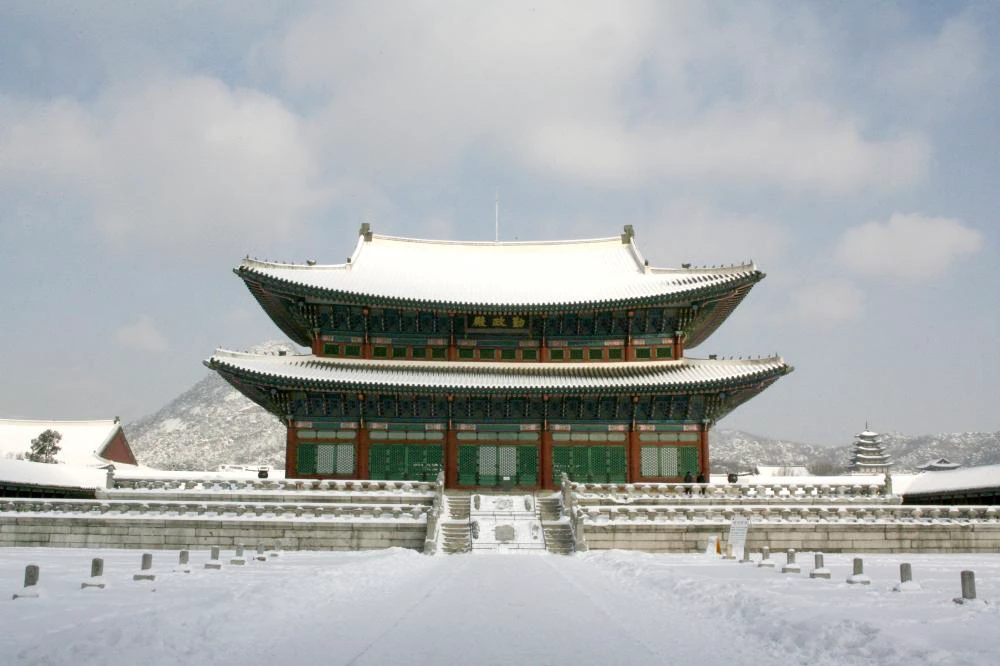
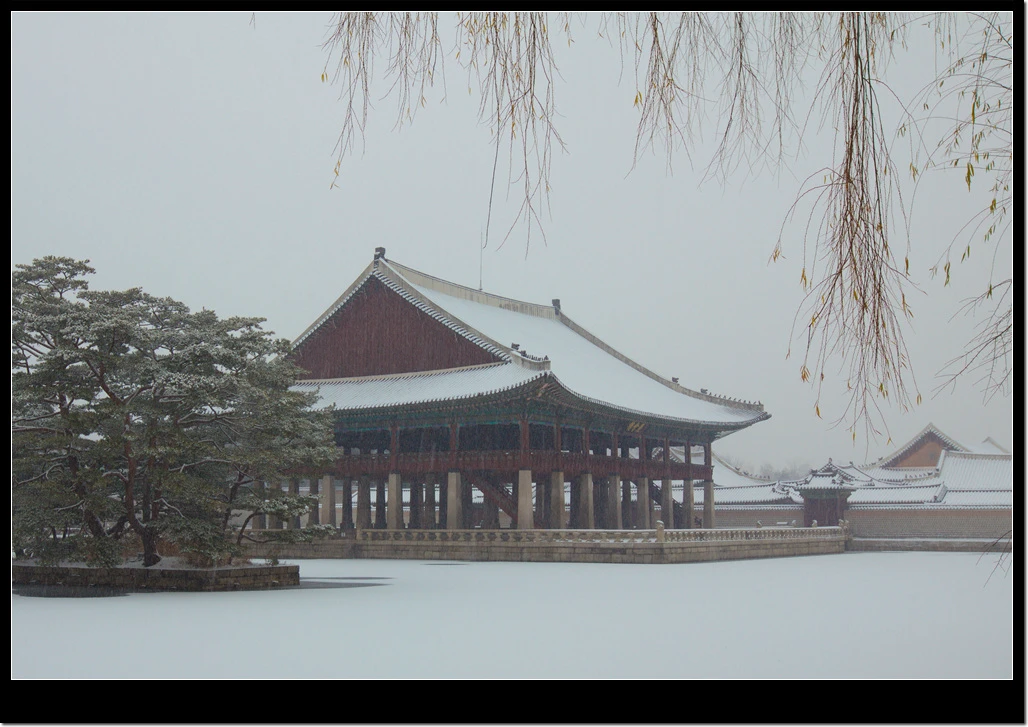
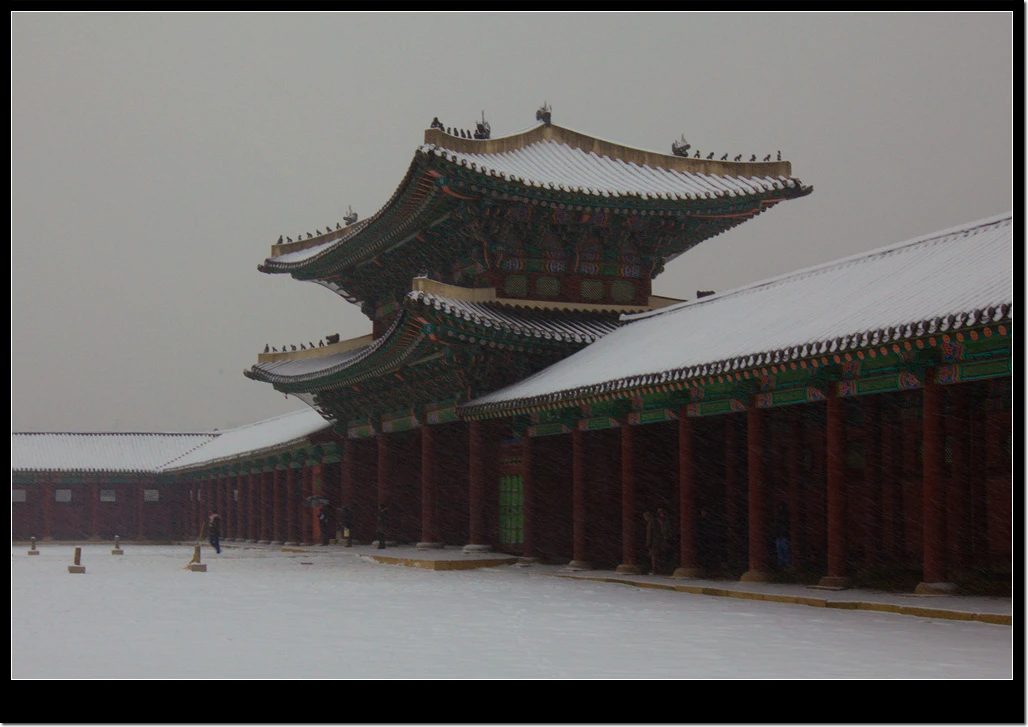
The slides show three distinct Gyeongbokgung surfaces: the open approach to Geunjeongjeon, the pond and roof planes around Gyeonghoeru, and a long palace roof during snowfall. They explain why “snow at the palace” is not one fixed visual condition. Choose the subject that still looks good when you arrive instead of trying to recreate a photograph from another storm.
Choose one palace, not three
Gyeongbokgung offers broad axial courtyards, mountain backdrops, Gyeonghoeru, and Hyangwonjeong. Changdeokgung has denser architectural layers and garden terrain, while Deoksugung is compact and easier to reach from the City Hall area. The best option that morning is the one that is open, reachable without unsafe travel, and suited to the picture you want.
The map marks Gwanghwamun, Gyeongbokgung's main public-facing gate, for orientation. It is not a recommendation to start a three-palace route after one snowfall; crossing central Seoul costs the clean early window. Check the palace's current entrance and construction notice before leaving, because temporary access can change.
- 1Gyeongbokgung—Gwanghwamun Gate
If Gyeongbokgung is closed on Tuesday, do not assume another palace follows the same weekly schedule. Verify that palace's official page and current admission notice. If an entrance is under restoration or an area is closed for safety, use the posted alternative rather than following an old map pin.
Arrive with a short shot order
At Gyeongbokgung, decide your first two subjects before the gate opens. A wide courtyard and a roof or pavilion detail are more realistic than a long checklist. Walk directly to the first subject, take the clean wide frame, then move to the second while the light and ground are still changing.
Do not step across ropes, onto planted or snow-covered restricted ground, or into a closed area for an unmarked surface. Keep tripods and bags out of main walking lines, and give staff room to clear hazardous paths. Snow hides curbs and uneven stones; slow down on steps even when the composition is waiting.
If the snow is falling, protect the camera from moisture and wipe the exterior before moving into a heated interior. Sudden temperature changes can cause condensation. Keep spare batteries inside a coat pocket, because cold reduces usable battery time.
Have a no-snow fallback
When central Seoul is wet rather than white, do not spend the morning chasing higher ground or another palace on guesswork. Use the same reservation or free time for palace architecture, covered corridors, museum interiors where photography is permitted, or a later visit after conditions are confirmed.
The reliable plan is therefore a decision system, not a date: hold a flexible morning, narrow the odds with the evening forecast, verify precipitation and observed snow at dawn, confirm the palace is open, and commit to one gate. That will not guarantee snowfall, but it gives you the best chance of reaching a real snow scene while it still exists.
Photo credits
- Featured Hyangwonjeong after snow: Korea.net / Korean Culture and Information Service, from Wikimedia Commons.jpg), CC BY-SA 2.0; resized for publication.
- Geunjeongjeon after snow: Korea.net / Korean Culture and Information Service, from Wikimedia Commons.jpg), CC BY-SA 2.0; resized for publication.
- Gyeonghoeru and palace roofs in snow: Korea Heritage Agency / National Heritage Channel, from K-Heritage TV; used with written operator permission.
Sources and image credits
- KMA short-term forecast — Checked for guide details or image attribution.
- heavy-snow warning — Checked for guide details or image attribution.
- VisitKorea listing — Checked for guide details or image attribution.
- radar and ultra-short precipitation map — Checked for guide details or image attribution.
- short-term forecast help — Checked for guide details or image attribution.
- city observations — Checked for guide details or image attribution.
- during an active snowfall — Checked for guide details or image attribution.
- the morning after overnight snow — Checked for guide details or image attribution.
- Korean photo logs — Checked for guide details or image attribution.
- CC BY-SA 2.0 — Checked for guide details or image attribution.
Last updated


