
How Hard Is Seoul’s July and August Heat, Really?
Seoul’s midsummer heat is manageable for many visitors, but humidity and long, exposed walks make it more tiring than the 29–30°C averages suggest. August is usually hotter; July is wetter.
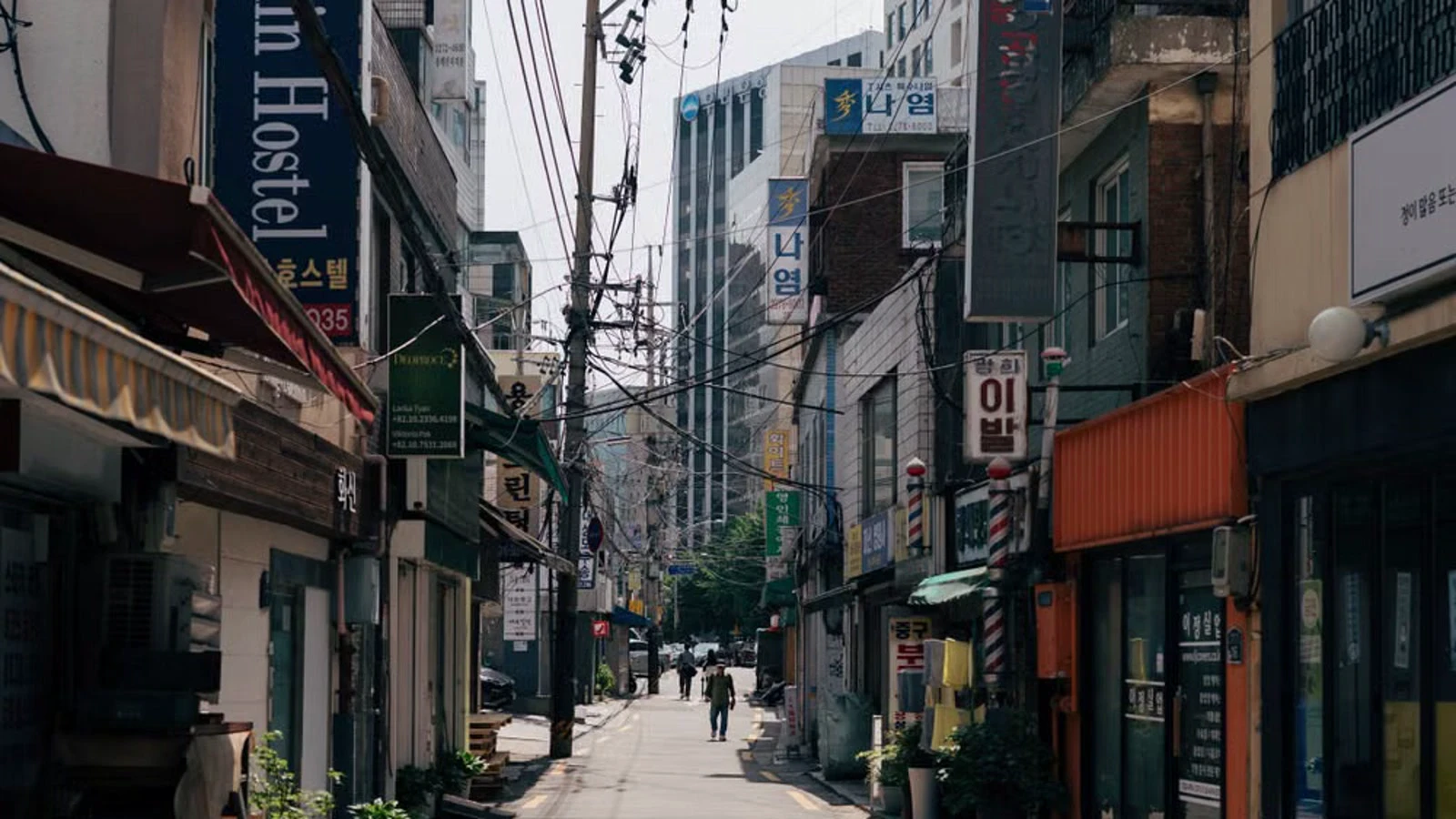
Yes—Seoul in July or August can be genuinely exhausting if your plan assumes hours of continuous walking, even though the 1991–2020 average daytime high is only 29.0°C in July and 30.0°C in August. August is usually the tougher month for heat, while July is wetter; either can still work if you judge the day by humidity, sun exposure, and uninterrupted outdoor time rather than the temperature alone.
If you can choose another season and dislike humid heat, move the trip. When July or August is your only window, plan outdoor stamina as a limited daily budget; the season does not automatically ruin the trip.
July is wetter; August is slightly hotter
The World Meteorological Organization’s Seoul climate table, supplied with Korea Meteorological Administration data, gives these 1991–2020 averages:
- July: daily minimum 22.3°C; daily maximum 29.0°C; 414.4 mm of rain; 16.3 rain days.
- August: daily minimum 22.9°C; daily maximum 30.0°C; 348.2 mm of rain; 14.7 rain days.
Those maximums are monthly averages, not a ceiling. A heatwave can run well above them, and the night may stay warm enough that sleep does not fully reset you. July’s heavier rain and cloud can sometimes soften the direct sun, but rain also leaves damp air and can interrupt outdoor plans. August is only one degree hotter in the averages, yet that small shift matters when the air is already humid and nights remain warm.
For the rain side of the decision, read our realistic jangma guide. The short version here is that July more often combines heat with heavy-rain uncertainty; August more often makes heat itself the main constraint. Neither pattern is guaranteed for a particular week.
Why 30°C can feel much worse than it sounds
Sweat cools the body by evaporating. Humid air slows that process, so the same thermometer reading can feel more oppressive than it would in a dry climate. This is why KMA issues heat alerts using feels-like temperature, which accounts for humidity and other conditions, rather than air temperature alone.
The city then adds radiant heat and walking. Palace courtyards, broad plazas, exposed bridges, steep lanes, and asphalt crossings offer less shade than a tree-lined park. A sightseeing day also includes the parts people forget to count: the walk from the hotel to the station, stairs at an exit, a queue outside, and the final uphill block after dinner. Ten tolerable segments can become one draining day.
That explains why travelers from similarly hot places report opposite experiences. In one August trip report, a heat-sensitive visitor found frequent air-conditioned stops made the trip workable. In another discussion among travelers used to tropical weather, several people still found Seoul unusually tiring because they walked outside far more than they normally would at home. These are personal reports rather than climate data, but they point to the useful variable: exposure, not hometown.
The air-conditioning contrast helps—and can mislead
Subway trains, museums, department stores, malls, cafés, and many restaurants often provide useful cooling breaks. Some people find the indoor temperature uncomfortably cold, while others find smaller venues or station platforms only mildly cooler. There is no single Seoul-wide indoor setting you can count on.
A thin layer is useful only if you are sensitive to air conditioning; it is not worth carrying a heavy jacket through the heat. More important is whether your route naturally passes through cooled spaces. A museum-and-shopping day may feel easy at the same forecast temperature that makes a palace, market, and hill walk miserable.
Do not confuse a five-minute cool-down with full recovery. If you leave a café still flushed, dizzy, headachy, or unusually weak, the next outdoor leg should not begin.
Use the official feels-like forecast as the decision line
Since June 1, 2026, KMA has used three heat-alert levels. A heatwave advisory is issued when the daily maximum feels-like temperature is expected to reach 33°C or higher for at least two consecutive days; a warning starts at 35°C under the same duration rule. The new severe heatwave warning can be issued in an area that has already recorded feels-like temperatures of at least 35°C for two days when either 38°C feels-like heat or an actual 39°C is expected. The current criteria are on the KMA warning standards page.
For a traveler, an advisory is not background noise. It is a reason to make long exposed attractions optional, reduce the distance between cooling stops, and check the current KMA severe-weather alerts before leaving. A warning means the itinerary should yield to the weather, not the other way around.
The Korea Disease Control and Prevention Agency’s 2026 guidance is simpler than most packing lists: drink water regularly before thirst, stay cool, wear light and loose clothing, block direct sun, and avoid strenuous outdoor activity during the hottest period. KDCA also now publishes a four-day heat-illness risk forecast for Korea’s 17 first-level regions.
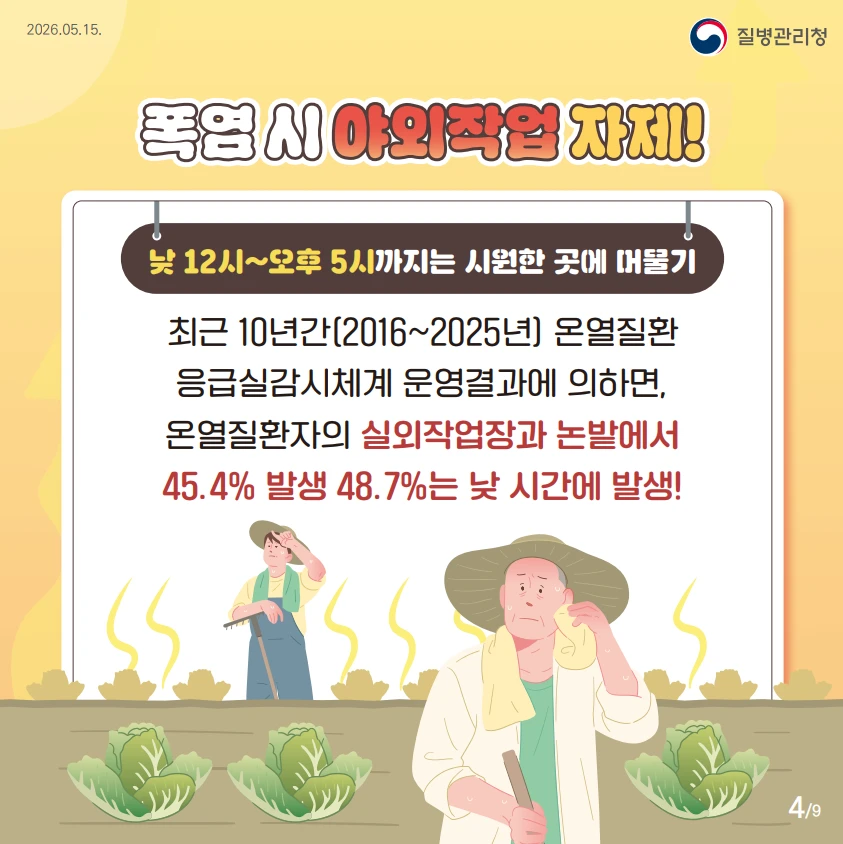
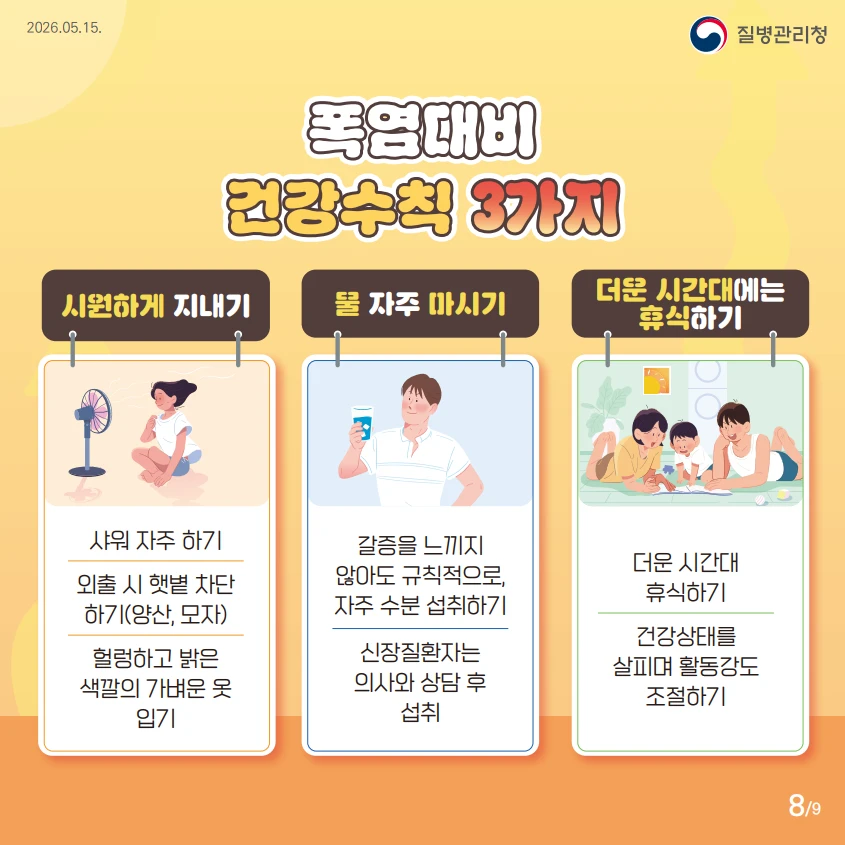
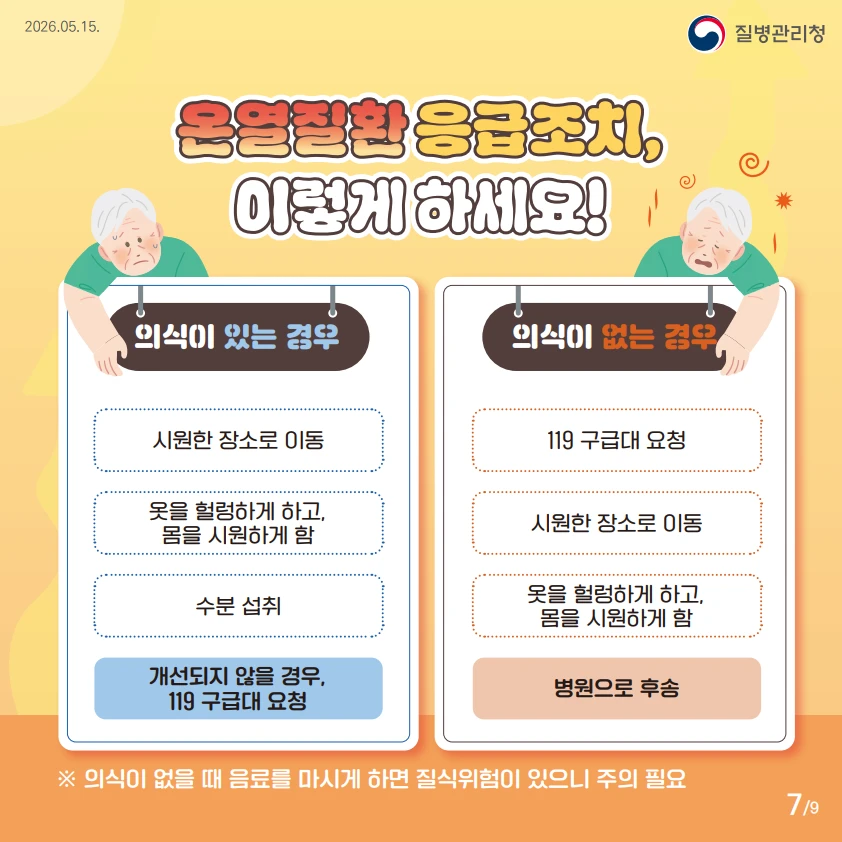
These Korean-language KDCA cards, published in April 2026, show the practical sequence: avoid outdoor activity from noon to 5 PM during heat events; cool down, drink regularly, and rest; then distinguish heat exhaustion from an emergency. They are grouped here because each answers a different stage of the same decision rather than repeating decorative summer imagery.
When discomfort becomes a medical problem
Heavy sweating, nausea, muscle cramps, headache, dizziness, and extreme fatigue can indicate heat exhaustion. Stop, move to an air-conditioned or otherwise cool place, loosen clothing, cool the body, and drink water if the person is fully conscious. If symptoms do not improve, seek medical care.
Confusion, loss of consciousness, or a body temperature above 40°C can indicate heat stroke. KDCA says to call 119 immediately, begin cooling, and never give a drink to an unconscious person. Older adults, young children, and anyone with a condition or medication that affects heat tolerance should be more conservative and follow their clinician’s advice.
Should you change your dates?
Keep July or August if it is your only realistic window and you are comfortable cutting or shortening outdoor plans. The trip is easier when the main priorities are food, museums, shopping, cafés, performances, or other activities with frequent indoor resets.
Move the dates if the trip depends on long palace walks, exposed markets, hiking, cycling, or photography sessions that cannot shift with the forecast—especially if someone in the group is heat-sensitive or medically vulnerable. August is the first month to avoid when heat is the deciding factor; July is the first to avoid when the combination of humidity and rain is the bigger concern.
A 30°C monthly average is neither a reason to cancel by itself nor permission to overbook the day. Check the feels-like forecast, count continuous outdoor minutes, and leave enough slack to stop when your body says the day is finished.
Facts and current alert links checked on August 10, 2026.
Sources and image credits
- World Meteorological Organization Seoul climate table — Korea Meteorological Administration data for the 1991–2020 July and August temperature, rainfall, and rain-day averages.
- August heat-sensitive traveler report — Personal experience showing how frequent cooled stops changed one visitor's tolerance; not climate evidence.
- Discussion among travelers used to tropical weather — Anecdotal examples of unusually high walking exposure in Seoul.
- KMA heat-warning standards — Heat advisory, warning, and severe-warning criteria in force from June 1, 2026.
- KMA severe-weather alerts — Current official alert check before travel.
- KDCA four-day heat-illness risk forecast — Regional risk forecast for Korea's 17 first-level regions.
- Gül Işık on Pexels — Sunny Seoul street image used as the cover, cropped horizontally.
- Pexels license — License terms for the cover image.
- KDCA 2026 heat-illness prevention card news — Source of the three Korean-language heat-safety cards published in April 2026.
- Korea Open Government License attribution terms — Reuse terms linked from the KDCA source page.
- Delivery Spot featured image file — Cropped sunny Seoul street image used as the cover.
Last updated


