
October or November for Seoul Fall Foliage? Pick by Landscape
Choose late October for higher trails and early November for palaces, Namsan, parks and ginkgo streets—then recheck weather 48 hours before.
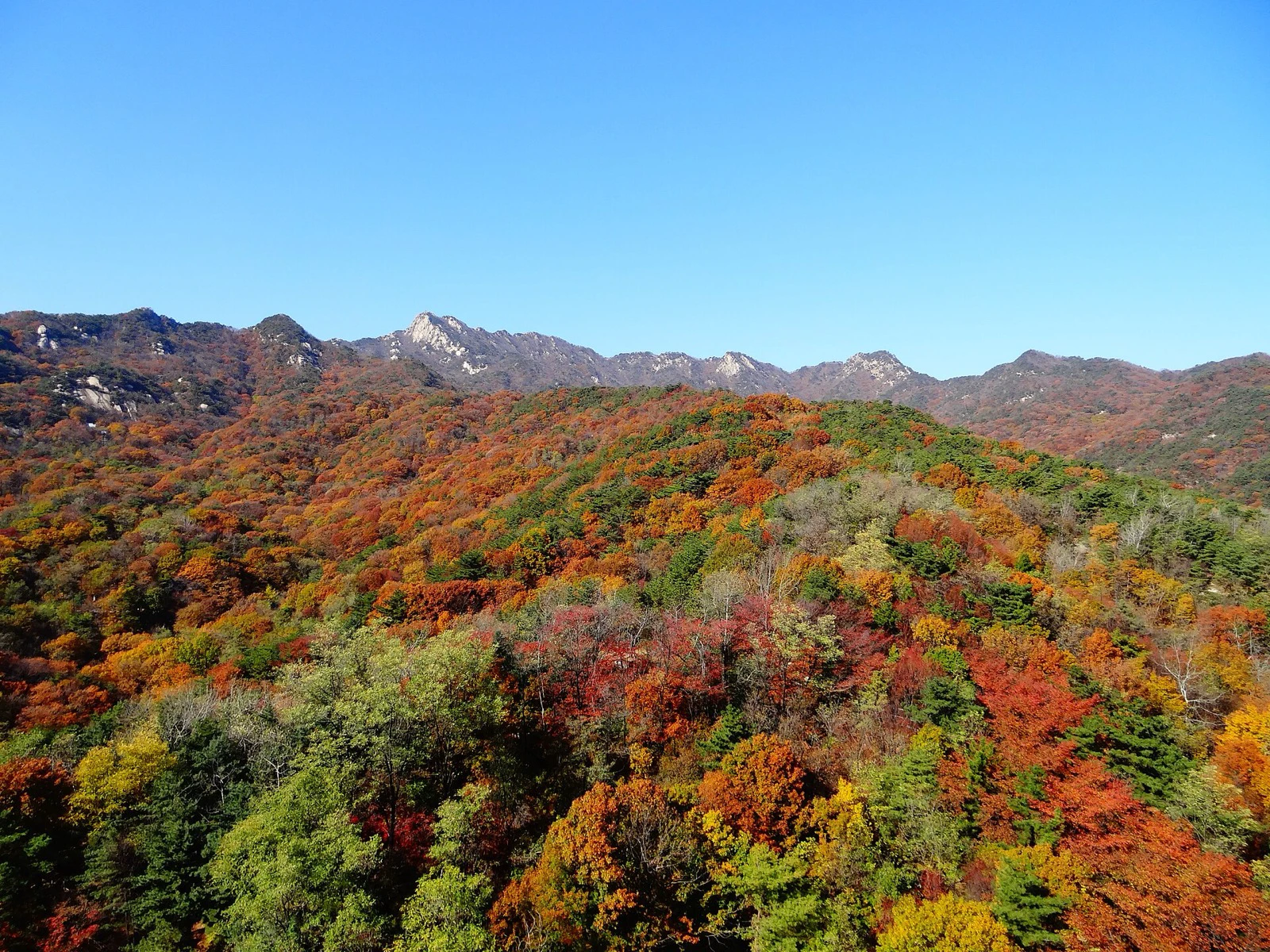
Seoul does not reach one citywide autumn peak. Choose late October through the first week of November for Bukhansan and higher trails; choose roughly the first half of November for palaces, Namsan, Seoul Forest and ginkgo streets. If one fixed window must cover both, November 2–10 is the strongest recent compromise, never a guarantee.
Checked on 12 August 2026, no official 2026 foliage forecast had been published. The dates below are planning ranges built from the latest official forecast and recent observations. Weather, elevation, tree species and a single windy rain can shift the view.
Pick the scene first
- October 20–31: early mountain color and cooler hiking; central Seoul may still look green.
- October 28–November 6: the recent sweet spot for Bukhansan approaching or reaching peak, with lower areas beginning to turn.
- November 5–12: a better bet for Namsan, palace grounds, Seoul Forest and mixed maple–ginkgo city scenes. Exposed high slopes may be past their best.
- After November 15: sheltered pockets can retain color, but wind and rain make a specific result far less dependable.
The best numerical anchor is Bukhansan. Korea Tourism Organization's 2025 forecast gave October 17 for first color and November 4 for peak. KMA's 2024 observation report recorded October 23 and November 4; that observed peak was seven days later than the climate normal used in the report.
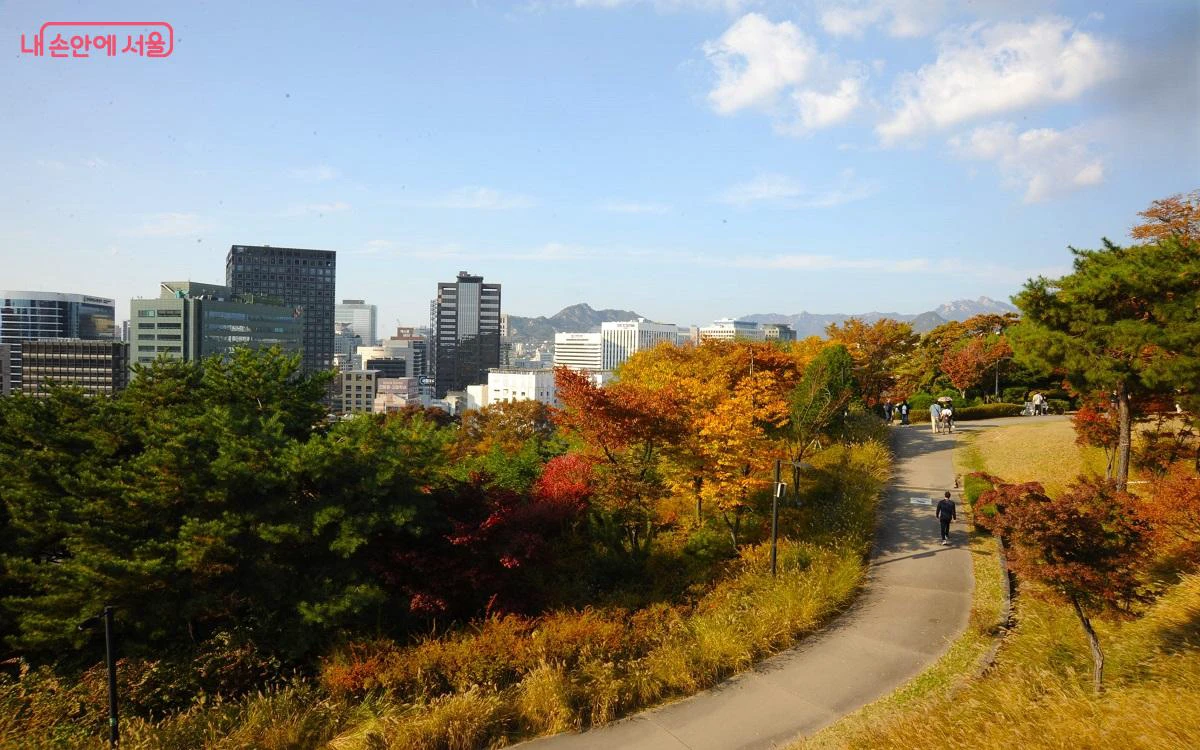
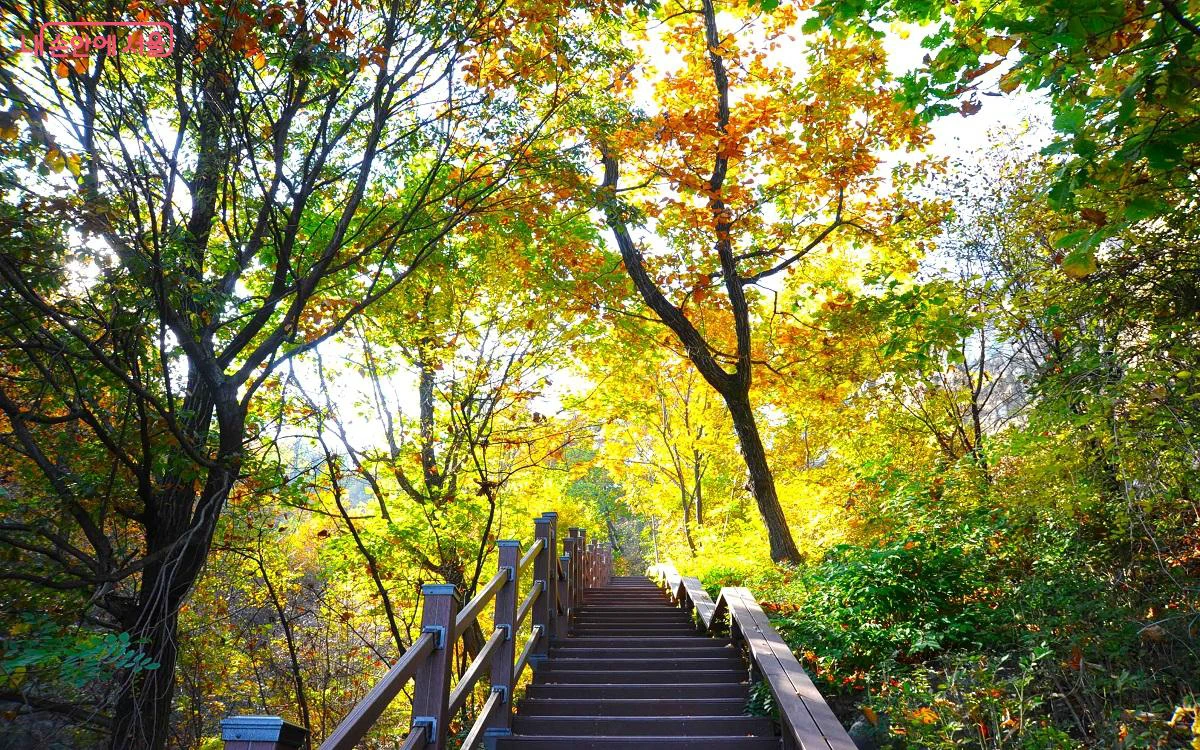
City trees move on another clock. A Seoul field report published November 7, 2024 expected Namsan to peak around November 10. A visitor choosing between October and November should therefore decide whether the priority is an elevated ridge or a lower urban walk.
Why official graphics can disagree
KMA calls first mountain foliage when about 20% of the summit-downward view has changed, and peak at about 80%. The Korea Forest Service tracks measured species differently, using at least 50% of leaves on the tree.
Its 2025 national species forecast put average peak at October 28 for ginkgo, October 31 for oak and November 1 for maple. Those national averages are not Seoul appointments. They clarify why a yellow ginkgo avenue can peak after a nearby maple and why “80% mountain color” does not match “50% of one species.”
Two timing anchors, not a day trip
This map shows a southern Bukhansan trailhead and Namsan for location and elevation context. The driving connector is not a recommended same-day foliage route.
- 1Bukhansan Jeongneung Visitor Center
- 2Namsan
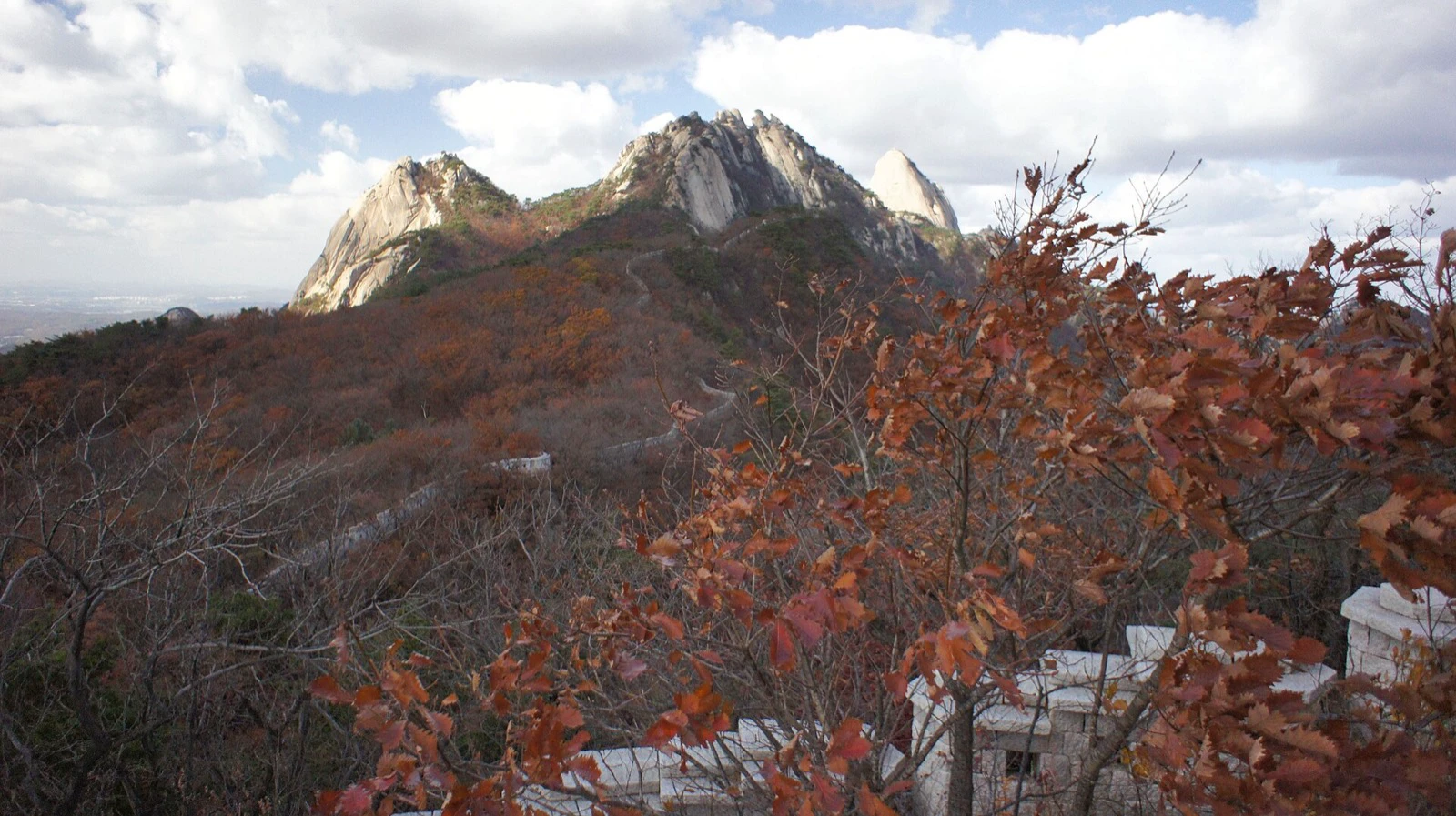
The photographs are historical examples, not a forecast. A Bukhansan ridge photographed October 27 can already look late-season, while Namsan photographs published November 7 still show green, yellow, orange and red together.
Mountain-first plan
Aim for the last days of October through the first week of November, then narrow the date after current-year observations begin. Late October is not automatically peak: both the 2024 observation and 2025 forecast placed Bukhansan peak on November 4.
Check hiking conditions separately from leaf color. Rain, high wind, cold rock or a trail restriction can matter more than a percentage on a foliage graphic. KMA's seasonal observation page links current famous-mountain photographs when its service is active; pair it with the current Bukhansan National Park notice before departure.
Palace, park or ginkgo-first plan
Choose the first half of November. Lower, built-up settings usually turn later, and their mix of maple, oak, zelkova, plane and ginkgo trees prevents a synchronized citywide peak. Seoul's 2025 autumn preference survey also points toward the city landscapes visitors actually choose, including palace grounds and Seoul Forest.
Keep a ginkgo plan movable by a few days: strong wind can turn a yellow canopy into a leaf carpet quickly. For red maple, check the exact park or palace rather than extrapolating from one viral photograph. If you are still choosing the season, our spring blossoms versus autumn foliage guide compares the planning trade-offs.
Decide again 48 hours before
Check the current-year KTO or Forest Service forecast, then KMA's live mountain photographs when relevant. Search the exact Korean place name on Naver and sort recent images or posts by date; discard any image whose shooting date or exact location is unclear.
Review the previous two days of rain and wind. Community reports are useful only as timestamped eyewitness checks: a late-October 2025 traveler thread contained sharply different reports across days and neighborhoods. It supports a flexible plan, not a claim that all Seoul is at peak.
With fixed dates, use November 2–10 as the citywide compromise. Shift earlier for a mountain-first trip and later for palaces, parks or ginkgo. A precise photograph requires a last check; a satisfying autumn day usually needs only the right landscape window.
Sources and image credits
- Ingu Kang via Wikimedia Commons.jpg) — featured Bukhansan view, photographed November 7, 2013, resized for publication.
- Uploaded featured image — published copy of the credited Bukhansan cover asset.
- CC BY-SA 4.0 — license for the featured image.
- Kellnerp via Wikimedia Commons.jpg) — Bukhansan fortress-wall body image, photographed October 27, 2018, resized for publication.
- CC BY-SA 4.0 — license for the Bukhansan body image.
- Jo Subong via Seoul Metropolitan Government — Namsan overlook and stairway images, published November 7, 2024.
Last updated


