
A Regional Korean Food Map: What to Eat in 7 Cities
Use one anchor dish and one flexible alternative to explore the food identities of Gangneung, Chuncheon, Jeonju, Daegu, Busan, Tongyeong, and Jeju without turning them into a rigid checklist.
No single dish is the only food you should eat in any Korean city. If you want one useful starting point, choose Chodang sundubu in Gangneung, dakgalbi in Chuncheon, bibimbap in Jeonju, makchang in Daegu, dwaeji-gukbap in Busan, Chungmu gimbap in Tongyeong, and black pork in Jeju—then switch to the alternative in each section if it suits your appetite better.
This is a decision map, not a claim that seven dishes define seven entire regions. The Korea Tourism Organization’s 2025 K-Local Food Trip 33 selection is a useful official tourism lens: it names regional specialties including Gangneung Chodang sundubu, Chuncheon dakgalbi, Jeonju bibimbap, Busan dwaeji-gukbap, Jeju black pork, and Tongyeong oysters. Daegu’s entry is fried chicken, while the city’s own food list gives visitors several older local choices. That difference is a reminder that there is no single uncontested canon.
A long must-eat list can also make real trips harder. In one Reddit food-itinerary discussion, travelers narrowed overlapping dishes instead of trying to collect every famous name. The approach below follows that practical idea: one anchor, one alternative, and a reason to choose between them.
Where these seven food cities sit
- 1Gangneung
- 2Chuncheon
- 3Jeonju
- 4Daegu
- 5Busan
- 6Tongyeong
- 7Jeju City
The pins are city-center orientation points, not restaurant recommendations. The connector shows the north-to-south spread and is not a suggested itinerary; Jeju is separated from the mainland, and live transport planning needs a separate flight or ferry decision.
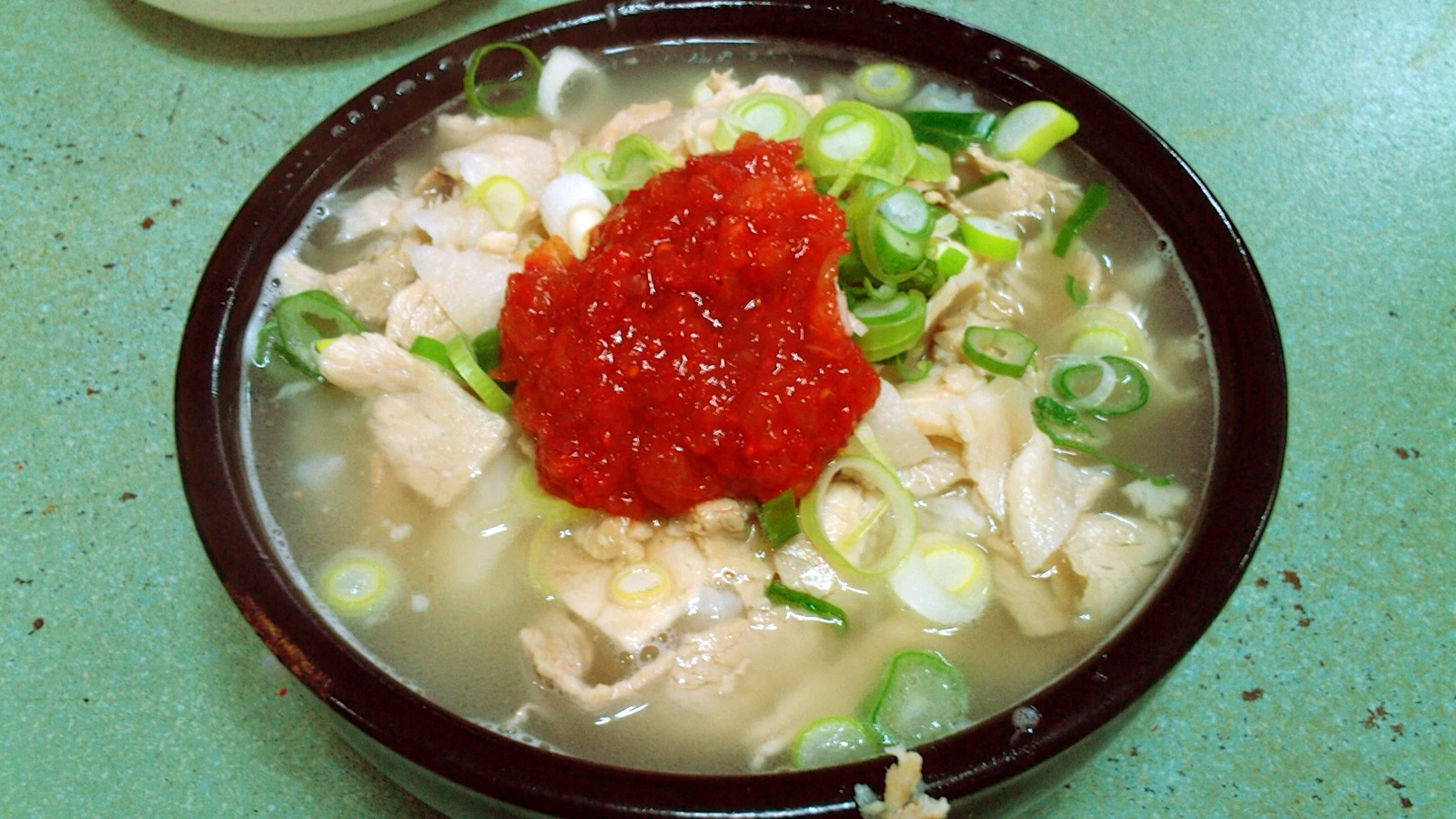
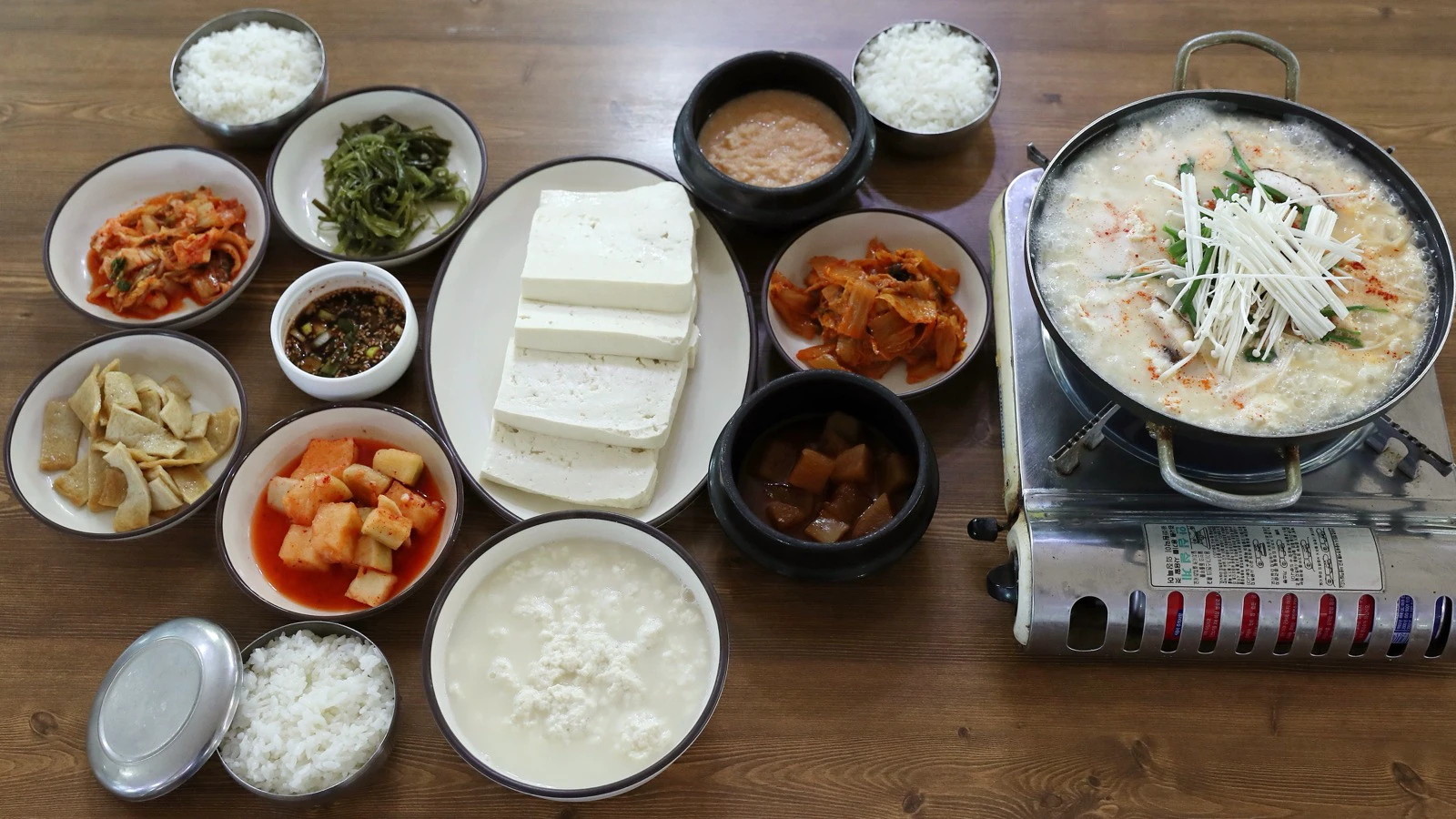
These two bowls illustrate a useful contrast: Gangneung’s tofu can be restrained and delicate, while Busan’s pork soup is built for seasoning at the table.
Gangneung: start with Chodang sundubu
Chodang sundubu (초당순두부) is the clearest first order when you want a dish tied to Gangneung itself. The local style puts very soft tofu at the center of the meal, often with rice, kimchi, and other small side dishes. A plain bowl lets you taste the tofu’s mild, clean character; a bubbling stew or restaurant-specific variation adds seasoning and heat.
Choose the mild version when tofu is the reason for the meal. If you actively want spice, look for a red stew or jjambbong-sundubu menu, but understand that it is a different experience from plain Chodang tofu. The KTO’s Gangneung Chodang sundubu guide treats the dish as a regional specialty rather than just a generic Korean soft-tofu stew.
Chuncheon: dakgalbi, with makguksu as the reset
Dakgalbi (닭갈비) is Chuncheon’s anchor: chicken cooked with vegetables and a red pepper-based seasoning, commonly on a large iron plate. It works best when you want a hot, shared main dish and do not mind the sauce carrying most of the meal’s intensity. Portion rules and add-ons vary by restaurant, so read the current menu instead of assuming one standard set.
Makguksu (막국수), buckwheat noodles usually served chilled, is the useful alternative. Order it as the main event when you want something cooler and lighter, or alongside dakgalbi when your group wants contrast. The KTO selection identifies dakgalbi with Chuncheon, but that does not make the city’s noodle tradition secondary in every meal.
Jeonju: bibimbap for range, kongnamul-gukbap for focus
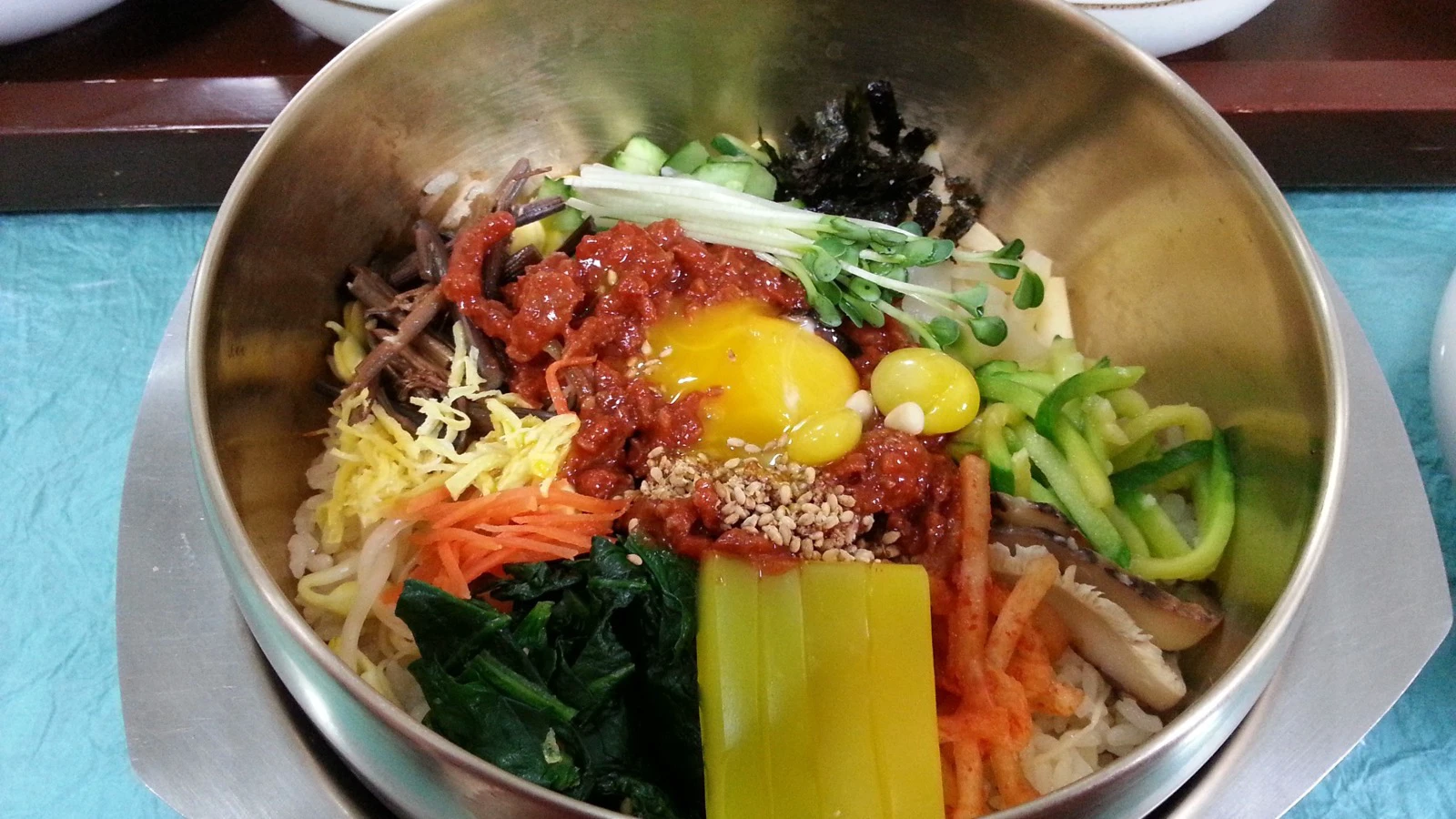
Jeonju bibimbap (전주비빔밥) is the obvious introduction because one bowl displays rice, seasoned vegetables, sauce, and toppings before they are mixed. It is a good choice when you want variety in one order and care about texture as much as heat. Restaurants differ in toppings and presentation, so the name signals a style, not one immutable recipe.
For a narrower, soup-centered meal, choose kongnamul-gukbap (콩나물국밥): bean-sprout soup with rice. It is less visually elaborate and often makes more sense when you want a warming breakfast or a straightforward bowl rather than a showcase dish. Jeonju’s official tourism site places both on its Food Road, which is a better picture of the city than treating bibimbap as its only meaningful meal.
Daegu: makchang for the grill, ttarogukbap for the bowl
Makchang-gui (막창구이) is the stronger Daegu choice for diners who enjoy chewy grilled offal and a social meal. Ask what cut is being served and check the minimum order, because the animal, cut, and portion format can differ by shop. It is a texture-forward choice; travelers who dislike offal should not force it for checklist value.
Ttarogukbap (따로국밥) is the easier alternative: a hearty soup served with the rice separately, as the word ttaro suggests. Daegu Metropolitan City’s official 10 Best Dishes includes both ttarogukbap and grilled makchang. The KTO’s 2025 list choosing Daegu fried chicken instead simply shows that official spotlights can answer different questions.
Busan: dwaeji-gukbap before you reach for every condiment
Dwaeji-gukbap (돼지국밥), pork soup with rice, is a practical Busan anchor because it is a complete bowl rather than a ceremonial tasting project. It may arrive deliberately mild, with salt, salted shrimp, chives, or a red seasoning available separately. Taste the broth first, then adjust it; adding everything immediately erases the baseline the kitchen served.
Milmyeon (밀면) is the alternative when weather or appetite points toward cold noodles. It gives you a very different Busan meal without requiring another heavy broth. The KTO’s Busan food feature uses dwaeji-gukbap as the regional representative, but a traveler deciding between hot pork soup and cool noodles should let the day’s conditions settle the choice.
Tongyeong: Chungmu gimbap, then seasonal seafood
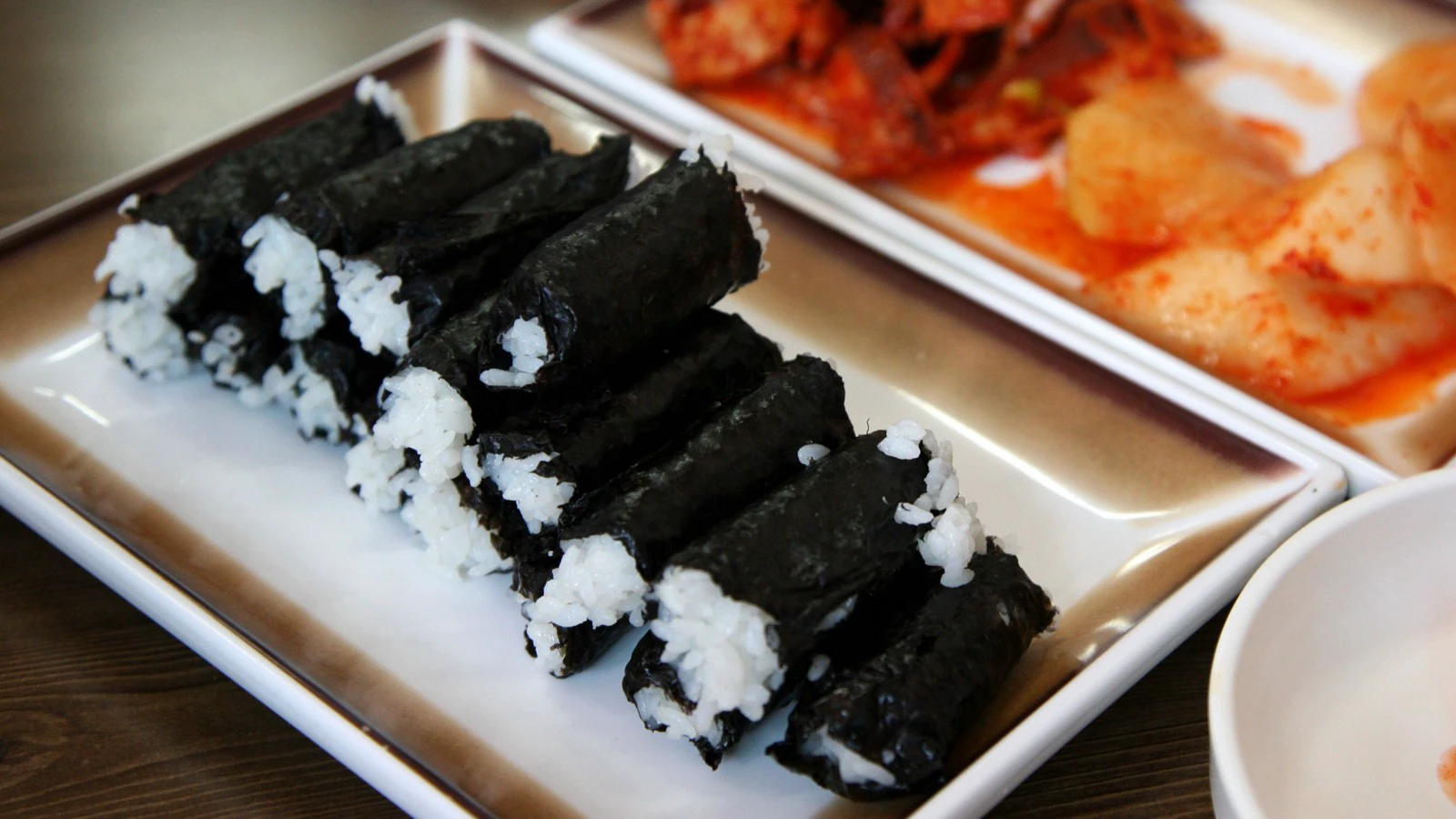
Chungmu gimbap (충무김밥) is not a stuffed roll. It is plain rice wrapped in seaweed and served with spicy radish kimchi and seasoned squid, so the meal’s character comes from alternating the separate components. The KTO’s dish guide traces it to Chungmu, the former name of today’s Tongyeong, and describes that plain-roll format.
Choose it when you want a portable, direct local reference. If seafood is the real reason for visiting Tongyeong, use oysters or another clearly identified local catch as the alternative when season and current availability align. The KTO’s 2025 regional list highlights Tongyeong oysters, but no oyster order is worth ignoring freshness, harvest conditions, or your own shellfish restrictions.
Jeju: black pork for a group, seafood for a different island meal
Jeju black pork, or heukdwaeji (흑돼지), is the anchor when you want a grill meal and have enough people for the restaurant’s current order rules. The useful distinction is the specified pork, not a promise that every restaurant or every cut will taste dramatically different. Check the menu’s origin labeling, cut, weight, and minimum order before sitting down.
If a shared grill is not appealing, choose an island seafood dish such as jeonbokjuk (전복죽, abalone porridge) or galchi (갈치, hairtail) in a format that suits your group. These are alternatives, not lesser consolation prizes. KTO’s regional selection names Jeju black pork, while Jeju’s coastal food culture gives seafood-focused diners a completely different route through the same island.
Use the map as a filter, not a scorecard
Pick the city first, then match the meal to the people eating it. A solo traveler may get more from gukbap or porridge than from a grill with a multi-portion minimum; a group can turn dakgalbi, makchang, or black pork into the center of the evening. Heat tolerance, offal preference, shellfish allergies, weather, and current menu rules matter more than completing a famous-food list.
Regional labels are most helpful when they sharpen a choice. They become misleading when they imply that every resident eats the same way or that one official campaign has settled the city’s identity. Start with the anchor, keep the alternative in view, and leave room for the actual menu in front of you.
Photo credits
- Jeonju bibimbap photo by Douglas Paul Perkins, CC BY 3.0, via Wikimedia Commons
- Dwaeji-gukbap photo by Leefect, CC BY-SA 3.0, via Wikimedia Commons
- Chodang sundubu photo by Republic of Korea, CC BY-SA 2.0, via Wikimedia Commons
- Chungmu gimbap photo by Junho Jung, CC BY 3.0, via Wikimedia Commons
Sources and image credits
- 2025 K-Local Food Trip 33 selection — Checked for guide details or image attribution.
- Reddit food-itinerary discussion — Checked for guide details or image attribution.
- Gangneung Chodang sundubu guide — Checked for guide details or image attribution.
- Food Road — Checked for guide details or image attribution.
- Busan food feature — Checked for guide details or image attribution.
- dish guide — Checked for guide details or image attribution.
- Jeonju bibimbap photo by Douglas Paul Perkins, CC BY 3.0, via Wikimedia Commons — Checked for guide details or image attribution.
- Dwaeji-gukbap photo by Leefect, CC BY-SA 3.0, via Wikimedia Commons — Checked for guide details or image attribution.
- Chodang sundubu photo by Republic of Korea, CC BY-SA 2.0, via Wikimedia Commons — Checked for guide details or image attribution.
- Chungmu gimbap photo by Junho Jung, CC BY 3.0, via Wikimedia Commons — Checked for guide details or image attribution.
Last updated


