
Is a Makeup Lesson Worth Adding to Personal Color Analysis?
A makeup add-on is worth it when you practise, get corrections, and leave with a routine you can repeat. Learn how to tell a lesson from a recommendation.
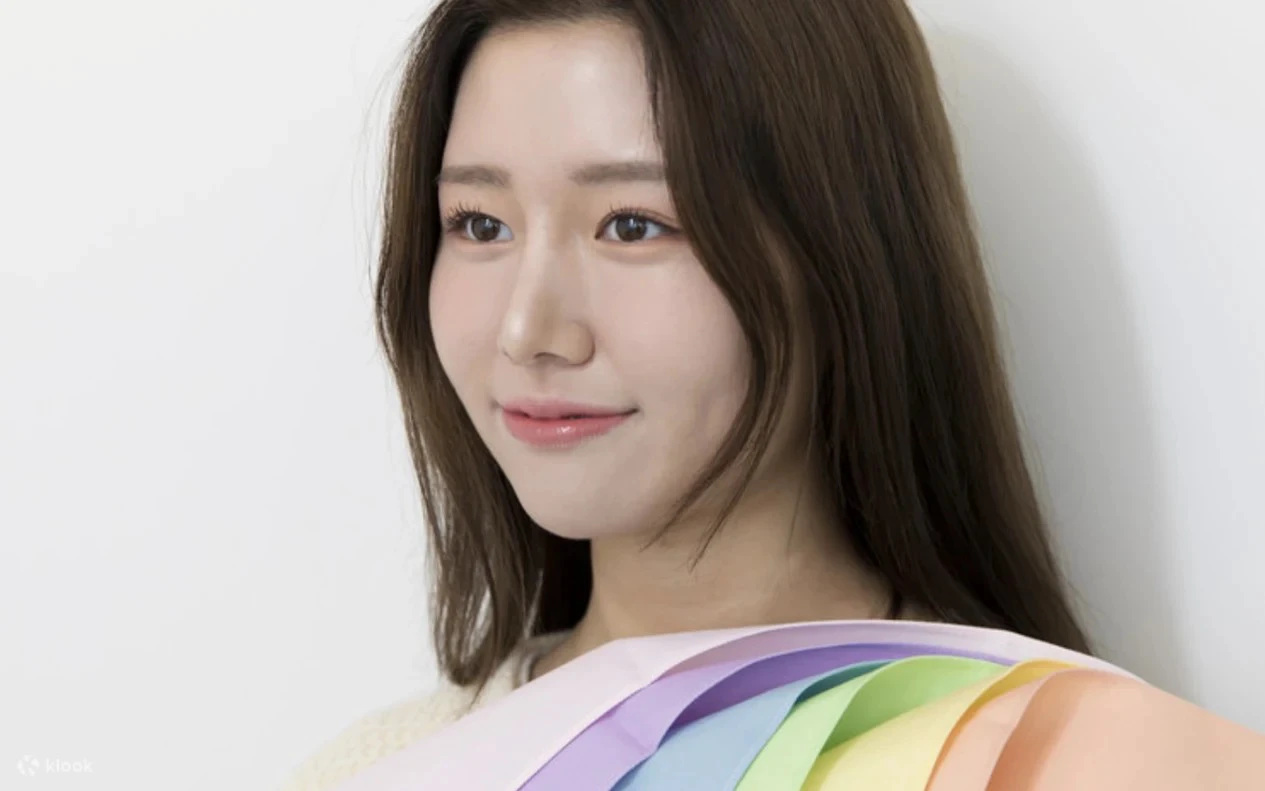
A makeup add-on is worth paying for after a personal color analysis when it teaches something you can repeat: you use the tools, apply at least part of the look, and get corrections. If the add-on only tests lip shades, recommends products, or gives you a finished face, it may still be useful—but it is not the same purchase as a lesson.
Ignore the package label for a moment. The booking page should tell you who applies the makeup, which steps are covered, how much time is separate from the color diagnosis, and what reference you take home.
First, identify the service you are buying
Three offers are often grouped under “makeup,” although they solve different problems.
- Shade recommendation or pouch audit: a consultant swatches colors, checks products you own, and gives shade families or a shopping list. Best when your technique already works and the missing piece is color.
- Professional application: an artist creates the look. Best when you want a makeover, a reference photo, or finished makeup for the rest of the day.
- Hands-on lesson: the instructor demonstrates, you apply the makeup, and the instructor corrects pressure, placement, order, and blending. Best when you want a routine you can reproduce at home.
A package may combine these, but the word makeup proves nothing by itself. The current Klook personal color listing in Myeongdong, for example, explicitly says its personalized makeup tips are not a full makeup service. The listed activity includes trying suitable lip colors and guidance on blush placement, eyebrow shape, and eyeliner shape. That is a useful consultation; it should not be mistaken for practicing a full face.
Read the verbs and the clock
A lesson description should contain actions such as apply, practise, repeat, correct, coach, or feedback. Words such as recommend, show, and demonstrate can describe a valuable service, but they do not confirm that your hands will do the work.
Seoul PASS’s current Image Ho listing makes the difference visible. For one person, it lists 100 minutes for personal color analysis plus a customized makeup class, 80 minutes for a daily makeup class with simple practice, and 150 minutes for a one-day master class with step-by-step practice and personalized feedback. For groups, the listed time and format change, and the page warns that a booking may be shared rather than private.
These are examples from one operator, not standards for Seoul. They show why a ten-minute recommendation after draping and a long practice class should not be priced or judged as the same product.
Before booking, ask:
- How many minutes are for makeup after the color analysis?
- Will I apply the products, and which parts will the instructor correct?
- Are base, brows, eyes, blush, contour, and lips included, or only selected areas?
- Is the session private, or can other guests join?
- Can the routine be adjusted to my skill level and the amount of makeup I normally wear?
- May I bring my own pouch and tools?
- Do I receive written steps, a face chart, shade names, or permitted photos?
- Which instruction languages are available for my date?
Why practice changes the value
Watching a clean eyebrow or eyeliner does not tell you how much pressure to use with your own hand. A finished face also cannot show whether you can repeat the placement and blending the next morning. Hands-on time reveals the small problem that a product list misses: where your line turns uneven, why your blush sits too low, or when the color intensity becomes heavier than you like.
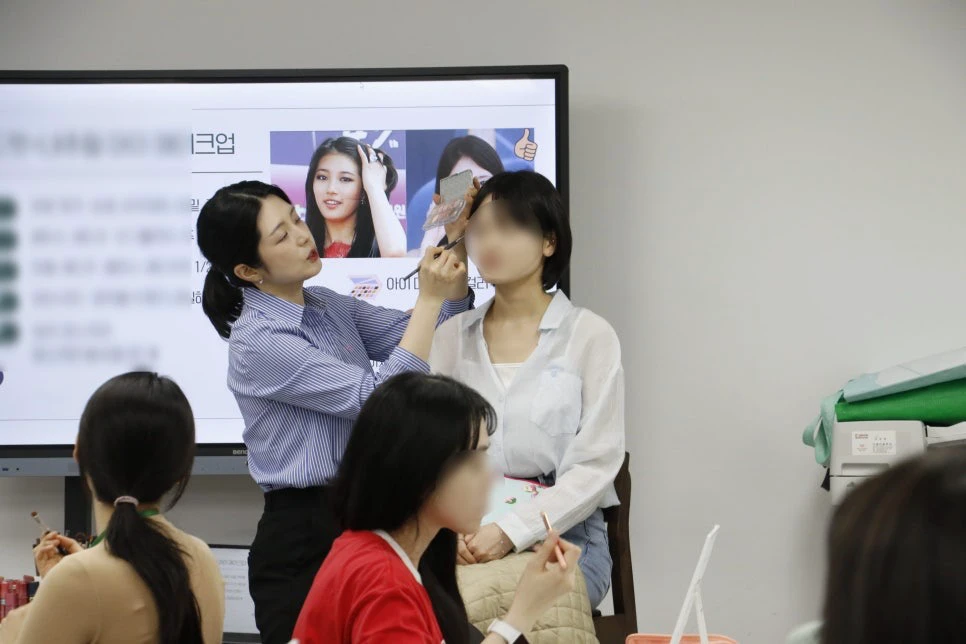
The published IMAGEMENT class report on Naver Blog describes a demonstration followed by participants working on their own faces and receiving immediate feedback. It also describes comparing the products participants brought with products used in class. The page did not expose its article text during the latest web recheck, so treat this as a credited professional-class example from the published capture, not a current booking promise.
When a recommendation is enough
Skip the longer lesson if you can already build a base, balance your brows, and create an eye look you like. Your real question may simply be how the diagnosis translates into lipstick, blush, and shadow families. A focused pouch audit and careful swatching can answer that faster.
Ask for both exact shade names and portable descriptions such as muted cool rose, clear warm coral, or low-contrast neutral brown. A product can be discontinued or unavailable at home; the color and texture description remains usable.
There is also no need to replace everything outside your named season. Ask the consultant to separate products into three groups: works as it is, works with different placement or pairing, and is genuinely difficult to use. Personal color is a decision tool, not a rule that empties your makeup bag.
When the lesson earns its price
Hands-on coaching is the stronger choice when you are new to makeup, repeatedly struggle with one feature, or want a short everyday routine designed around your face and habits. It can also help when your products fit the recommended palette in theory but the finished look still feels too heavy, flat, warm, cool, or high-contrast.
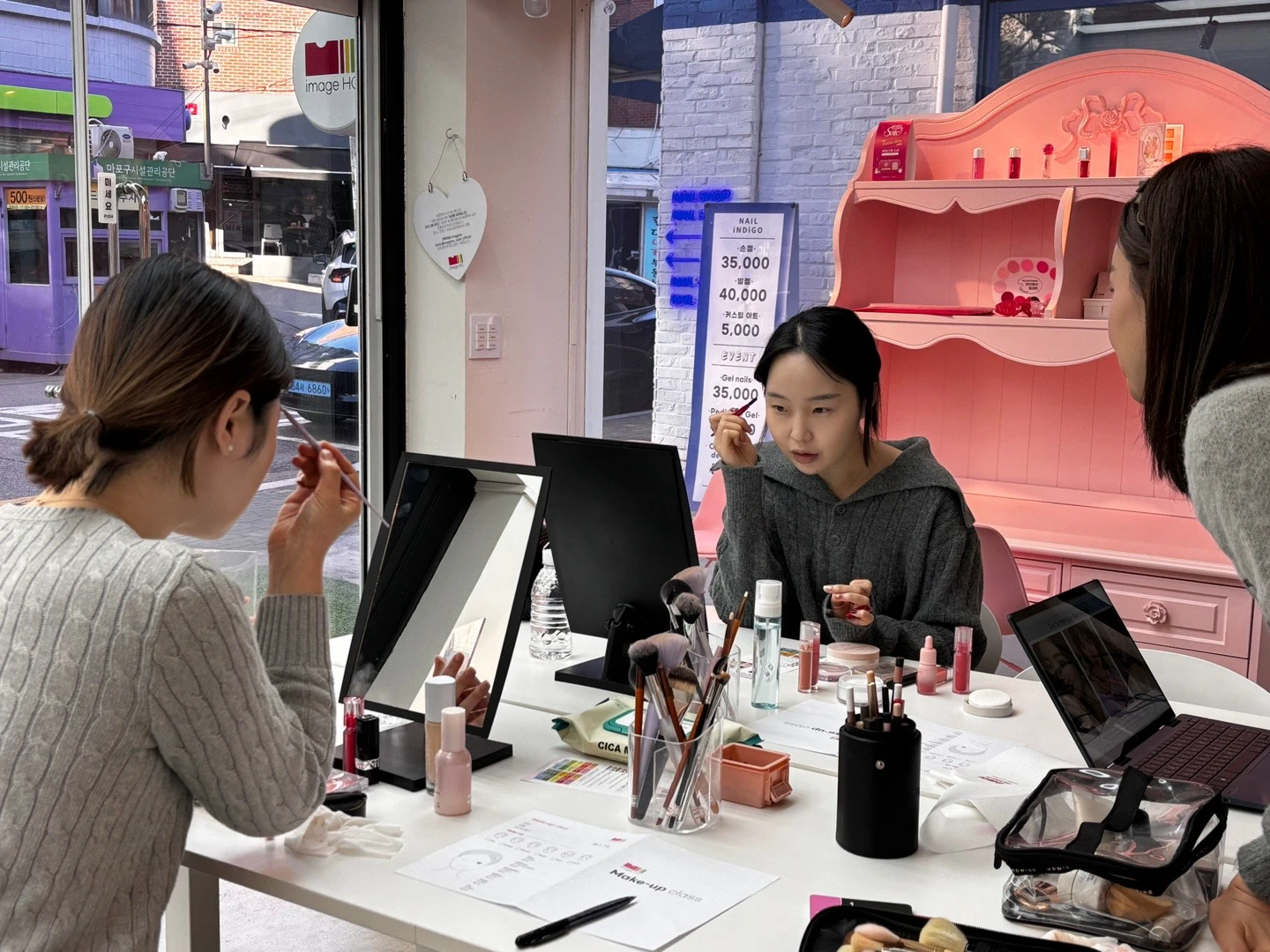
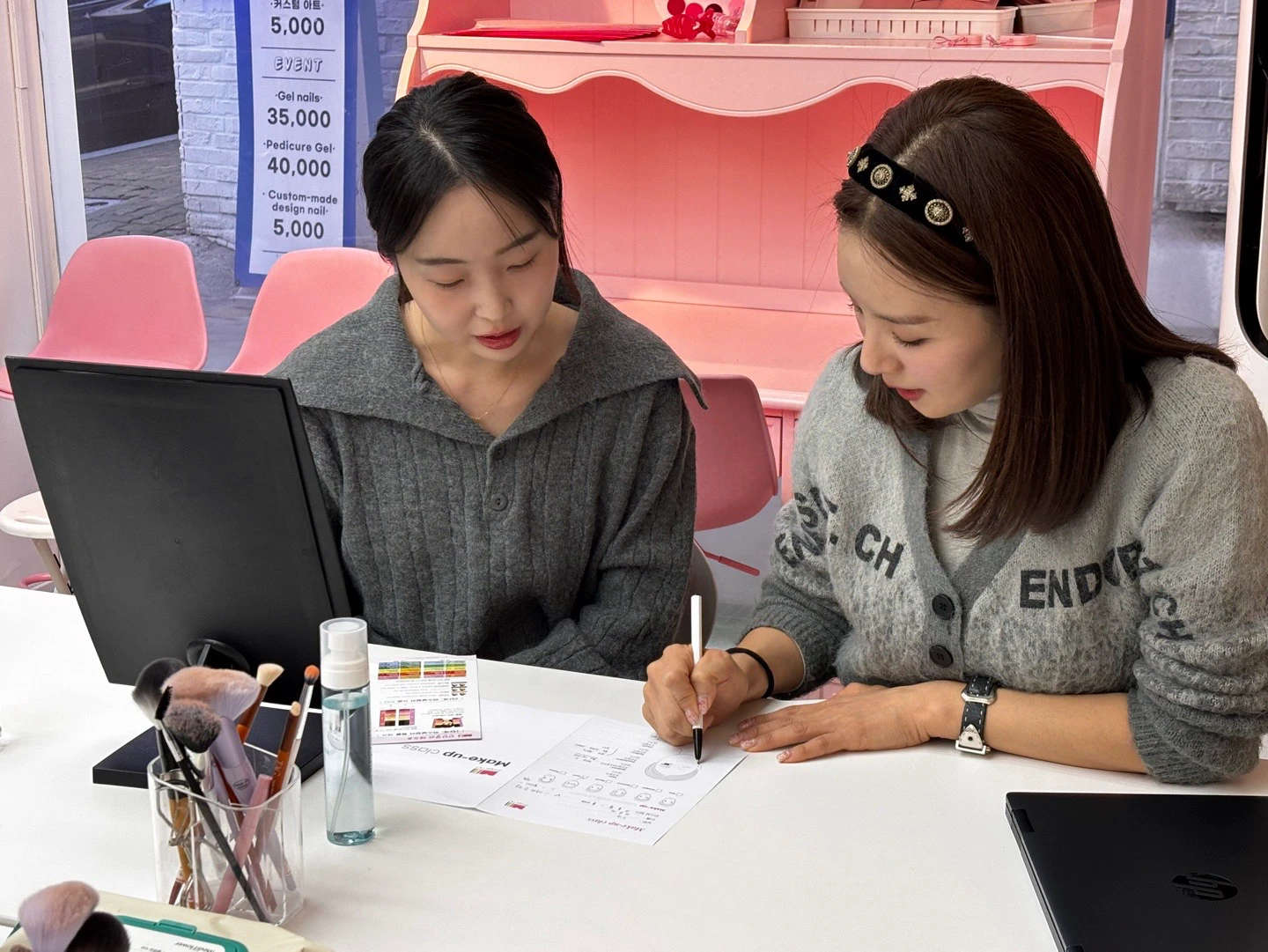
The Image Ho scenes show the useful part of a lesson: working at your own mirror and reviewing guidance with the instructor. The makeup disappears at the end of the day; a repeatable sequence and clear notes are the lasting value.
Bring the products and tools you really use, including the item that frustrates you. Tell the instructor how many minutes you have in the morning, your preferred coverage, whether you wear glasses or contacts, and which step you normally skip. Choose one or two problems to solve—uneven brows, eyeliner hidden by your eye shape, separating base makeup, or blush that takes over the face—rather than requesting every technique at once.
The older BRANME program page is retained here because the published guide used it to distinguish product and pouch advice from technique instruction. Its detailed program text was not available in the latest recheck, so confirm any current inclusion directly before booking.
Take home more than a season name
In a recent Reddit discussion about Seoul color analysis, experiences varied: one participant valued the makeup portion, while another advised taking notes because the summary packet did not capture everything said. These are individual accounts, not evidence that every studio performs consistently. They do support one sensible action: ask what you may photograph or record, then write down the steps you will need later.
Copy this question into your booking message:
Hello, I am considering the personal color analysis with makeup add-on. How many minutes are for makeup, and do I apply the products myself? Which steps are included? May I bring my own pouch, and will I receive written steps, shade names, or permitted photos? Is the session private, and which instruction languages are available for my date?
If the reply only repeats “customized makeup recommendation,” ask who applies what and how long the practice lasts. Choose the add-on when the answer describes a skill you want to learn—not simply more products placed on your face.
Package inclusions, durations, languages, and prices can change. Facts checked August 12, 2026.
Sources and image credits
- Delivery Spot cover image — published personal-color editorial image supplied for this guide; reused under the operator’s August 9, 2026 rights confirmation.
- Klook — Color & Make-up & Fashion & Face Analysis in Myeongdong — current distinction between personalized makeup tips and a full makeup service, including lip testing and placement guidance; rechecked August 12, 2026.
- Seoul PASS — Image Ho Personal Color One Day Makeup — current option inclusions, one-person durations, practice depth, group-session note, own-pouch option, and instruction languages; also the source and credit for the two Image Ho lesson images; rechecked August 12, 2026.
- IMAGEMENT professional class report on Naver Blog — demonstration, participant practice, immediate feedback, and pouch comparison described in the published capture; page availability rechecked August 12, 2026.
- BRANME personal makeup program page — older operator page retained from the published guide; page availability rechecked August 12, 2026, with current inclusions left for direct confirmation.
- Reddit — personal color analysis and makeup add-on discussion — individual experience signals about the makeup portion and note-taking, presented with attribution and variability; rechecked August 12, 2026.
- Delivery Spot IMAGEMENT class image — published web asset credited to the IMAGEMENT professional class report above.
- Delivery Spot Image Ho practice image — published web asset credited to Image Ho via the Seoul PASS listing above.
- Delivery Spot Image Ho notes image — published web asset credited to Image Ho via the Seoul PASS listing above.
Last updated


