
How to Shop Olive Young After a Personal Color Analysis
Turn a personal-color result into a short lipstick and blush list at Olive Young. Filter by temperature, depth, saturation, and finish before buying.
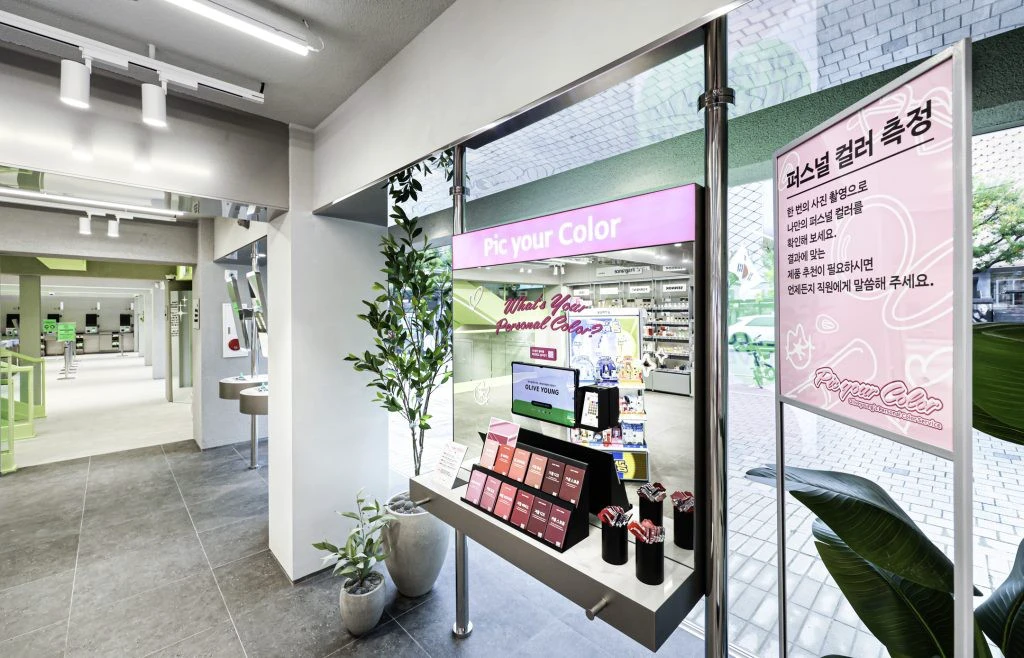
Use the personal-color result to reduce the shelf, not to let a season label buy for you. At Olive Young, translate the consultation into three filters—temperature, depth, and saturation—then compare at most three lip colors and two blushes. Leave with one or two products only if they still make sense in a second light and in your real routine.
A “Spring” or “Summer” tag is not a product guarantee. Formula transparency, finish, natural lip pigmentation, application thickness, and the light around you can all change the visible result.
Before leaving the analysis studio
Photograph the result card in neutral-looking light and record the full subtype, not only the four-season family. Ask the analyst which axis mattered most in your result:
- warm, neutral, or cool temperature;
- light, medium, or deep value;
- clear/bright, medium, or muted saturation;
- sheer, glossy, satin, soft-matte, or full-matte finish.
Take close photos of any recommended product showing the brand, line, exact shade number or name, and finish. If the studio has no product recommendation, photograph two or three of the strongest drapes beside the face. A traveler discussion about an underwhelming analysis included both a vague-card complaint and a report that photos of the actual makeup recommendations helped at Olive Young. These are individual experiences, not evidence that every studio works the same way, but they show why a searchable product or color reference is more useful than a season word alone.
Before walking out, make sure you can answer:
- What is the complete season or subtype?
- Which two or three colors were strongest?
- Which colors are comparison candidates rather than automatic rejects?
- Is depth or saturation more important than temperature for this result?
- Which finish and application strength matched the analysis?
Turn the card into shelf filters
Temperature: Warm lip and cheek colors may lean peach, coral, orange-red, brick, or golden brown. Cool ones may lean rose, mauve, berry, blue-red, plum, or lavender pink. Neutral does not mean every color works; apply depth and saturation next.
Depth: A lighter result often needs a lighter visible payoff, while a deeper result may need enough color to avoid looking faded. Judge the swatch on skin, not a poetic shade name such as “rose” or “brick.”
Saturation: Clear or bright results usually compare cleaner, more vivid color. Muted results compare colors with visible gray, beige, or brown mixed in. This filter often explains why two shades with the same undertone feel different.
Finish and coverage: A transparent tint and opaque matte in a similar color can behave like different products. Keep the finish the analyst recommended—or the finish you will actually wear—as part of the shortlist.
If the result card gives only Spring, Summer, Autumn, or Winter, use any seasonal shelf label as a starting section, then return to the best drape photos. Subtypes and individual contrast can reverse a simplistic seasonal shopping list.
Lip color: build a three-shade comparison
A current Maybelline undertone guide, dated March 25, 2026, describes warm lip colors as carrying yellow, orange, or warm red and cool colors as carrying blue, pink, or purple. It also recommends checking swatches in multiple lighting conditions, especially daylight. Use it as color vocabulary from a cosmetics brand, not a scientific rule that every warm person must buy coral or every cool person berry.
- Pick one shade close to the analyst's example.
- Add one slightly lighter or softer option.
- Add one slightly deeper or clearer option.
- Keep the finish comparable unless finish itself is the variable you are testing.
Swatch the three side by side on a clean hand or arm to compare relative temperature, depth, and saturation. A hand swatch does not reproduce the final lip result: natural lip pigmentation, complexion depth, coverage, and number of layers can all shift it. Photograph the labels and swatches under store lighting, then look again near a window or outside before paying when practical.
Test shared cosmetics conservatively
Do not put a shared tester directly on lips, eyes, or broken skin. The FDA's microbiological-safety page, rechecked August 12, says cosmetics can be contaminated through consumer use and advises consumers not to share products, keep containers clean, and wash hands before application.
In a store, ask staff how that tester is meant to be used. Prefer a fresh disposable applicator supplied by the store or a clean hand/arm comparison. Do not double-dip a disposable applicator. If the tester looks dried, separated, dirty, damaged, or has no hygienic way to dispense it, skip it. This is a cautious shopping practice, not a guarantee that any shared tester is sterile.
Blush: choose the effect before the shade name
Start with two blushes. Let one echo the temperature of the safest lip candidate; let the other be a little more neutral, muted, light, or deep according to the consultation. Blend each into a thin patch rather than judging a dense stripe or the color in the pan.
Check whether the applied color stays visible, turns unexpectedly orange, gray, or purple, and fits the level of blush you use at home. If you rarely wear obvious blush, the softer candidate may be more useful than the one that looks dramatic under store lights. If both require a routine you will not repeat, buy neither.
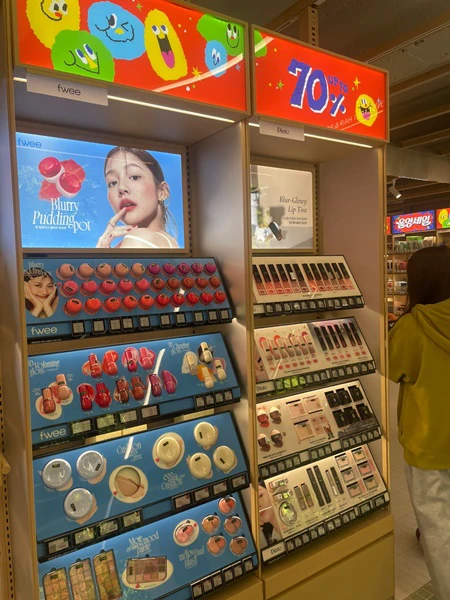
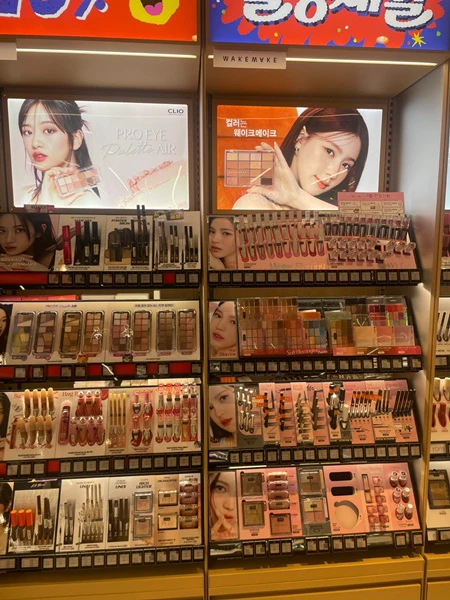
The displays show why a narrow plan matters: several brands can place neighboring colors beside promotion signs. Product lines, shade names, prices, stock, and promotions change. The images are shopping context, not current product recommendations.
Choose a branch for access, not a promised feature
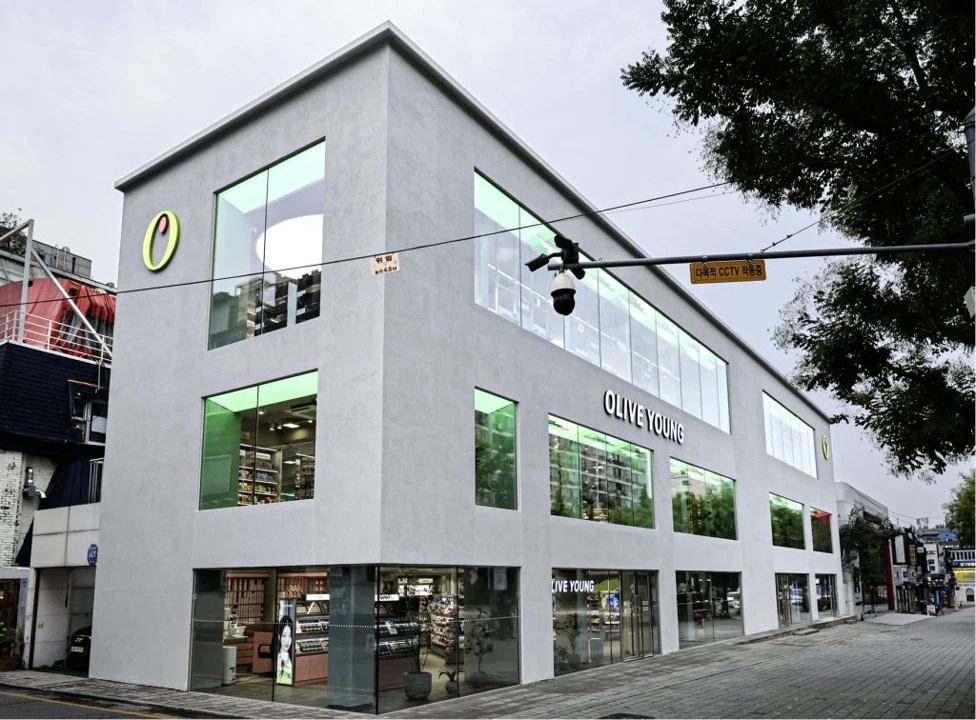
Large branches may make comparison easier, but special tools and staffed consultations are not standard across every Olive Young. CJ's official Apgujeong Rodeo flagship page, rechecked August 12, says the three-story location opened September 30, 2025, with dedicated color-cosmetics space, expert beauty consultations, skin scans, and self-service scalp and personal-color diagnostics. Those are features of that named flagship. They do not promise that a diagnostic station is working, available without a queue, offered in every language, or present at another branch.
A 2024 Naver guide by Damppum Personal Color Diagnosis observed that assortments varied among Seongsu branches and preferred a roomier location. Treat it as a dated independent observation and an image source, not current inventory evidence. Check the exact branch you will visit and ask staff about the service or tester you need.
Use a ten-minute buying rule
- Minutes 0–2: Open the card, drape photos, and exact product photos. Remove obvious temperature, depth, saturation, or finish mismatches.
- Minutes 2–5: Keep three lips and two blushes. Ignore discounts until the shortlist exists.
- Minutes 5–8: Make conservative, clean comparison swatches and photograph each label beside its swatch.
- Minutes 8–10: Check a second light and name the role of each product—daily lip, stronger lip, or everyday blush. If no role is clear, leave with the photos instead of forcing a purchase.
Show staff the card and a product photo, then use:
퍼스널컬러는 ___이고, [웜/쿨], [밝은/어두운], [맑은/차분한] 색이 잘 맞아요. 이 사진과 비슷한 립과 블러셔를 찾고 있어요. 테스트 가능한 제품이 있나요?
It means: “My personal color is ___. [Warm/cool], [light/deep], [clear/muted] colors suit me. I am looking for lipstick and blush similar to this photo. Are there products I can test?” The photo and three axes carry more shopping information than the season name alone.
Final purchase check
- Can you name the exact shade and finish without relying on the shelf tag?
- Did it survive a second light?
- Is the comparison hygienic enough for you to trust?
- Does it fill a real role different from products already owned?
- Would you still buy it without the sale sign or seasonal label?
A useful color analysis reduces wasted choices. One lip and one blush that work in your real lighting and routine are a better result than a bag bought because five shelf tags repeated the same season.
Sources and image credits
- Maybelline: lipstick undertone guide — Cosmetics-brand vocabulary for warm/cool/neutral color, natural lip pigmentation, and multiple-light comparison; dated March 25, 2026 and rechecked August 12, 2026.
- U.S. FDA: Microbiological Safety and Cosmetics — Official contamination pathways and consumer hygiene advice; rechecked August 12, 2026.
- CJ Newsroom: Apgujeong Rodeo flagship — Official named-branch opening and feature description; rechecked August 12, 2026.
- Traveler discussion about a personal-color analysis — Used only for individual workflow experiences, not as studio policy or color evidence.
- Damppum Personal Color Diagnosis guide — Dated independent branch observation and credited image source; not used as current stock evidence.
- Delivery Spot cover image — Published Pic Your Color asset from CJ Newsroom/CJ Olive Young under operator-confirmed reuse authorization.
- Delivery Spot flagship image — Published Apgujeong Rodeo flagship asset from CJ Newsroom/CJ Olive Young under operator-confirmed reuse authorization.
- Delivery Spot color-display image — Published Damppum/Naver Blog retail-display asset under operator-confirmed reuse authorization.
- Delivery Spot shelf image — Published Damppum/Naver Blog color-cosmetics shelf asset under operator-confirmed reuse authorization.
Last updated


