
How to Eat a Full Non-Spicy Day from Korean Convenience Stores
A genuinely filling non-spicy convenience-store day needs more than plain rice and banana milk. Build each meal from a staple, a protein, and produce; read sauces instead of trusting package colors; and manage the sodium, added sugar, and low-fiber traps that accumulate across three packaged meals.
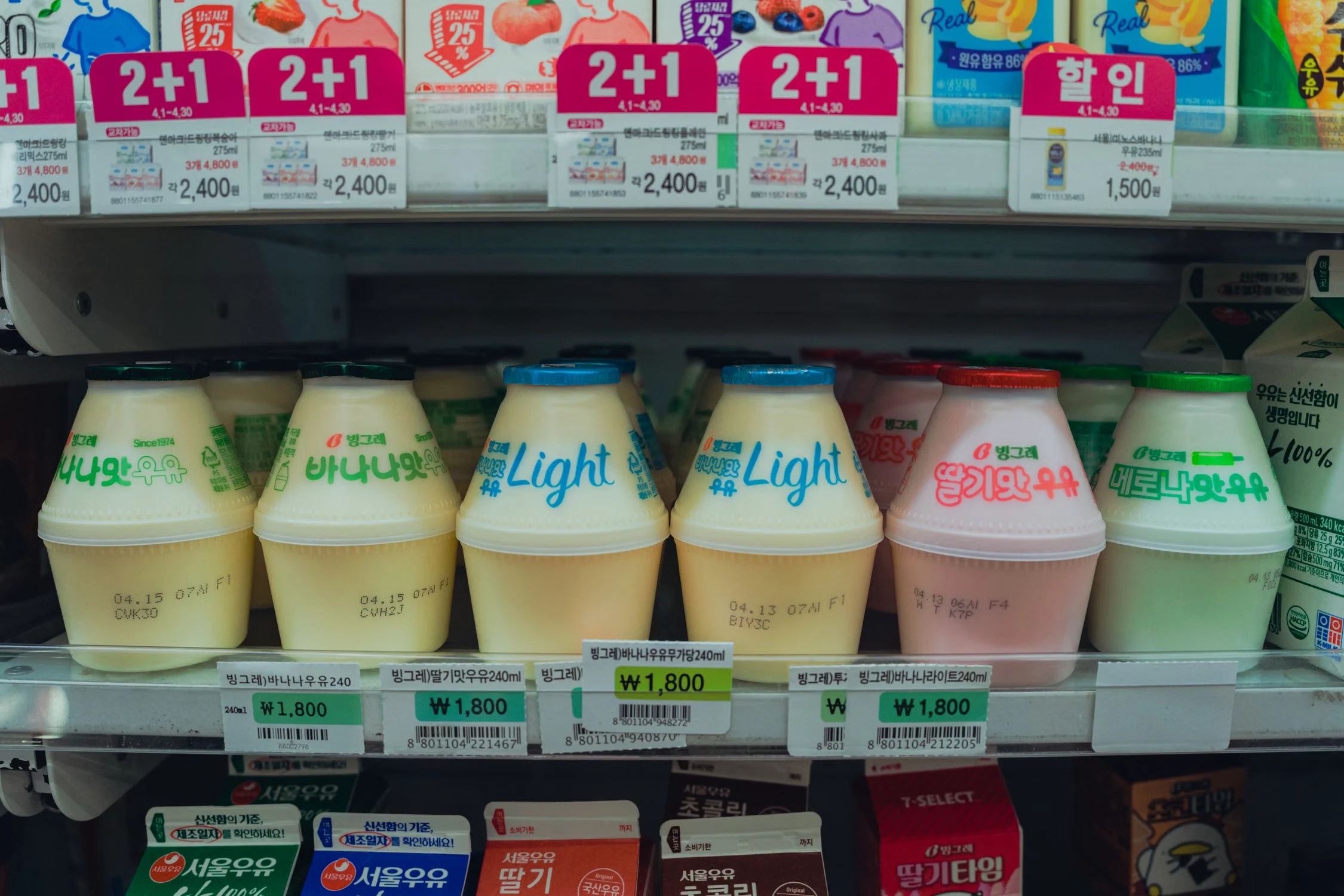
You can eat a full day from Korean convenience stores without choosing spicy food, but the successful version does not look like three cups of ramyeon. The simple formula is one staple + one protein + one fruit or vegetable at each main meal, with water as the default drink.
A practical day might be eggs, plain yogurt, and a banana for breakfast; a mild sandwich or gimbap with salad for lunch; and microwave rice with a plainly seasoned protein and vegetables for dinner. Product ranges change by chain, branch, and hour, so treat this as a shopping method rather than a fixed menu.
First, know what “non-spicy” does and does not mean
In everyday food conversation, an maewoyo (안 매워요, “it is not spicy”) usually refers to chile heat. It does not mean free of black pepper, garlic, mustard, allergens, or cross-contact. Someone who merely dislikes heat can choose by flavor name. Someone with a pepper allergy needs a full ingredient check and a medically appropriate communication plan.
Scan the front for words that commonly signal heat: 매운 (spicy), 매콤 (spicy-savory), 불닭 (fire chicken), 청양 (Cheongyang chile), 고추장 (red-pepper paste), 제육 (often spicy pork), and 김치. Red packaging is a clue, not proof; mild tomato products can be red, while a pale cream sauce can still contain chile.
Names such as 참치마요 (tuna mayo), 햄치즈 (ham cheese), 불고기 (bulgogi), 간장 (soy sauce), 계란 (egg), and 유부 (seasoned tofu pouch) often lead to gentler options. They are not guarantees. A tuna-mayo triangle can have a spicy variant, and a soy-based sauce can include chile. Read the full name and ingredient panel.
A realistic one-day shopping plan

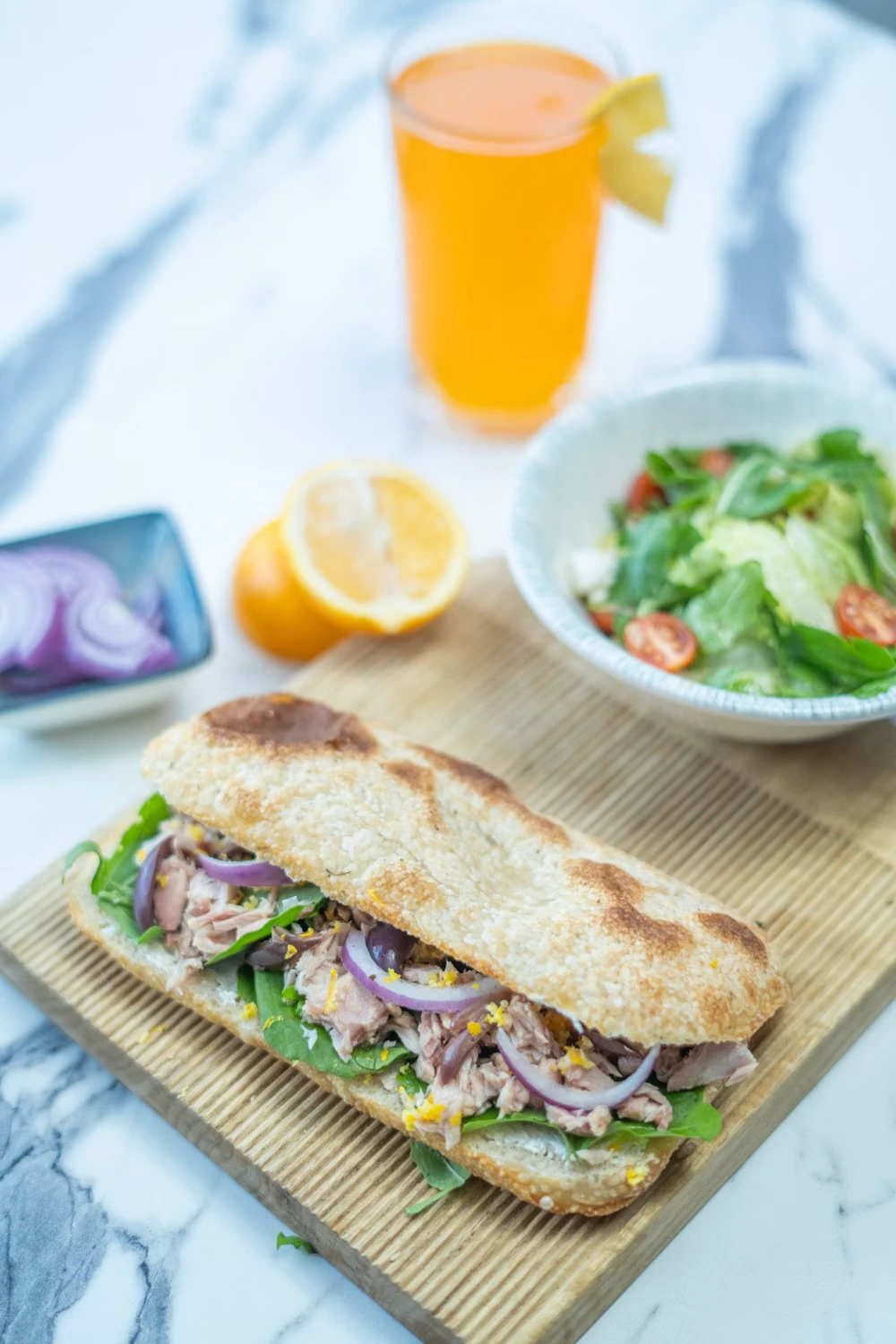
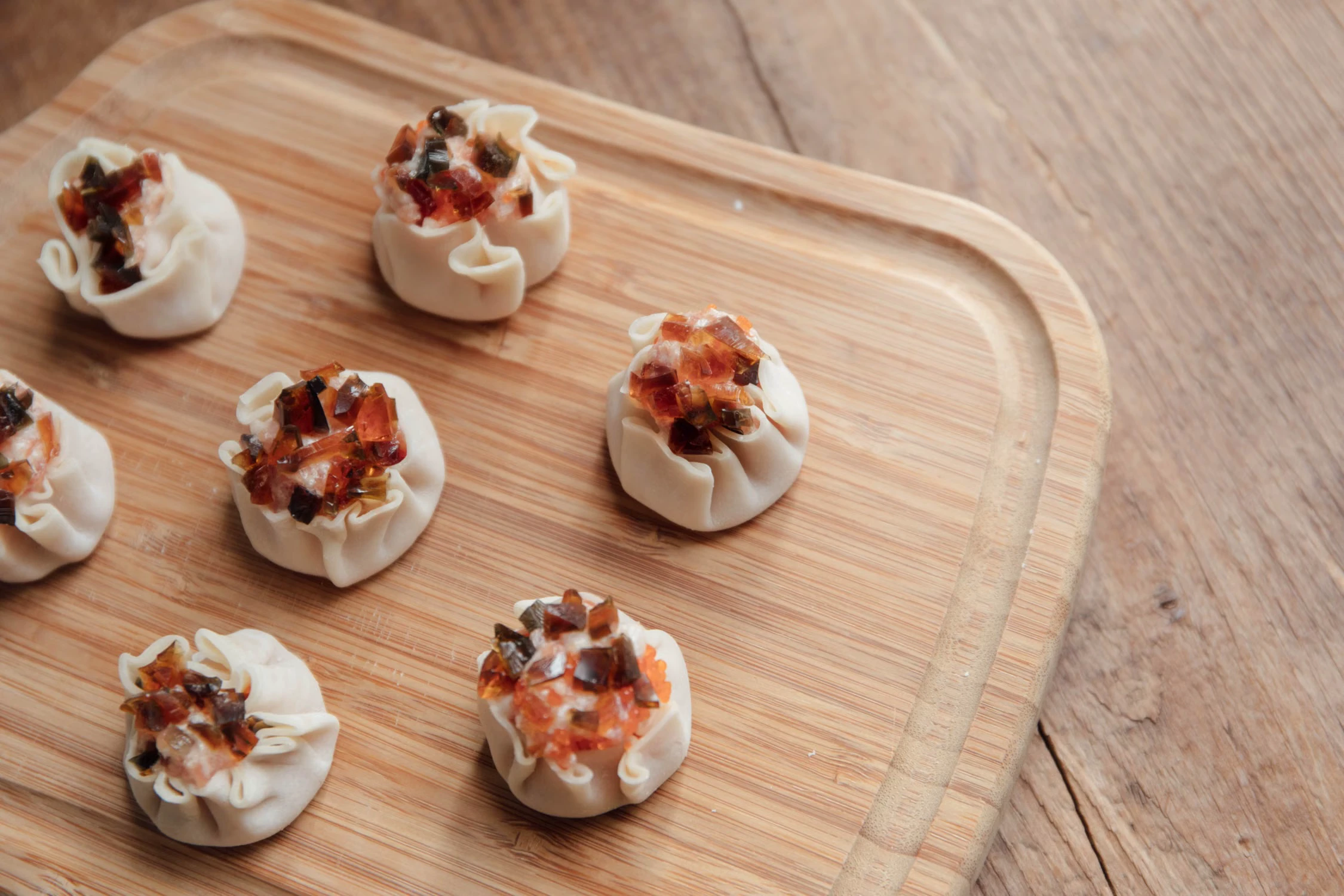
These photographs are meal-building references, not the exact products sold in a particular Korean store. They show the day’s logic: simple fruit at breakfast, a sandwich with visible vegetables at lunch, and a mild dumpling-style protein at dinner.
Breakfast: eggs, plain yogurt, fruit, and water
Start with two packaged eggs, a cup of plain or lower-sugar yogurt, and a banana or another whole fruit. If you need more energy, add a small plain rice ball, bread roll, or oatmeal cup when available. Drink water, unsweetened tea, or coffee according to your normal caffeine routine.
This breakfast works because the eggs and yogurt contribute protein, the fruit adds fiber and volume, and the optional grain makes it more substantial. A flavored milk and sweet pastry may be fun, but together they make a dessert-like breakfast with little produce. Check yogurt labels carefully: “plain” and “Greek” describe styles, not automatically low sugar.
Packaged eggs may be labeled 구운란 (baked egg), 훈제란 (smoked egg), or 반숙란 (soft-cooked egg). Keep refrigerated products cold and follow the use-by date. Do not assume a soft egg can sit in a backpack all morning simply because it came in a sealed package.
Lunch: a mild main plus an actual vegetable side
Choose one main: a tuna-mayo or bulgogi gimbap, a ham-and-cheese or egg sandwich, a mild triangle gimbap, or a plainly labeled lunch box. Then add a packaged salad, vegetable sticks, or whole fruit. Use only as much dressing as you need; dressings can add substantial sodium, sugar, and calories.
The Korea Tourism Organization convenience-store guide identifies tuna-mayo triangle gimbap as a steady seller and notes that convenience-store selections keep changing. That makes tuna mayo a useful search term, not a promise that every branch will stock the same product. Avoid the nearby Jeonju-bibimbap version if you want zero chile heat; the same guide describes it as spicy seasoned rice.
Sandwiches can be easier because their fillings are visible, but check for mustard, spicy mayonnaise, jalapeño, or red-pepper sauce. Gimbap looks balanced because it contains several colorful strips, yet the vegetable quantity can be modest. That is why the separate salad or fruit matters.
Dinner: rice, mild protein, vegetables
For the most meal-like dinner, combine a microwave cup of plain rice with one plainly seasoned protein: packaged chicken breast, tofu, eggs, mild dumplings, or a non-spicy meat side dish. Add a salad, vegetable cup, or fruit. A small sheet pack of laver can add texture, but seasoned laver is another sodium source.
If you choose dumplings, look beyond the generic 만두 label. Kimchi mandu is often spicy; meat or vegetable mandu can still contain pepper or chile seasoning. Follow the package heating time exactly and confirm that the wrapper is microwave-safe before cooking.
A mild udon or soup can substitute for rice, but the broth is usually the sodium-heavy part. You do not need to drink every drop. Cream or jjajang tteokbokki can be less hot than red-pepper versions—the tourism guide explicitly notes non-spicy cream and black-bean options—but “less hot” is not the same as nutritionally balanced or chile-free.
The nutrition limit is accumulation
One packaged meal can fit comfortably into a varied diet. Three in one day create a stacking problem. The Korean food-based dietary guidelines summarized by the FAO recommend variety across grains, vegetables, fruits, dairy, meat, fish, eggs, and beans. Convenience-store meals can cover several groups, but they tend to repeat refined rice or bread while providing less produce than the packaging suggests.
The biggest practical risk is sodium. It hides in gimbap fillings, processed meat, dumplings, soup powder, soy sauce, dressing, seasoned laver, and kimchi. Korea's Ministry of Food and Drug Safety sodium guidance uses 2,000 milligrams per day as the recommended daily average and explains why excessive intake matters. Instead of trying to memorize which product is “healthy,” compare the 나트륨 line on two labels and choose the lower amount when the portions are similar.
Other gaps accumulate too:
- Fiber and vegetables: A few pickles or carrot strips are not a full vegetable side. Buy produce deliberately.
- Added sugar: Flavored milk, sweet coffee, yogurt, juice, and dessert can turn every eating occasion into a sugar event. Choose water most of the day.
- Protein: A plain rice ball or noodle cup may have very little. Eggs, yogurt, tofu, chicken, tuna, or beans make it a meal.
- Saturated fat: Cheese, creamy sauces, fried food, pastries, and processed meat can stack quickly.
- Portion fit: One traveler's day may be another traveler's snack. Use the label and your needs rather than copying an online calorie total.
This plan is a convenience strategy, not a prescription for diabetes, kidney disease, hypertension, food allergy, pregnancy, or another medical condition. Travelers with clinical dietary needs should use advice tailored to them.
A five-minute label routine
Turn the package over before you commit to the meal. Check serving size, calories, protein, sugars (당류), sodium (나트륨), allergens, heating directions, and the use-by time. Nutrition values for the whole package and for one serving are not always the same.
Then compare the day, not just the item. If lunch is a salty gimbap and soup, make dinner plain rice, eggs or tofu, fruit, and water. If breakfast is sweet yogurt and flavored milk, skip the juice and dessert later. Balance can happen across meals even when no single convenience-store tray is perfect.
A 2026 Reddit discussion for a first-time Korea traveler is a useful reminder that many Korean foods are not red or spicy at all. Convenience stores are only one slice of that range. Use this one-day plan for an early arrival, late schedule, or low-effort day—not as evidence that a full Korean trip must be lived between refrigerated shelves.
The basket to remember
For each meal, ask: Where is the staple? Where is the protein? Where is the produce? Then check heat words, sodium, sugar, and allergens. That tiny checklist does more than searching for a mythical package labeled “healthy and not spicy.”
If the store has no suitable vegetables, buy fruit and correct the gap at the next meal. If every ready meal is spicy, eggs, plain rice, yogurt, tofu, bread, cheese, nuts, and fruit can still assemble a calm meal. The goal is not culinary perfection; it is a day that leaves you fed, comfortable, and ready to eat a more varied Korean meal tomorrow.
Photo credits
- Korean convenience-store refrigerator: Theodore Nguyen via Pexels.
- Banana breakfast reference: cottonbro studio via Pexels.
- Sandwich-and-salad lunch reference: khezez | خزاز via Pexels.
- Dumpling dinner reference: zhugewala via Pexels.
Sources and image credits
- Korea Tourism Organization convenience-store guide — Checked for guide details or image attribution.
- Korean food-based dietary guidelines summarized by the FAO — Checked for guide details or image attribution.
- Ministry of Food and Drug Safety sodium guidance — Checked for guide details or image attribution.
- Reddit discussion for a first-time Korea traveler — Checked for guide details or image attribution.
- Theodore Nguyen via Pexels — Checked for guide details or image attribution.
- cottonbro studio via Pexels — Checked for guide details or image attribution.
- khezez | خزاز via Pexels — Checked for guide details or image attribution.
- zhugewala via Pexels — Checked for guide details or image attribution.
Last updated


