
How to Meet People in Seoul After 30
Use structured activities instead of hoping for a spontaneous introduction. This guide compares hobby classes, small-group tours, language exchanges, recurring groups, and guesthouses for solo travelers over 30.

The easiest way to meet people in Seoul after 30 is to book a small activity where conversation already has a reason to happen. Choose a beginner-friendly group class for natural talk, a small-group tour for the lowest commitment, or a structured language exchange when conversation itself is the goal.
Do not judge the plan by whether it produces a new best friend. A good event gives you a bounded window with other people and would still be worth doing if every conversation ends there.
Choose the format by the pressure you want
- Least social pressure: a hands-on class with a shared task and quiet working time.
- Easiest one-off booking: a walking, food, museum, or neighborhood tour with a clear start and finish.
- Most direct conversation: a language exchange with a host, table assignments, or timed rotations.
- Best for a longer stay: a recurring hobby group where you can see the same people again.
- Most variable: a guesthouse common room, because the crowd changes every night and may be more party-focused than you want.
The useful distinction is not “young travelers versus older travelers.” It is unstructured approach versus structured participation.
Start with a shared-task hobby class
A pottery, cooking, drawing, dance, or craft class gives you an immediate subject: the tool, the instructor's demonstration, or the thing everyone is trying to make. That removes the need for a clever opening line. It also creates natural pauses, which matters if constant small talk is tiring.
Before booking, confirm that it is actually a group session. “One-day class” can describe a private lesson, a couple booking, or a room where participants work independently. Check:
- whether solo registration is accepted;
- the minimum and maximum group size;
- whether beginners share one start time;
- the instruction language;
- whether materials are included; and
- what happens if the minimum enrollment is not reached.
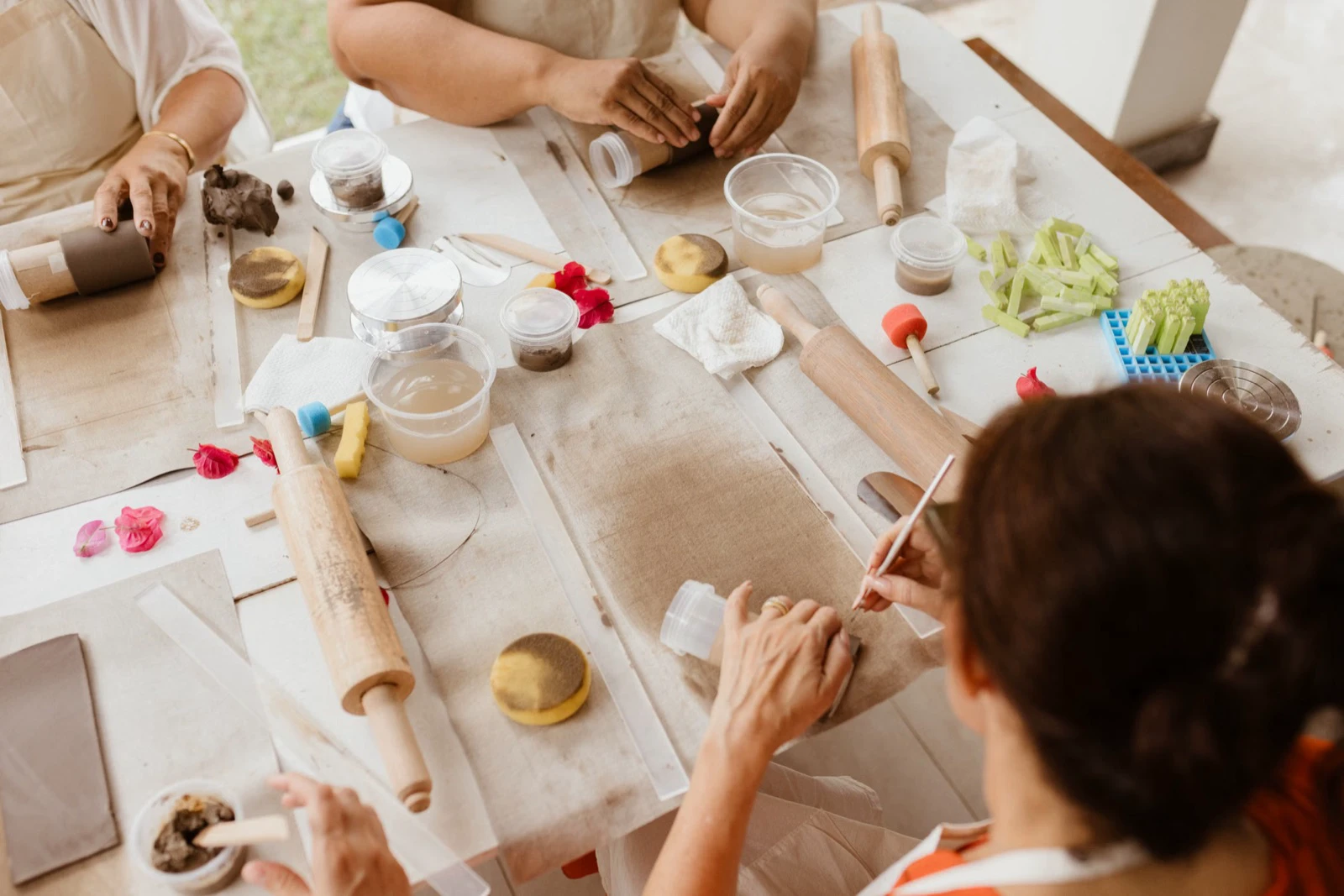

The two formats create different rhythms. A shared craft gives you something to do between sentences. A conversation-led event removes that buffer and asks you to keep talking. Pick the structure that matches your energy, not the one that sounds most social.
Use a small-group tour for the simplest first step
A tour solves three problems at once: you know where to go, what to discuss, and when you can leave. Introductions happen around the activity rather than across an empty table. For a short visit, this is usually the easiest first booking.
Seoul's official Guided Walking Tour is a useful example. The city describes about 40 routes across eight themes, led by multilingual volunteer guides. Most individual tours allow up to 10 participants, reservations are made online at least three days ahead, and other tourists may join.
There is an important solo-traveler catch: the current reservation page says tours need at least two participants, and a booking with fewer than two by 17:00 two days before the tour is automatically cancelled. A solo booking can therefore wait for another participant but is not guaranteed to run. Check the live status and keep a self-guided backup.
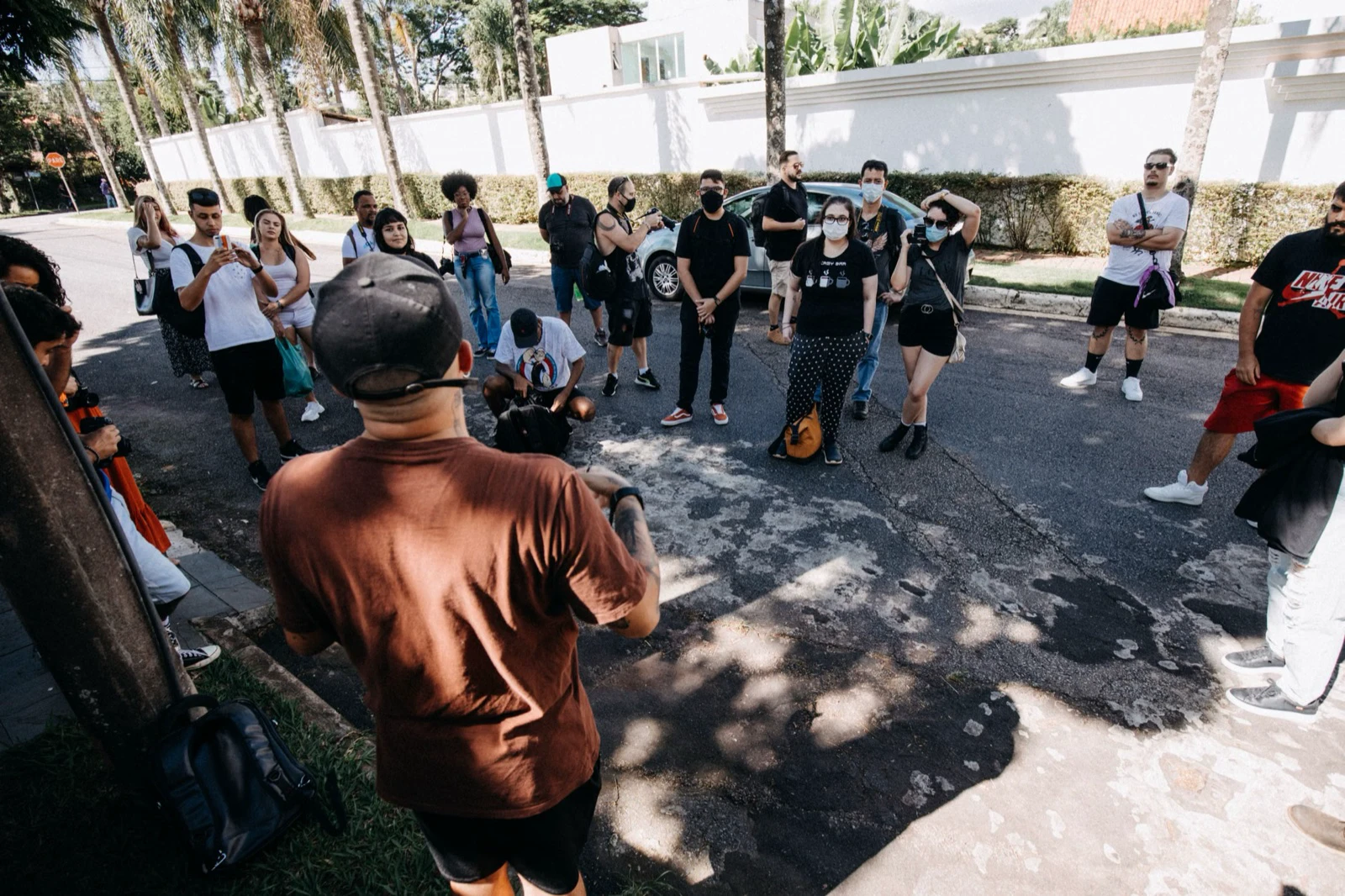
Commercial food, market, museum, and hiking tours can provide the same structure, but compare the actual group cap, meeting language, cancellation rule, and recent reviews. A “small group” label is less useful than a stated maximum.
Choose language exchange for conversation, not guaranteed friendship
Language exchanges are the most direct option because everyone arrives expecting to speak. The better formats remove the hardest moment by assigning tables, using prompts, or rotating partners.
Two recent Naver participant accounts illustrate both sides. One writer in their 30s describes a host helping mixed-age tables keep moving; another says many attendees came alone and table rotations shortened the awkward period. The second also says the crowd and repeated introductions could be draining. Both posts link to the same organizer, so treat them as examples of event structure, not independent proof of quality: first account, second account.
Screen the current listing before you pay or travel across the city:
- Is it guided practice, free conversation, or mainly a party?
- Are solo arrivals normal?
- Does the event show a host, table plan, or rotation system?
- Is alcohol optional?
- Is the venue public and easy to leave?
- Are the start and finish times clear?
- Do recent photos show conversation-sized tables or one dense standing crowd?
Age labels are less reliable than format. A well-run mixed-age table can feel easier than an “over 30” event with no host and no structure.
Prefer recurring groups when you have more than a week
One-off activities are good for company today. Recurring photography walks, running clubs, board-game groups, dance classes, and volunteer sessions are better when you want continuity. The second meeting is usually easier because names and expectations already exist.
Check whether the group welcomes short-term visitors, whether registration needs a Korean phone number, and whether the next session is confirmed. Do not join a residents-only program by assuming that an English listing means tourist eligibility.
If you connect with someone, make the follow-up small and specific: “I am going to this market on Thursday afternoon—want to join for an hour?” A concrete plan is easier to answer than “We should hang out sometime.”
You do not need a social hostel
A guesthouse common room can work, but it gives you the least control over age mix, noise, and conversation style. Do not choose accommodation only because reviews call it social. A private room plus one pre-booked external activity often gives a solo traveler more control over both rest and interaction.
That tradeoff appears in traveler discussions. An early-40s visitor describes a genuine mental block around entering social spaces alone, while a mid-30s traveler says organized experiences and language-exchange groups provided company when wanted. These are individual experiences, but they support the same practical move: book the introduction instead of waiting for one to happen.
A low-pressure plan for your first three days
- Book one small-group class or tour for your first or second full day.
- Save one structured language exchange as an optional higher-energy evening.
- Check the participant minimum, host, venue, end time, and route home on the current listing.
- Arrive ten minutes early and ask one practical question: “Have you done this before?” or “Which part are you most interested in?”
- If the group clicks, suggest one short follow-up. If it does not, let the activity itself count as a good outing.
The best method after 30 is not a special district or a younger crowd. It is a room where people already agreed to do the same thing at the same time.
Photo credits
- Conversation photo by Antonius Ferret on Pexels
- Group craft photo by Jonathan Borba on Pexels
- Conversation-over-snacks photo by Monstera Production on Pexels
- Guided group photo by Matheus Bertelli on Pexels
Sources and image credits
- Guided Walking Tour — Checked for guide details or image attribution.
- reservation page — Checked for guide details or image attribution.
- first account — Checked for guide details or image attribution.
- second account — Checked for guide details or image attribution.
- early-40s visitor — Checked for guide details or image attribution.
- mid-30s traveler — Checked for guide details or image attribution.
- Conversation photo by Antonius Ferret on Pexels — Checked for guide details or image attribution.
- Group craft photo by Jonathan Borba on Pexels — Checked for guide details or image attribution.
- Conversation-over-snacks photo by Monstera Production on Pexels — Checked for guide details or image attribution.
- Guided group photo by Matheus Bertelli on Pexels — Checked for guide details or image attribution.
Last updated


